

NASA’s Curiosity rover has uncovered a missing piece in the puzzle of Mars’ past atmosphere.
Scientists discovered siderite—an iron-rich carbonate mineral—in layered rock near the surface of Gale Crater, suggesting that Mars once had enough carbon dioxide to support liquid water. This could explain why previous attempts failed to find expected carbonates: they were hidden beneath the surface, masked by other minerals. The finding brings us closer to understanding why Mars, once possibly habitable, became a frozen desert while Earth thrived.
Clues to Mars’ Ancient Atmosphere Emerge
New results from NASA’s Curiosity rover may help solve a long-standing mystery: what happened to Mars’ ancient atmosphere, and how the planet has evolved over time.
For years, scientists have believed that early Mars had a thick atmosphere rich in carbon dioxide, along with liquid water on its surface. According to this theory, the carbon dioxide and water should have reacted with surface rocks to form carbonate minerals. But until now, missions on the ground and satellite-based infrared studies haven’t detected the expected amounts of these carbonates.
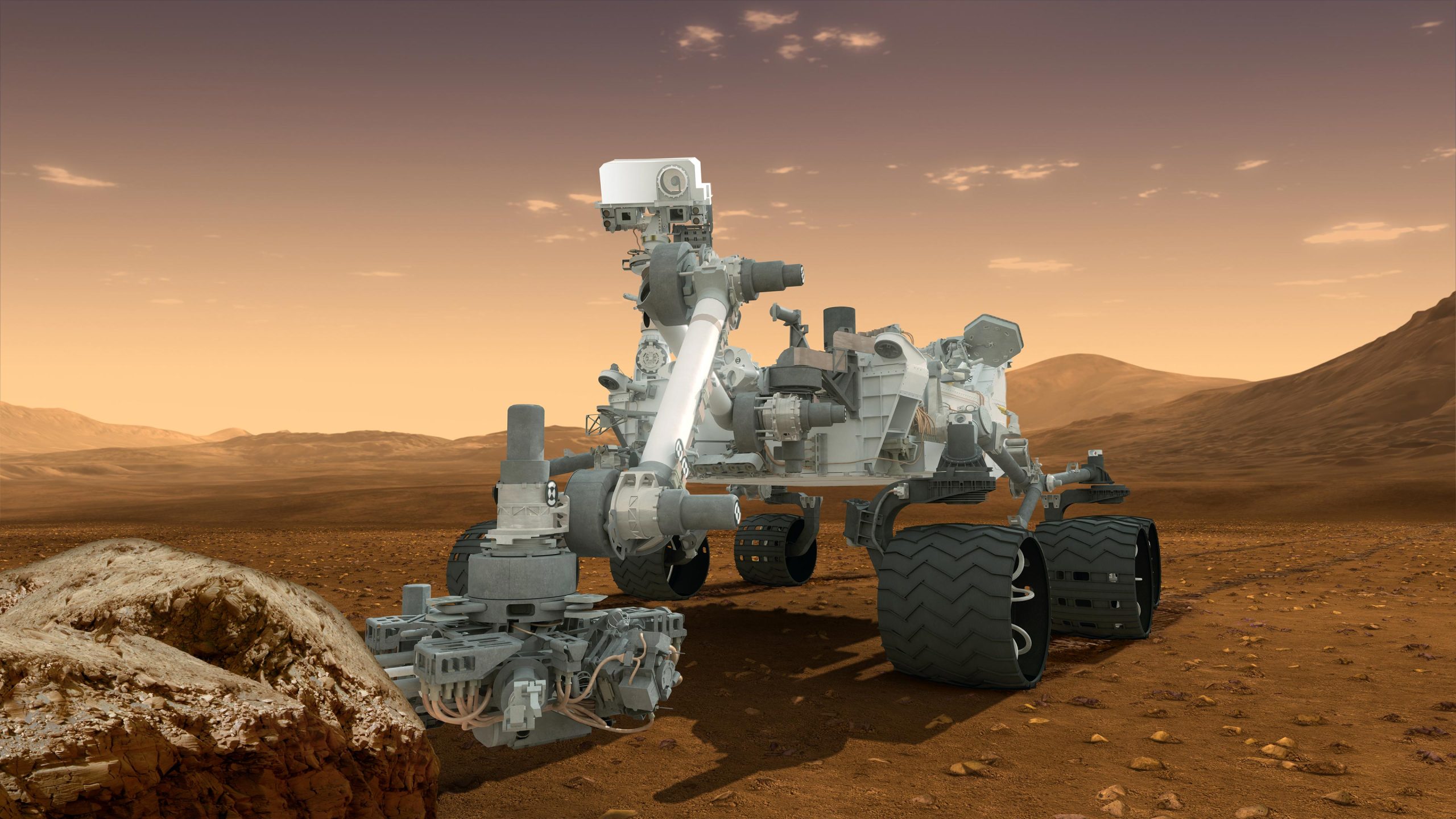
That changed with a new study, published on April 18 in Science. Curiosity’s analysis of rock samples from three drill sites on Mount Sharp—inside Mars’ Gale Crater—revealed the presence of siderite, an iron-based carbonate mineral, in sulfate-rich rock layers near the surface.
Siderite Discovery Hints at Warmer, Wetter Mars
The discovery suggests that Mars once had a thicker atmosphere with enough carbon dioxide to keep surface temperatures warm enough for liquid water to exist.
Although researchers have long suspected this, it’s the first time direct mineral evidence has supported the idea.
“Earth’s surface has been continuously habitable since about 3.5 billion years ago, but Mars’s surface evolved from more habitable early on, to uninhabitable today,” said Edwin Kite, associate professor of geophysical sciences at the University of Chicago and third author on the paper. “This discovery helps us understand the mechanisms that drove the two planets down very different paths.”
How Curiosity Drills Through Martian Time
NASA’s Curiosity rover landed on Mars in 2012 and has been exploring the Red Planet ever since.
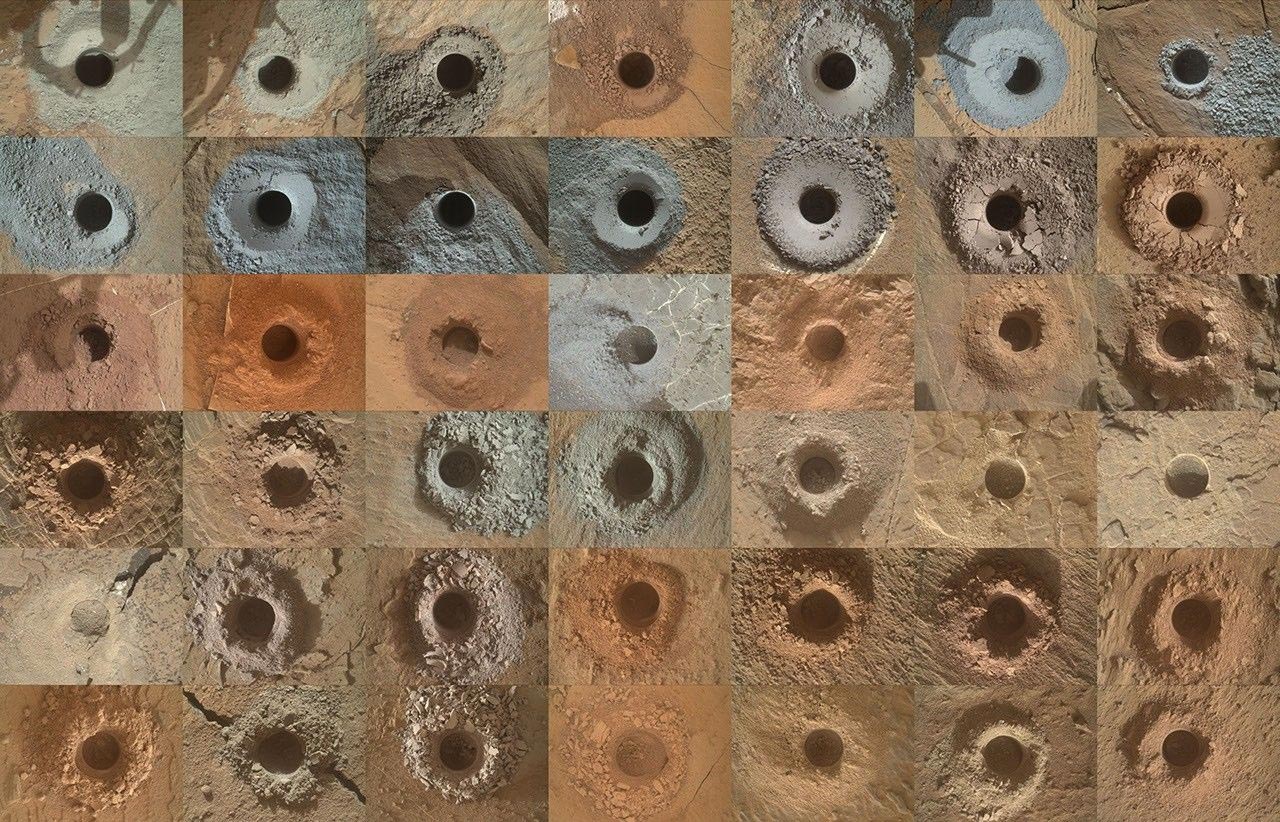
To study Mars’s chemical and mineral makeup, the Curiosity rover drills one to 1.5 inches down into the subsurface, then drops the powdered rock samples into an instrument in its belly called CheMin. The instrument, developed at NASA’s Ames Research Center in California’s Silicon Valley, uses X-ray diffraction to analyze rocks and soil.
“Drilling through the layered Martian surface is like going through a history book,” said Thomas Bristow, research scientist at NASA Ames and co-author of the paper. “Just a few centimeters down gives us a good idea of the minerals that formed at or close to the surface around 3.5 billion years ago.”
Hiding in Plain Sight: Carbonate Clues Beneath the Surface
As Mars’ atmosphere thinned, the carbon dioxide it contained transformed into rock form. The new results suggest that carbonate may be masked by other minerals under the surface—which would have made it difficult to detect through other previous methods, such as infrared satellite analysis.
In the future, missions or analyses of other sulfate-rich areas on Mars could confirm these findings and help us better understand the planet’s early history and how it transformed as its atmosphere was lost.
“The discovery of abundant siderite in the Gale Crater represents both a surprising and important breakthrough in our understanding of the geologic and atmospheric evolution of Mars,” said lead study author Assoc. Prof. Benjamin Tutolo of the University of Calgary.
Explore Further: NASA’s Curiosity Rover Digs Up a Carbon Time Capsule on Mars
Reference: “Carbonates identified by the Curiosity rover indicate a carbon cycle operated on ancient Mars” by Benjamin M. Tutolo, Elisabeth M. Hausrath, Edwin S. Kite, Elizabeth B. Rampe, Thomas F. Bristow, Robert T. Downs, Allan Treiman, Tanya S. Peretyazhko, Michael T. Thorpe, John P. Grotzinger, Amelie L. Roberts, P. Douglas Archer, David J. Des Marais, David F. Blake, David T. Vaniman, Shaunna M. Morrison, Steve Chipera, Robert M. Hazen, Richard V. Morris, Valerie M. Tu, Sarah L. Simpson, Aditi Pandey, Albert Yen, Stephen R. Larter, Patricia Craig, Nicholas Castle, Douglas W. Ming, Johannes M. Meusburger, Abigail A. Fraeman, David G. Burtt, Heather B. Franz, Brad Sutter, Joanna V. Clark, William Rapin, John C. Bridges, Matteo Loche, Patrick Gasda, Jens Frydenvang and Ashwin R. Vasavada, 17 April 2025, Science.
DOI: 10.1126/science.ado9966
Funding: NASA, Canadian Space Agency, Science and Technology Funding Council of the United Kingdom.
Curiosity was built by NASA’s Jet Propulsion Laboratory, which is managed by Caltech in Pasadena, California. JPL leads the mission on behalf of NASA’s Science Mission Directorate in Washington.
Never miss a breakthrough: Join the SciTechDaily newsletter.
Follow us on Google and Google News.
3 Comments
So with the digging deep is that in away terforming or repairing the planet so it can be more like earth 🌍?
If Mars once had a thick atmosphere then why does the artists impression show a planet pockmarked all over with craters?
Popped pimples?