
Close Menu
    Facebook X (Twitter) Instagram
    SciTechDaily
    • Biology
    • Chemistry
    • Earth
    • Health
    • Physics
    • Science
    • Space
    • Technology
    Facebook X (Twitter) Pinterest YouTube RSS
    SciTechDaily
    Home»Biology»Cuttlefish Have Complex Cognitive Abilities – Can Make Decisions Based on Future Expectations
    Biology

    Cuttlefish Have Complex Cognitive Abilities – Can Make Decisions Based on Future Expectations

    By University of CambridgeFebruary 9, 2020No Comments3 Mins Read
    Facebook Twitter Pinterest Telegram LinkedIn WhatsApp Email Reddit
    Share
    Facebook Twitter LinkedIn Pinterest Telegram Email Reddit
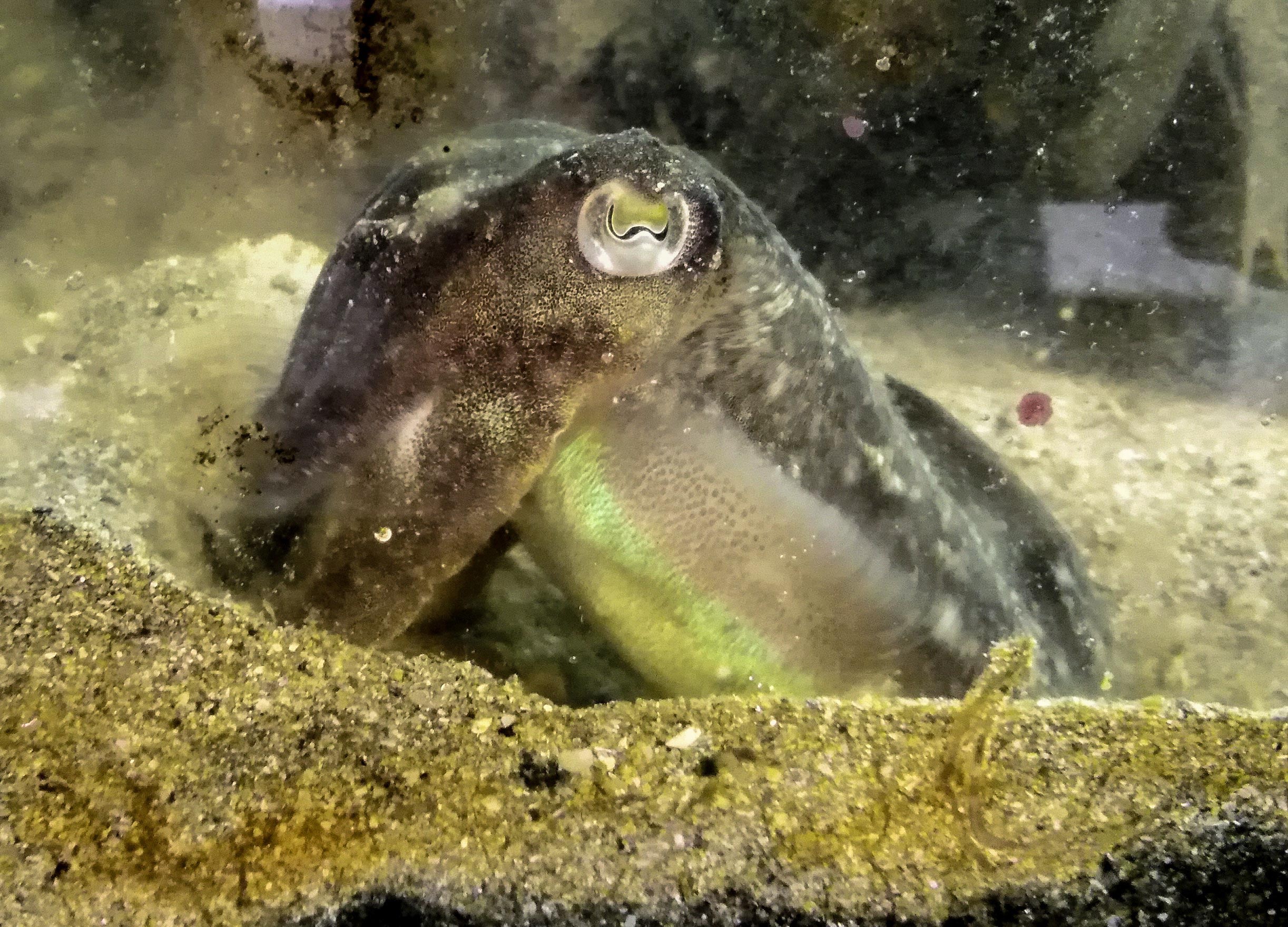
    European Common Cuttlefish
    This is a European common cuttlefish, Sepia officinalis. Credit: Pauline Billard

    When cuttlefish know that shrimp — their favorite food — will be available in the evening, they eat fewer crabs during the day. This capacity to make decisions based on future expectations reveals complex cognitive abilities.

    “It was surprising to see how quickly the cuttlefish adapted their eating behavior — in only a few days they learned whether there was likely to be shrimp in the evening or not. This is a very complex behavior and is only possible because they have a sophisticated brain,” said Pauline Billard, a Ph.D. student in the University of Cambridge’s Department of Psychology and Unicaen, France, and first author of the report.

    Cuttlefish foraging behavior can be described as either selective or opportunistic. Observing the European common cuttlefish, Sepia officinalis, when the researchers reliably provided one shrimp every evening, the cuttlefish became more selective during the day and ate significantly fewer crabs. But when they were provided with evening shrimp on a random basis, the cuttlefish became opportunistic and ate more crabs during the day.

    Random provision of evening shrimp meant that the cuttlefish could not predict whether their favorite food would be available for dinner each day, so they made sure they had enough to eat earlier in the day. When conditions changed, the cuttlefish changed their foraging strategy to match.

    The researchers saw the animals quickly shift from one eating strategy to another based on their experience. By learning and remembering patterns of food availability, the cuttlefish optimize their foraging activity not only to guarantee they eat enough — but also to make sure they eat more of the foods they prefer.

    Cuttlefish eat a wide range of food including crabs, fish, and squid, depending on what is available. Despite such a generalized diet, they show strong food preferences. To test this, the researchers tested twenty-nine cuttlefish five times a day, for five days, by putting crab and shrimp at an equal distance from the cuttlefish at the same time and watching what they ate first. All showed a preference for shrimp.

    Animals must constantly adapt to changes in their environment in order to survive. Cuttlefish hatch with a large central nervous system, which enables them to learn from a young age. They are capable of remembering things that happened in the past, and using this information to adjust their behavior in anticipation of the future.

    Cuttlefish are a type of cephalopod. In evolutionary terms, cephalopods and vertebrates diverged around 550 million years ago, yet they are remarkably similar in the organization of their nervous systems.

    “This flexible foraging strategy shows that cuttlefish can adapt quickly to changes in their environment using previous experience,” said Professor Nicola Clayton in the University of Cambridge’s Department of Psychology, who led the study. “This discovery could provide a valuable insight into the evolutionary origins of such complex cognitive ability.”

    Reference: “Cuttlefish show flexible and future-dependent foraging cognition” by Pauline Billard, Alexandra K. Schnell, Nicola S. Clayton and Christelle Jozet-Alves, 5 February 2020, Biology Letters.
    DOI: 10.1098/rsbl.2019.0743

    This research was funded by ANR (the French National Research Agency).

    Never miss a breakthrough: Join the SciTechDaily newsletter.
    Follow us on Google and Google News.

    Marine Biology University of Cambridge
    Share. Facebook Twitter Pinterest LinkedIn Email Reddit

    Related Articles

    Motion Camouflage: The Remarkable Hunting Tactics of Trumpetfish

    Invasive Species “Hitchhiking” on Ships Threaten Antarctica’s Unique Ecosystems

    Unlike Humans, Cuttlefish Retain Sharp Memory of Specific Events in Old Age

    Conservationists May Be Unintentionally Spreading Diseases and Parasites Between Threatened Animal Populations

    Evolution in Action Revealed by Stunning New Starfish-Like Fossil

    Suction Cups That Don’t Fall Off – Insects in Torrential Rivers Inspire Engineering Solutions

    Jacques Cousteau Predicted Detrimental Change in Coral Reefs

    Mesodinium Chamaeleon Is A Unique Life Form That is Half Plant Half Animal

    Brainless, Faceless Fish Found in Scottish Waters

    Leave A Reply Cancel Reply

    • Facebook
    • Twitter
    • Pinterest
    • YouTube

    Don't Miss a Discovery

    Subscribe for the Latest in Science & Tech!

    Trending News

    Just 10 Minutes a Day: Scientists Say This Ancient Chinese Practice Shows Powerful Blood Pressure Benefits

    Scientists Say This Popular Food Could Help Your Body Get Rid of Microplastics

    For the First Time, ChatGPT Has Solved an Unproven Math Problem in Geometry

    This Popular Supplement May Actually Slow Biological Aging, Scientists Reveal

    Can a Common Vitamin Fight the Most Aggressive Brain Cancer?

    Scientists Discover How to Stop Vision Loss Before It Starts

    The Mediterranean Isn’t Safe: Scientists Warn of Inevitable Tsunami

    Scientists Say Washing Dishes With a Sponge Has a Concerning Side Effect

    Follow SciTechDaily
    • Facebook
    • Twitter
    • YouTube
    • Pinterest
    • Newsletter
    • RSS
    SciTech News
    • Biology News
    • Chemistry News
    • Earth News
    • Health News
    • Physics News
    • Science News
    • Space News
    • Technology News
    Recent Posts
    • A 30-Year-Old Flu Shot Still Works Today With One Big Problem
    • Widely Available Drug Found To Ease One of Long COVID’s Most Stubborn Symptoms
    • New Study Finds Internalized Stress May Accelerate Cognitive Decline
    • Stopping Weight-Loss Drugs Like Ozempic Can Quickly Erase Heart Benefits
    • A 500-Million-Year-Old Surprise Is Forcing Scientists to Rethink Spider Evolution
    Copyright © 1998 - 2026 SciTechDaily. All Rights Reserved.
    • Science News
    • About
    • Contact
    • Editorial Board
    • Privacy Policy
    • Terms of Use

    Type above and press Enter to search. Press Esc to cancel.