
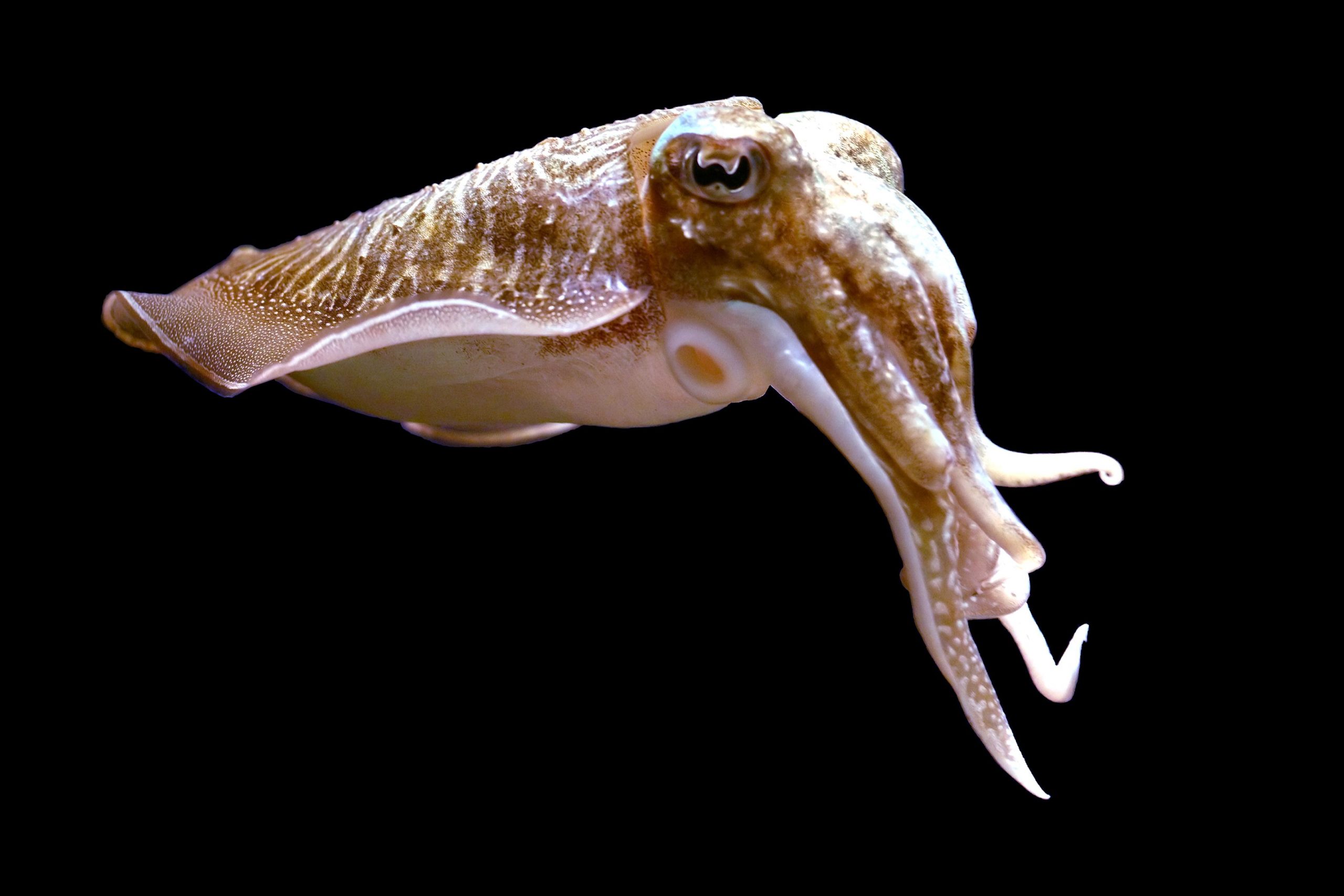
Unlike humans, aging cuttlefish retain vivid episodic-like memory. Their brains stay cognitively sharp until just before death, aiding in tasks like remembering mating history. This rare trait may offer a survival advantage in their short lifespans.
Cuttlefish can remember what, where, and when specific events happened – right up to their last few days of life, researchers have found. The results, published this week in the journal Proceedings of the Royal Society B, are the first evidence of an animal whose memory of specific events does not deteriorate with age.
Researchers from the University of Cambridge, U.K., the Marine Biological Laboratory (MBL), Woods Hole, Mass., and the University of Caen, France, conducted memory tests with 24 common cuttlefish, Sepia officinalis. Half of them were 10-12 months old – not-quite adult, and the other half were 22-24 months old – equivalent to humans in their 90s.
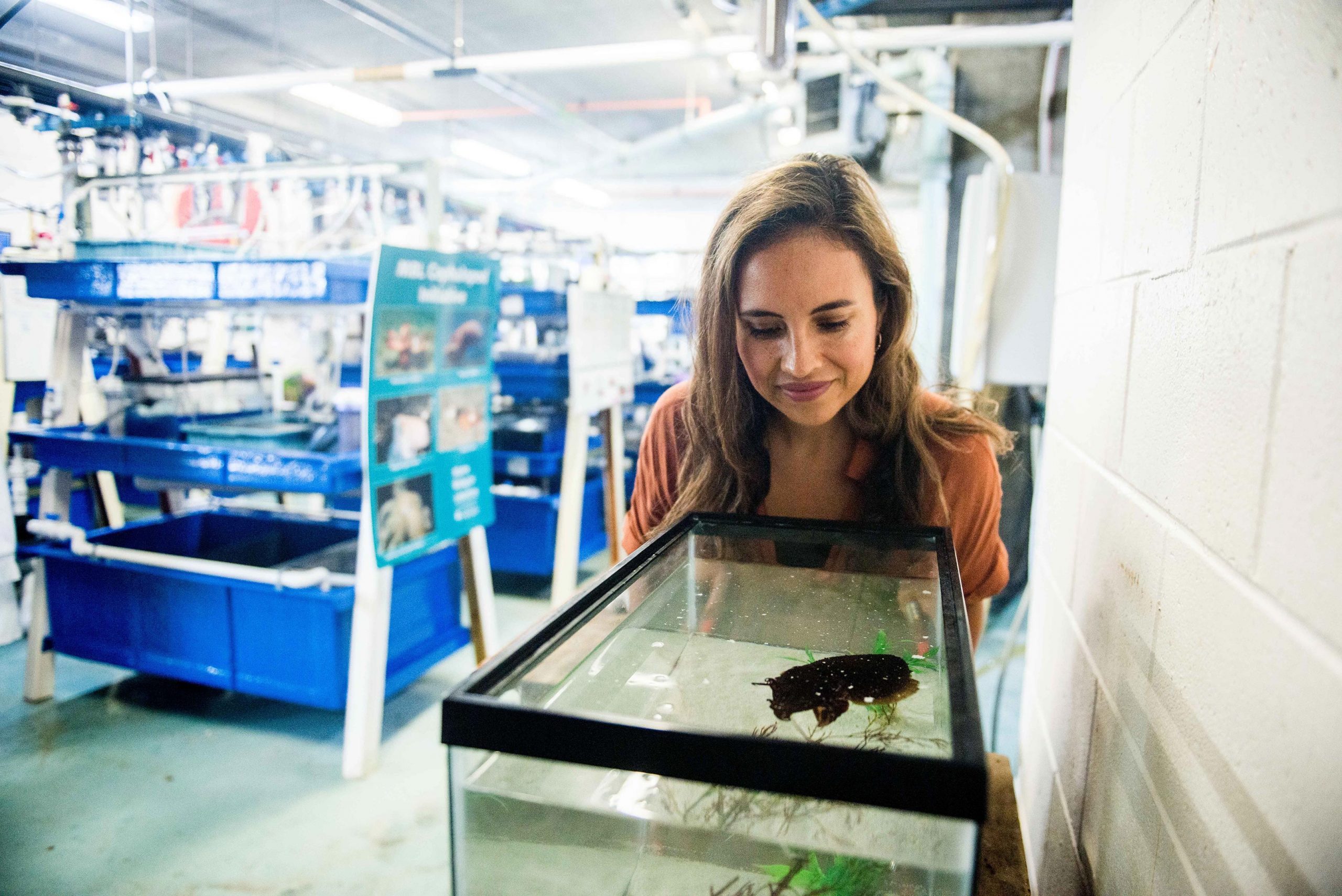
“Cuttlefish can remember what they ate, where, and when, and use this to guide their feeding decisions in the future. What’s surprising is that they don’t lose this ability with age, despite showing other signs of aging such as loss of muscle function and appetite,” said first author Alexandra Schnell of the University of Cambridge’s Department of Psychology, who conducted the experiments at the Marine Biological Laboratory in collaboration with MBL Senior Scientist Roger Hanlon.

As humans age, they gradually lose the ability to remember experiences that happened at particular times and places – for example, what we had for dinner last Tuesday. This is termed episodic memory, and its decline is thought to be due to the deterioration of a part of the brain called the hippocampus.
Brain Structure May Explain Memory Resilience
Cuttlefish do not have a hippocampus, and their brain structure is dramatically different to ours. The vertical lobe of the cuttlefish brain is associated with learning and memory. This does not deteriorate until the last two to three days of the animal’s life, which the researchers say could explain why episodic-like memory is not affected by age in cuttlefish.

To conduct the experiment, the cuttlefish were first trained to approach a specific location in their tank marked with a black and white flag. Then they were trained to learn that two foods they commonly eat – grass shrimp, which they prefer, and king prawn — were available at specific flag-marked locations and after specific delays. This training was repeated daily for four weeks.
Then the cuttlefishes’ recall of which food would be available, where, and when was tested. To make sure they hadn’t just learned a pattern, the two feeding locations were unique each day. All the cuttlefish – regardless of age – watched which food first appeared at each flag and used that to work out which feeding spot was best at each subsequent mealtime.
“The old cuttlefish were just as good as the younger ones in the memory task – in fact, many of the older ones did better in the test phase. We think this ability might help cuttlefish in the wild to remember who they mated with, so they don’t go back to the same partner,” said Schnell.
Evolutionary Edge in Mating Strategy
Cuttlefish only breed at the end of their life. By remembering who they mated with, where, and how long ago, the researchers think this helps the cuttlefish to spread their genes widely by mating with as many partners as possible.
Cuttlefish have short lifespans – most live until around two years old – making them a good subject to test whether memory declines with age. Since it is impossible to test whether animals are consciously remembering things, the authors used the term ‘episodic-like memory’ to refer to the ability of cuttlefish to remember what, where and when specific things happened.
Reference: “Episodic-like memory is preserved with age in cuttlefish” by Alexandra K. Schnell, Nicola S. Clayton, Roger T. Hanlon and Christelle Jozet-Alves, 18 August 2021, Proceedings of the Royal Society B Biological Sciences.
DOI: 10.1098/rspb.2021.1052
This research was funded by the Royal Society and the Grass Foundation. Schnell was a Grass Fellow in residence at the Marine Biological Laboratory when the experiments were conducted.
Never miss a breakthrough: Join the SciTechDaily newsletter.
Follow us on Google and Google News.
3 Comments
🔴 Human Rights and Justice in Islam
🔵 Islam provides many human rights for the individual. The following are some of these human rights that Islam protects.
🔴 The life and property of all citizens in an Islamic state are considered sacred, whether a person is Muslim or not. Islam also protects honor. So, in Islam, insulting others or making fun of them is not allowed.
🔵 The Prophet Muhammad said: {Truly your blood, your property, and your honor are inviolable.}
🔴 Racism is not allowed in Islam, for the Quran speaks of human equality in the following terms:
{ O mankind, We have created you from a male and a female and have made you into nations and tribes for you to know one another. Truly, the noblest of you with God is the most pious.2 Truly, God is All-Knowing, All-Aware.} (Quran, 49:13)
🔵 Islam rejects certain individuals or nations being favored because of their wealth, power, or race. God created human beings as equals who are to be distinguished from each other only on the basis of their faith and piety.
🔴 The Prophet Muhammad said: {O people! Your God is one and your forefather (Adam) is one. An Arab is not better than a non-Arab and a non-Arab is not better than an Arab, and a red (i.e. white tinged with red) person is not better than a black person and a black person is not better than a red person, except in piety.}
There seems to be an assumption here that memory deteriorates in relative lifespan rather than over a common time period. Perhaps all species remember one year better than 50 years but not many species get to 50 and so you cannot test them. In that case a species that lives 2 years would seem to have an excellent memory.
🔴 What Is Islam? ⚠️
🔴 Islam is not just another religion.
🔵 It is the same message preached by Moses, Jesus and Abraham.
🔴 Islam literally means ‘submission to God’ and it teaches us to have a direct relationship with God.
🔵 It reminds us that since God created us, no one should be worshipped except God alone.
🔴 It also teaches that God is nothing like a human being or like anything that we can imagine.
🌍 The concept of God is summarized in the Quran as:
📖 { “Say, He is God, the One. God, the Absolute. He does not give birth, nor was He born, and there is nothing like Him.”} (Quran 112:1-4)[4] 📚
🔴 Becoming a Muslim is not turning your back to Jesus.
🔵 Rather it’s going back to the original teachings of Jesus and obeying him.