
Close Menu
    Facebook X (Twitter) Instagram
    SciTechDaily
    • Biology
    • Chemistry
    • Earth
    • Health
    • Physics
    • Science
    • Space
    • Technology
    Facebook X (Twitter) Pinterest YouTube RSS
    SciTechDaily
    Home»Biology»Delayed Gratification: Quick-Learning Cuttlefish Pass “The Marshmallow Test”
    Biology

    Delayed Gratification: Quick-Learning Cuttlefish Pass “The Marshmallow Test”

    By Marine Biological LaboratoryMarch 2, 2021No Comments4 Mins Read
    Facebook Twitter Pinterest Telegram LinkedIn WhatsApp Email Reddit
    Share
    Facebook Twitter LinkedIn Pinterest Telegram Email Reddit
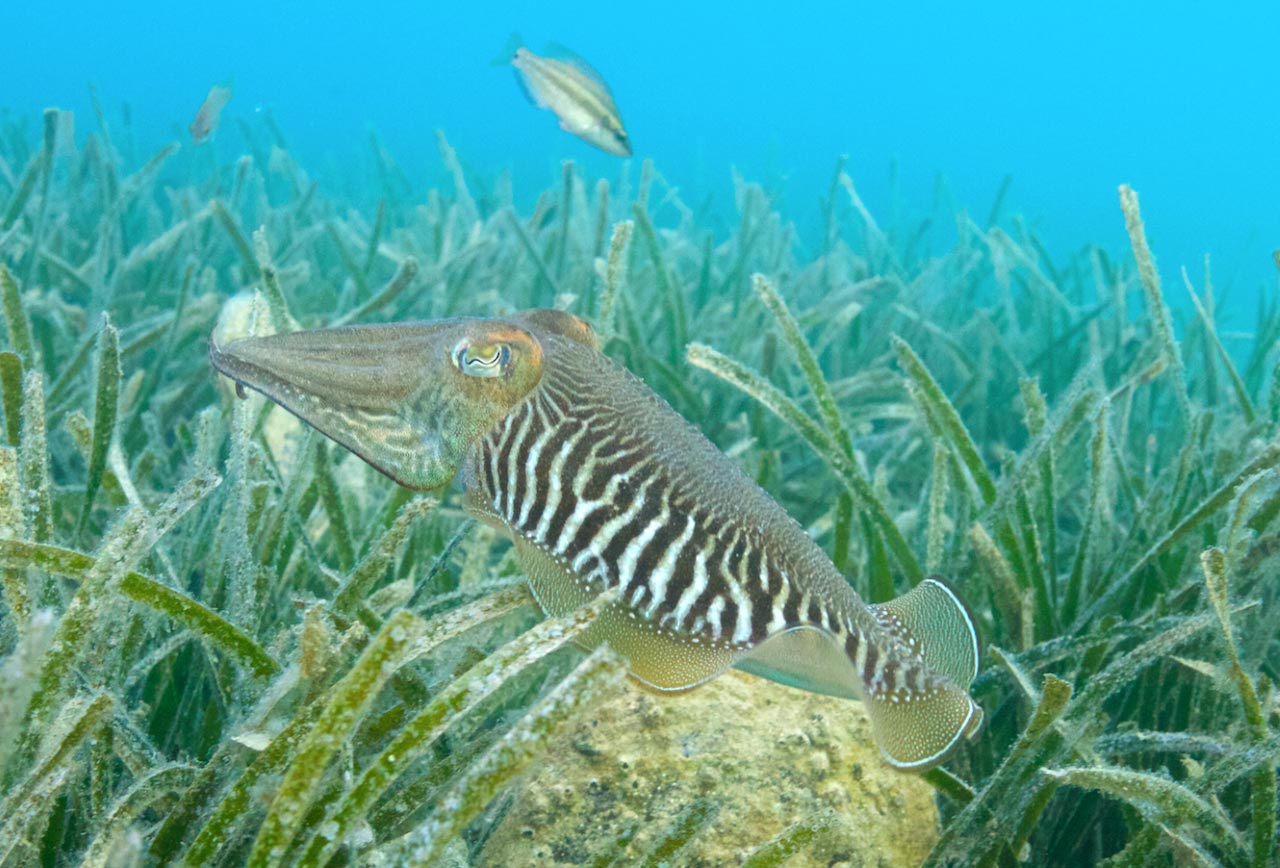
    Common Cuttlefish
    The common cuttlefish, Sepia officinalis. Credit: Roger Hanlon

    First Evidence of Intelligence Link Beyond Primates

    Much like the popular TikTok challenge where kids resist eating snacks, cuttlefish can do the same! Cuttlefish can delay gratification — wait for a better meal rather than be tempted by the one at hand — and those that can wait longest also do better in a learning test, scientists have discovered.

    This intriguing report marks the first time a link between self-control and intelligence has been found in an animal other than humans and chimpanzees. It is published this week in Proceedings of the Royal Society B.

    The research was conducted at the Marine Biological Laboratory (MBL), Woods Hole, while lead author Alexandra Schnell of University of Cambridge, UK, was in residence there as a Grass Fellow. Among Schnell’s collaborators was MBL Senior Scientist Roger Hanlon, a leading expert in cephalopod behavior and joint senior author on the paper.
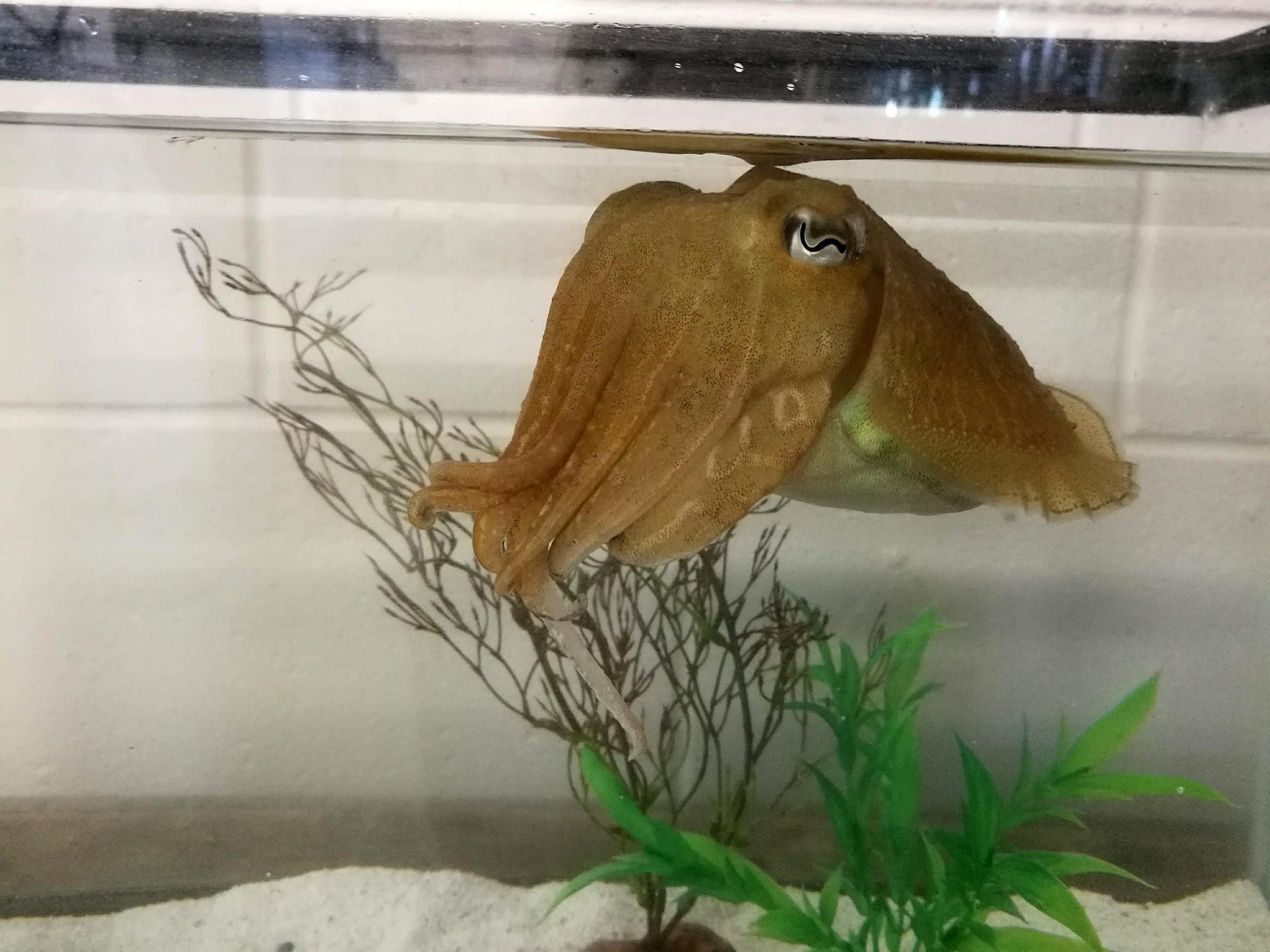
    Common Cuttlefish Sepia officianalis
    The common cuttlefish, Sepia officianalis, in the Marine Resources Center at the Marine Biological Laboratory, Woods Hole, Mass. Credit: Alexandra Schnell

    Marshmallow Test, Cuttlefish Edition

    “We used an adapted version of the Stanford marshmallow test, where children were given a choice of taking an immediate reward (1 marshmallow) or waiting to earn a delayed but better reward (2 marshmallows),” Schnell says. “Cuttlefish in the present study were all able to wait for the better reward and tolerated delays for up to 50-130 seconds, which is comparable to what we see in large-brained vertebrates such as chimpanzees, crows, and parrots.”

    Cuttlefish that could wait longer for a meal also showed better cognitive performance in a learning task. In that experiment, cuttlefish were trained to associate a visual cue with a food reward. Then, the situation was reversed, so the reward became associated with a different cue. “The cuttlefish that were quickest at learning both of those associations were better at exerting self-control,” Schnell says.

    Why cuttlefish have evolved this capacity for self-control is a bit mysterious. Delayed gratification in humans is thought to strengthen social bonds between individuals — such as waiting to eat so a partner can first — which benefits the species as a whole. It may also be a function of tool-building animals, who need to wait to hunt while constructing the tool.

    Alexandra Schnell
    Alexandra Schnell in the Cephalopod Mariculture Facility at the Marine Biological Laboratory, Woods Hole, Mass. Credit: Courtesy of Grass Foundation

    But cuttlefish are not social species, and they don’t build tools. Instead, the authors suggest, delayed gratification may be a by-product of the cuttlefish’s need to camouflage to survive.

    “Cuttlefish spend most of their time camouflaging, sitting and waiting, punctuated by brief periods of foraging,” Schnell says. “They break camouflage when they forage, so they are exposed to every predator in the ocean that wants to eat them. We speculate that delayed gratification may have evolved as a byproduct of this, so the cuttlefish can optimize foraging by waiting to choose better quality food.”

    A New Example of Convergent Evolution

    Finding this link between self-control and learning performance in a species outside of the primate lineage is an extreme example of convergent evolution, where completely different evolutionary histories have led to the same cognitive feature.

    Reference: “Cuttlefish exert self-control in a delay of gratification task” by Alexandra K. Schnell, Markus Boeckle, Micaela Rivera, Nicola S. Clayton and Roger T. Hanlon, 3 March 2021, Proceedings of the Royal Society B.
    DOI: 10.1098/rspb.2020.3161

    Funding: Grass Foundation, Royal Society Newton International Fellowship, National Science Foundation Research Experiences for Undergraduates, Sholley Foundation, European Research Council

    Other collaborators include joint senior author Nicola Clayton at University of Cambridge and scientists at Ripon College in Wisconsin and the Karl Landsteiner University of Health Science, Krems, Austria.

    Never miss a breakthrough: Join the SciTechDaily newsletter.
    Follow us on Google and Google News.

    Behavioral Science Evolution Marine Biological Laboratory Marine Biology Popular
    Share. Facebook Twitter Pinterest LinkedIn Email Reddit

    Related Articles

    Mysterious Success of Invading Invertebrates Surviving Severe Conditions Explained by Cannibalism

    Ancient Sea-Worm Mystery Solved by Student After 50 Years in “Wastebasket”

    “Treasure Trove” of New Coral Species Discovered Along the Great Barrier Reef

    Revealed: The Mysterious, Legendary Giant Squid’s Genome

    Scientists Just Showed That Color-Changing Brittle Stars Can See, Even Though They Don’t Have Eyes

    Scientists Cracked the Case of Why Octopuses of the Same Species Can Look Totally Different

    A Natural Example of a Functioning Gear Mechanism Discovered in an Insect

    European Catfish Learn to Catch Pigeons

    Relationships of Male Dolphins from Shark Bay Determined by Slow Swimming

    Leave A Reply Cancel Reply

    • Facebook
    • Twitter
    • Pinterest
    • YouTube

    Don't Miss a Discovery

    Subscribe for the Latest in Science & Tech!

    Trending News

    New Study Reveals Why Ozempic Works Better for Some People Than Others

    Climate Change Is Altering a Key Greenhouse Gas in a Way Scientists Didn’t Expect

    New Study Suggests Gravitational Waves May Have Created Dark Matter

    Scientists Discover Why the Brain Gets Stuck in Schizophrenia

    Scientists Engineer “Tumor-Eating” Bacteria That Devour Cancer From Within

    Even “Failed” Diets May Deliver Long-Term Health Gains, Study Finds

    NIH Scientists Discover Powerful New Opioid That Relieves Pain Without Dangerous Side Effects

    Collapsing Plasma May Hold the Key to Cosmic Magnetism

    Follow SciTechDaily
    • Facebook
    • Twitter
    • YouTube
    • Pinterest
    • Newsletter
    • RSS
    SciTech News
    • Biology News
    • Chemistry News
    • Earth News
    • Health News
    • Physics News
    • Science News
    • Space News
    • Technology News
    Recent Posts
    • This 15,000-Year-Old Discovery Changes What We Know About Early Human Creativity
    • 35-Million-Year-Old Mystery: Strange Arachnid Discovered Preserved in Amber
    • Revolutionary Gas Turbine Generates Power Without Air Compression
    • Is AI Really Just a Tool? It Could Be Altering How You See Reality
    • JWST Reveals a “Forbidden” Planet With a Baffling Composition
    Copyright © 1998 - 2026 SciTechDaily. All Rights Reserved.
    • Science News
    • About
    • Contact
    • Editorial Board
    • Privacy Policy
    • Terms of Use

    Type above and press Enter to search. Press Esc to cancel.