
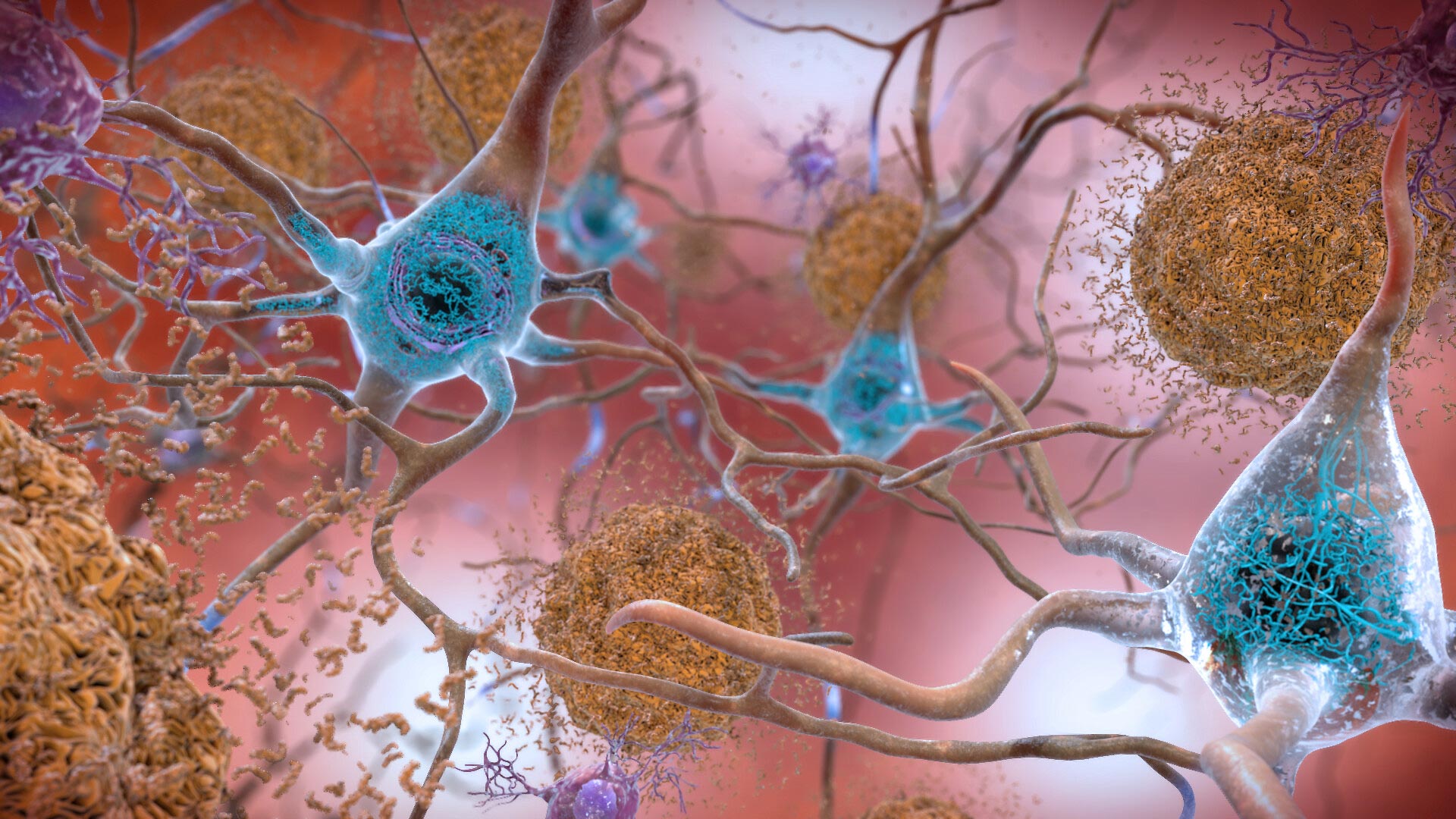
Key steps leading to such accumulation identified; could inform new therapeutic approaches.
Under normal circumstances, tau protein is part of the brain’s infrastructure, important for stabilizing neurons into their proper shapes. But sometimes tau gets knotted up into tangles and turns toxic, injuring brain tissue and causing tauopathies, a group of brain diseases characterized by problems with learning, memory, and movement. Alzheimer’s disease is the most common tauopathy, but the group also includes Parkinson’s disease, chronic traumatic encephalopathy (CTE), and several rare genetic conditions.
New Research on Tau Tangles
In search of ways to prevent these destructive tau tangles, researchers at Washington University School of Medicine in St. Louis have identified a key step in their development. Intervening at this step potentially could forestall the destructive cascade of events that results in brain damage, the researchers said. The findings were published on September 20 in the journal Molecular Psychiatry.
“Tauopathies are devastating diseases that have limited treatment options right now, and they all have this feature of tau aggregation,” said senior author Celeste Karch, PhD, a professor of psychiatry. “We’ve been thinking for a long time about whether there are factors that impact that common process of tau aggregation and if so, whether we could target those factors as a novel approach to treatment. These findings move us one step closer to finding a way to intervene and stop the process of tau aggregation that leads to dementia.”
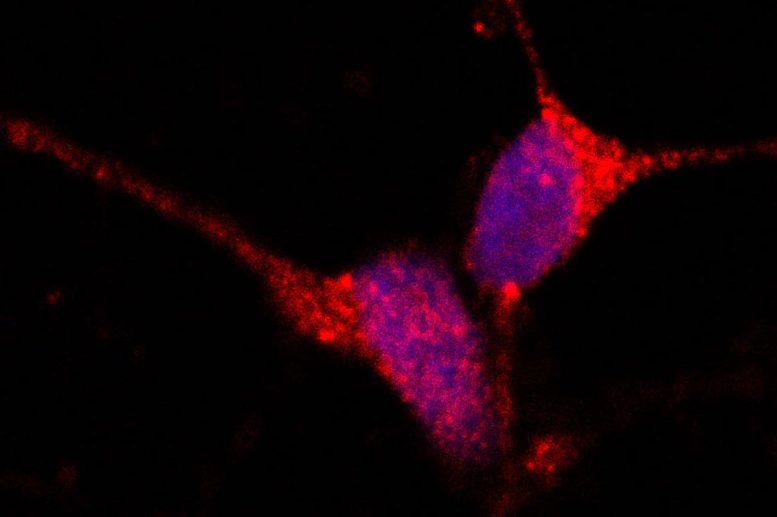
The Role of lncRNAs in Tauopathies
First author Reshma Bhagat, PhD, a postdoctoral researcher, came up with the idea of looking for such factors among a group of RNA molecules known as long noncoding RNAs (lncRNAs) that are not translated into proteins. Historically, RNA has not been considered an active element in biological processes, and most disease research has not focused on them. Only in the past decade have scientists recognized that these RNA molecules can play critical roles in disease processes. Bhagat became interested in lncRNAs because they are involved in regulating diverse cellular processes and have been implicated in cancers.
To investigate the role of lncRNAs in tauopathies, the researchers started with skin cells from three people with a genetic tauopathy, each of whom carried a different mutation in the tau gene. Using molecular techniques, the researchers converted the skin cells into brain neurons that carry each of the three mutations. For comparison, they used a molecular technique known as CRISPR to correct the mutations in some of the skin cells before converting them into neurons. In this way, they were able to obtain human brain cells with and without tau mutations, which didn’t require using human brain tissue.
Using these cells, the researchers identified 15 lncRNAs that were significantly increased or decreased in brain cells with tau mutations compared to their genetically matched controls. One lncRNA, in particular, stood out: SNHG8, which was low not only in the three human brain cells with tau mutations but also in mice with a tau mutation and in brain samples from people who had died of any of three different tauopathies: Alzheimer’s disease, frontotemporal lobar degeneration with tau pathology, or progressive supranuclear palsy. In other words, SNHG8 levels were down in tauopathies regardless of mutation, species, or disease — all signs that point to its role in a common pathological process.
Stress Granules and Tau Aggregation
Further investigation revealed that neurons with low SNHG8 levels also had high levels of stress granules, RNA-protein complexes that form to help cells survive stressful situations such as excessive heat or low oxygen and disintegrate once the threat passes. Stress granules are rich in tau, and therein lies the danger. If too many stress granules form or if they contain mutated tau particularly prone to tangling — as is the case in genetic tauopathies — stress granules can kickstart the aggregation process by concentrating tau.
“If we could somehow target this stress-induced protein-aggregation pathway, maybe we can inhibit the development of tau pathology,” Bhagat said.
Bhagat went back to the human neurons with tau mutations, the ones she had developed out of skin cells from tauopathy patients. These cells exhibited persistently low levels of SNHG8 and high levels of stress granules. By replacing the missing SNHG8, she was able to bring down the levels of stress granules in such cells.
“That’s really the killer experiment,” Karch said. “That shows that lncRNAs are impacting stress granule formation and that this pathway can be targeted to treat, potentially, a variety of tauopathies.”
Bhagat, Karch, and colleagues are working on identifying compounds that can shore up SNHG8 levels and looking at the effects of such compounds in animal models of tau aggregation and tauopathy.
Reference: “Long non-coding RNA SNHG8 drives stress granule formation in tauopathies” by Reshma Bhagat, Miguel A. Minaya, Arun Renganathan, Muneshwar Mehra, Jacob Marsh, Rita Martinez, Abdallah M. Eteleeb, Alissa L. Nana, Salvatore Spina, William W. Seeley, Lea T. Grinberg and Celeste M. Karch, 21 September 2023, Molecular Psychiatry.
DOI: 10.1038/s41380-023-02237-2
Never miss a breakthrough: Join the SciTechDaily newsletter.
Follow us on Google and Google News.