
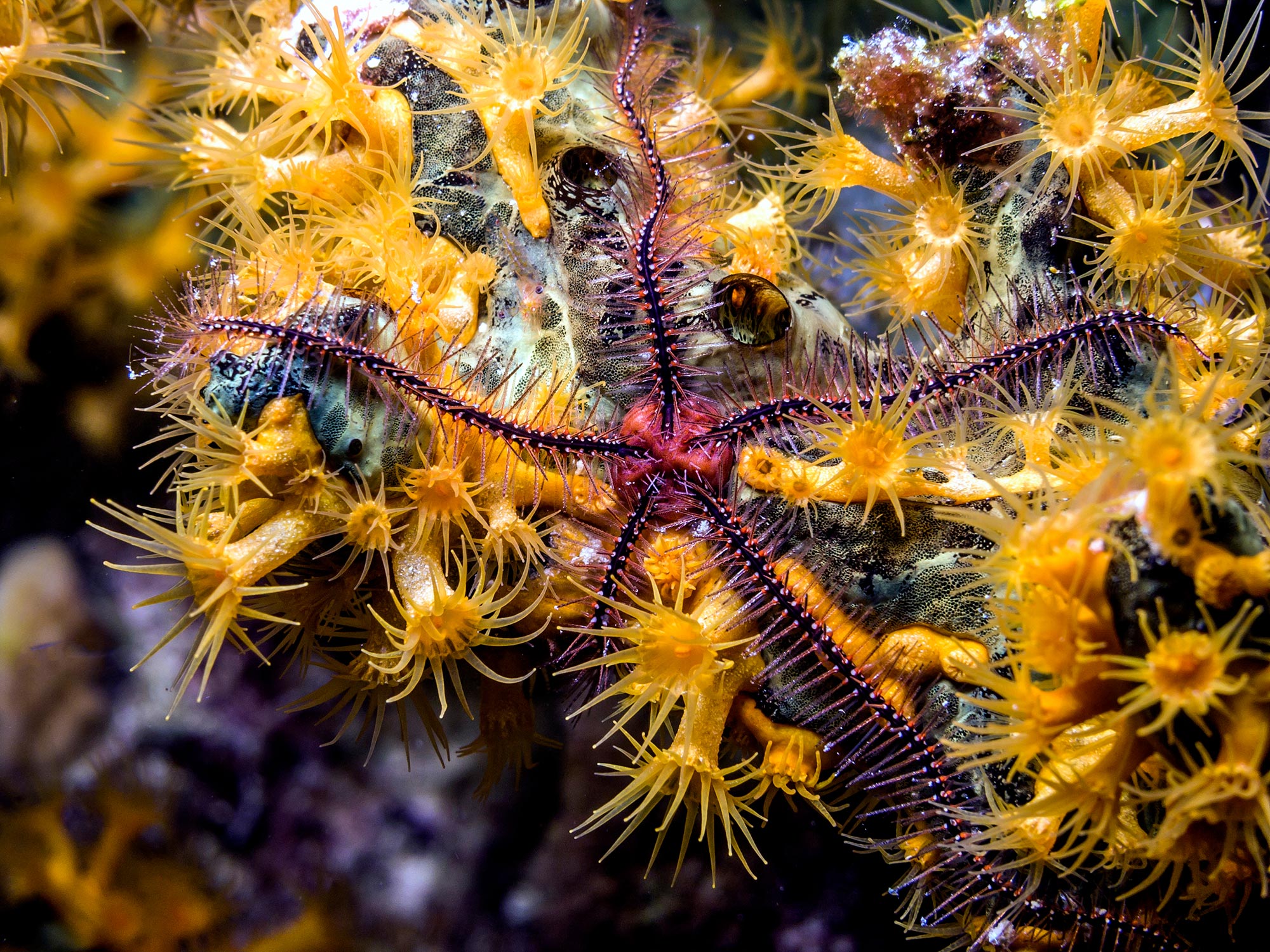
A world-first study conducted by the Museums Victoria Research Institute has discovered that marine life in the cold, dark, and pressurized depths of the ocean is far more globally interconnected than scientists had previously believed.
A groundbreaking study led by the Museums Victoria Research Institute has uncovered a surprising truth about the deep sea: marine life at extreme depths is far more interconnected across the globe than once believed.
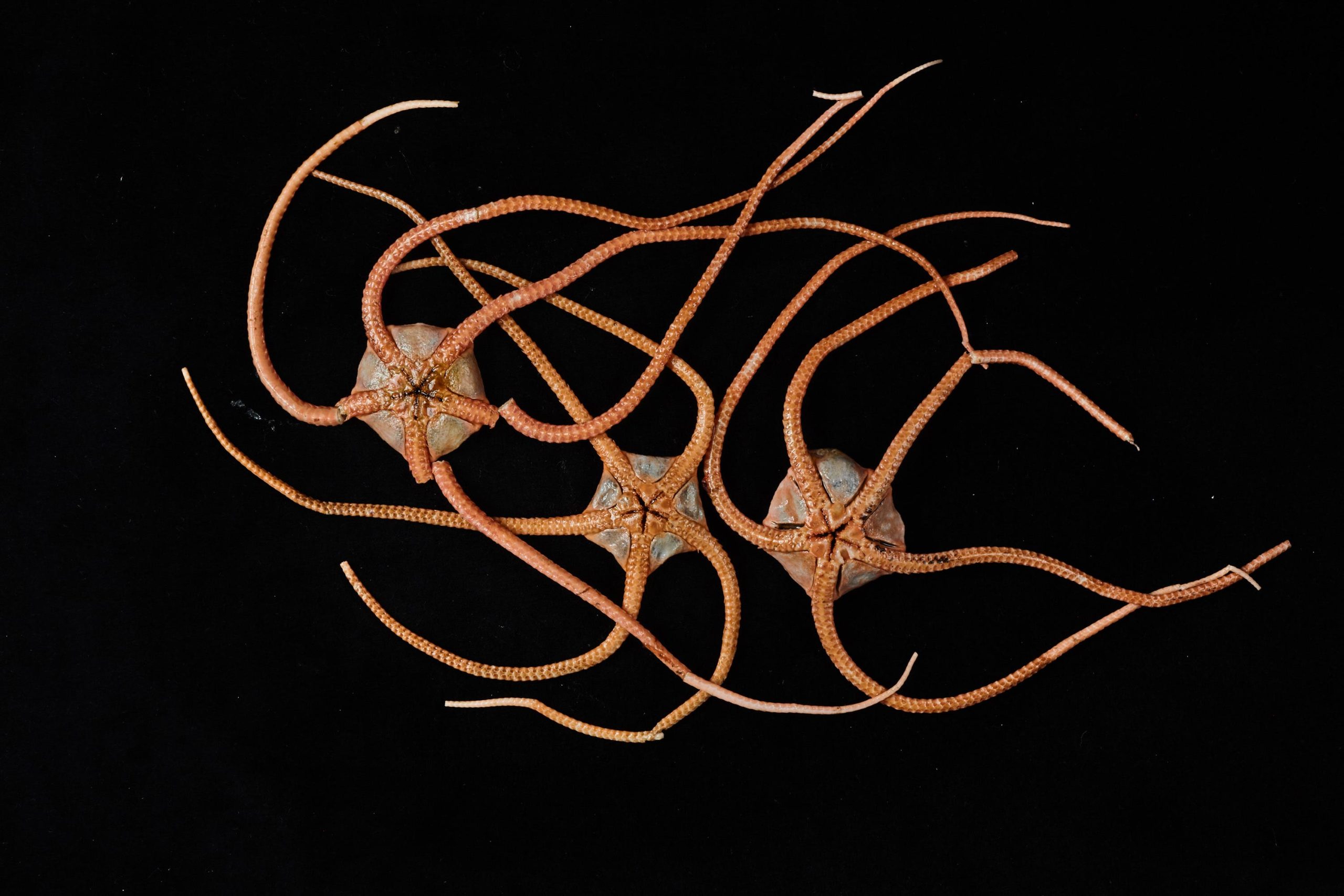
Published in the journal Nature, the study presents the most detailed map to date of where brittle stars (Ophiuroidea) are found and how they have evolved. These spiny, ancient animals live in every ocean, from tropical shallows to the icy depths of the abyss, stretching from the equator to the polar regions.
Using DNA from thousands of brittle star specimens gathered during hundreds of research expeditions and housed in natural history museums worldwide, scientists discovered that these creatures have crossed entire oceans over millions of years. Their gradual migrations have formed invisible links between ecosystems as far apart as Iceland and Tasmania.
This extraordinary dataset provides an entirely new perspective on the evolution and global spread of deep-sea life over the last 100 million years.
The Deep Sea: A Living Superhighway
“You might think of the deep sea as remote and isolated, but for many animals on the seafloor, it’s actually a connected superhighway,” said Dr Tim O’Hara, Senior Curator of Marine Invertebrates at Museums Victoria Research Institute and lead author of the study.
“Over long timescales, deep-sea species have expanded their ranges by thousands of kilometers. This connectivity is a global phenomenon that’s gone unnoticed, until now.”
This is the most comprehensive study of its kind, using DNA from 2,699 brittle star specimens housed in 48 natural history museums across the globe. These animals which have lived on Earth for over 480 million years are found on all ocean floors, including at depths of more than 3,500 meters.
Unlike marine life in shallow waters, which is restricted by temperature boundaries, deep-sea environments are more stable and allow species to disperse over vast distances. Many brittle stars produce yolk-rich larvae that can drift on deep ocean currents for extended periods, giving them the ability to colonize far-flung regions.
“These animals don’t have fins or wings, but they’ve still managed to span entire oceans,” said Dr O’Hara. “The secret lies in their biology – their larvae can survive for a long time in cold water, hitching a ride on slow-moving deep-sea currents.”
Surprising Evolutionary Connections
The research shows that deep-sea communities, particularly at temperate latitudes, are more closely related across regions than their shallow-water counterparts. For example, marine animals found off southern Australia share close evolutionary links with those in the North Atlantic, on the other side of the planet.
Yet, the deep sea is not uniform. While species can spread widely, factors such as extinction events, environmental change, and geography have created a patchwork of biodiversity across the seafloor.
“It’s a paradox. The deep sea is highly connected, but also incredibly fragile,” said Dr O’Hara. “Understanding how life is distributed and moves through this vast environment is essential if we want to protect it, especially as threats from deep-sea mining and climate change increase.”
This research not only transforms our understanding of deep-sea evolution but also highlights the enduring scientific value of museum collections. The DNA analyzed in this study came from specimens collected during 332 research voyages, many undertaken decades ago, and preserved in institutions including Museums Victoria’s Research Institute.
“This is science on a global scale,” said Lynley Crosswell, CEO and Director of Museums Victoria. “It demonstrates how museums, through international collaboration and the preservation of biodiversity specimens, can unlock new knowledge about our planet’s past and help shape its future.”
Reference: “Spatiotemporal faunal connectivity across global sea floors” by Timothy D. O’Hara, Andrew F. Hugall, Margaret L. Haines, Alexandra A.-T. Weber, Angelina Eichsteller, Martin I. Brogger, Marc Eléaume, Toshihiko Fujita, Jon A. Kongsrud, Pedro Martinez Arbizu, Sadie Mills, Jennifer M. Olbers, Gustav Paulay, Fran Ramil, Sarah Samadi, Chester J. Sands, Javier Sellanes, Francisco A. Solis-Marin and Adnan Moussalli, 23 July 2025, Nature.
DOI: 10.1038/s41586-025-09307-1
This world-leading project was made possible through partnerships with more than 40 institutions globally, spanning natural history museums, universities, and marine research organizations, including support via grants of sea time on RV Investigator from Australia’s CSIRO Marine National Facility.
Never miss a breakthrough: Join the SciTechDaily newsletter.
Follow us on Google and Google News.
2 Comments
All the more reason to halt the economics-driven enthusiasm for deep ocean mining, which will strongly interfere with the long-evolved evolution and inter-support of species which under gird the planetary food web. Ignorance is no excuse for indeterminate destruction of what is living and most important to study.
‘…, which will strongly interfere with the long-evolved evolution and inter-support of species which under gird the planetary food web.”
Where is the evidence for your claim? Without evidence, it is only unsupported speculation.