
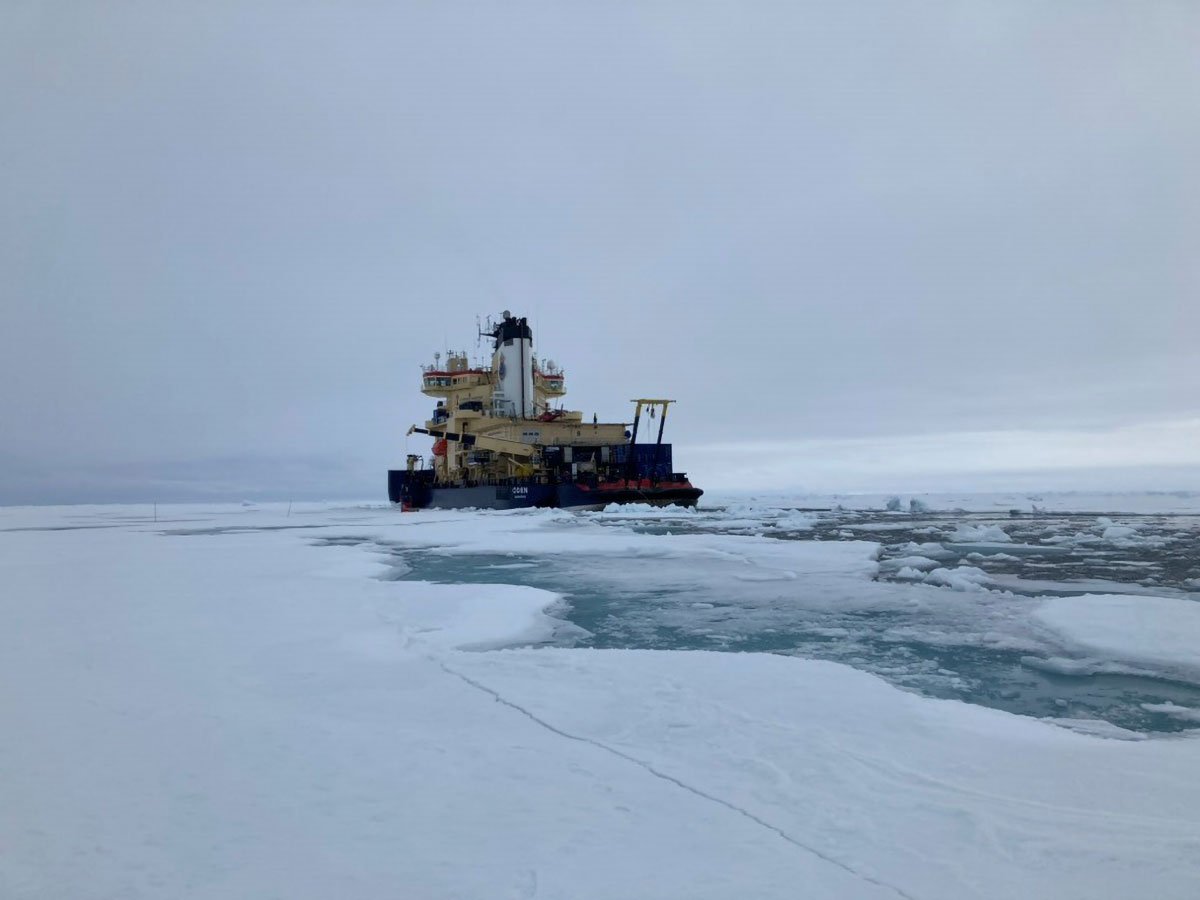
As Arctic sea ice melts, new life may emerge from the thaw. Researchers have discovered that bacteria beneath and along the melting ice are converting nitrogen gas into a form that fuels algae.
The rapid loss of Arctic sea ice is widely seen as a catastrophe. Yet, in an unexpected twist, the melting ice may actually boost the foundation of Arctic marine ecosystems: algae.
Algae serve as the essential food source for most ocean life, but their growth depends on nitrogen, a nutrient that is scarce in the Arctic’s frigid waters. Now, a new international study led by the University of Copenhagen suggests that future levels of nitrogen in the Arctic Ocean may be higher than previously estimated. This finding could have major implications for marine ecosystems in the High North and for the global carbon balance.
For the first time, scientists have identified nitrogen fixation occurring beneath the Arctic’s sea ice, even in its most central regions. This process involves certain bacteria that transform nitrogen gas (N2) dissolved in seawater into ammonium. The ammonium supports bacterial growth while also nourishing algae and the many organisms that depend on them throughout the marine food web.
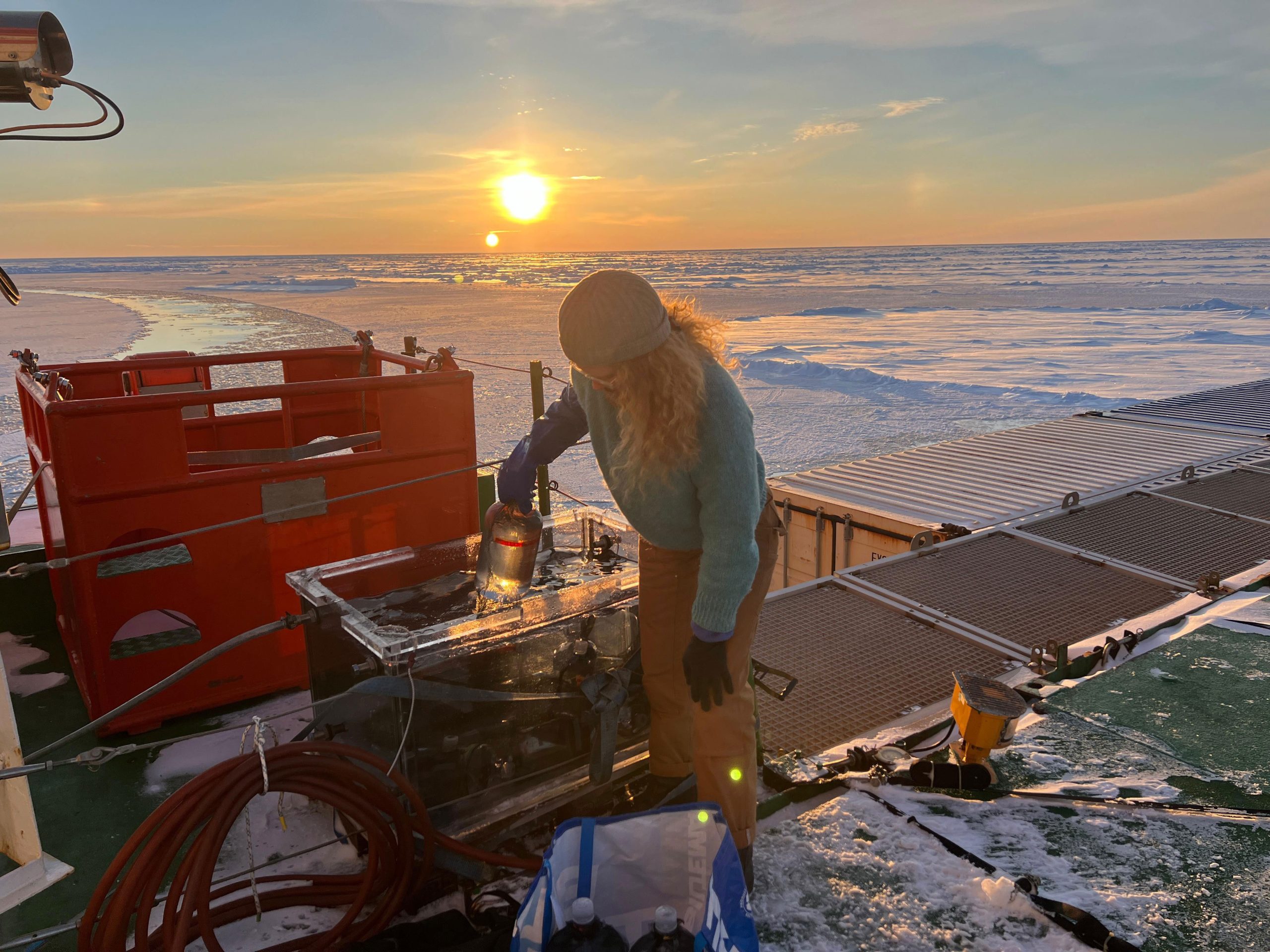
“Until now, it was believed that nitrogen fixation could not take place under the sea ice because it was assumed that the living conditions for the organisms that perform nitrogen fixation were too poor. We were wrong,” says Lisa W. von Friesen, lead author of the study and former PhD student at the Department of Biology.
Less ice could mean more algae
Whereas in most other oceans it is cyanobacteria that perform nitrogen fixation, the study shows that in the Central Arctic Ocean, it is a completely different type of bacteria that converts nitrogen: the so-called non-cyanobacteria.
The researchers have measured the highest rates of nitrogen fixation at the ice edge, where the ice melts most actively. Although the bacteria can perform nitrogen fixation under the ice, it is easier for them to do so along the ice edge. So as the sea ice retreats and the area of melting expands, larger amounts of nitrogen are expected to be added through nitrogen fixation.
“In other words, the amount of available nitrogen in the Arctic Ocean has likely been underestimated, both today and for future projections. This could mean that the potential for algae production has also been underestimated as climate change continues to reduce the sea ice cover,” says Lisa W. von Friesen.
“Because algae are the primary food source for small animals such as planktonic crustaceans, which in turn are eaten by small fish, more algae can end up affecting the entire food chain,” adds Lisa W. von Friesen.
May affect the ocean’s CO2 uptake
In addition, the newly discovered source of nitrogen could also be beneficial for the uptake of CO2 – at least regionally. More algae make the ocean better at absorbing CO2.
“For the climate and the environment, this is likely good news. If algae production increases, the Arctic Ocean will absorb more CO2 because more CO2 will be bound in algae biomass. But biological systems are very complex, so it is hard to make firm predictions, because other mechanisms may pull in the opposite direction,” says Lasse Riemann, professor at the Department of Biology and senior author of the study.
Nevertheless, the researchers believe that nitrogen fixation should be included in forecasts for the Arctic Ocean.
“We do not yet know whether the net effect will be beneficial for the climate. But it is clear that we should include an important process such as nitrogen fixation in the equation when we try to predict what will happen to the Arctic Ocean in the coming decades as sea ice declines,” says Lasse Riemann.
Reference: “Nitrogen fixation under declining Arctic sea ice” by Lisa W. von Friesen, Hanna Farnelid, Wilken-Jon von Appen, Mar Benavides, Olivier Grosso, Christien P. Laber, Johanna Schüttler, Marcus Sundbom, Sinhué Torres-Valdés, Stefan Bertilsson, Ilka Peeken, Pauline Snoeijs-Leijonmalm and Lasse Riemann, 20 October 2025, Communications Earth & Environment.
DOI: 10.1038/s43247-025-02782-4
Never miss a breakthrough: Join the SciTechDaily newsletter.
Follow us on Google and Google News.
2 Comments
O I see,
Let’s Heal, You know! And
Let’s simulate ‘Self Navigator-“Nautical Neucler Vessel’
Man! You all are Such that
Just in
Arctic melts, the East Coast sinks, the marine life blooms. Sounds like a bargain to me.