
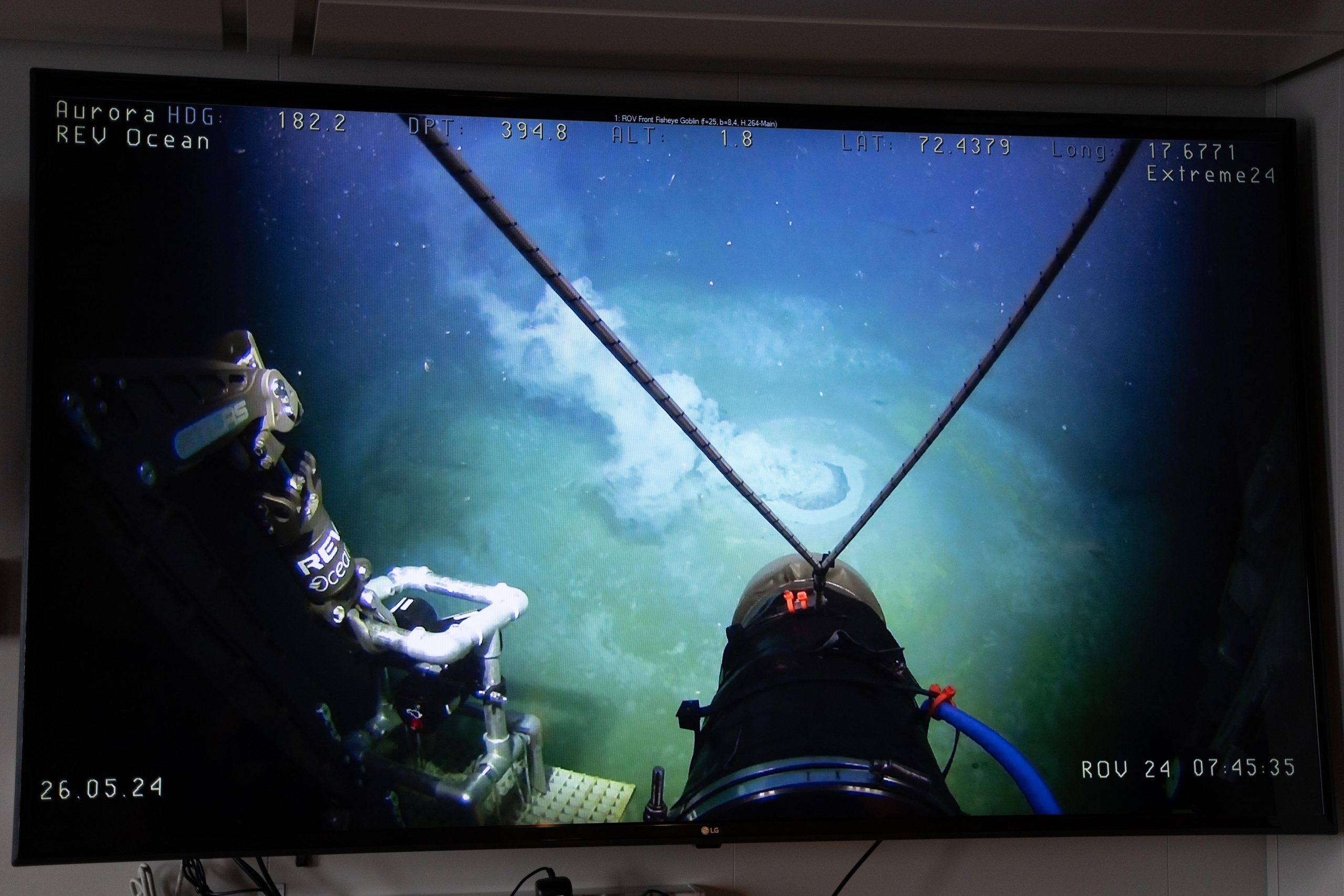
One would think that a volcano was not the most hospitable place for living organisms. However, the Borealis Mud Volcano, at 400 m water depth, acts as a sanctuary for a number of marine species.
The Borealis Mud Volcano, an underwater volcano in the Barents Sea, was first discovered in 2023 by researchers at UiT The Arctic University of Norway. The discovery gained significant global attention, with images of the volcano widely circulated. Now, in collaboration with REV Ocean, UiT researchers have published the findings of an interdisciplinary study, revealing that Borealis Mud Volcano serves as a vital ecological refuge for various marine species in the Barents Sea.
While some areas of the crater floor appear inhospitable to many organisms, the carbonate crusts—minerals formed over thousands of years—provide a solid substrate that supports marine life. These crusts create a habitat for species such as anemones, serpulid worms, demosponges, and sparse colonies of octocorals.

“Important for maintaining biodiversity”
In addition, the carbonates offer both shelter and feeding opportunities, playing an important role in sustaining the local fish populations. The researchers observed large schools of commercially valuable species like saithe and various demersal species such as spotted wolffish, cod, four-bearded rockling, and redfish (Sebastes spp.) clustering around the jagged carbonate formations.
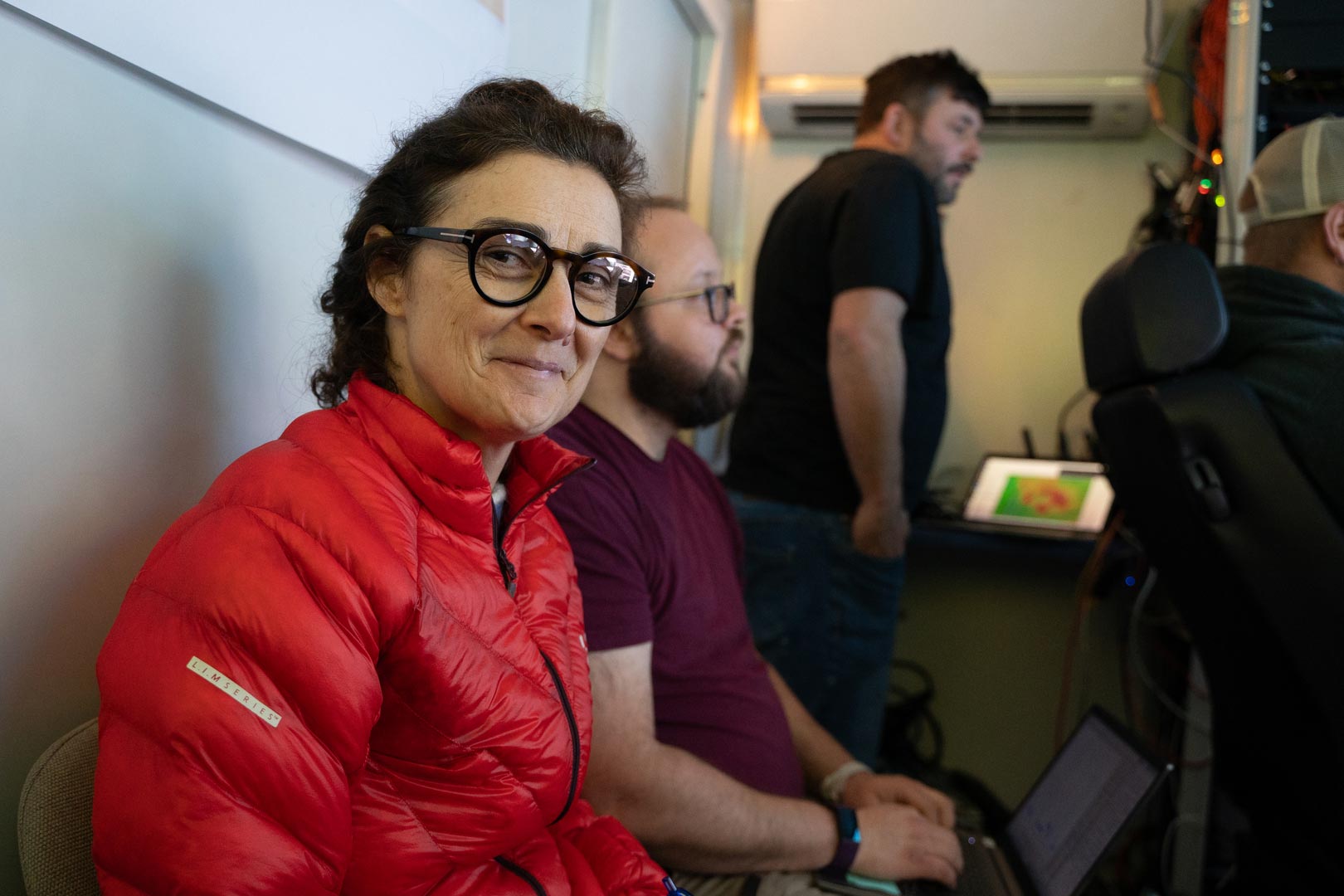
“The redfish, for instance, is red-listed, and we don’t know the consequences if it would disappear. Borealis is an oasis where different species can thrive and flourish. Thus, preserving ecosystems such as the Borealis Mud Volcano is essential for maintaining biodiversity and understanding the interactions between geology, geochemistry, and biology in marine environments. We need that understanding, among other things, considering that the Arctic seabed plays an important role in oil and gas extraction activities and the emerging deep-sea mining industry,” says Professor Giuliana Panieri, lead author of the study recently published in Nature Communications.
Methan has leaked out, probably for thousands of years
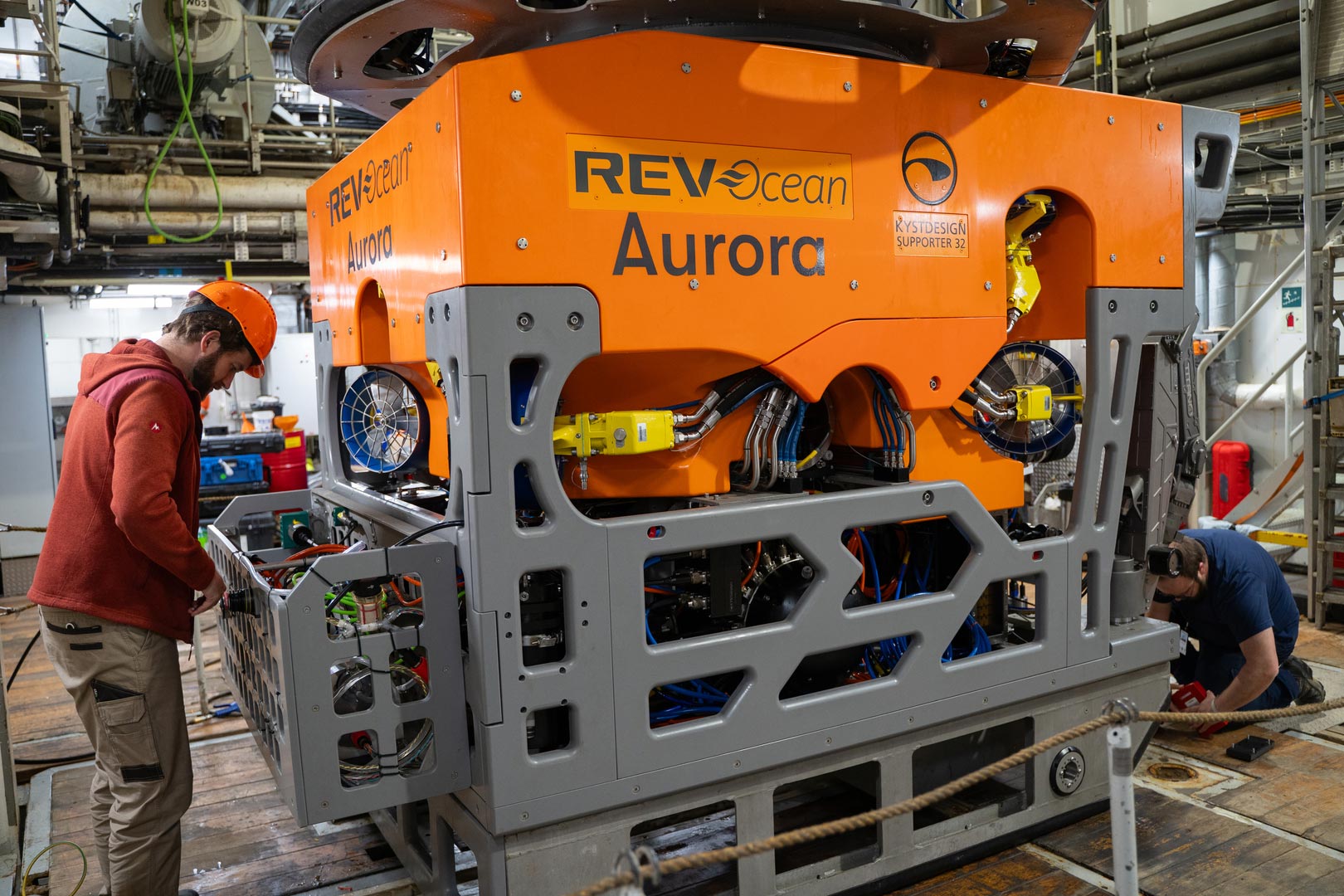
On board the research vessel Kronprins Haakon in May 2024, researchers confirmed the previous discoveries. Using the remotely operated vehicle, ROV Aurora, the research team was able to make a series of observations of the underwater volcano. Among other things, they saw that it warms the surroundings to 11.5 degrees Celsius, while the seabed usually has a temperature of around 4 degrees Celsius.

The researchers also found sediments containing extinct, microscopic marine organisms from up to 2.5 million years ago and that small “mud cones” in the volcanic system are emitting vigorous methane-rich liquids. The fact that the seabed around the volcano is also characterized by extensive carbonate deposits indicates that methane has leaked out, probably for thousands of years.
“The Borealis Mud Volcano is a unique geological and ecological phenomenon that provides a rare insight into the complex interactions between geological processes and marine ecosystems. It is important to preserve these unique habitats, which play a crucial role in maintaining marine biodiversity,” says Panieri.
She reminds that, in the longer term, Norway has committed to the 30×30 target (protecting 30 % of land and sea by 2030) for spatial conservation measures of representative marine ecosystems, including in the deep sea. Protecting large areas of the deep-sea floor along the Norwegian margin may result in seep refugia acting as source populations for wider recolonization and restoration of benthic biological communities.
“The new findings show the power of international cooperation and how such cooperation can contribute to increasing our understanding of the world’s oceans,” says Panieri.
Reference: “Sanctuary for vulnerable Arctic species at the Borealis Mud Volcano” by Giuliana Panieri, Claudio Argentino, Alessandra Savini, Bénédicte Ferré, Fereshteh Hemmateenejad, Mari H. Eilertsen, Rune Mattingsdal, Sofia P. Ramalho, Tor Eidvin, Sarah Youngs, Beckett Casper Colson, Anna Pauline Miranda Michel, Jason Alexander Kapit, Denise Swanborn, Alex D. Rogers, Ines Barrenechea Angeles, Stéphane Polteau, Dimitri Kalenitchenko, Stefan Buenz and Adriano Mazzini, 27 January 2025, Nature Communications.
DOI: 10.1038/s41467-024-55712-x
Funding: UiT The Arctic University of Norway, Norwegian Research Council, The Norwegian Offshore Directorate, REV Ocean, Woods Hole Oceanographic Institution, La Rochelle University
Never miss a breakthrough: Join the SciTechDaily newsletter.
Follow us on Google and Google News.