
Close Menu
    Facebook X (Twitter) Instagram
    SciTechDaily
    • Biology
    • Chemistry
    • Earth
    • Health
    • Physics
    • Science
    • Space
    • Technology
    Facebook X (Twitter) Pinterest YouTube RSS
    SciTechDaily
    Home»Space»Deep Sky Discoveries: The Summer Triangle’s Hidden Treasures
    Space

    Deep Sky Discoveries: The Summer Triangle’s Hidden Treasures

    By NASAAugust 22, 2024No Comments6 Mins Read
    Facebook Twitter Pinterest Telegram LinkedIn WhatsApp Email Reddit
    Share
    Facebook Twitter LinkedIn Pinterest Telegram Email Reddit
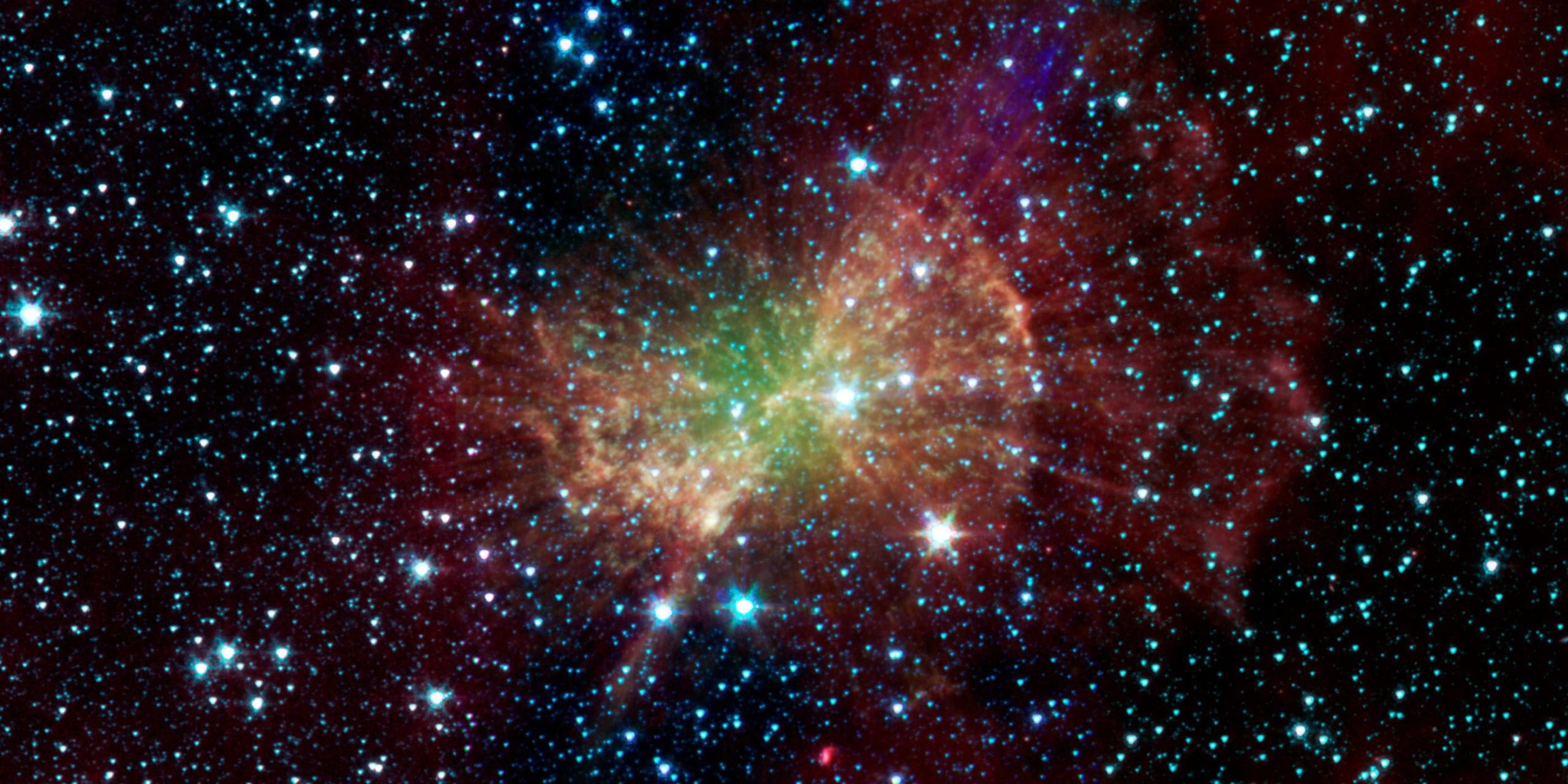
    Dumbbell Nebula (Messier 27)
    The ‘Dumbbell nebula,’ also known as Messier 27, pumps out infrared light in this image from NASA’s Spitzer Space Telescope. Planetary nebulae are now known to be the remains of stars that once looked a lot like our sun. Credit: NASA/JPL-Caltech/Harvard-Smithsonian CfA

    During August, the Summer Triangle asterism becomes a prominent feature in the Northern Hemisphere’s night sky.

    Observers can enhance their experience by using a blanket or a chair to comfortably spot constellations like Lyra, Cygnus, and Aquila, along with hidden ones such as Vulpecula, Sagitta, and Delphinus. Notably, Vulpecula houses the large Dumbbell Nebula, Sagitta contains a unique globular cluster, and Delphinus marks the approach of faint water constellations.

    Exploring the Summer Triangle

    August skies bring the lovely Summer Triangle asterism into prime position after nightfall for observers in the Northern Hemisphere. Its position high in the sky may make it difficult for some to observe its member stars comfortably, since looking straight up while standing can be hard on one’s neck!

    While that isn’t much of a problem for those that just want to quickly spot its brightest stars and member constellations, this difficulty can prevent folks from seeing some of the lesser-known and dimmer star patterns scattered around its informal borders.

    The solution? Lie down on the ground with a comfortable blanket or mat or grab a lawn or gravity chair and sit luxuriously while facing up. You’ll quickly spot the major constellations about the Summer Triangle’s three corner stars: Lyra with bright star Vega, Cygnus with brilliant star Deneb, and Aquila with its blazing star, Altair.

    As you get comfortable and your eyes adjust, you’ll soon find yourself able to spot a few constellations hidden in plain sight in the region around the Summer Triangle: Vulpecula the Fox, Sagitta the Arrow, and Delphinus the Dolphin! You could call these the Summer Triangle’s “hidden treasures” – and they are hidden in plain sight for those who know where to look!
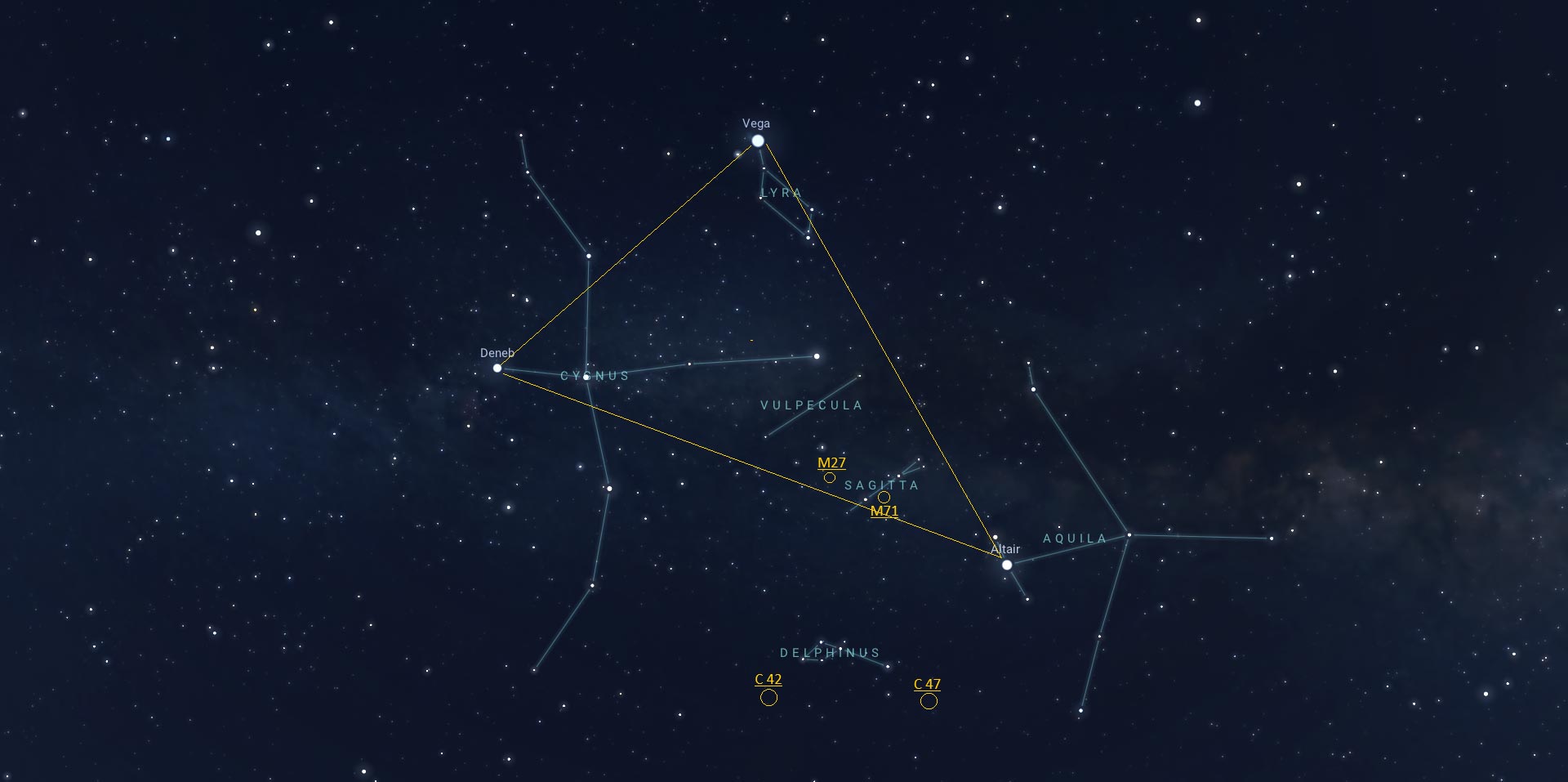
    Summer Triangle Sky Chart
    Mid-August offers views of the Summer Triangle with stars Deneb, Vega and Altair in the constellations Cygnus, Lyra, Aquila respectively. Constellations Vulpecula, Sagitta, and Delphinus are also visible, along with some of jewels – namely Messier 27, Messier 71, Caldwell 42 and Caldwell 47. Credit: Stellarium Web

    Hidden Treasures of the Night Sky

    Vulpecula the Fox is located near the middle of the Summer Triangle, and is relatively small, like its namesake. Despite its size, it features the largest planetary nebula in our skies: M27, aka the Dumbbell Nebula! It’s visible in binoculars as a fuzzy “star” and when seen through telescopes, its distinctive shape can be observed more readily – especially with larger telescopes.

    Planetary nebulae, named such because their round fuzzy appearances were initially thought to resemble the disc of a planet by early telescopic observers, form when stars similar to our Sun begin to die. The star will expand into a massive red giant, and its gases drift off into space, forming a nebula. Eventually, the star collapses into a white dwarf – as seen with M27 – and eventually, the colorful shell of gases will dissipate throughout the galaxy, leaving behind a solitary, tiny, dense, white dwarf star. You are getting a peek into our Sun’s far-distant future when you observe this object!
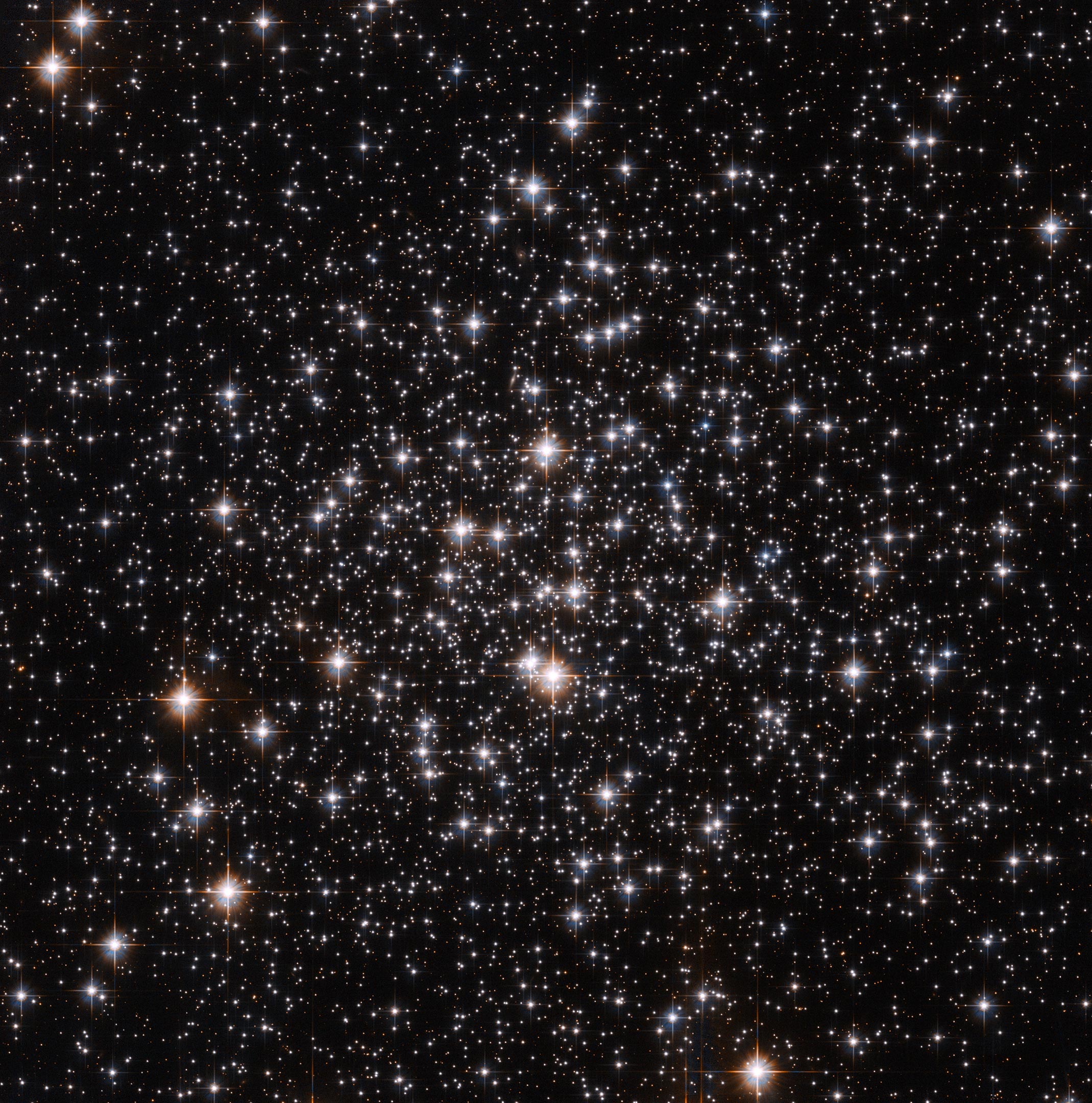
    Globular Cluster Messier 71
    This spectacular NASA/ESA Hubble Space Telescope image shows a bright scattering of stars in the small constellation of Sagitta (the Arrow). This is the centre of the globular cluster Messier 71, a great ball of ancient stars on the edge of our galaxy around 13 000 light-years from Earth. M71 is around 27 light-years across. Globular clusters are like galactic suburbs, pockets of stars that exist on the edge of major galaxies. These clusters are tightly bound together by their gravitational attraction, hence their spherical shape and their name: globulus means “little sphere” in Latin. Around 150 such globular clusters are known to exist around our Milky Way, each one of them containing several hundred thousand stars. Messier 71 has been known for a long time, having been first spotted in the mid eighteenth century by Swiss astronomer Jean-Philippe de Cheseaux. Cheseaux discovered a number of nebulae in his career, and also spent much time studying religion: one posthumously published work attempted to derive the exact date of Christ’s crucifixion from astronomical events noted in the Bible. Despite being a familiar object, Messier 71’s precise nature was disputed until recently. Was it simply an open cluster, a loosely bound group of stars? This was for many years the dominant view. But in the 1970s, astronomers came to the view that it is in fact a relatively sparse globular cluster. The stars in Messier 71, as is usual in such clusters, are relatively old, at around 9 to 10 billion years, and consequently are low in elements other than hydrogen and helium. This picture was created from images taken with the Wide Field Channel of the Advanced Camera for Surveys on Hubble. It is a combination of images taken through yellow (F606W — coloured blue) and near-infrared (F814W — coloured red) filters. The exposure times were 304 s and 324 s respectively. The field of view is about 3.4 arcminutes across. Credit: ESA/Hubble and NASA

    The Mysteries of Sagitta the Arrow

    Sagitta the Arrow is even smaller than Vulpecula – it’s the third smallest constellation in the sky! Located between the stars of Vulpecula and Aquila the Eagle, Sagitta’s stars resemble its namesake arrow.

    It too contains an interesting deep-sky object: M71, an unusually small and young globular cluster whose lack of a strong central core has long confused and intrigued astronomers. Your own views very likely won’t be as sharp or close as this. However, this photo does show the cluster’s lack of a bright, concentrated core, which led astronomers until fairly recently to classify this unusual cluster as an “open cluster” rather than as a “globular cluster.”

    Studies in the 1970s proved it to be a globular cluster after all – though an unusually young and small one! It’s visible in binoculars, and a larger telescope will enable you to separate its stars a bit more easily than most globulars; you’ll certainly see why it was thought to be an open cluster!

    Delightful Delphinus and Stargazing Tips

    Delicate Delphinus the Dolphin appears to dive in and out of the Milky Way near Aquilla and Sagitta! Many stargazers identify Delphinus as a herald of the fainter water constellations, rising in the east after sunset as fall approaches. The starry dolphin appears to leap out of the great celestial ocean, announcing the arrival of more wonderful sights later in the evening. With a large telescope and dark skies, you can pick out globular clusters Caldwell 42 and Caldwell 47.

    Want to hunt for more treasures? You’ll need a treasure map, and the Night Sky Network’s “Trip Around the Triangle” handout is the perfect guide for your quest!

    Never miss a breakthrough: Join the SciTechDaily newsletter.
    Follow us on Google and Google News.

    Astronomy NASA
    Share. Facebook Twitter Pinterest LinkedIn Email Reddit

    Related Articles

    Chunk of Moon Rock? NASA Tracks Asteroid 2024 PT5 During Close Earth Flyby

    Webb’s “Weird” Discovery: Meet the Galaxy Where Gas Outshines the Stars

    Don’t Miss the Comet: Witness Tsuchinshan-ATLAS Before It Disappears for 80,000 Years

    Webb Telescope’s Encounter With a Time-Bending Supernova: Rewriting Cosmic Rules

    Sun Unleashes Monumental X9.0 Solar Flare – Most Intense in 7 Years – Captured by NASA Observatory

    Skywatching Magic: October’s Spectacular Comet Lights Up the Night Sky

    Monster X7.1 Solar Flare Unleashed: Intense Blast Captured by NASA’s Solar Dynamics Observatory

    Astronomers Baffled by Black Hole Jets Igniting Star Explosions

    Webb’s Unprecedented Discovery: Potential Missing Link to First Stars in the Universe

    Leave A Reply Cancel Reply

    • Facebook
    • Twitter
    • Pinterest
    • YouTube

    Don't Miss a Discovery

    Subscribe for the Latest in Science & Tech!

    Trending News

    Scientists May Have Found the Key to Jupiter and Saturn’s Moon Mystery

    Scientists Uncover Brain Changes That Link Pain to Depression

    Saunas May Do More Than Raise Body Temperature – They Activate Your Immune System

    Exercise in a Pill? Metformin Shows Surprising Effects in Cancer Patients

    Hidden Oceans of Magma Could Be Protecting Alien Life

    New Study Challenges Alzheimer’s Theories: It’s Not Just About Plaques

    Artificial Sweeteners May Harm Future Generations, Study Suggests

    Splashdown! NASA Artemis II Returns From Record-Breaking Moon Mission

    Follow SciTechDaily
    • Facebook
    • Twitter
    • YouTube
    • Pinterest
    • Newsletter
    • RSS
    SciTech News
    • Biology News
    • Chemistry News
    • Earth News
    • Health News
    • Physics News
    • Science News
    • Space News
    • Technology News
    Recent Posts
    • Ancient DNA Reveals Irish Goats Have a 3,000-Year-Old Lineage Still Alive Today
    • Historians Reveal Secrets of the Strange Hat Wars That Shook Early Modern England
    • “A Plague Is Upon Us”: The Mass Death That Changed an Ancient City Forever
    • This Strange Material Can Turn Superconductivity on and off Like a Switch
    • Scientists Discover Game-Changing New Way To Treat High Cholesterol
    Copyright © 1998 - 2026 SciTechDaily. All Rights Reserved.
    • Science News
    • About
    • Contact
    • Editorial Board
    • Privacy Policy
    • Terms of Use

    Type above and press Enter to search. Press Esc to cancel.