
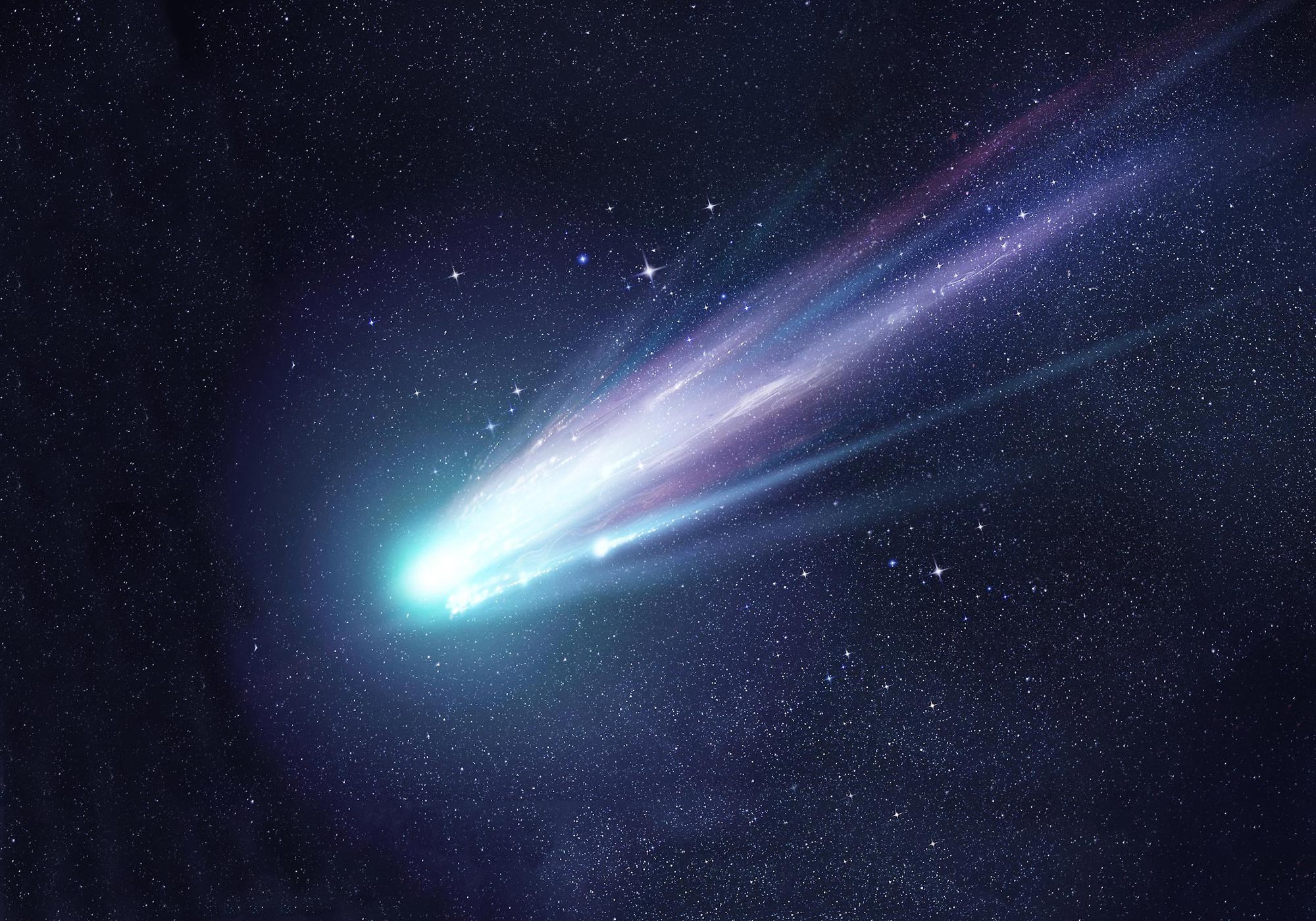
What are some skywatching highlights in October 2024?
A potentially bright comet (C/2023 A3) to look for after mid-month, good opportunities to spy the ocean world NASA’s launching to, and the monthly dance of four planets with the Moon.
Comets: Unpredictable, But Irresistible
A new comet is passing through the inner solar system! Time will tell if it’s the brightest of the year, once it appears in twilight after about October 14.
Skywatching Highlights
- All month – Planet visibility report: Look for Venus low in the west just after sunset; Saturn can be seen toward the southeast as soon as it gets dark; Mars rises around midnight; and Jupiter rises in the first half of the night (rising earlier as the month goes on).
- October 2 – New moon
- October 11 – Europa is easily observable to one side of Jupiter by itself this morning using binoculars.
- October 14-31 – Comet C/2023 A3 (Tsuchinshan-ATLAS) becomes visible low in the west following sunset. If the comet’s tail is well-illuminated by sunlight, it could be visible to the unaided eye. The first week and a half (October 14-24) is the best time to observe, using binoculars or a small telescope.
- October 13-14 – After dark both nights, look for the nearly full Moon with Saturn toward the southeast.
- October 17 – Full moon
- October 20 – The Moon rises near Jupiter, with the giant planet looking extremely bright. You should be able to find them low in the east after around 10 pm.
- October 23-24 – Early risers will be able to spot Mars together with the Moon, high overhead in the south both mornings.
- October 25 – Europa is easily observable to one side of Jupiter by itself this morning using binoculars.

Video Transcript
What’s Up for October?
This month’s viewing tips for Venus, Saturn, Mars and Jupiter. When’s the best time to observe the destination of NASA’s next deep space mission? And how you can see a (potentially bright) comet this month?
And watch our video ’till the end for photos of highlights from last month’s skies.
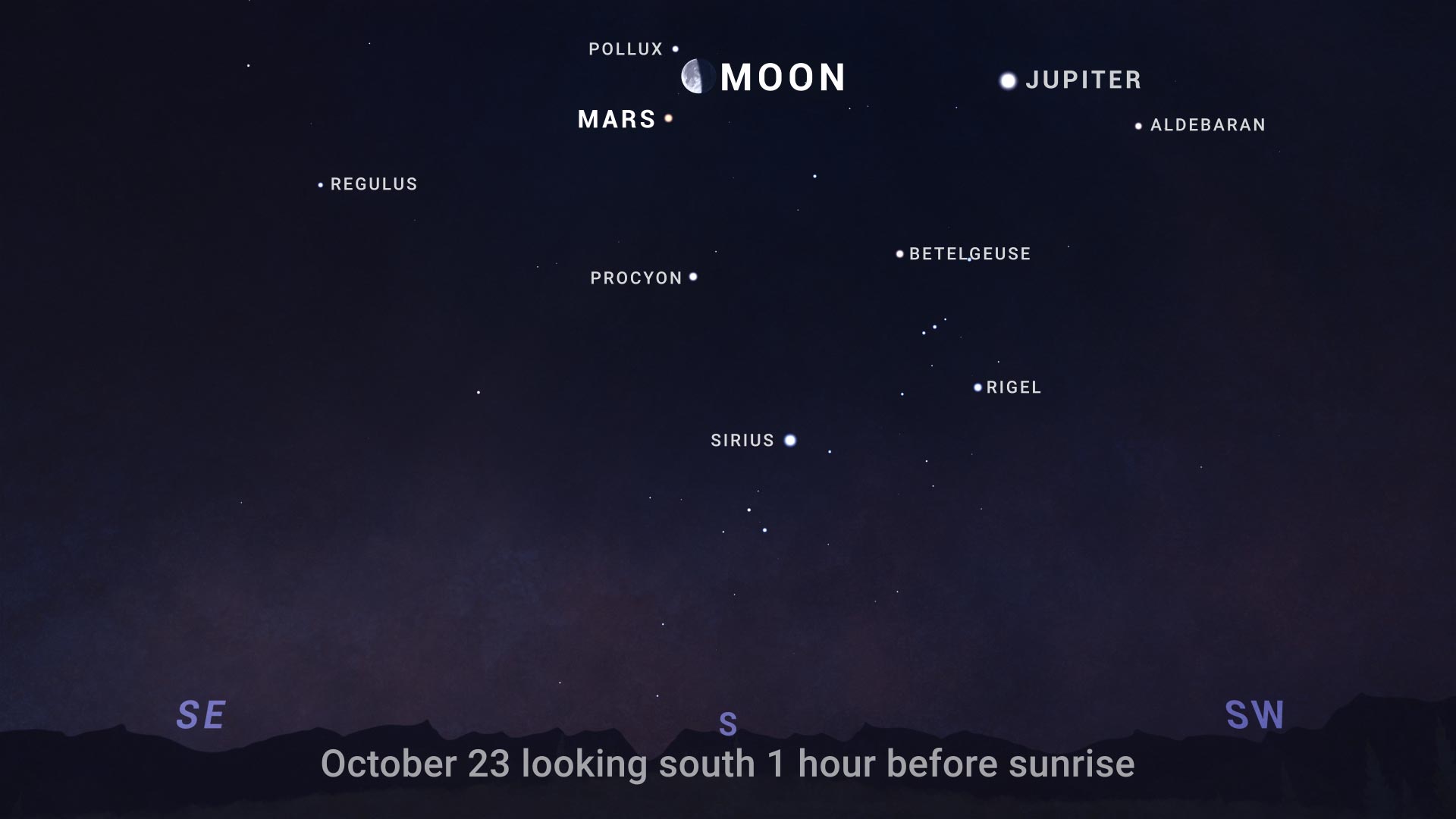
Up first, we look at the visibility of the planets in October. Look for Venus low in the west just after sunset. It’s setting by the time the sky is fully dark. Saturn is visible toward the southeast as soon as it gets dark out, and sets by dawn. Mars rises around midnight all month. By dawn it has climbed quite high into the south-southeastern sky, appearing together with Jupiter. Now, Jupiter is rising in the first half of the night. In early October you’ll find it high in the south as dawn approaches, and later in the month it’s progressed farther over to the west before sunrise.
And, speaking of Jupiter, NASA plans to launch its latest solar system exploration mission to one of the giant planet’s moons this month. Europa Clipper is slated to blast off as early as October 10th. It’s thought that Europa holds an enormous ocean of salty liquid water beneath its icy surface. That makes this the first mission dedicated to studying an ocean world beyond Earth. Europa Clipper is designed to help us understand whether this icy moon could support some form of life, and along the way it’ll teach us more about the conditions that make a world habitable.
Now, if you’ve ever pointed binoculars or a telescope at Jupiter, you know the thrill of seeing the little star-like points of light next to it that are its four large moons, which were first observed by Galileo in 1610.
There are two mornings in October, the 11th and the 25th, when you can most easily observe Europa. These are times when the moon is at its greatest separation from the planet as seen from here on Earth, and it’s all by itself to one side of Jupiter. So be sure to have your own peek at Jupiter’s moon Europa this month, as a new NASA mission begins its journey to explore an ocean in the sky.
Now a look at Moon and planet pair-ups for October. On the 13th and 14th after dark, look for the nearly full Moon with Saturn toward the southeast. Then on the evening of October 20th, the Moon rises near Jupiter, with the giant planet looking extremely bright. You should be able to find them low in the east after around 10 pm that night. Then, in the morning of October 23rd and 24th, early risers will be able to spot Mars together with the Moon, high overhead in the south.
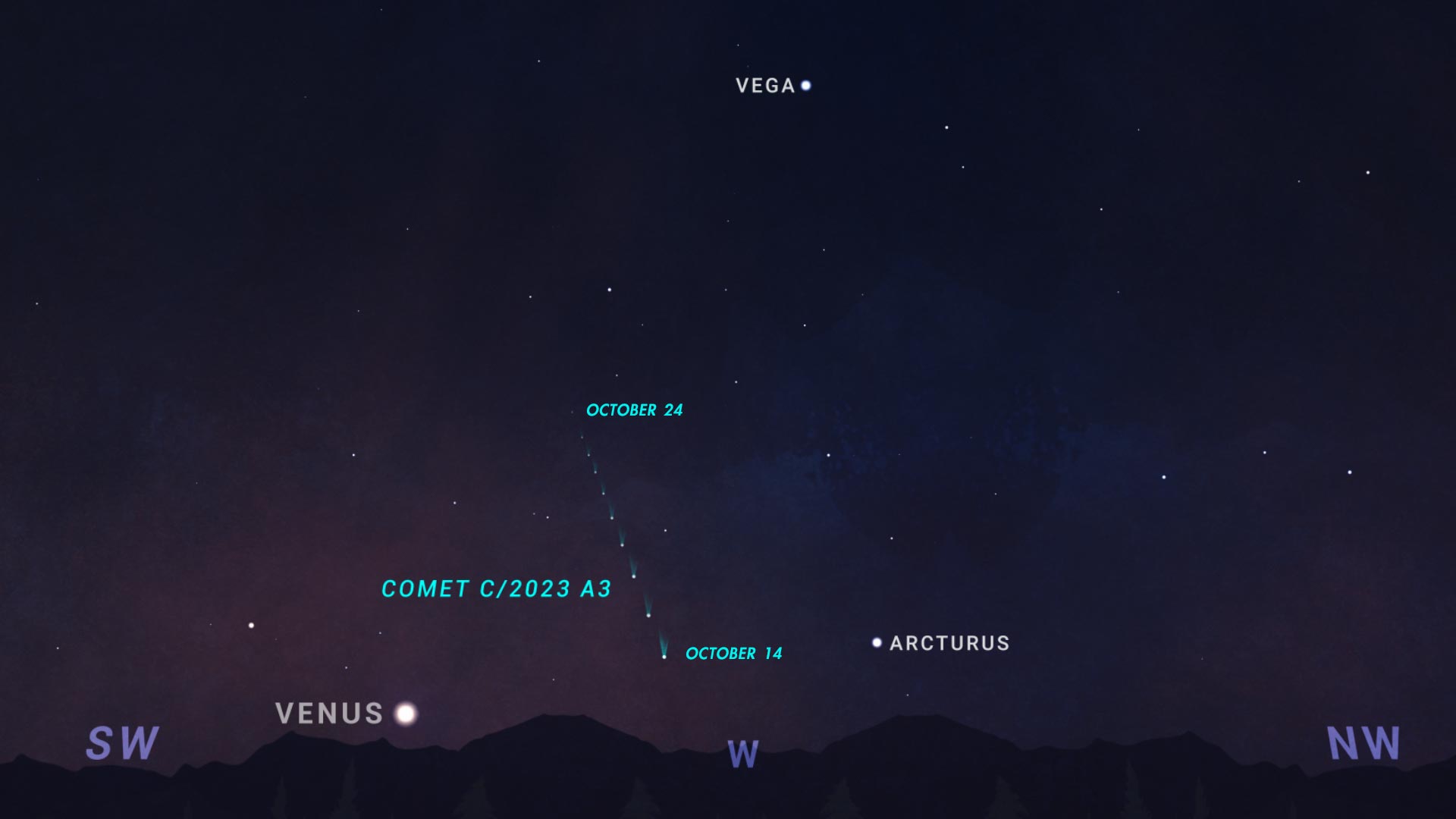
October offers a chance to observe what could be the brightest comet of the year. Earlier this year we got a look at Comet 12P, which was visible with binoculars but not super bright. Now another of these ancient and icy dust balls is streaking through our neighborhood on an 80,000-year orbit from the distant reaches of the Oort Cloud. The comet, known as C/2023 A3, aka Tsuchinshan-ATLAS, is currently speeding through the inner solar system. It passed its closest to the Sun in late September, and will be at its closest to Earth on October 13th. And after that time, through the end of the month, will be the best time to look for it. This is when the comet will become visible low in the western sky beginning during twilight.
It will quickly rise higher each subsequent evening, making it easier to observe, but it’ll also be getting a little fainter each night. As with all comets, predictions for how bright it could get are uncertain. If the comet’s tail is brilliantly illuminated by the Sun, predictions show that it could become bright enough to see with the unaided eye. But comets have a way of surprising us, so we’ll just have to wait and see.
Your best shot at seeing it will be from around October 14th through the 24th, with binoculars or a small telescope, and a reasonably clear view toward the west. So good luck, and clear skies, comet hunters!
Watch our video for views of what some of the highlights we told you about in last month’s video actually looked like.
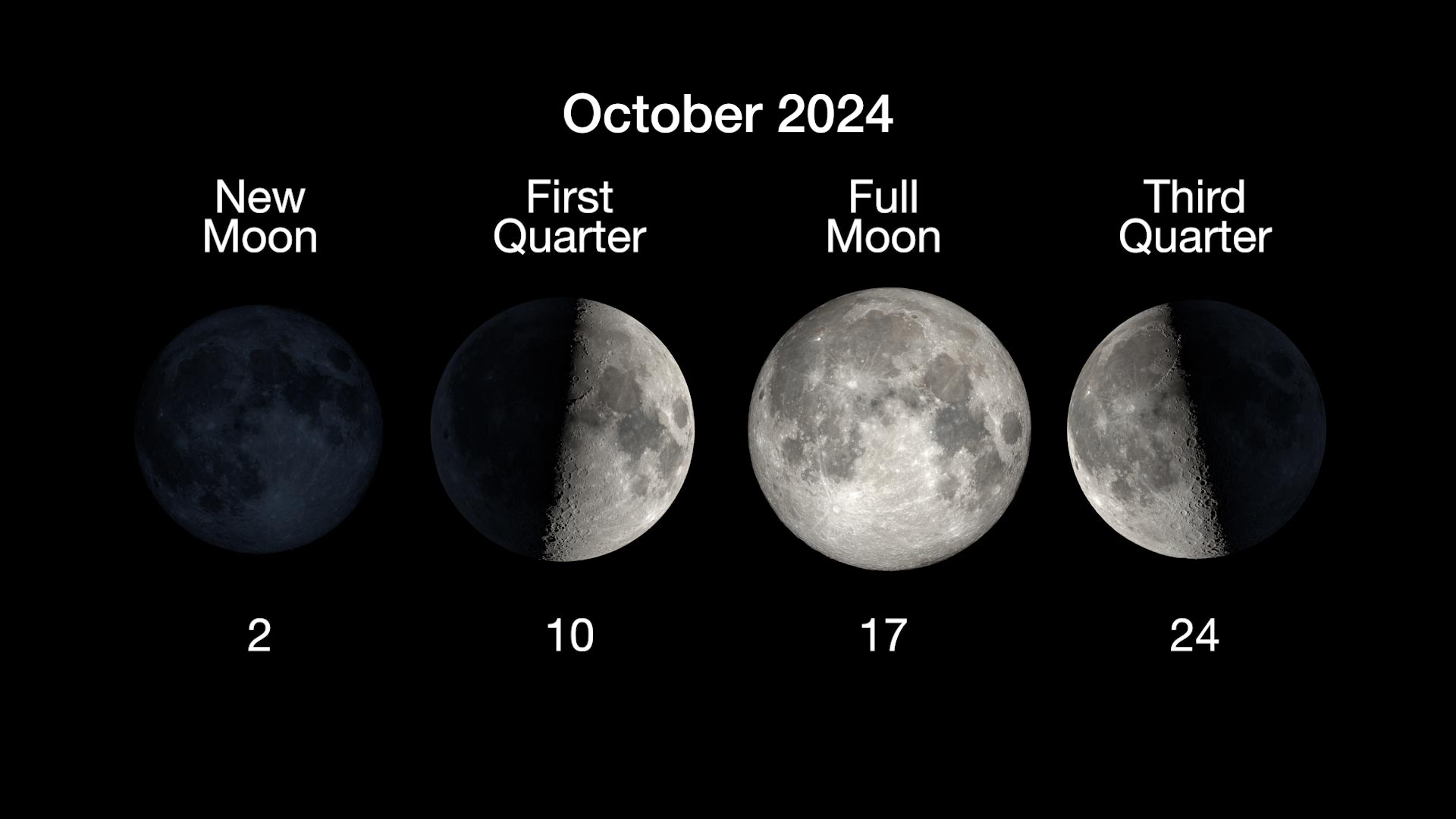
And here are the phases of the Moon for October.
Never miss a breakthrough: Join the SciTechDaily newsletter.
Follow us on Google and Google News.
4 Comments
Very cool 😎 people 🙎🏻♀️🐈⚾️💈
Very interesting and I like to hear about this Al the time
Very good article with a lot of useful details. I like the evening viewing guide for when/where. Most other A3 comet sites do not include that.
One other author has mentioned comet S1 as a morning object in late October. Maybe it will not be bright enough to be included here.
1234567890