
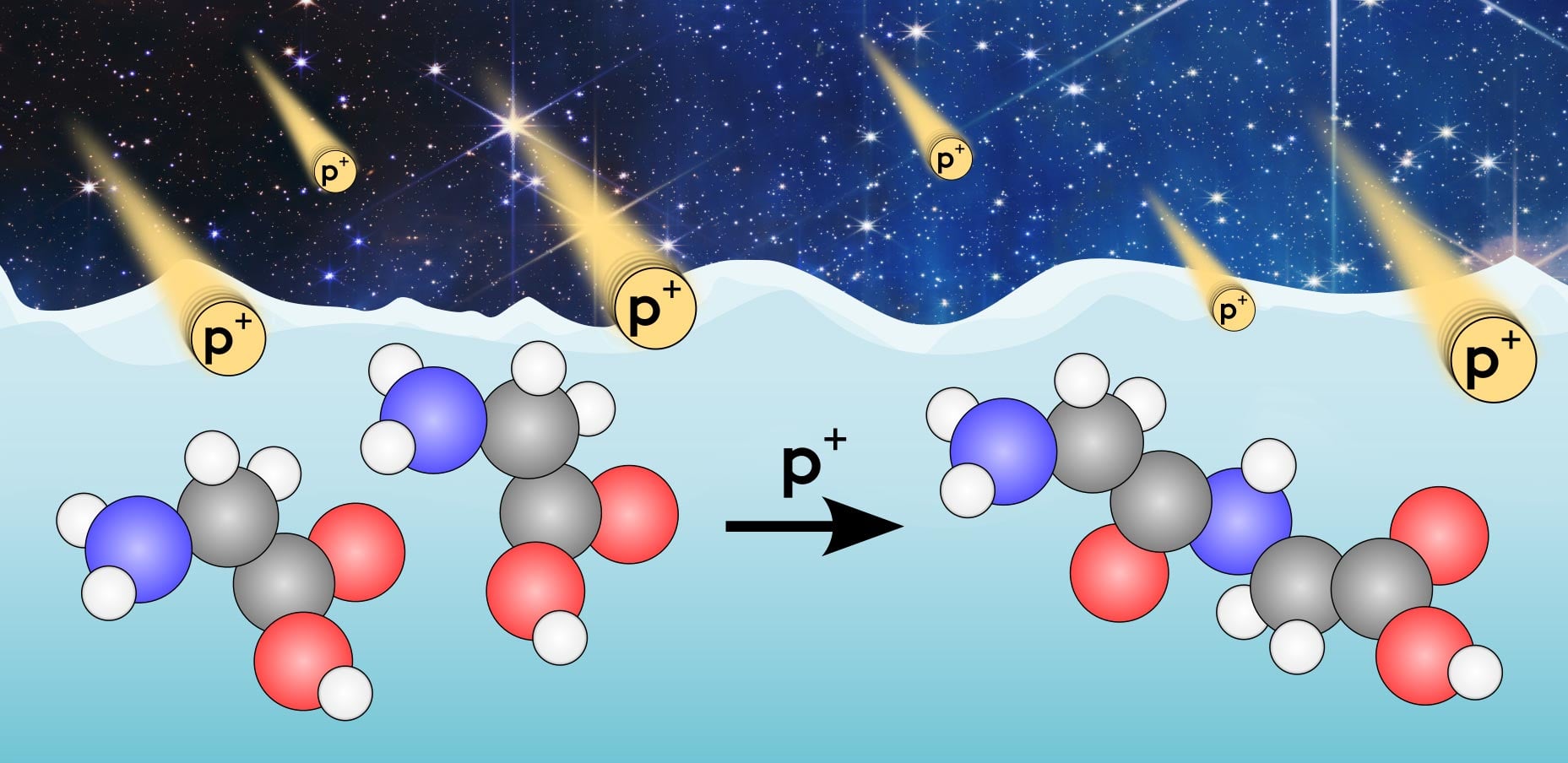
Scientists have shown that the building blocks of proteins can form naturally in deep space. This means the raw ingredients for life may exist long before planets are formed.
Researchers at Aarhus University have overturned a long-standing belief about where life’s essential chemistry can begin. Their experiments show that the basic building blocks needed to make proteins can form naturally in space. This finding increases the statistical chances that life could emerge elsewhere in the universe.
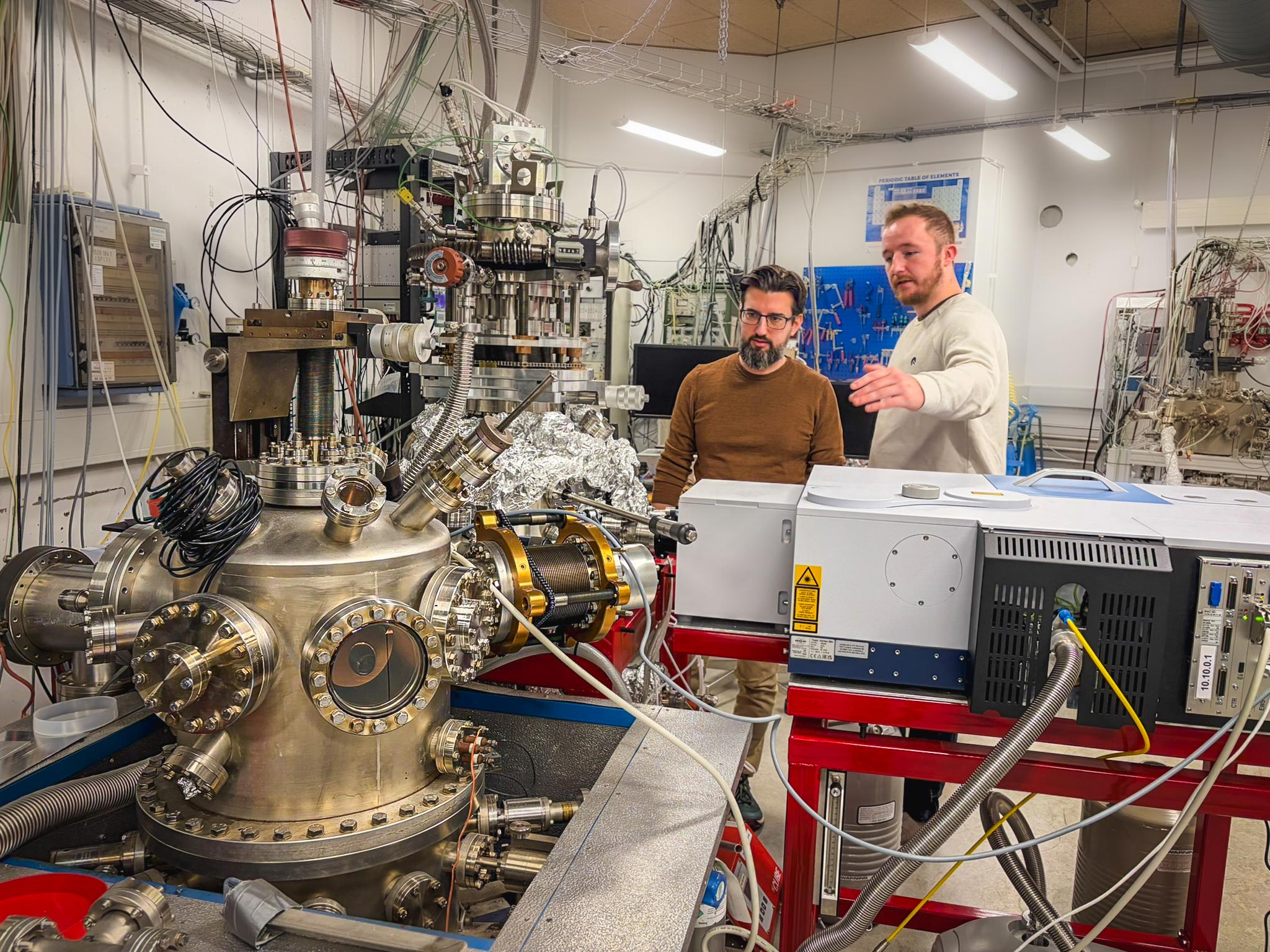
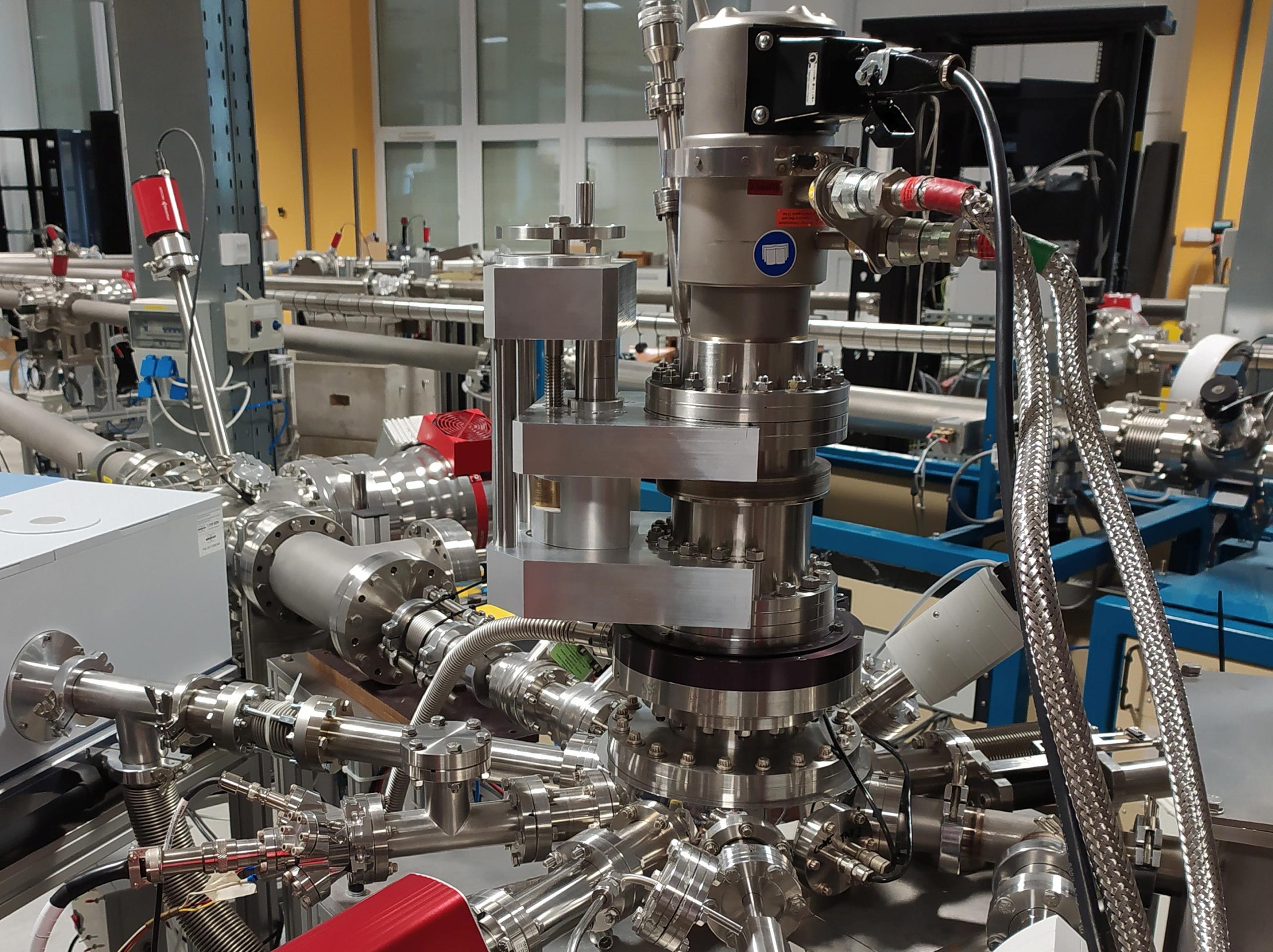
The work was carried out in advanced laboratories at Aarhus University and at a major European research facility in Hungary (HUN-REN Atomki). The experiments were led by scientists Sergio Ioppolo and Alfred Thomas Hopkinson.
Recreating the Harsh Conditions of Interstellar Space
Using a small, sealed chamber, the researchers recreated the extreme environment found inside massive dust clouds located thousands of light-years from Earth. These regions are among the most hostile places known.
Temperatures in these clouds drop to about -260°C, and pressure is so low that nearly all gas particles must be continuously removed to maintain an ultra-high vacuum. Under these conditions, the team studied how the remaining particles respond to radiation, closely matching what happens in real interstellar space.
“We already know from earlier experiments that simple amino acids, like glycine, form in interstellar space. But we were interested in discovering if more complex molecules, like peptides, form naturally on the surface of dust grains before those take part in the formation of stars and planets,” Sergio Ioppolo says.
From Simple Molecules to Protein Precursors
Peptides form when amino acids link together in short chains. When many peptides connect, they create proteins, which are essential for life as we know it. Understanding how these protein precursors form is a critical step in tracing the origins of life.
To investigate this process, the researchers placed glycine inside the chamber and exposed it to simulated cosmic radiation. This radiation was generated using an ion accelerator at HUN-REN Atomki. The team then carefully examined the chemical changes that followed.
“We saw that the glycine molecules started reacting with each other to form peptides and water. This indicates that the same process occurs in interstellar space,” Alfred Thomas Hopkinson says. “This is a step toward proteins being created on dust particles, the same materials that later form rocky planets.”
Star-Forming Dust Clouds as Chemical Nurseries
Ioppolo, Hopkinson, and their colleagues focus on the giant dust clouds between stars because these regions eventually give rise to new solar systems.
“We used to think that only very simple molecules could be created in these clouds. The understanding was that more complex molecules formed much later, once the gases had begun coalescing into a disc that eventually becomes a star,” Sergio Ioppolo explains.
“But we have shown that this is clearly not the case.”
This shift in understanding suggests that important life-related molecules may be far more common throughout the universe than scientists once believed.
What This Means for Life Beyond Earth
Over time, interstellar dust clouds collapse to form stars and planets. During this process, tiny chemical building blocks can be carried onto newly formed rocky worlds.
“Eventually, these gas clouds collapse into stars and planets. Bit by bit, these tiny building blocks land on rocky planets within a newly formed solar system. If those planets happen to be in the habitable zone, then there is a real probability that life might emerge,” Sergio Ioppolo says.
“That said, we still don’t know exactly how life began. But research like ours shows that many of the complex molecules necessary for life are created naturally in space.”
A Chemical Process That Works Everywhere
At first glance, the formation of peptides from simple amino acids might seem like a small step. However, the chemical reaction that links amino acids together follows the same basic rules everywhere.
“All types of amino acids bond into peptides through the same reaction. It is, therefore, very likely that other peptides naturally form in interstellar space as well,” says Hopkinson. “We haven’t looked into this yet, but we are likely to do so in the future.”
Searching for Other Building Blocks of Life
Proteins are not the only components required for life. Membranes, nucleobases, and nucleotides are also essential. Whether these substances can form naturally in space is still unknown.
Researchers at the Center for Interstellar Catalysis, funded by The Danish National Research Foundation, are continuing to explore these questions.
“These molecules are some of the key building blocks of life,” explained co-author Professor Liv Hornekær, the InterCat center leader. “They might actively participate in early prebiotic chemistry, catalyzing further reactions that lead toward life.”
“There’s still a lot to be discovered, but our research team is working on answering as many of these basic questions as possible,” Sergio Ioppolo says. “We’ve already discovered that many of the building blocks of life are formed out there, and we’ll likely find more in the future.”
Reference: “An interstellar energetic and non-aqueous pathway to peptide formation” by Alfred Thomas Hopkinson, Ann Mary Wilson, Joe Pitfield, Alejandra Traspas Muiña, Richárd Rácz, Duncan V. Mifsud, Péter Herczku, Gergö Lakatos, Béla Sulik, Zoltán Juhász, Sándor Biri, Robert W. McCullough, Nigel J. Mason, Carsten Scavenius, Liv Hornekær and Sergio Ioppolo, 20 January 2026, Nature Astronomy.
DOI: 10.1038/s41550-025-02765-7
Never miss a breakthrough: Join the SciTechDaily newsletter.
Follow us on Google and Google News.
1 Comment
Going from even a fully formed protein to a cell with all of its functionality is an impossible leap. Calculations show one chance in 10 to the 40,000 power (reference Sir Fred Hoyle). A usually accepted number among scientists for something being impossible is 10 to the 50 power.