

Close Menu
    Facebook X (Twitter) Instagram
    SciTechDaily
    • Biology
    • Chemistry
    • Earth
    • Health
    • Physics
    • Science
    • Space
    • Technology
    Facebook X (Twitter) Pinterest YouTube RSS
    SciTechDaily
    Home»Health»Desulfovibrio Bacteria: Researchers Discover a Potential Cause of Parkinson’s Disease
    Health

    Desulfovibrio Bacteria: Researchers Discover a Potential Cause of Parkinson’s Disease

    By University of HelsinkiMay 21, 20232 Comments3 Mins Read
    Facebook Twitter Pinterest Telegram LinkedIn WhatsApp Email Reddit
    Share
    Facebook Twitter LinkedIn Pinterest Telegram Email Reddit
    Brain Exploding Ideas Energy Concept
    Researchers at the University of Helsinki have linked specific Desulfovibrio bacterial strains to the primary cause of Parkinson’s disease, triggering α-synuclein protein aggregation. This breakthrough enables screening for and removal of these harmful bacteria from the gut, potentially preventing Parkinson’s disease.

    Researchers at the University of Helsinki have demonstrated that certain strains of Desulfovibrio bacteria are the likely cause of Parkinson’s disease in most cases. The study enables the screening of the carriers of Desulfovibrio strains and the removal of the bacteria from the gut – also making it possible to prevent Parkinson’s disease.

    “Our findings are significant, as the cause of Parkinson’s disease has gone unknown despite attempts to identify it throughout the last two centuries. The findings indicate that specific strains of Desulfovibrio bacteria are likely to cause Parkinson’s disease. The disease is primarily caused by environmental factors, that is, environmental exposure to the Desulfovibrio bacterial strains that cause Parkinson’s disease. Only a small share, or roughly 10%, of Parkinson’s disease is caused by individual genes,” says Professor Per Saris from the University of Helsinki.

    The goal of Professor Saris’s research group was to experimentally investigate whether the Desulfovibrio strains found in patients can result in progress toward Parkinson’s disease.
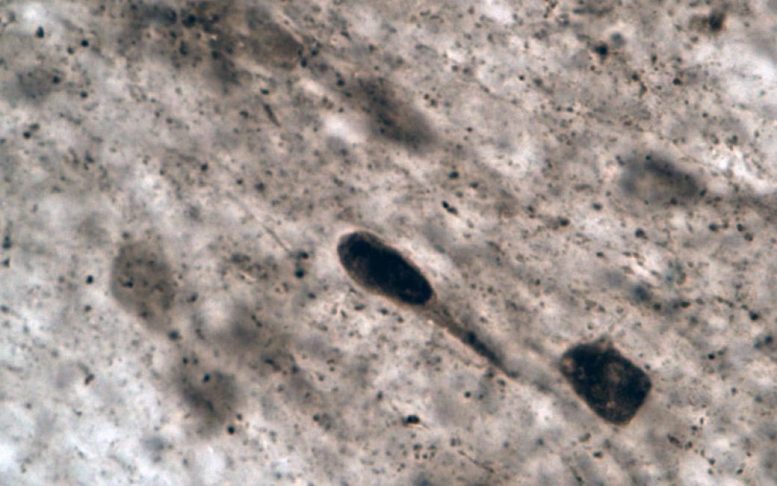
    Alpha-Synuclein Aggregation in Nerve Cell
    Aggregation of alpha-synuclein in a nerve cell. Credit: Timo Myöhänen research group

    The principal finding of the group’s recently published study was that these strains in patients with Parkinson’s disease cause aggregation of the α-synuclein protein on a statistically significant level in a model organism for Parkinson’s disease. The worm Caenorhabditis elegans was used as the model organism.

    The study also found that Desulfovibrio strains isolated from healthy individuals do not cause α-synuclein aggregation to the same degree. In contrast, the aggregates caused by the Desulfovibrio strains in patients with Parkinson’s disease were also larger.

    “Our findings make it possible to screen for the carriers of these harmful Desulfovibrio bacteria. Consequently, they can be targeted by measures to remove these strains from the gut, potentially alleviating and slowing the symptoms of patients with Parkinson’s disease. Once the Desulfovibrio bacteria are eliminated from the gut, α-synuclein aggregates are no longer formed in intestinal cells, from which they travel towards the brain via the vagus nerve like prion proteins,” Saris sums up.

    Reference: “Desulfovibrio bacteria enhance alpha-synuclein aggregation in a Caenorhabditis elegans model of Parkinson’s disease” by Vy A. Huynh, Timo M. Takala, Kari E. Murros, Bidhi Diwedi and Per E. J. Saris, 1 May 2023, Frontiers in Cellular and Infection Microbiology.
    DOI: 10.3389/fcimb.2023.1181315

    Never miss a breakthrough: Join the SciTechDaily newsletter.
    Follow us on Google and Google News.

    Bacteria Neuroscience Parkinson's Disease Popular University of Helsinki
    Share. Facebook Twitter Pinterest LinkedIn Email Reddit

    Related Articles

    People With Parkinson’s Who Eat a Diet Rich in Berries and Red Wine May Live Longer

    Deep Brain Stimulation Research Shows Promising Results for Treating Parkinson’s Disease

    Surprise Discovery Suggests Scientists May Need To Rethink Which Genes Control Aging

    Scientists Developing “Game-Changing” Test to Diagnose Parkinson’s Based on Compounds Found on Skin

    Identifying “The Terrorist Inside My Husband’s Brain” – Living Brain Imaging Can Clearly Differentiate Between Types of Dementia

    An Amazonian Tea Containing DMT Stimulates the Formation of New Brain Neurons

    Significant Link Found Between Air Pollution and Neurological Disorders in U.S.

    Long-Term Neurological Consequences of COVID-19: The “Silent Wave”

    The Epidemic Outbreak of the Zika Virus Was Bad – Something in the Water Made It Worse

    2 Comments

    1. Anna on August 25, 2023 12:30 pm

      Great!

      Reply
    2. James Propotnick on December 5, 2023 12:29 am

      I was diagnosed with PD 8 years ago. I offer myself to researchers. I will pay my own way. I am 84 years old. I have nothing to lose.

      Reply
    Leave A Reply Cancel Reply

    • Facebook
    • Twitter
    • Pinterest
    • YouTube

    Don't Miss a Discovery

    Subscribe for the Latest in Science & Tech!

    Trending News

    Bone-Strengthening Discovery Could Reverse Osteoporosis

    Scientists Uncover Hidden Trigger Behind Stem Cell Aging

    Scientists Find Way to Reverse Fatty Liver Disease Without Changing Diet

    Could Humans Regrow Limbs? New Study Reveals Promising Genetic Pathway

    Scientists Reveal Eating Fruits and Vegetables May Increase Your Risk of Lung Cancer

    Scientists Reverse Brain Aging With Simple Nasal Spray

    Scientists Uncover Potential Brain Risks of Popular Fish Oil Supplements

    Scientists Discover a Surprising Way To Make Bread Healthier and More Nutritious

    Follow SciTechDaily
    • Facebook
    • Twitter
    • YouTube
    • Pinterest
    • Newsletter
    • RSS
    SciTech News
    • Biology News
    • Chemistry News
    • Earth News
    • Health News
    • Physics News
    • Science News
    • Space News
    • Technology News
    Recent Posts
    • Europe’s Most Active Volcano Just Got Stranger – Here’s Why Scientists Are Rethinking It
    • Why Are Giant Ants Letting Tiny Ants Crawl All Over Them?
    • Revolutionary Technique Sends Healthy Mitochondria Exactly Where They’re Needed
    • This Student Recreated the Universe in a Bottle. What She Discovered Could Help Reveal How Life Started on Earth
    • Alzheimer’s Symptoms May Start Outside the Brain, Study Finds
    Copyright © 1998 - 2026 SciTechDaily. All Rights Reserved.
    • Science News
    • About
    • Contact
    • Editorial Board
    • Privacy Policy
    • Terms of Use

    Type above and press Enter to search. Press Esc to cancel.