
Close Menu
    Facebook X (Twitter) Instagram
    SciTechDaily
    • Biology
    • Chemistry
    • Earth
    • Health
    • Physics
    • Science
    • Space
    • Technology
    Facebook X (Twitter) Pinterest YouTube RSS
    SciTechDaily
    Home»Biology»DNA in Flesh-Eating Flies’ Guts Reveal Biodiversity
    Biology

    DNA in Flesh-Eating Flies’ Guts Reveal Biodiversity

    By SciTechDailyJanuary 7, 2013No Comments2 Mins Read
    Facebook Twitter Pinterest Telegram LinkedIn WhatsApp Email Reddit
    Share
    Facebook Twitter LinkedIn Pinterest Telegram Email Reddit
    Credit: Saguaro juniper
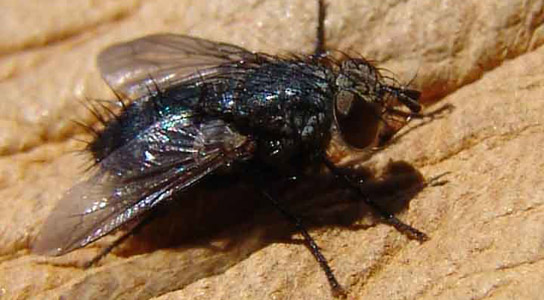
    Flesh-eating flies sample DNA from dead animals, offering a cost-effective method to study mammal diversity in remote rainforest environments. Credit: Saguaro juniper

    When blowflies and flesh flies settle on dead animals, they aren’t just feasting on the carrion, they are in fact sampling their DNA. Scientists have demonstrated that this DNA persists long enough to be sequenced, allowing them to gain a quick and cost-effective snapshot of mammal diversity in otherwise inaccessible rainforest environments.

    The scientists published their findings in the journal Molecular Ecology. Researchers stumbled upon this technique while they were studying a form of anthrax that kills chimpanzees in Côte d’Ivoire. They started to sample flies to see whether the anthrax bacterium could be harbored inside the flies feasting on infected bodies. They discovered that they were detecting mammalian DNA from the flies, which could also be used to assess biodiversity.

    Sébastien Calvignac-Spencer, an evolutionary biologist at the Robert Koch Institute in Berlin, and his colleagues baited traps with meat. The team collected the carrion flies from the Taï National Park in Côte d’Ivoire and the Kirindy Reserve in Madagascar. They found that 40% of them carried mammal DNA. The material was sequenced and it was possible to identify 16 mammals in Côte d’Ivoire, including six of the nine local primate species, as well as Jentink’s duiker (Cephalophus jentinki), and endangered antelope of which there are less than 3,500 worldwide. In Madagascar, the team identified four mammal species, including two lemurs.

    The team was able to recover fragments that were several base pairs long, which would be harder to find in other mammals as their guts are more efficient at breaking down food with acids and enzymes. Flies have a less sophisticated digestive system.

    The flies could also help track the status of endangered populations more effectively. The Ebola virus killed off thousands of gorillas in the Republic of Congo and Gabon a decade ago, but active monitoring has only detected 44 carcasses. It’s a lot harder to monitor the die-offs of smaller mammals, like bats or rodents.

    Reference: “Carrion fly-derived DNA as a tool for comprehensive and cost-effective assessment of mammalian biodiversity” by Sébastien Calvignac-Spencer, Kevin Merkel, Nadine Kutzner, Hjalmar Kühl, Christophe Boesch, Peter M. Kappeler, Sonja Metzger, Grit Schubert and Fabian H. Leendertz, 8 January 2013, Molecular Ecology.
    DOI: 10.1111/mec.12183

    Never miss a breakthrough: Join the SciTechDaily newsletter.
    Follow us on Google and Google News.

    Biodiversity DNA Evolutionary Biology
    Share. Facebook Twitter Pinterest LinkedIn Email Reddit

    Related Articles

    DNA Flip Switches Found To “Supercharge” Evolution

    Ancient DNA Reveals Link between Early Humans & Present-Day Asians and Native Americans

    Researchers Calculate That DNA Has a 521 Year Half-Life

    Genetic Variability Helps Sea Urchins Cope with Environmental Changes

    DNA Could Predate Existence of Life As We Know It

    Extinctions Due to Habitat Loss are Proportional to the Area Destroyed

    Rare Example of Bacterial Gene Transfer Providing Evolutionary Benefit

    Human Y-Chromosome Has Enough Genes to Stay for Millions of Years

    Researchers Complete Genome Sequence of a Denisovan Human Finger Bone

    Leave A Reply Cancel Reply

    • Facebook
    • Twitter
    • Pinterest
    • YouTube

    Don't Miss a Discovery

    Subscribe for the Latest in Science & Tech!

    Trending News

    Scientists Uncover Potential Brain Risks of Popular Fish Oil Supplements

    Scientists Discover a Surprising Way To Make Bread Healthier and More Nutritious

    After 60 Years, Scientists Uncover Unexpected Brain Effects of Popular Diabetes Drug Metformin

    New Research Uncovers Hidden Side Effects of Popular Weight-Loss Drugs

    Scientists Rethink Extreme Warming After Surprising Ocean Discovery

    Landmark Study Links Never Marrying to Significantly Higher Cancer Risk

    Researchers Discover Unknown Beetle Species Just Steps From Their Lab

    Largest-Ever Study Finds Medicinal Cannabis Ineffective for Anxiety, Depression, PTSD

    Follow SciTechDaily
    • Facebook
    • Twitter
    • YouTube
    • Pinterest
    • Newsletter
    • RSS
    SciTech News
    • Biology News
    • Chemistry News
    • Earth News
    • Health News
    • Physics News
    • Science News
    • Space News
    • Technology News
    Recent Posts
    • Scientists Discover a “Protector” Protein That Could Help Reverse Hair Loss
    • Powerful Lasers Reveal How Matter Becomes Plasma in Trillionths of a Second
    • A Simpler Path to Super-Resolution: Scientists Reinvent Microscopy
    • Scientists Uncover Hidden Genetic Cause of Diabetes in Babies
    • Amazonian Chocolate Could Become the Next Superfood, Scientists Say
    Copyright © 1998 - 2026 SciTechDaily. All Rights Reserved.
    • Science News
    • About
    • Contact
    • Editorial Board
    • Privacy Policy
    • Terms of Use

    Type above and press Enter to search. Press Esc to cancel.