
Close Menu
    Facebook X (Twitter) Instagram
    SciTechDaily
    • Biology
    • Chemistry
    • Earth
    • Health
    • Physics
    • Science
    • Space
    • Technology
    Facebook X (Twitter) Pinterest YouTube RSS
    SciTechDaily
    Home»Health»Do Low-Cal Sweeteners Disrupt Metabolism? New Yale Study Explains Conflicting Findings
    Health

    Do Low-Cal Sweeteners Disrupt Metabolism? New Yale Study Explains Conflicting Findings

    By Yale UniversityMarch 3, 2020No Comments3 Mins Read
    Facebook Twitter Pinterest Telegram LinkedIn WhatsApp Email Reddit
    Share
    Facebook Twitter LinkedIn Pinterest Telegram Email Reddit
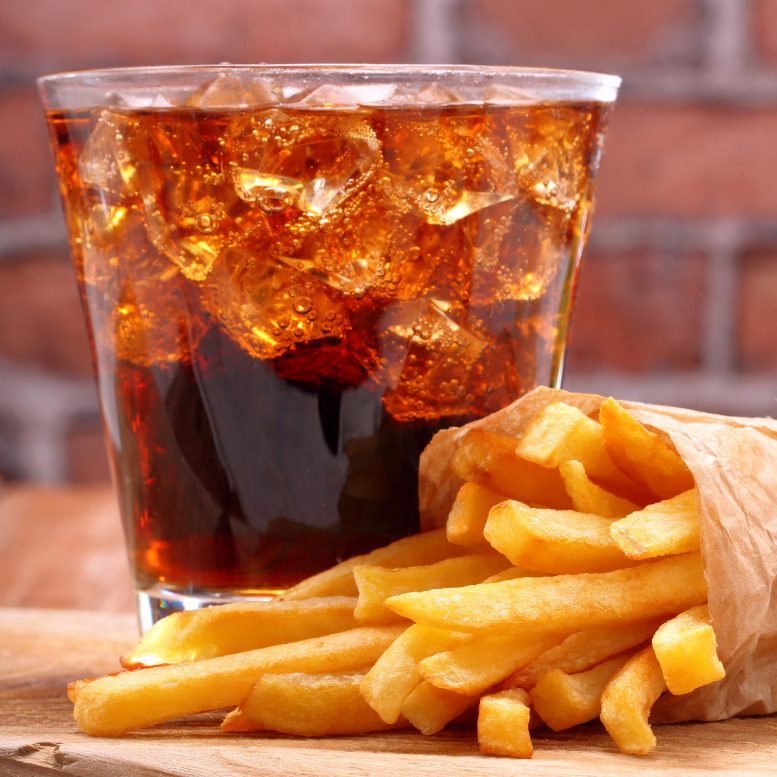
    Diet Drink and French Fries
    A new study suggests consuming low-calorie sweeteners with a carbohydrate impairs metabolism.

    Several studies in recent years have reported that low-calorie sweeteners in foods and beverages disrupt the human metabolism, promoting the development of diabetes and obesity. But other studies have found that consuming low-calorie drinks and food has little impact on metabolism and might actually aid in weight loss.

    A new study by Yale researchers published on March 3, 2020, in the journal Cell Metabolism may help reconcile these conflicting findings.

    The study showed that people who periodically drank beverages with the low-calorie sweetener sucralose, which is found in low-cal soft drinks, candy, breakfast bars, and other products, did experience problematic metabolic and neural responses — but only when a carbohydrate in the form of a tasteless sugar was added to the drink. In contrast, people drinking beverages with low-calorie sweeteners alone, or beverages with real sugar, showed no changes in brain or metabolic response to sugars.

    “The bottom line, is that, at least in small quantities, individuals can safely drink a diet soda, but they shouldn’t add French fries.” Dana Small

    “The subjects had seven low-calorie drinks, each containing the equivalent of two packages of Splenda, over two weeks,” said senior author Dana Small, professor of psychiatry and psychology and director of the Modern Diet and Physiology Research Center. “When the drink was consumed with just the low-calorie sweetener, no changes were observed; however, when this same amount of low-calorie sweetener was consumed with a carbohydrate added to the drink, sugar metabolism, and brain response to sugar became impaired.”

    The study was designed to test the theory that consuming sweet foods and beverages without calories “uncouples” sweet taste perception from energy intake, resulting in a diminished physiological response to sugar that could ultimately lead to weight gain, glucose intolerance, and diabetes.

    The new study of 45 individuals demonstrates that the uncoupling hypothesis is wrong, the researchers reported: Rather, the findings suggest, consuming low-calorie sweeteners with a carbohydrate impairs metabolism.

    “The bottom line,” said Small, who also directs Yale’s newly formed division of nutritional psychiatry, “is that, at least in small quantities, individuals can safely drink a diet soda, but they shouldn’t add French fries.”

    “This is an important information, particularly for people with diabetes who shouldn’t consume sugars,” Small said.

    Reference: “Short-term consumption of sucralose with, but not without, carbohydrate impairs neural and metabolic sensitivity to sugar” by Jelle R. Dalenberg, Barkha P. Patel, Raphael Denis, Maria G. Veldhuizen, Yuko Nakamura, Petra C. Vinke, Serge Luquet and Dana M. Small, 3 March 2020, Cell Metabolism.
    DOI: 10.1016/j.cmet.2020.01.014

    Yale’s Jelle R. Dalenberg and Barkha P. Partel are co-first authors of the study.

    Never miss a breakthrough: Join the SciTechDaily newsletter.
    Follow us on Google and Google News.

    Artificial Sweeteners Metabolic Disorders Nutrition Yale University
    Share. Facebook Twitter Pinterest LinkedIn Email Reddit

    Related Articles

    Recently Discovered Protein Has Important Role in Obesity and Diabetes

    Warning: High-Fat Diets Affect Your Brain, Not Just Your Body

    Artificially Sweetened Beverage Intake Linked to Lower Disease Recurrence

    Zero-Calorie Sweeteners Linked to Dramatic Increase in Diabetes and Obesity

    Scientists Debunk Common Vitamin D Myths

    Yale Researchers Show Parents Underestimate Their Children’s Weight

    Energy Drinks Significantly Increase Hyperactivity and Inattention in Children

    Nutritional Supplements Help Ease Clinical Depression

    Noninvasive Technique Measures Fruit and Vegetable Consumption

    Leave A Reply Cancel Reply

    • Facebook
    • Twitter
    • Pinterest
    • YouTube

    Don't Miss a Discovery

    Subscribe for the Latest in Science & Tech!

    Trending News

    Enormous Prehistoric Insects Puzzle Scientists

    Scientists Develop Bioengineered Chewing Gum That Could Help Fight Oral Cancer

    After 37 Years, the World’s Longest-Running Soil Warming Experiment Uncovers a Startling Climate Secret

    NASA Satellite Captures First-Ever High-Res View of Massive Pacific Tsunami

    ADHD Isn’t Just a Deficit: Study Reveals Powerful Hidden Strengths

    Scientists Discover Stem Cells That Could Regrow Teeth and Bone

    Early Cannabis Use May Stall Key Brain Skills in Teens

    Popular Vitamin D Supplement Has “Previously Unknown” Negative Effect, Study Finds

    Follow SciTechDaily
    • Facebook
    • Twitter
    • YouTube
    • Pinterest
    • Newsletter
    • RSS
    SciTech News
    • Biology News
    • Chemistry News
    • Earth News
    • Health News
    • Physics News
    • Science News
    • Space News
    • Technology News
    Recent Posts
    • Scientists Identify Two Simple Treatments for Cancer-Related Cognitive Impairment
    • Omega-3 Supplements Linked to Cognitive Decline in Surprising New Study
    • One in Five at Risk: Scientists Identify a Hidden Blood Particle Linked to Higher Risk of Stroke and Death
    • Darwin’s Islands Still Evolving: Giant Daisies Rewrite the Rules of Evolution
    • Ancient Document Confirms “Legendary” African King Actually Existed
    Copyright © 1998 - 2026 SciTechDaily. All Rights Reserved.
    • Science News
    • About
    • Contact
    • Editorial Board
    • Privacy Policy
    • Terms of Use

    Type above and press Enter to search. Press Esc to cancel.