
Multidisciplinary research team develops new strategy for validating computer simulations.
Computer simulations hold tremendous promise to accelerate the molecular engineering of green energy technologies, such as new systems for electrical energy storage and solar energy usage, as well as carbon dioxide capture from the environment. However, the predictive power of these simulations depends on having a means to confirm that they do indeed describe the real world.
Such confirmation is no simple task. Many assumptions enter the setup of these simulations. As a result, the simulations must be carefully checked by using an appropriate “validation protocol” involving experimental measurements.
“We focused on a solid/liquid interface because interfaces are ubiquitous in materials, and those between oxides and water are key in many energy applications.” — Giulia Galli, theorist with a joint appointment at Argonne and the University of Chicago
To address this challenge, a team of scientists at the U.S. Department of Energy’s (DOE) Argonne National Laboratory, the University of Chicago, and the University of California, Davis, developed a groundbreaking validation protocol for simulations of the atomic structure of the interface between a solid (a metal oxide) and liquid water. The team was led by Giulia Galli, a theorist with a joint appointment at Argonne and the University of Chicago, and Paul Fenter, an Argonne experimentalist.
“We focused on a solid/liquid interface because interfaces are ubiquitous in materials, and those between oxides and water are key in many energy applications,” said Galli.
“To date, most validation protocols have been designed for bulk materials, ignoring interfaces,” added Fenter. “We felt that the atomic-scale structure of surfaces and interfaces in realistic environments would present a particularly sensitive, and therefore challenging, validation approach.”
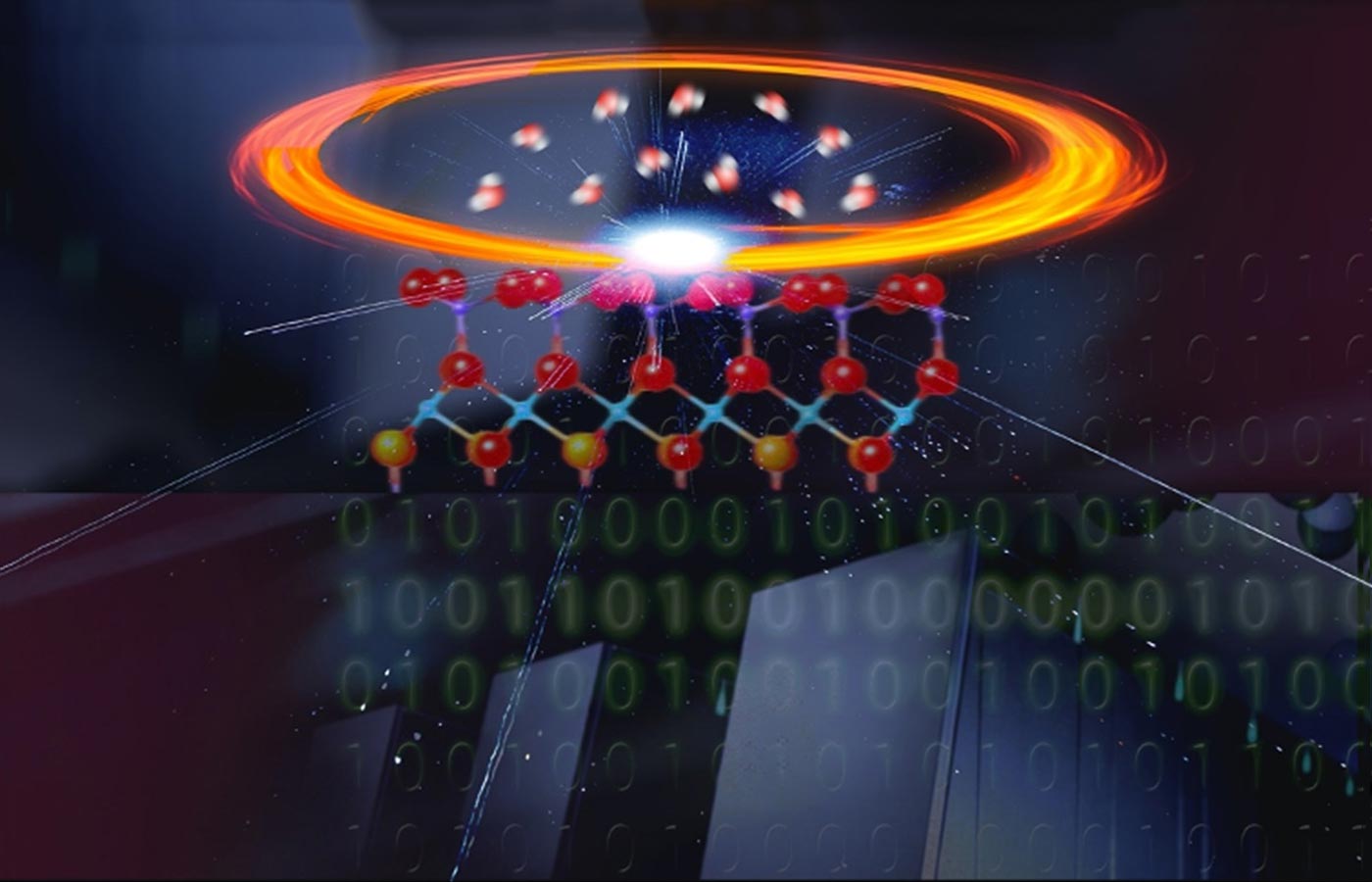
The validation procedure they designed uses high-resolution X-ray reflectivity (XR) measurements as the experimental pillar of the protocol. The team compared XR measurements for an aluminum oxide/water interface, conducted at beamline 33-ID-D at Argonne’s Advanced Photon Source (APS), with results obtained by running high-performance computer simulations at the Argonne Leadership Computing Facility (ALCF). Both the APS and ALCF are DOE Office of Science User Facilities.
Quantum Simulations Meet High-Energy Experiments
“These measurements detect the reflection of very high energy X-ray beams from an oxide/water interface,” said Zhan Zhang, a physicist in Argonne’s X-ray Science division. At the beam energies generated at the APS, the X-ray wavelengths are similar to interatomic distances. This allows the researchers to directly probe the molecular-scale structure of the interface.
“This makes XR an ideal probe to obtain experimental results directly comparable to simulations,” added Katherine Harmon, a graduate student at Northwestern University, an Argonne visiting student, and the first author of the paper. The team ran the simulations at the ALCF using the Qbox code, which is designed to study finite temperature properties of materials and molecules using simulations based on quantum mechanics.
“We were able to test several approximations of the theory,” said Francois Gygi from the University of California, Davis, part of the team and lead developer of the Qbox code. The team compared measured XR intensities with those calculated from several simulated structures. They also investigated how X-rays scattered from the electrons in different parts of the sample would interfere to produce the experimentally observed signal.
The endeavor of the team turned out to be more challenging than anticipated. “Admittedly, it was a bit of a trial and error at the beginning when we were trying to understand the right geometry to adopt and the right theory that would give us accurate results,” said Maria Chan, a co-author of the study and scientist at Argonne’s Center for Nanoscale Materials, a DOE Office of Science User Facility. “However, our back and forth between theory and experiment paid off, and we were able to set up a robust validation protocol that can now be deployed for other interfaces as well.”
“The validation protocol helped quantify the strengths and weaknesses of the simulations, providing a pathway toward building more accurate models of solid/liquid interfaces in the future,” said Kendra Letchworth-Weaver. An assistant professor at James Madison University, she developed software to predict XR signals from simulations during a postdoctoral fellowship at Argonne.
New Insights Into XR Data and Electron Behavior
The simulations also shed new insight on the XR measurements themselves. In particular, they showed that the data are sensitive not only to the atomic positions, but also to the electron distribution surrounding each atom in subtle and complex ways. These insights will prove beneficial to future experiments on oxide/liquid interfaces.
Reference: “Validating first-principles molecular dynamics calculations of oxide/water interfaces with x-ray reflectivity data” by Katherine J. Harmon, Kendra Letchworth-Weaver, Alex P. Gaiduk, Federico Giberti, Francois Gygi, Maria K. Y. Chan, Paul Fenter and Giulia Galli, 16 November 2020, Physical Review Materials.
DOI: 10.1103/PhysRevMaterials.4.113805
The interdisciplinary team is part of the Midwest Integrated Center for Computational Materials, headquartered at Argonne, a computational materials science center supported by DOE. The work is presented in an article titled “Validating first-principles molecular dynamics calculations of oxide/water interfaces with X-ray reflectivity data,” which appeared in the November 2020 issue of Physical Review Materials. This project received support from the DOE Office of Basic Energy Sciences, a Laboratory Directed Research and Development Award, and the Department of Defense. ALCF computing time was awarded through DOE’s ASCR Leadership Computing Challenge.
Never miss a breakthrough: Join the SciTechDaily newsletter.
Follow us on Google and Google News.