
Close Menu
    Facebook X (Twitter) Instagram
    SciTechDaily
    • Biology
    • Chemistry
    • Earth
    • Health
    • Physics
    • Science
    • Space
    • Technology
    Facebook X (Twitter) Pinterest YouTube RSS
    SciTechDaily
    Home»Space»Docking the Robotic Arm on NASA’s Mars Perseverance Rover
    Space

    Docking the Robotic Arm on NASA’s Mars Perseverance Rover

    By SciTechDailyNovember 11, 2021No Comments3 Mins Read
    Facebook Twitter Pinterest Telegram LinkedIn WhatsApp Email Reddit
    Share
    Facebook Twitter LinkedIn Pinterest Telegram Email Reddit

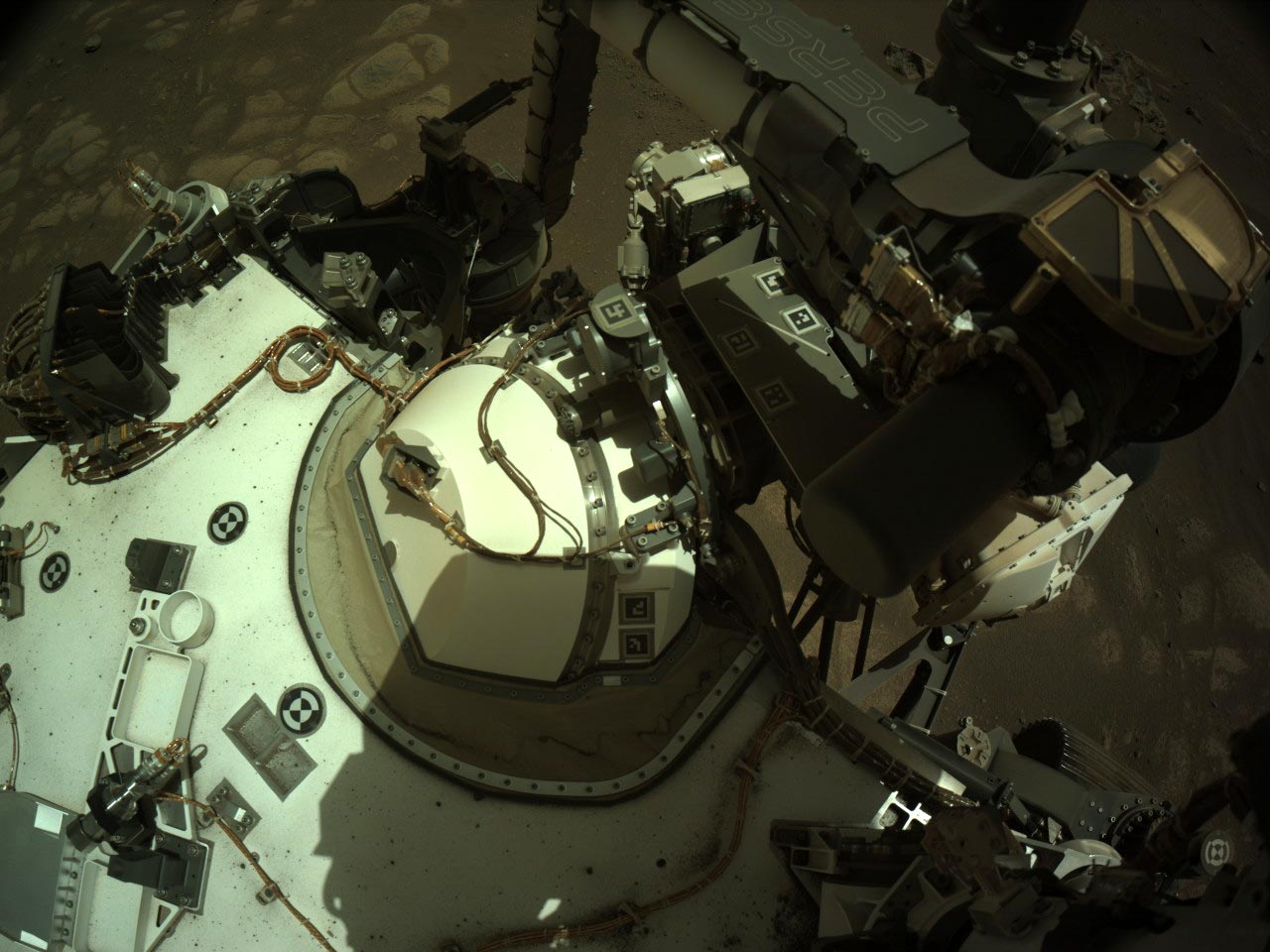
    Mars Perseverance Sol 87
    Mars Perseverance Sol 87 – Left Navigation Camera: First time docking on Mars, on Sol 87 [May 18th, 2021]. This image was acquired by Perserverance’s left navigation camera shortly after the arm finished docking. The Bit Carousel is the conical object in the center of the image. Credit: NASA/JPL-Caltech
    Perseverance’s rock sampling on Mars involves a series of intricate robotic maneuvers, including two key docking operations with its Bit Carousel. Years of design and extensive testing on Earth, totaling almost 2,000 docking trials, have made the process reliable.

    Every time we collect a rock sample on Mars, Perseverance performs an hours-long set of carefully choreographed operations with its robotic arm, the coring drill, and the Adaptive Caching Assembly. One of these operations is docking: the process by which the arm aligns itself with the Bit Carousel on the front of the rover, so that the corer can drop off and pick up new drill bits.

    Docking happens twice during sample collection. First, the robotic arm docks to drop off the currently-chucked abrading bit and pick up a coring bit with an empty sample tube. Then, after collecting a rock sample, it docks again to drop off the coring bit with a now-filled sample tube, which will be processed, sealed, and stored by the caching assembly.
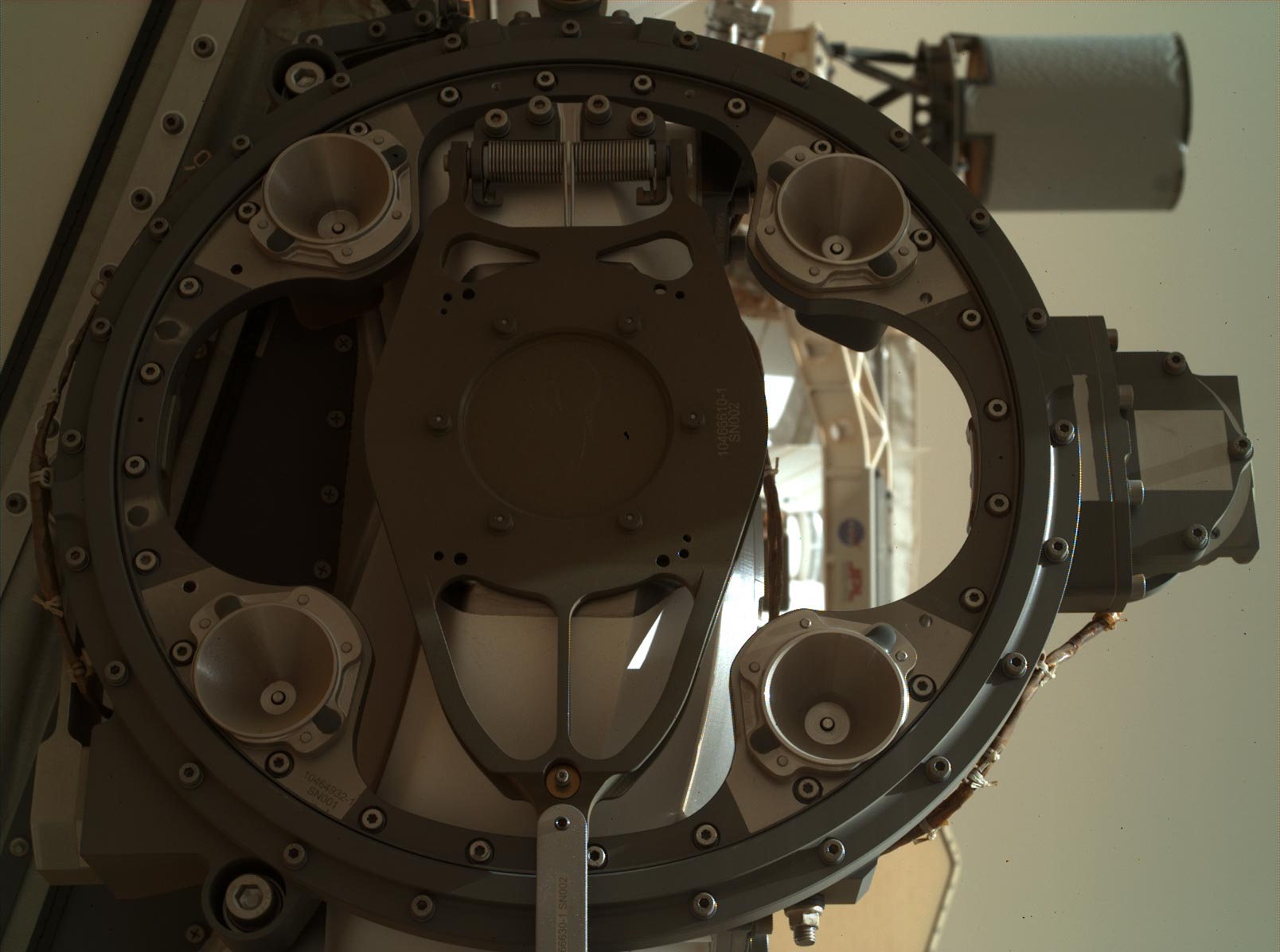
    Mars Perseverance Sol 21
    Mars Perseverance Sol 21 – WATSON Camera: An overview picture of the dock on the front of Perseverance, taken by the WATSON camera on the Robotic Arm. A door in front of the bit carousel was still closed when this image was acquired and has since been opened. Credit: NASA/JPL-Caltech

    Docking works by guiding a set of small posts on the end of the robotic arm into a matching set of cones on the dock. Imagine plugging your charger into your phone or computer – even if you don’t think about it, you rely a lot on the tactile feedback from your hand and fingertips to feel if you need to slide the plug to the side, to line it up a little better, and to know when it’s reached the bottom. Docking works the same way. A force sensor on the end of the robotic arm tells Perseverance how hard it’s pushing and in which directions, and Perseverance uses this data to guide the arm into place and to determine when docking is complete. (The dock also includes microswitches at the bottom of each cone which are pressed when the arm is almost docked, which serve as an extra verification). Once the posts reach the bottom of the cones, the robotic arm pushes harder into the dock with almost 650N (146 lbs) of force to make sure it stays docked during bit exchange.

    I’ve worked on docking for most of my 6-year career at JPL, and my goal has been to make it reliable and easy – just like plugging in your phone. Getting to this point required a lot of design and testing (including docking almost 2000 times in various testbeds here on Earth), and it’s been a privilege to see docking happen successfully many times on Mars already. I’ll always be a little nervous every time we collect a sample, but my fingers are crossed for many more successful and easy docking attempts.

    Written by Sawyer Brooks, Docking Systems Engineer at NASA/JPL.

    Never miss a breakthrough: Join the SciTechDaily newsletter.
    Follow us on Google and Google News.

    JPL Mars Mars 2020 Perseverance Rover NASA
    Share. Facebook Twitter Pinterest LinkedIn Email Reddit

    Related Articles

    NASA’s Perseverance Rover Discovers Mysterious Striped Rock on Mars

    NASA’s Perseverance Rover Begins Ambitious Ascent of Jezero Crater Rim

    NASA’s Perseverance Mars Rover To Begin Epic Climb up Steep Martian Crater Rim

    Potential Evidence of Life Discovered on Mars by NASA’s Perseverance Rover

    Is There Life on Mars? NASA’s AI Rovers Might Soon Tell Us

    Charting the Red Planet: How Open Science Fuels Mars Exploration

    Perseverance Triumphs: How SHERLOC Was Brought Back to Life on Mars

    Atmospheric Time Capsules: Why Scientists Are Intrigued by Air in NASA’s Mars Sample Tubes

    NASA’s Perseverance Rover Crosses Ancient Martian River To Reach New Scientific Frontiers

    Leave A Reply Cancel Reply

    • Facebook
    • Twitter
    • Pinterest
    • YouTube

    Don't Miss a Discovery

    Subscribe for the Latest in Science & Tech!

    Trending News

    Just a Few Breathless Minutes a Day Could Slash Your Risk of 8 Major Diseases

    This Simple Habit Could Cut Your Risk of Dementia by 30%

    Scientists Debunk Rattlesnake Myth That Fooled Hikers and Doctors for Decades

    Scientists Discover Plants Can “Count” – and May Be Smarter Than We Thought

    New Research Reveals Ancient Mars May Have Been Warm, Wet – and Possibly Alive

    This Surprising Daily Habit Could Cut Dementia Risk by 35%

    Just 10 Minutes a Day: Scientists Say This Ancient Chinese Practice Shows Powerful Blood Pressure Benefits

    Scientists Say This Popular Food Could Help Your Body Get Rid of Microplastics

    Follow SciTechDaily
    • Facebook
    • Twitter
    • YouTube
    • Pinterest
    • Newsletter
    • RSS
    SciTech News
    • Biology News
    • Chemistry News
    • Earth News
    • Health News
    • Physics News
    • Science News
    • Space News
    • Technology News
    Recent Posts
    • Blood-Sucking Parasites Could Revolutionize Treatment for Autoimmune Diseases
    • Scientists Uncover Massive Climate Secret Beneath Sweden’s Forests
    • Scientists Unlock 3 Million Years of Climate Secrets Hidden in Antarctic Ice
    • “We Were Truly Astonished”: New Discovery Rewrites Earth’s Origin Story
    • A Simple Nose Swab Could Detect Alzheimer’s Years Before Symptoms Appear
    Copyright © 1998 - 2026 SciTechDaily. All Rights Reserved.
    • Science News
    • About
    • Contact
    • Editorial Board
    • Privacy Policy
    • Terms of Use

    Type above and press Enter to search. Press Esc to cancel.