
Close Menu
    Facebook X (Twitter) Instagram
    SciTechDaily
    • Biology
    • Chemistry
    • Earth
    • Health
    • Physics
    • Science
    • Space
    • Technology
    Facebook X (Twitter) Pinterest YouTube RSS
    SciTechDaily
    Home»Space»Dodging Danger, Embracing Discovery: ISS Crew Unpacks SpaceX Dragon After Debris Evasion
    Space

    Dodging Danger, Embracing Discovery: ISS Crew Unpacks SpaceX Dragon After Debris Evasion

    By NASANovember 14, 2023No Comments3 Mins Read
    Facebook Twitter Pinterest Telegram LinkedIn WhatsApp Email Reddit
    Share
    Facebook Twitter LinkedIn Pinterest Telegram Email Reddit
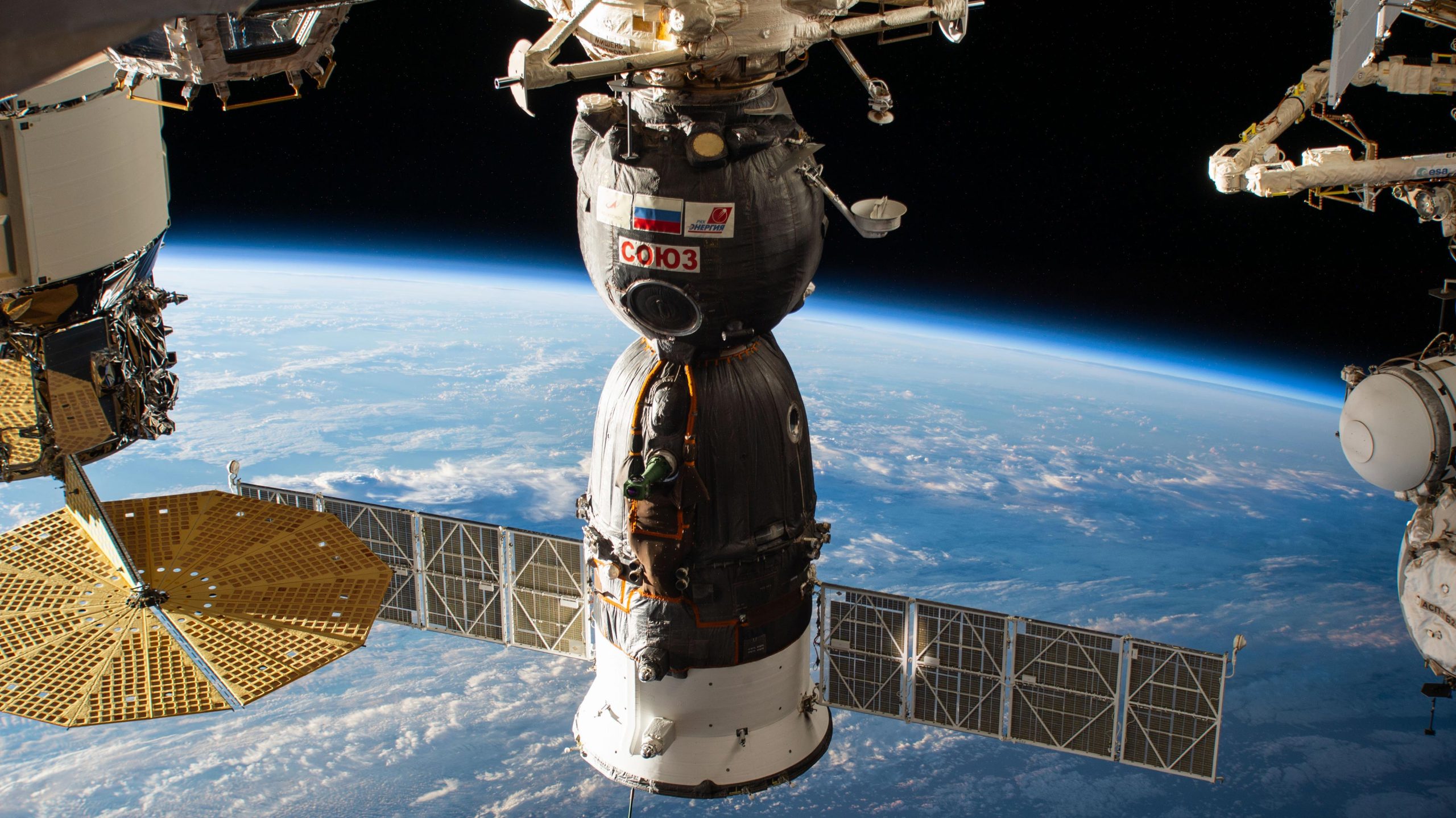
    Soyuz MS-24 Crew Ship Docked to the Rassvet Module
    The Soyuz MS-24 crew ship is docked to the Rassvet module in this photograph from the International Space Station as it orbited 267 miles above the Tasman Sea in between Australia and New Zealand. At left, is the Northrop Grumman Cygnus space freighter and one of its prominent cymbal-shaped UltraFlex solar arrays. Credit: NASA

    The Expedition 70 crew is unpacking the SpaceX Dragon cargo spacecraft following its arrival early Saturday morning. Meanwhile, the orbital residents are also continuing their research and maintenance activities following the International Space Station’s debris avoidance maneuver last week.

    Unloading and Installation of Time-Sensitive Experiments

    The hatches are open between Dragon and the orbital outpost following its arrival on Saturday. NASA Flight Engineers Jasmin Moghbeli and Loral O’Hara monitored Dragon’s arrival and entered the cargo spacecraft less than two hours after its docking. The duo along with Commander Andreas Mogensen and Flight Engineer Satoshi Furukawa spent a busy weekend unloading time-sensitive experiments for installation and activation aboard the orbital outpost.
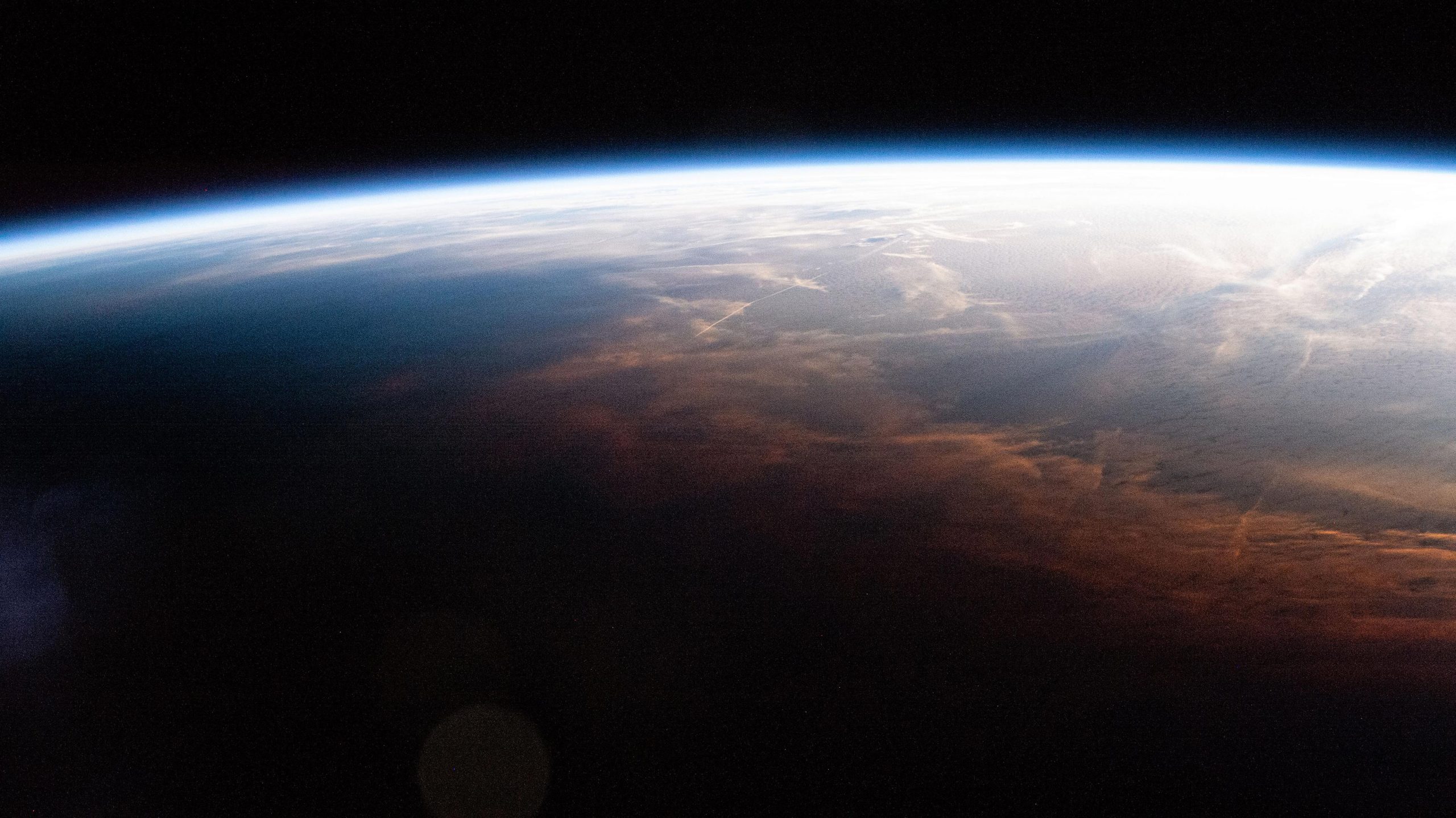
    International Space Station Enters Orbital Nighttime
    As the International Space Station entered orbital nighttime 260 miles above the Southernmost Point of Alaska, shadows can be seen reaching a wall of clouds colored coral from the Sun. Credit: NASA

    Continued Transfers and Research on Monday

    The foursome worked throughout Monday transferring science freezers stocked with research samples from Dragon into the station and kicking off some of the new investigations. Mogensen from ESA (European Space Agency) and Furukawa from JAXA (Japan Aerospace Exploration Agency) configured space biology hardware and began offloading some of the 6,500 pounds of new crew supplies and hardware.

    Assistance and Maintenance by O’Hara and Moghbeli

    O’Hara and Moghbeli assisted the two international astronauts with both the science freezer work and the cargo transfers during the morning. O’Hara then spent the afternoon servicing components on a biological printer, the BioFabrication Facility (BFF), that is testing the printing of organ-like tissues in microgravity. Moghbeli set up new life science hardware, helped with the BFF work, and maintained standard life support and electronics hardware.

    Routine Emergency Procedure Review

    At the end of the day, the four astronauts joined the space station’s three cosmonauts reviewing updated emergency procedures while the new Dragon cargo spacecraft is docked to the Harmony module’s forward. Dragon will stay attached to Harmony until early December when it will return to Earth filled with station hardware and completed research for retrieval and analysis.

    Russian Cosmonauts’ Activities

    Veteran cosmonaut Oleg Kononenko began his day inside the Poisk airlock checking pressurization gear, then inspected windows on the Zvezda service module, and finally jogged on Zvezda’s treadmill for a fitness evaluation. Flight Engineer Nikolai Chub spent much of his day testing a 3D printer to make tools and supplies without depending on cargo missions from Earth. Flight Engineer Konstantin Borisov deactivated a camera remotely controlled by students on Earth, inspected Roscosmos laptop computers, and cleaned ventilation systems.

    ISS Debris Avoidance Maneuver

    On November 10, the International Space Station’s Zvezda service module engines were fired for five minutes and 16 seconds beginning at 10:07 a.m. to maneuver the complex away from the predicted track of an orbital debris fragment.  The maneuver did not affect the rendezvous and docking of NASA’s SpaceX 29th commercial resupply mission, which docked to the space station at 5:07 a.m. on November 11 after launching two days prior.

    Never miss a breakthrough: Join the SciTechDaily newsletter.
    Follow us on Google and Google News.

    Astronaut International Space Station NASA SpaceX
    Share. Facebook Twitter Pinterest LinkedIn Email Reddit

    Related Articles

    NASA’s Crew-9 Returns After 286-Day Mission With a Spectacular Splashdown in the Gulf of America

    NASA’s SpaceX Crew-9 Splashes Down Off Coast of Florida

    SpaceX Dragon Undocks With NASA Crew-9 Members for Return to Earth

    Liftoff! NASA’s SpaceX Crew-10 Blasts Off From Kennedy Space Center [Video]

    Rocket Ready: NASA’s SpaceX Crew-10 Set for Liftoff

    NASA’s SpaceX Crew-10 Was Moments From Liftoff – Then a Last-Minute Malfunction Shut It Down

    NASA’s SpaceX Crew-10: Four Astronauts, a 17,500 MPH Rocket, and 200+ Experiments

    No Treadmill, No Problem – NASA’s Space Workout Experiment Could Change Fitness Forever

    NASA and SpaceX’s Unexpected Spacecraft Swap Sends Crew-10 to Space Sooner

    Leave A Reply Cancel Reply

    • Facebook
    • Twitter
    • Pinterest
    • YouTube

    Don't Miss a Discovery

    Subscribe for the Latest in Science & Tech!

    Trending News

    Millions Take These IBS Drugs, But a New Study Finds Serious Risks

    Scientists Unlock Hidden Secrets of 2,300-Year-Old Mummies Using Cutting-Edge CT Scanner

    Bread Might Be Making You Gain Weight Even Without Eating More Calories

    Scientists Discover Massive Magma Reservoir Beneath Tuscany

    Europe’s Most Active Volcano Just Got Stranger – Here’s Why Scientists Are Rethinking It

    Alzheimer’s Symptoms May Start Outside the Brain, Study Finds

    Millions Take This Popular Supplement – Scientists Discover a Concerning Link to Heart Failure

    The Universe Is Expanding Too Fast and Scientists Can’t Explain Why

    Follow SciTechDaily
    • Facebook
    • Twitter
    • YouTube
    • Pinterest
    • Newsletter
    • RSS
    SciTech News
    • Biology News
    • Chemistry News
    • Earth News
    • Health News
    • Physics News
    • Science News
    • Space News
    • Technology News
    Recent Posts
    • U.S. Waste Holds $5.7 Billion Worth of Crop Nutrients
    • Scientists Say a Hidden Structure May Exist Inside Earth’s Core
    • Doctors Surprised by the Power of a Simple Drug Against Colon Cancer
    • Why Popular Diabetes Drugs Like Ozempic Don’t Work for Everyone: The “Genetic Glitch”
    • Scientists Create Improved Insulin Cells That Reverse Diabetes in Mice
    Copyright © 1998 - 2026 SciTechDaily. All Rights Reserved.
    • Science News
    • About
    • Contact
    • Editorial Board
    • Privacy Policy
    • Terms of Use

    Type above and press Enter to search. Press Esc to cancel.