
Close Menu
    Facebook X (Twitter) Instagram
    SciTechDaily
    • Biology
    • Chemistry
    • Earth
    • Health
    • Physics
    • Science
    • Space
    • Technology
    Facebook X (Twitter) Pinterest YouTube RSS
    SciTechDaily
    Home»Space»Don’t Miss: “Gorgeously Green” Geminid Meteor Shower Peaks This Week
    Space

    Don’t Miss: “Gorgeously Green” Geminid Meteor Shower Peaks This Week

    By Lauren Perkins, NASA’s Marshall Space Flight CenterDecember 12, 2023No Comments4 Mins Read
    Facebook Twitter Pinterest Telegram LinkedIn WhatsApp Email Reddit
    Share
    Facebook Twitter LinkedIn Pinterest Telegram Email Reddit
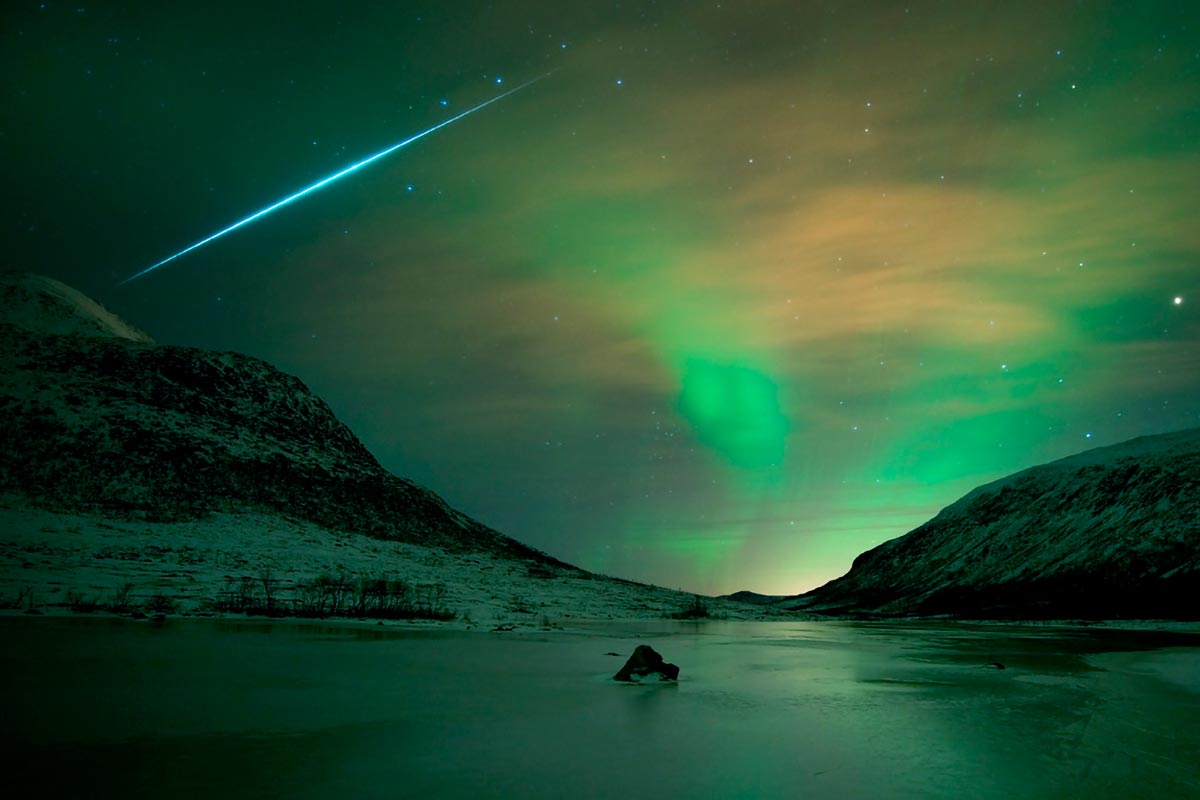
    Northern Lights Geminid Fireball Meteor
    Northern Lights, or aurora borealis, haunted skies over the island of Kvaløya, near Tromsø Norway on December 13, 2009. This 30-second long exposure records their shimmering glow gently lighting the wintery coastal scene. A study in contrasts, it also captures the sudden flash of a fireball meteor from December’s excellent Geminid meteor shower. Streaking past familiar stars in the handle of the Big Dipper, the trail points back toward the constellation Gemini, off the top of the view. Both aurora and meteors occur in Earth’s upper atmosphere at altitudes of 100 kilometers or so, but aurora are caused by energetic charged particles from the magnetosphere, while meteors are trails of cosmic dust. Credit & Copyright: Bjørnar G. Hansen

    The Geminid meteor shower is active for much of December, but the peak occurs from the night of the 13th into the morning of the 14th. Meteor rates in rural areas can be upwards of one per minute this year with minimal moonlight to interfere.

    Bill Cooke, lead for the Meteoroid Environment Office at NASA’s Marshall Space Flight Center in Huntsville, Alabama, shares why the Geminids particularly excite him: “Most meteors appear to be colorless or white, however the Geminids appear with a greenish hue. They’re pretty meteors!”

    Depending on the meteor’s chemical composition, the meteor will emit different colors when burned in the Earth’s atmosphere. Oxygen, magnesium, and nickel usually produce green.

    As with all meteor showers, all you need is a clear sky, darkness, a bit of patience, and perhaps warm outerwear and blankets for this one. You don’t need to look in any particular direction; meteors can generally be seen all over the sky.


    What are some skywatching highlights in December 2023? Clear skies will make for ideal viewing of the Geminid meteor shower, and grab your binoculars to search for asteroid Vesta.

    Geminid Meteor Shower

    The Geminid Meteor Shower is one of the most enchanting and eagerly awaited celestial events of the year. Known for its reliability and intensity, this meteor shower transforms the night sky into a cosmic dance floor, where streaks of light dash and weave, creating a spellbinding spectacle.

    Originating from the asteroid 3200 Phaethon, the Geminids are a unique phenomenon. Unlike most meteor showers that stem from comets, the Geminids come from this mysterious rocky object, shedding light on the intricate relationships between comets and asteroids in our solar system. Every December, Earth passes through the debris trail of 3200 Phaethon, and as these fragments collide with our atmosphere, they ignite to create the meteor shower’s dazzling display.
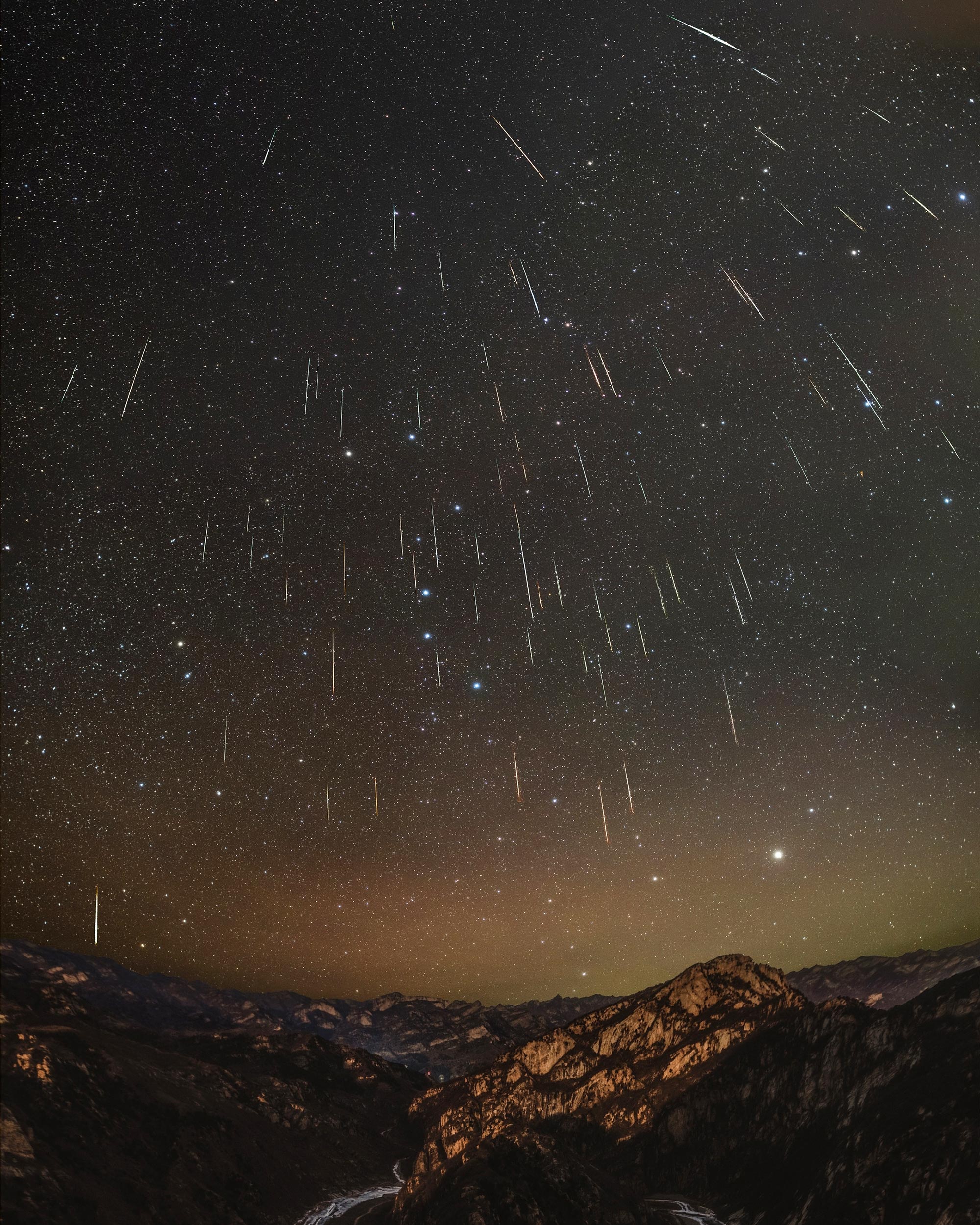
    Geminids Meteor Shower
    Geminid meteor shower.

    What sets the Geminid Meteor Shower apart is its stunning brilliance and color. These meteors often appear as bright, multicolored streaks, with predominant hues of green, red, and yellow, a result of the various metals like sodium, calcium, and magnesium burning up in the Earth’s atmosphere. The Geminids also boast an impressive rate, showering the sky with up to 120 meteors per hour under optimal conditions, making it one of the most prolific showers visible from Earth.

    This meteor shower is named after the constellation Gemini, as the meteors seem to radiate from a point near this constellation, known as the radiant. However, the beauty of the Geminids can be appreciated from almost any point in the night sky, making it a universal treat for stargazers across the globe.

    For those eager to witness this celestial event, the best time to view the Geminid Meteor Shower is typically around mid-December. The absence of moonlight during its peak often provides ideal dark skies for an unobstructed view. Observers are advised to find a spot away from city lights, give their eyes time to adjust to the darkness, and simply look up to enjoy the natural fireworks.

    In essence, the Geminid Meteor Shower is not just a stunning astronomical event; it’s a reminder of the dynamic and ever-changing universe we are a part of. It’s a cosmic spectacle that brings together professional astronomers, amateur stargazers, and even the casually curious, all united by the awe-inspiring beauty of our night sky.

    Never miss a breakthrough: Join the SciTechDaily newsletter.
    Follow us on Google and Google News.

    Astronomy Meteors NASA NASA Marshall Space Flight Center Popular
    Share. Facebook Twitter Pinterest LinkedIn Email Reddit

    Related Articles

    Don’t Miss: Best Meteor Shower of the Year Peaks This Weekend

    Surprising Results From NASA’s IXPE Help Unlock the Secrets of Famous Exploded Star

    Fireball Lights Up the Sky Over Salt Lake City – 16 Times Brighter Than the Full Moon

    Perseids Meteor Shower on the Way – But There’s a Big Problem

    Spectacular New Tau Herculids Meteor Shower May Light Up the Skies Over North America

    NASA IXPE Observatory’s First Stunning Image: The Glowing Remains of an Exploded Star

    Don’t Miss the Geminid Meteor Shower – And Check Out NASA’s Live Meteor Camera

    Don’t Miss: Hunter’s, Blood Moon and Orionid Meteor Shower

    Treasure Trove of Cosmic Delights Revealed by NASA’s Chandra X-ray Observatory

    Leave A Reply Cancel Reply

    • Facebook
    • Twitter
    • Pinterest
    • YouTube

    Don't Miss a Discovery

    Subscribe for the Latest in Science & Tech!

    Trending News

    Bone-Strengthening Discovery Could Reverse Osteoporosis

    Scientists Uncover Hidden Trigger Behind Stem Cell Aging

    Scientists Find Way to Reverse Fatty Liver Disease Without Changing Diet

    Could Humans Regrow Limbs? New Study Reveals Promising Genetic Pathway

    Scientists Reveal Eating Fruits and Vegetables May Increase Your Risk of Lung Cancer

    Scientists Reverse Brain Aging With Simple Nasal Spray

    Scientists Uncover Potential Brain Risks of Popular Fish Oil Supplements

    Scientists Discover a Surprising Way To Make Bread Healthier and More Nutritious

    Follow SciTechDaily
    • Facebook
    • Twitter
    • YouTube
    • Pinterest
    • Newsletter
    • RSS
    SciTech News
    • Biology News
    • Chemistry News
    • Earth News
    • Health News
    • Physics News
    • Science News
    • Space News
    • Technology News
    Recent Posts
    • Why Are Giant Ants Letting Tiny Ants Crawl All Over Them?
    • Revolutionary Technique Sends Healthy Mitochondria Exactly Where They’re Needed
    • This Student Recreated the Universe in a Bottle. What She Discovered Could Help Reveal How Life Started on Earth
    • Alzheimer’s Symptoms May Start Outside the Brain, Study Finds
    • Cancer’s Secret Weapon? Scientists Reveal How Tumors “Learn” To Survive Treatment
    Copyright © 1998 - 2026 SciTechDaily. All Rights Reserved.
    • Science News
    • About
    • Contact
    • Editorial Board
    • Privacy Policy
    • Terms of Use

    Type above and press Enter to search. Press Esc to cancel.