
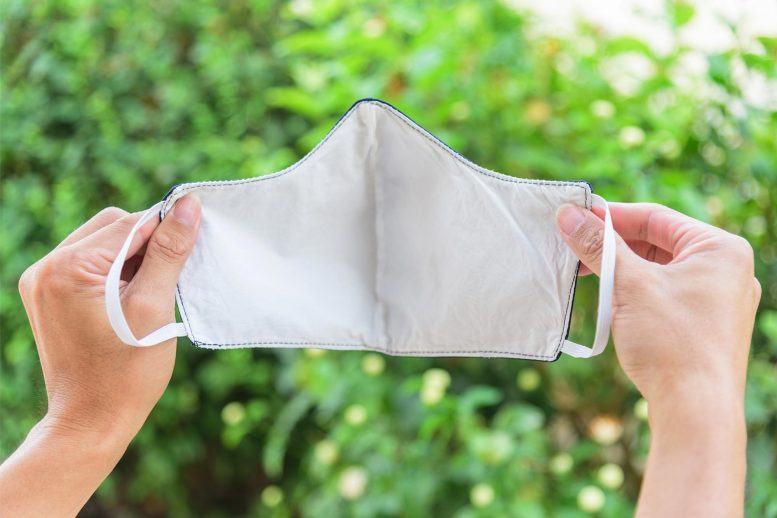
Don’t throw that cloth mask away yet—it still works.
New study also confirms that layering a cotton mask on top of a surgical mask—properly fit on one’s face—provides more protection than cloth alone.
The reusable cloth masks people have been using for COVID-19 protection for the past year or more may look a little worse for the wear. But new research from the University of Colorado Boulder finds that washing and drying them doesn’t reduce their ability to filter out viral particles.
“It’s good news for sustainability,” said lead author Marina Vance, assistant professor in the Paul M. Rady Department of Mechanical Engineering. “That cotton mask that you have been washing, drying, and reusing? It’s probably still fine—don’t throw it away.”
The study, published in the journal Aerosol and Air Quality Research, also confirms previous research that layering a cotton mask on top of a surgical mask—properly fit on one’s face—provides more protection than cloth alone.
Science for Sustainability
Since the start of the COVID pandemic, an estimated 7,200 tons of medical waste has been generated every day—much of which is disposable masks.
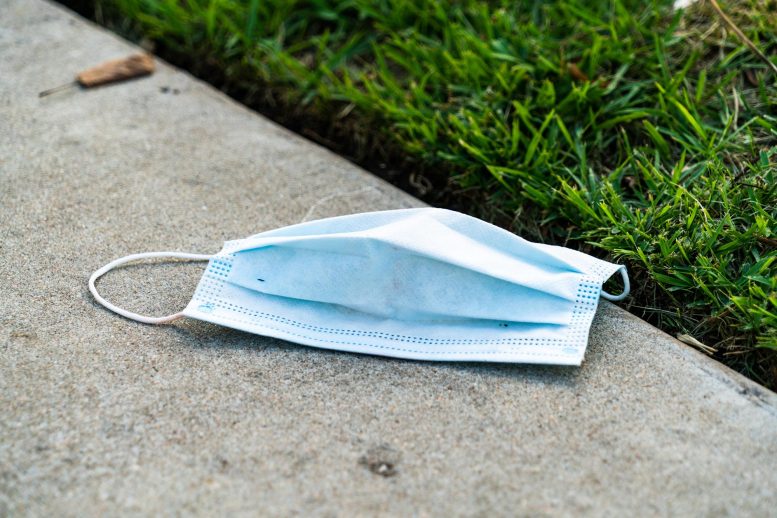
“We were really bothered during the beginning of the pandemic, when going out on a hike or going downtown, and seeing all these disposable masks littering the environment,” said Vance, who is also on the faculty in the environmental engineering program.
So she was eager to join forces when scientists at the nearby National Renewable Energy Laboratory (NREL) approached her about studying how washing and drying impacts reusable cloth masks.
Their process was quite simple: create double-layered squares of cotton, put them through repeated washing and drying (up to 52 times, the equivalent of a weekly wash for a year) and test them between about every 7 cleaning cycles.
While the masks were not tested using real people—instead, they were mounted on one end of a steel funnel through which researchers could control a consistent flow of air and airborne particles—the researchers tested the masks using realistic to real-life conditions, with high humidity levels and temperatures to mimics the impact on the mask from our breathing.
While the cotton fibers started falling apart over time after repeated washing and drying, the researchers found that did not significantly affect the cloth’s filtration efficiency.
The only noticeable change was that inhalation resistance slightly increased, meaning that the mask may feel a bit more difficult to breathe through after some wear and tear.
Mask Fit Is Critical
A key caveat is that they conducted the testing using a “perfect fit” in the lab.
“We’re assuming there are no gaps between the mask material and the person’s face,” said Vance.
The shape of each person’s face varies significantly. So, depending on a mask’s shape and how well the person adjusts it, it may or may not fit snugly. Previous research has shown that a poorly-fit mask can let as many as 50% of airborne particles we breathe in and out slip through—as well as the virus.
Learn tips and tricks for testing and tweaking your mask here.
So What Mask Should You Wear?
This study is not the first to find that cloth masks provide less protection than surgical masks or a layered combination of surgical and cloth masks.
Measuring for how well the mask filtered air being breathed in—protecting the person wearing the mask, not reducing transmission from the source—this study found that the cotton cloth masks filtered out up to 23% of the smallest particle size (0.3 microns) on which the virus can travel. Bandanas filtered even less, at only 9%.
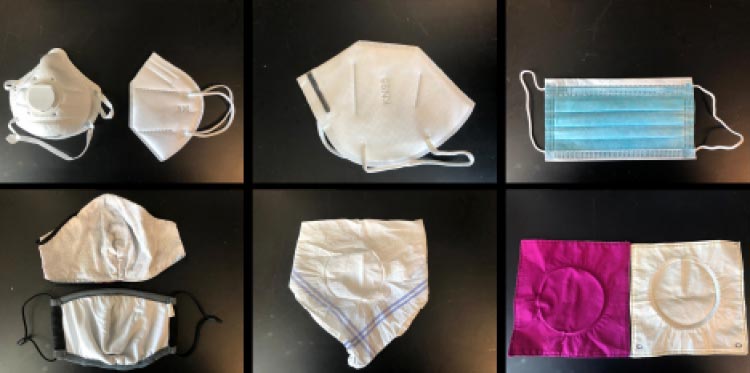
In comparison, surgical masks filtered out between 42-88% of the tiny particles, and cotton masks on top of surgical masks reached close to 40% filtration efficiency. KN95 and N95 masks unsurprisingly performed the best, filtering out 83-99% of these particles.
But while this study found that cloth masks alone provide less protection from the virus than a layered approach or disposable masks, such as surgical masks, KN95s and N95s, it remains important information for those who rely on cloth for its comfort, affordability and reusability, said Vance.
“I think the best mask might be the one that you’re actually going to wear,” said Vance. “And that is going to fit snugly against your face without being too uncomfortable.”
Reference: “Filtration Performance of Layering Masks and Face Coverings and the Reusability of Cotton Masks after Repeated Washing and Drying” by Sumit Sankhyan, Karen N. Heinselman, Peter N. Ciesielski, Teresa Barnes, Michael E. Himmel, Hannah Teed, Sameer Patel and Marina E. Vance, 30 August 2021, Aerosol and Air Quality Research.
DOI: 10.4209/aaqr.210117
Additional authors on this publication include: Sumit Sankhyan, Sameer Patel and Hannah Teed of the University of Colorado Boulder; Karen N. Heinselman, Peter N. Ciesielski Teresa Barnes and Michael E. Himmel of the Renewable Resources and Enabling Sciences Center at the National Renewable Energy Laboratory.
Never miss a breakthrough: Join the SciTechDaily newsletter.
Follow us on Google and Google News.
1 Comment
Again you keep being dishonest, you only mention the “up to” values for cloth masks filtration but mention the range of efficacy for surgical and KN95 and N95.
Surgical masks level of efficacy should be the minimum one should use.
Stop jewing, burn in hell.