
Close Menu
    Facebook X (Twitter) Instagram
    SciTechDaily
    • Biology
    • Chemistry
    • Earth
    • Health
    • Physics
    • Science
    • Space
    • Technology
    Facebook X (Twitter) Pinterest YouTube RSS
    SciTechDaily
    Home»Earth»Dutch Tulip Fields Come Into Bloom in Stunning Satellite Images
    Earth

    Dutch Tulip Fields Come Into Bloom in Stunning Satellite Images

    By European Space AgencyApril 25, 20201 Comment2 Mins Read
    Facebook Twitter Pinterest Telegram LinkedIn WhatsApp Email Reddit
    Share
    Facebook Twitter LinkedIn Pinterest Telegram Email Reddit

    Dutch Tulip Fields Bloom

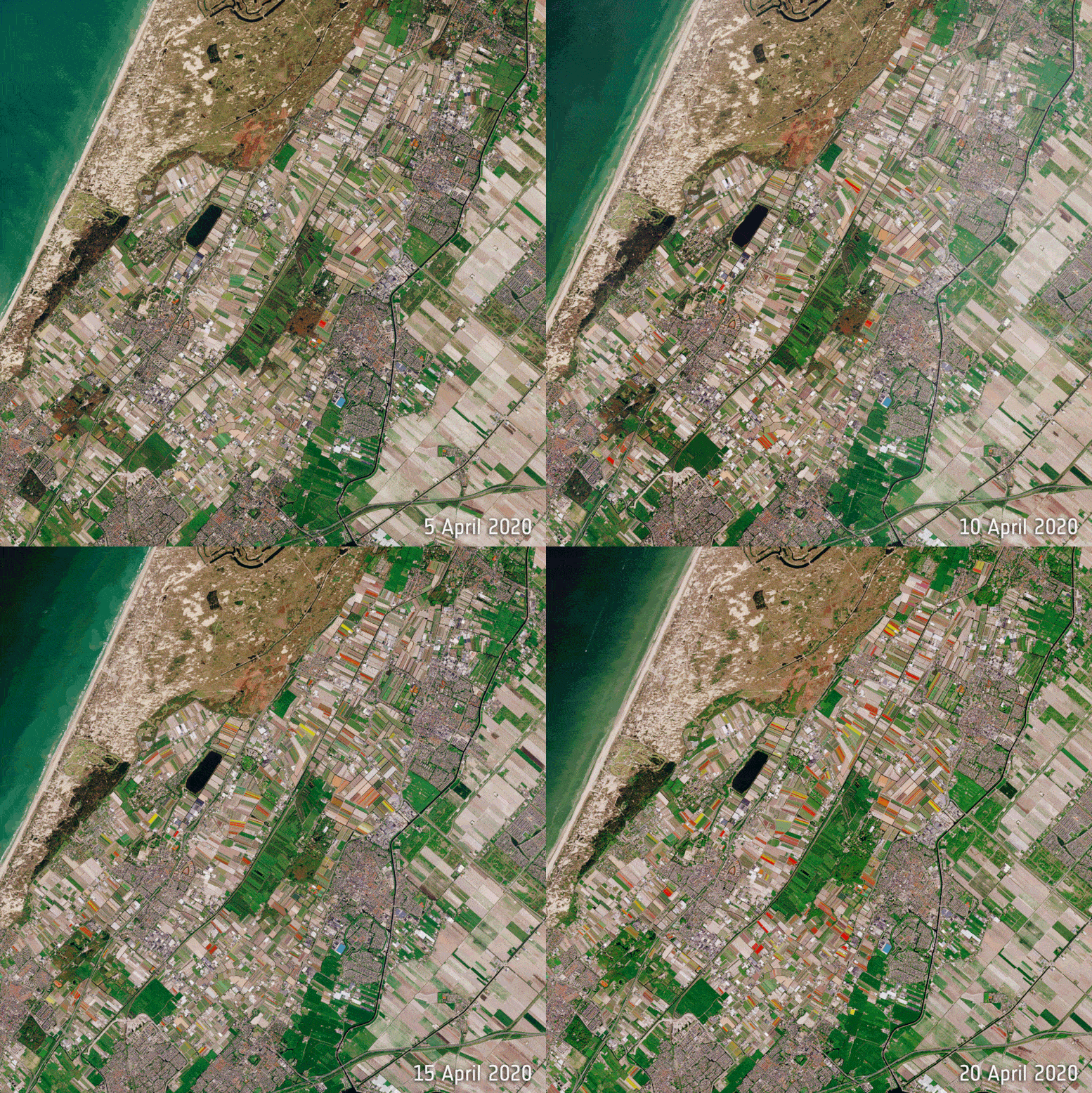
    While the COVID-19 virus pandemic is forcing everybody to stay at home, we bring you these beautiful views from space of the Dutch tulip fields coming into bloom. Captured by the Copernicus Sentinel-2 mission on April 5, April 10, April 15 and April 20, 2020, this sequence of images shows how the fields change from browns and greens to an array of vibrant colors. Lasting just a few weeks, the beauty of these colors normally attracts millions of visitors from all over the world. Sadly, this is not the case this year, as the COVID-19 crisis means that people cannot travel and even locals are actively discouraged from visiting the fields.

    The image features the area around the small town Lisse, home to the world-famous showcase for floriculture the Keukenhof flower park. The area, which lies close to the coast in the Dutch province of South Holland, is famed for producing bulbs that are exported all over the globe. The fields are only in bloom for a few short weeks. When the tulips reach full bloom, the farmers quickly remove their colorful heads to divert the flowers’ energy back to the bulbs to help keep them strong.

    While we are all cooped up inside, we hope this view of spring from space brings you a little joy in difficult times.

    The Copernicus Sentinels are a fleet of dedicated EU-owned satellites, designed to deliver the wealth of data and imagery that are central to the European Union’s Copernicus environmental program. The European Commission leads and coordinates this program, to improve the management of the environment, safeguarding lives every day. ESA is in charge of the space component, responsible for developing the family of Copernicus Sentinel satellites on behalf of the European Union and ensuring the flow of data for the Copernicus services, while the operations of the Copernicus Sentinels have been entrusted to ESA and EUMETSAT.

    Never miss a breakthrough: Join the SciTechDaily newsletter.
    Follow us on Google and Google News.

    European Space Agency Flowers Geology
    Share. Facebook Twitter Pinterest LinkedIn Email Reddit

    Related Articles

    Salt and Spectacle: Satellite Reveals East Africa’s Pink Lakes

    Exploring Earth From Space: Maharloo Lake, Iran [Video]

    Vast Mineral Deposits in the Atacama Desert Seen From Space

    Mysterious Red Circles in Satellite Image of Southern Ukraine Explained

    One of the World’s Greatest Natural Wonders: Victoria Falls From Space

    Incredible View From Space: Kuwait and the Second Largest Oil Field in the World

    Earth From Space: Magnificent Canadian Arctic Archipelago

    Earth From Space: Bolivian Highland Heart [Video]

    Search for Extra-Terrestrial Life Takes Mars Scientists on Expedition to Australia

    1 Comment

    1. thejingstock on May 26, 2020 2:13 am

      Some day it will all be green

      Reply
    Leave A Reply Cancel Reply

    • Facebook
    • Twitter
    • Pinterest
    • YouTube

    Don't Miss a Discovery

    Subscribe for the Latest in Science & Tech!

    Trending News

    Scientists Discover 132-Million-Year-Old Dinosaur Tracks on South Africa’s Coast

    Scientists Uncover the Secret Ingredient Behind the Spark That May Have Started Life on Earth

    Physicists Observe Matter in Two Places at Once in Mind-Bending Quantum Experiment

    Stanford Scientists Discover Hidden Brain Circuit That Fuels Chronic Pain

    New Study Reveals Why Ozempic Works Better for Some People Than Others

    Climate Change Is Altering a Key Greenhouse Gas in a Way Scientists Didn’t Expect

    New Study Suggests Gravitational Waves May Have Created Dark Matter

    Scientists Discover Why the Brain Gets Stuck in Schizophrenia

    Follow SciTechDaily
    • Facebook
    • Twitter
    • YouTube
    • Pinterest
    • Newsletter
    • RSS
    SciTech News
    • Biology News
    • Chemistry News
    • Earth News
    • Health News
    • Physics News
    • Science News
    • Space News
    • Technology News
    Recent Posts
    • 320 Light-Years Away, a Planet Confirms a Fundamental Cosmic Assumption
    • Astronomers Solve Decades-Long Mystery About Saturn’s Spin – “Something Strange Was Happening”
    • Scientists Uncover Strange New State of Matter Inside Uranus and Neptune
    • The Crown Jewel of Dentistry? Breakthrough Tech Could Transform Tooth Repair
    • The Surprising Non-Medical Factor That Determines Cancer Survival
    Copyright © 1998 - 2026 SciTechDaily. All Rights Reserved.
    • Science News
    • About
    • Contact
    • Editorial Board
    • Privacy Policy
    • Terms of Use

    Type above and press Enter to search. Press Esc to cancel.