
Close Menu
    Facebook X (Twitter) Instagram
    SciTechDaily
    • Biology
    • Chemistry
    • Earth
    • Health
    • Physics
    • Science
    • Space
    • Technology
    Facebook X (Twitter) Pinterest YouTube RSS
    SciTechDaily
    Home»Space»Eclipse in Motion: Dramatic Space Footage of the Total Solar Eclipse
    Space

    Eclipse in Motion: Dramatic Space Footage of the Total Solar Eclipse

    By European Space Agency (ESA)April 12, 2024No Comments2 Mins Read
    Facebook Twitter Pinterest Telegram LinkedIn WhatsApp Email Reddit
    Share
    Facebook Twitter LinkedIn Pinterest Telegram Email Reddit
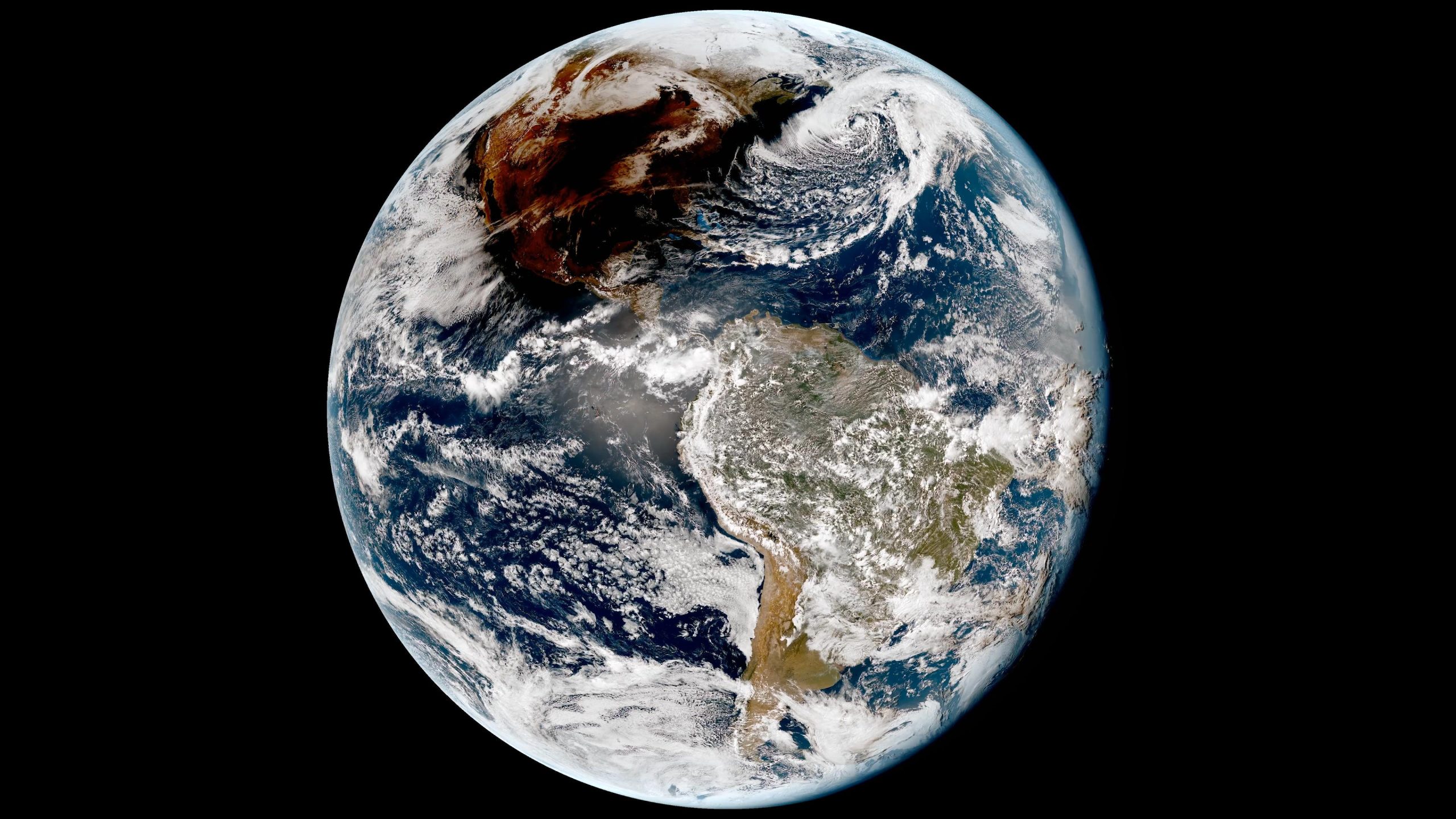
    ESA Total Solar Eclipse 2024 From Space
    GOES-16 and Sentinel-3 satellites documented the April 8 solar eclipse across North America, exploring its impact on weather patterns. Credit: ESA, Data: NOAA

    A total solar eclipse darkened parts of North America on April 8, with GOES-16 capturing the event, offering insights into atmospheric effects.

    A total solar eclipse swept across North America on April 8, blocking out the Sun momentarily with parts of the continent plunged into darkness. Geostationary satellites orbiting 36,000 km (22,000 miles) away captured images of the rare celestial event. 

    These images, captured by the Geostationary Operational Environmental Satellite (GOES-16), captured the moon’s shadow moving across North America from approximately 10 a.m. to 5 p.m. EDT (16:00 to 23:00 CEST.)

    A total solar eclipse occurs when the Moon passes between the Sun and Earth and, for a short period, blocks the face of the Sun, save for a visible ring of light, known as the Sun’s corona. 

    The track of the moon’s shadow across Earth’s surface, called the path of totality, spanned across the North American continent – from Mexico to the very eastern tip of Canada.

    The GOES series is a collaborative development and acquisition effort between National Oceanic and Atmospheric Administration (NOAA) and NASA. The GOES-16 (GOES-East) satellite, the first of the series, provides continuous imagery and atmospheric measurements of Earth’s western hemisphere and monitors space weather.
    Solar Eclipse Over Eastern Pacific
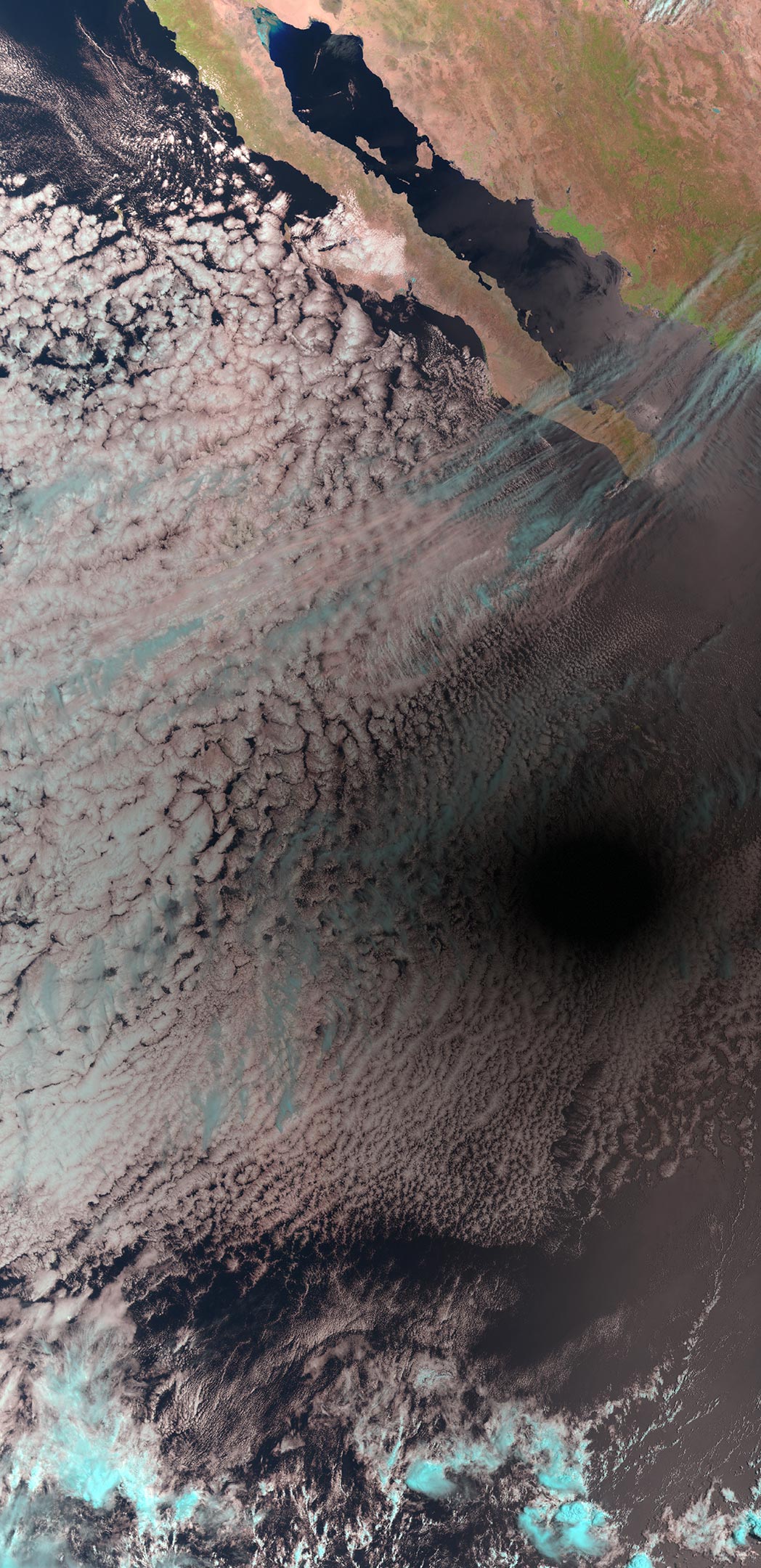
    A total solar eclipse swept across North America on April 8, blocking out the Sun momentarily with parts of the continent plunged into darkness. The Copernicus Sentinel-3 mission captured images of the eclipse with its Sea and Land Surface Temperature Radiometer (SLSTR). This image was acquired at 19:45 CEST (17:45 UTC). Credit: Contains modified Copernicus Sentinel data (2024), processed by ESA

    The Copernicus Sentinel-3 mission also captured images of the eclipse (see above) with its Sea and Land Surface Temperature Radiometer (SLSTR).

    The eclipse also acts as a laboratory for researching what happens to weather when the Moon’s shadow passes over. The shadow makes air temperatures drop and can cause clouds to evolve in different ways. Data from GOES, Sentinel-3, and other satellites are now being used to explore these effects.

    Never miss a breakthrough: Join the SciTechDaily newsletter.
    Follow us on Google and Google News.

    Eclipse European Space Agency Solar Eclipse
    Share. Facebook Twitter Pinterest LinkedIn Email Reddit

    Related Articles

    Proba-2 Satellite Sees the Moon Eclipse the Sun Twice [Video]

    Five NASA Tips for Photographing the “Ring of Fire” Solar Eclipse

    Don’t Miss: A “Ring of Fire” in the Sky

    Eclipsing Expectations: Aussie Adventure Sets the Stage for 2024 U.S. Eclipse Spectacle

    Australian Total Solar Eclipse Captured in Stunning Image

    Don’t Miss Eclipses: NASA Releases New Map of Upcoming Solar Eclipses

    Proba-2 Spacecraft Captures Two Partial Solar Eclipses in One Day

    NASA’s ACE Mission: Total Solar Eclipses Shine a Light on the Solar Wind

    A Unique View of a Solar Eclipse

    Leave A Reply Cancel Reply

    • Facebook
    • Twitter
    • Pinterest
    • YouTube

    Don't Miss a Discovery

    Subscribe for the Latest in Science & Tech!

    Trending News

    289-Million-Year-Old Reptile Mummy Reveals Origin of Human Breathing System

    New Brain Discovery Challenges Long-Held Theory of Teenage Brain Development

    Scientists Discover Plants “Scream” – We Just Couldn’t Hear Them Until Now

    Scientists Discover a Surprising Reason Intermittent Fasting Extends Life

    This Simple Fruit Wash Could Make Produce Safer and Last Days Longer

    Scientists Say Adding This Unusual Seafood to Your Diet Could Reverse Signs of Aging

    Scientists Say a Hidden Structure May Exist Inside Earth’s Core

    Doctors Surprised by the Power of a Simple Drug Against Colon Cancer

    Follow SciTechDaily
    • Facebook
    • Twitter
    • YouTube
    • Pinterest
    • Newsletter
    • RSS
    SciTech News
    • Biology News
    • Chemistry News
    • Earth News
    • Health News
    • Physics News
    • Science News
    • Space News
    • Technology News
    Recent Posts
    • Breakthrough Bowel Cancer Trial Leaves Patients Cancer-Free for Nearly 3 Years
    • New Immune Pathway Could Supercharge mRNA Cancer Vaccines
    • Natural Compound Shows Powerful Potential Against Rheumatoid Arthritis
    • 100,000-Year-Old Neanderthal Fossils in Poland Reveal Unexpected Genetic Connections
    • Unexpected Hormone Discovery Could Change How We Treat Arthritis
    Copyright © 1998 - 2026 SciTechDaily. All Rights Reserved.
    • Science News
    • About
    • Contact
    • Editorial Board
    • Privacy Policy
    • Terms of Use

    Type above and press Enter to search. Press Esc to cancel.