
Pathfinding exercise paves the way for extensive US observations in 2024.
The Southwest Research Institute led a team in the CATE experiment to observe the Sun’s corona during a solar eclipse in Australia as a precursor to the 2024 U.S. eclipse. The Citizen CATE 2024 project will create a high-resolution movie of the solar eclipse using a network of citizen scientists.
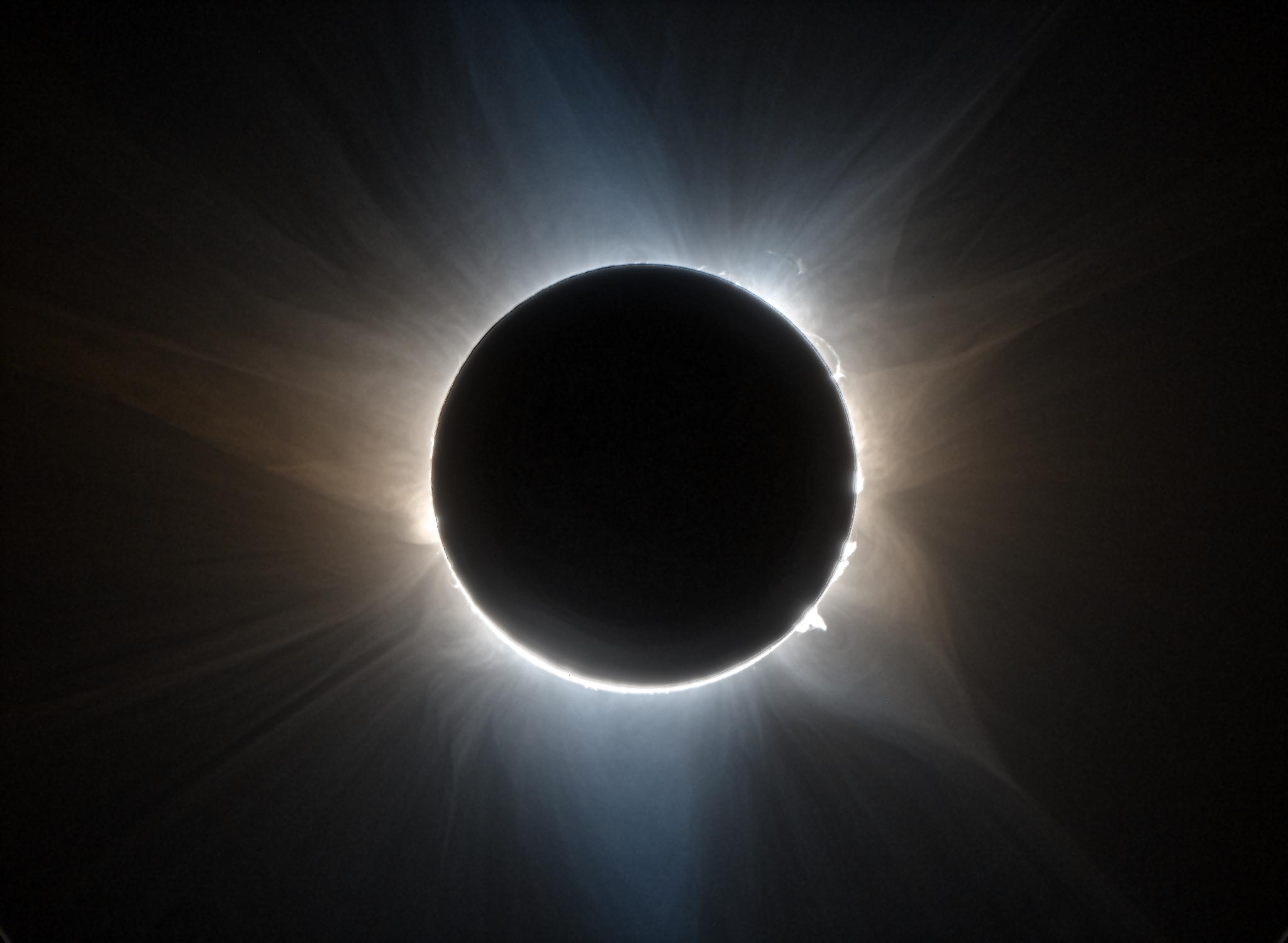
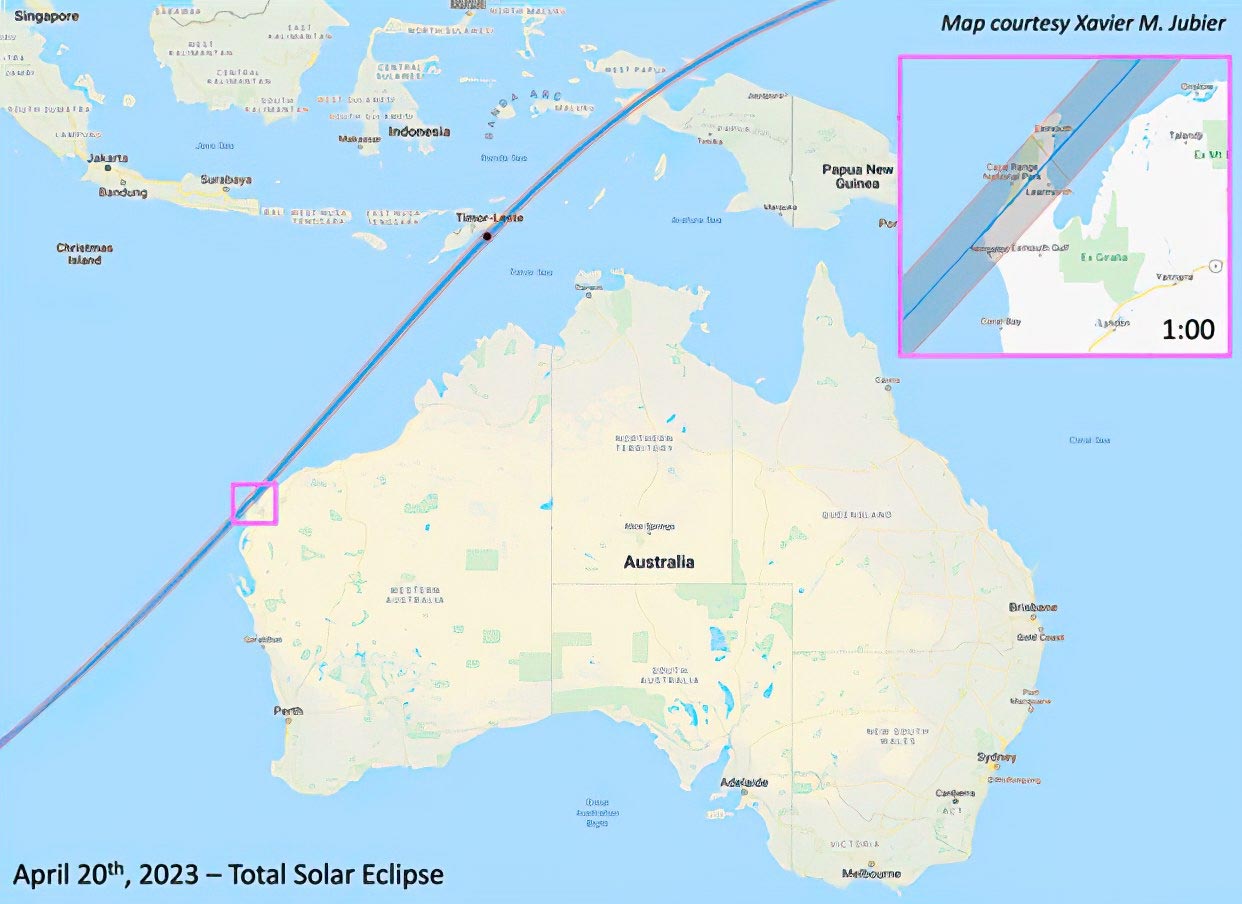
Scientists from Southwest Research Institute (SwRI) led a team in the unique Citizen Continental-America Telescopic Eclipse (CATE) experiment to image the Sun’s outer atmosphere, the corona, during a short solar eclipse on the opposite side of the Earth. Using four platforms in the northwest corner of Australia, the team successfully observed the million-degree solar corona at the April 20 eclipse viewed from the Exmouth peninsula. The Australian eclipse serves both as a unique scientific opportunity and a training exercise for the program’s leadership in preparation for the 2024 U.S. eclipse.
Purpose and Scope of the Citizen CATE Experiment
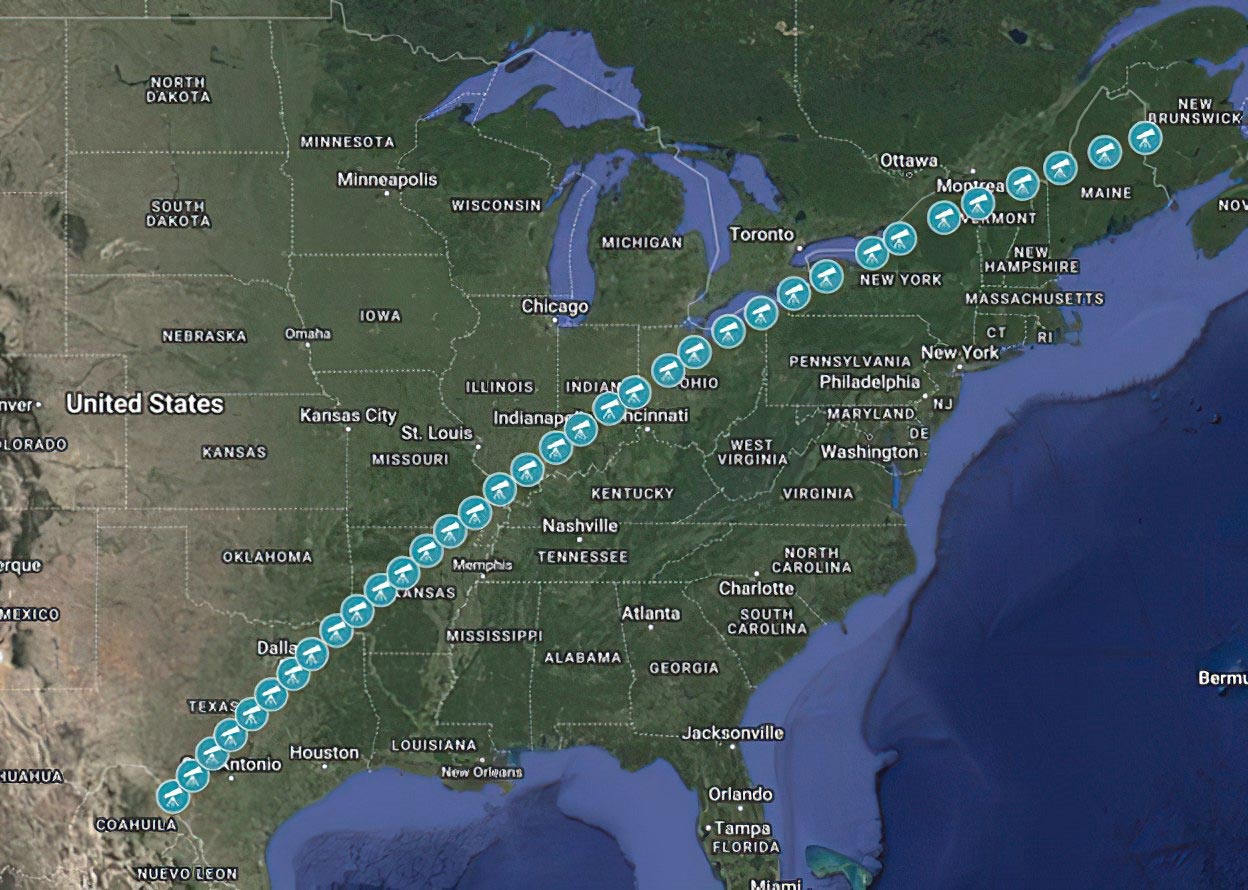
The CATE 2024 team traveled nearly 10,000 miles (16,000 kilometers) for one minute of totality to observe the Sun’s corona from the unique perspective offered by total solar eclipses. These phenomena allow scientists to view the complex and dynamic outer atmosphere in ways that aren’t possible or practical by any other means, opening new windows into our understanding of the solar corona. SwRI is leading the Citizen CATE 2024 experiment, a broad scientific outreach initiative that will make a continuous 60-minute high-resolution movie during the April 8, 2024, solar eclipse over the United States. CATE 2024 will use a network of 35 teams of citizen scientists representing the local communities within the eclipse shadow path.
“Even though this was a very short eclipse, our team of community scientists performed flawlessly and captured fabulous images of the structure of the elusive solar corona,” said Dr. Amir Caspi, a principal scientist at SwRI in Boulder, Colorado, and leader of the CATE 2024 project.
The observations obtained by the team will allow scientists to study the complexities of the Sun’s corona including its complicated shape, how it changes over time, or what causes the corona to reach temperatures of millions of degrees Fahrenheit. Today’s images from Australia will also help the team to refine its experimental procedures for the immense, distributed community effort in the United States next year.
“This eclipse provided the perfect opportunity to test our equipment and procedures, and to train our community leaders for the next eclipse in 2024,” Caspi said. “When it comes to preparations for this kind of major effort, there’s no substitute for the real thing.”
The Citizen CATE 2024 project is funded by grants from the National Science Foundation and NASA, is led by SwRI, and includes the National Center for Atmospheric Research, the National Solar Observatory, the Laboratory for Atmospheric and Space Physics at the University of Colorado Boulder, and the Space Science Institute. Beyond its scientific goals, the project aims to engage many unique and diverse communities along the eclipse path as an integral part of a major scientific research effort.
Engaging Communities Through Participatory Science
“Total solar eclipses provide wonderful opportunities to bring together the public and science,” said Dr. Carrie Black, program officer for the National Solar Observatory at the NSF Astronomical Sciences Division. “The Citizen CATE 2024 project leverages the public value of science to create a lasting educational impact for both the scientific and local communities.”
“Citizen CATE is part of a growing family of NASA citizen science projects gearing up for the Heliophysics Big Year initiative in 2023-2024, inspiring joy and curiosity along with excellent participatory science opportunities,” said Dr. Elizabeth MacDonald, Citizen Science Strategic Working Group lead at NASA.
The current project builds on the experience of the first Citizen CATE experiment, which used 68 stations to observe the August 2017 total solar eclipse that crossed the entire continental United States. CATE 2024 expands the scientific objectives by measuring polarized light and engages with teams across the new eclipse path. Dr. Sarah Kovac, a 2017 CATE participant and now a postdoctoral researcher at SwRI, serves as project manager for CATE 2024.
“Participating in CATE as a young undergraduate inspired me to pursue a career in heliophysics,” said Kovac. “Seven years and one Ph.D. later, I get to be on the professional side of planning an eclipse expedition, and it’s beyond exciting to share this passion with the next generation of young scientists.”
The 2023 Australian observation effort includes team members from SwRI, NSO, NCAR, the University of Northern Colorado, Rice University, Indiana University Bloomington, and the University of Maine.
The project will begin to recruit teams from eclipse path communities in Fall of 2023. Interested parties can find more information and a contact form on the project’s website, https://eclipse.boulder.swri.edu.
Never miss a breakthrough: Join the SciTechDaily newsletter.
Follow us on Google and Google News.