
Close Menu
    Facebook X (Twitter) Instagram
    SciTechDaily
    • Biology
    • Chemistry
    • Earth
    • Health
    • Physics
    • Science
    • Space
    • Technology
    Facebook X (Twitter) Pinterest YouTube RSS
    SciTechDaily
    Home»Space»Five NASA Tips for Photographing the “Ring of Fire” Solar Eclipse
    Space

    Five NASA Tips for Photographing the “Ring of Fire” Solar Eclipse

    By NASAOctober 11, 2023No Comments4 Mins Read
    Facebook Twitter Pinterest Telegram LinkedIn WhatsApp Email Reddit
    Share
    Facebook Twitter LinkedIn Pinterest Telegram Email Reddit
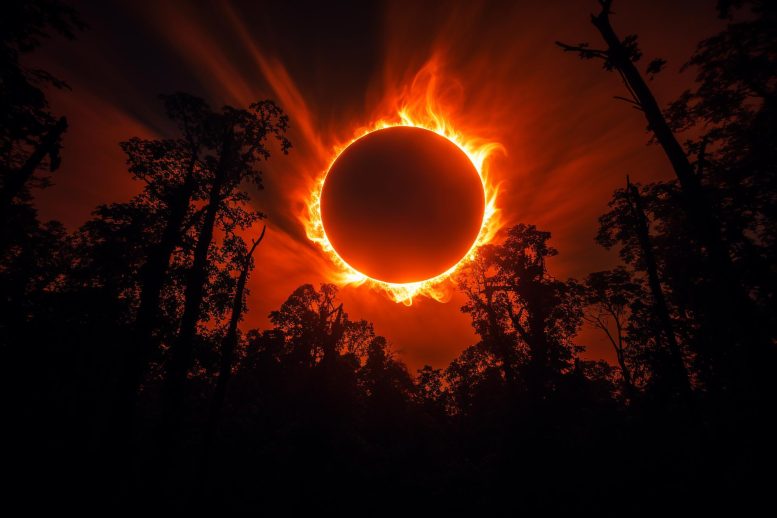
    Ring of Fire Solar Eclipse Concept
    A “Ring of Fire” solar eclipse, also known as an annular solar eclipse, occurs when the Moon passes between the Earth and the Sun but does not completely cover the Sun’s disk due to its apparent smaller size. This phenomenon is caused by the Moon being near its apogee, the farthest point from Earth in its elliptical orbit. As a result, the outer edge of the Sun remains visible as a bright ring, or annulus, surrounding the dark disk of the Moon. This striking appearance gives rise to its popular name, the “Ring of Fire.” (Artist’s illustration.)

    An annular “ring of fire” solar eclipse is crossing the Americas on October 14, 2023. This astronomical event is a perfect opportunity to capture unforgettable images of the Moon “taking a bite” out of the Sun or creating a “ring of fire” effect in the sky. Whether you’re an amateur photographer or a selfie master, try out these tips for photographing the eclipse.

    1. – Safety First

    To take images as the Sun is being eclipsed, you’ll need to use a special solar filter to protect your camera, just as you’ll need a pair of eclipse glasses to protect your own eyes.

    Having a few other pieces of equipment can also come in handy during the eclipse. Using a tripod can help you stabilize the camera and avoid taking blurry images during the low lighting. Additionally, using a delayed shutter release timer will allow you to snap shots without jiggling the camera.
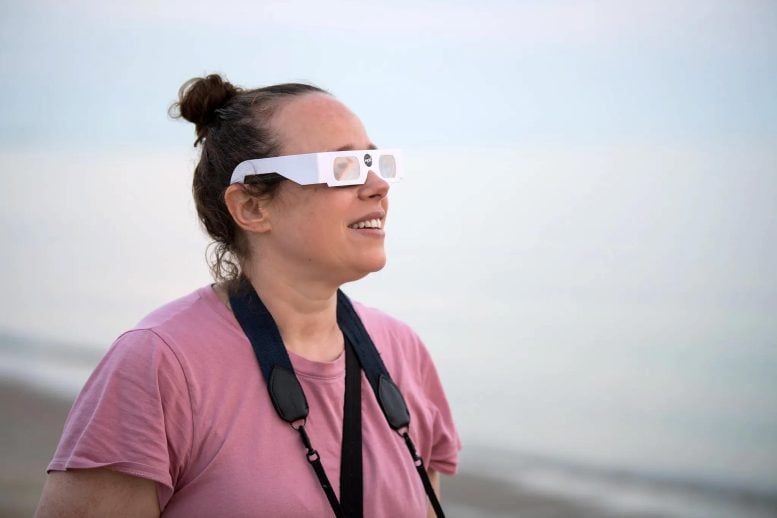
    Sarah Baker Views Partial Solar Eclipse
    Sarah Baker views the partial solar eclipse as the sun rises, Thursday, June 10, 2021, at Lewes Beach in Delaware. Credit: NASA/Aubrey Gemignani

    2. – Any Camera Is a Good Camera

    Taking a stunning photo has more to do with the photographer than the camera. Whether you have a high-end DSLR, or a camera phone, you can take great photos during the eclipse; after all, the best piece of equipment you can have is a good eye and a vision for the image you want to create. If you don’t have a telephoto zoom lens, focus on taking landscape shots, which capture the changing environment.

    3. – Look Up, Down, All Around

    While the Sun is the most commanding element of an eclipse, remember to look around you. As the Moon slips in front of the Sun, the landscape will be bathed in long shadows, creating eerie lighting across the landscape. Light filtering through the overlapping leaves of trees creates natural pinholes, which will also create mini eclipse replicas on the ground. Everywhere you can point your camera can yield exceptional imagery, so be sure to compose some wide-angle photos that can capture your eclipse experience.

    NASA photographer Bill Ingalls recommends focusing on the human experience of watching the eclipse. “The real pictures are going to be of the people around you pointing, gawking, and watching it,” Ingalls noted. “Those are going to be some great moments to capture to show the emotion of the whole thing.”
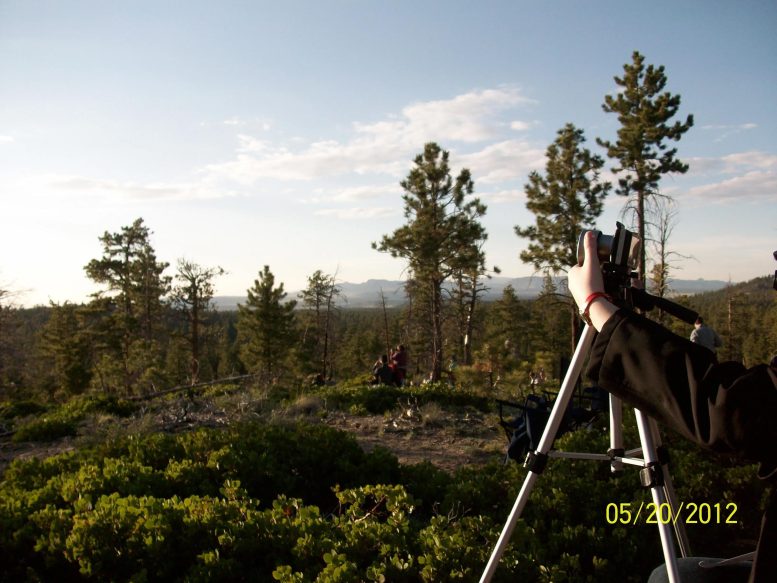
    Safe Solar Filter for Photographing Solar Eclipse
    A safe solar filter must be used in front of a camera lens whenever photographing an annular solar eclipse or a partial solar eclipse. Putting the camera on a tripod will help stabilize the view and produce clearer photos. Credit: Danny B. Thomas

    4. – Practice

    Be sure you know the capabilities of your camera before eclipse day. Most cameras, and even many camera phones, have adjustable exposures, which can help you darken or lighten your image during the tricky eclipse lighting. Make sure you know how to manually focus the camera for crisp shots.

    For DSLR cameras, the best way to determine the correct exposure is to test settings on the uneclipsed Sun beforehand. Using a fixed aperture of f/8 to f/16, try shutter speeds between 1/1000 to 1/4 second to find the optimal setting, which you can then use to take images during the partial or annular stages of the eclipse.

    5. – Share!

    Share your eclipse experience with friends and family afterward. Tag @NASA to connect your photos on social media to those taken around the country and share them with NASA.

    While you’re out perfecting your perfect eclipse shot, don’t forget to stop and look at the eclipse with your own eyes. Just remember to wear your solar viewing glasses (or “eclipse glasses”) throughout the entire eclipse!

    Never miss a breakthrough: Join the SciTechDaily newsletter.
    Follow us on Google and Google News.

    Astronomy Eclipse Moon NASA Solar Eclipse Sun
    Share. Facebook Twitter Pinterest LinkedIn Email Reddit

    Related Articles

    NASA Needs You: Contribute to Research on Eclipse Day – and Every Day

    A “Ring of Fire” in the Sky: The Solar Eclipse Experience

    Don’t Miss: A “Ring of Fire” in the Sky

    Don’t Miss Eclipses: NASA Releases New Map of Upcoming Solar Eclipses

    Total Solar Eclipse Below the Bottom of the World Captured From Airplane

    Don’t Miss the Total Solar Eclipse 2021 – Where To See It in Person & How To Watch a Live Stream

    NASA’s ACE Mission: Total Solar Eclipses Shine a Light on the Solar Wind

    Don’t Miss the Breathtaking “Ring of Fire” Solar Eclipse

    NASA’s Solar Dynamics Observatory Spots First Lunar Transit of 2021

    Leave A Reply Cancel Reply

    • Facebook
    • Twitter
    • Pinterest
    • YouTube

    Don't Miss a Discovery

    Subscribe for the Latest in Science & Tech!

    Trending News

    Scientists Uncover Potential Brain Risks of Popular Fish Oil Supplements

    Scientists Discover a Surprising Way To Make Bread Healthier and More Nutritious

    After 60 Years, Scientists Uncover Unexpected Brain Effects of Popular Diabetes Drug Metformin

    New Research Uncovers Hidden Side Effects of Popular Weight-Loss Drugs

    Scientists Rethink Extreme Warming After Surprising Ocean Discovery

    Landmark Study Links Never Marrying to Significantly Higher Cancer Risk

    Researchers Discover Unknown Beetle Species Just Steps From Their Lab

    Largest-Ever Study Finds Medicinal Cannabis Ineffective for Anxiety, Depression, PTSD

    Follow SciTechDaily
    • Facebook
    • Twitter
    • YouTube
    • Pinterest
    • Newsletter
    • RSS
    SciTech News
    • Biology News
    • Chemistry News
    • Earth News
    • Health News
    • Physics News
    • Science News
    • Space News
    • Technology News
    Recent Posts
    • Students Build Dark Matter Detector and Set New Experimental Limits
    • Scientists Discover Caffeine Can Repair Key Memory Circuits After Sleep Loss
    • Strange 65-Foot Dinosaur Discovered in Argentina
    • Researchers Uncover Source of Strange Deformation in Earth’s Largest Continental Rift
    • Scientists Solve Mystery of Where the Colorado River Vanished Millions of Years Ago
    Copyright © 1998 - 2026 SciTechDaily. All Rights Reserved.
    • Science News
    • About
    • Contact
    • Editorial Board
    • Privacy Policy
    • Terms of Use

    Type above and press Enter to search. Press Esc to cancel.