
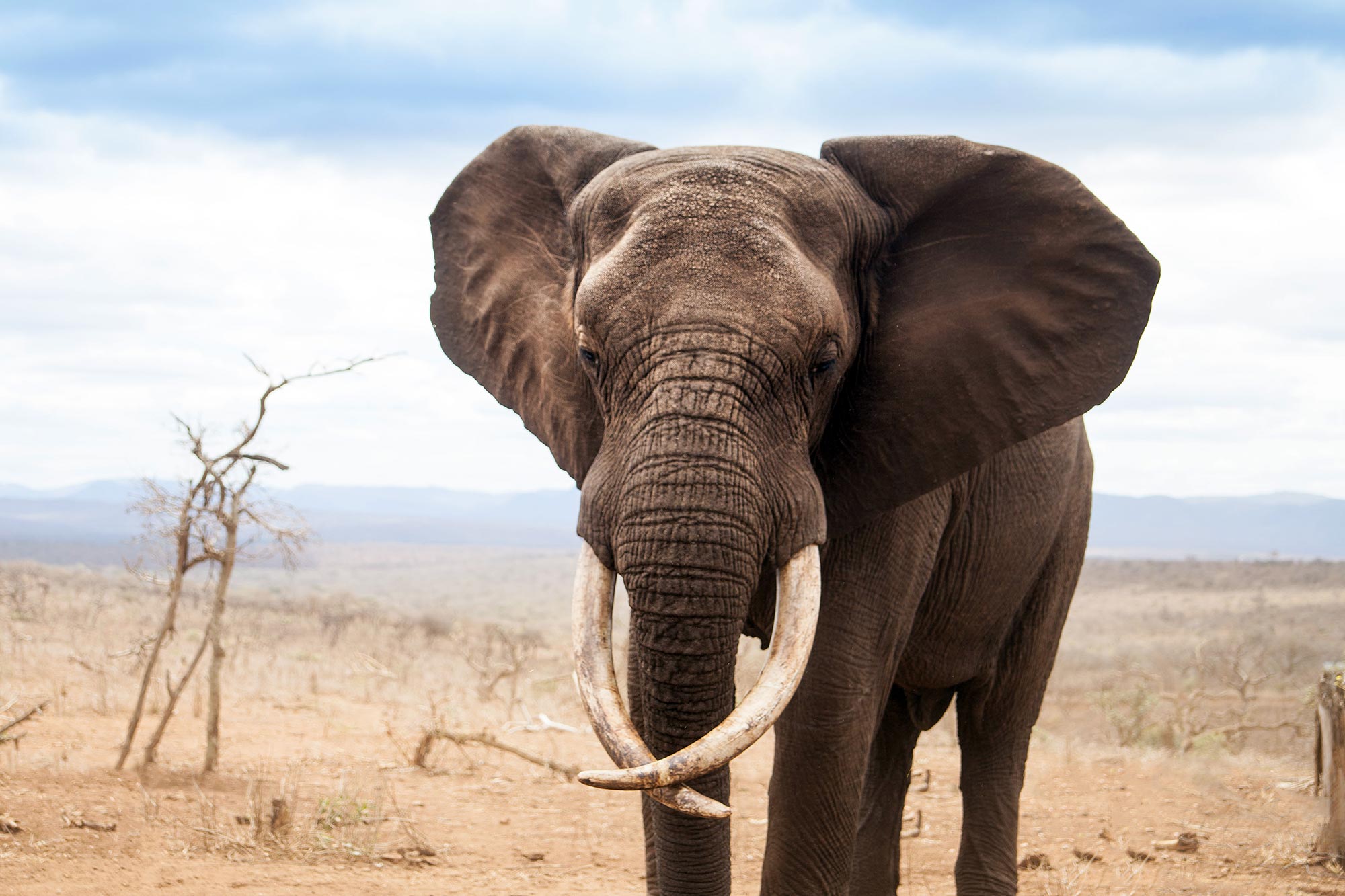
Stories of unique and sentient interactions between elephants and their dead are a familiar part of the species’ lore, but a comprehensive study of these interactions has been lacking — until now. A recent review of documented field observations of elephants at carcasses reveals patterns of elephants’ behavior toward their dead, regardless of the strength of former relationships with the deceased individual.
“Witnessing elephants interact with their dead sends chills up one’s spine, as the behavior so clearly indicates advanced feeling.” George Wittemyer, Ph.D.
The findings, published in the journal Primates, indicate that elephants exhibit a generalized interest in their dead, even after bodies have long decayed — and even if the elephants studied were not closely bonded to the dead individual. The most common behaviors observed were approaching the dead, touching and examining the carcass. Elephants also appeared to use their advanced sense of smell to identify dead individuals, and they were observed vocalizing and attempting to lift or pull fallen elephants that had just died.
The research was led by Shifra Goldenberg, Ph.D., from the San Diego Zoo Institute for Conservation Research and the Smithsonian Conservation Biology Institute, and George Wittemyer, Ph.D., from Save the Elephants and the Department of Fish, Wildlife and Conservation Biology at Colorado State University. The project was funded by Save the Elephants, the National Science Foundation, and Colorado State University.
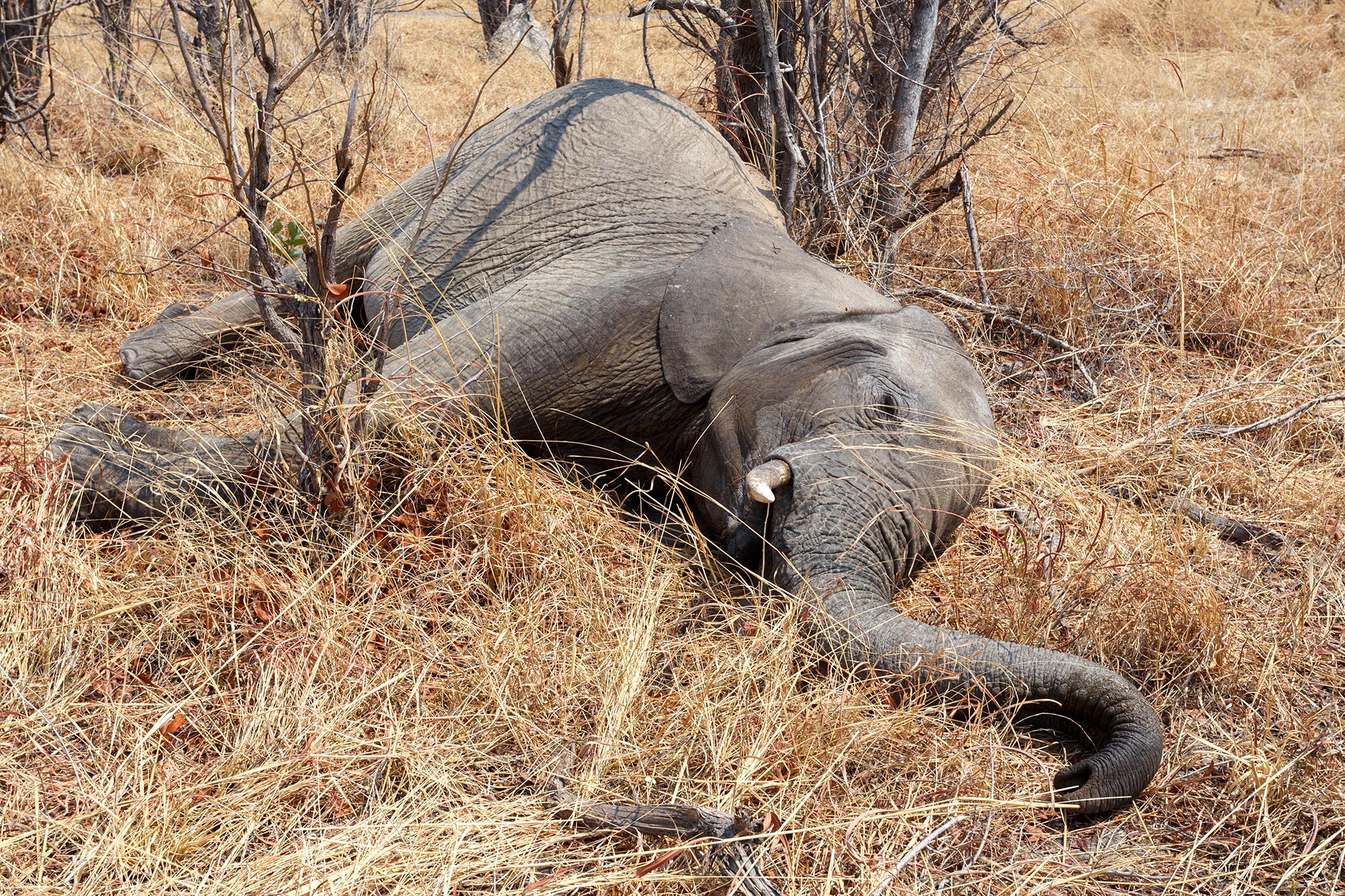
The study consisted of a literature review of 32 original observations of wild elephant carcasses from 12 distinct sources across Africa. Despite variability across sources in methodology, some trends were apparent.
“The most commonly recorded behavior of elephants towards their dead included touching, approaching the dead animal, and investigating the carcass,” said Goldenberg. “The motivations underlying observed behaviors are hard to know, but clearly varied across circumstances and individuals. For example, some elephants made repeated visits to a carcass, and it’s possible that temporal gland streaming by a young female at the site of her mother’s carcass is associated with heightened emotion.”
Elephants form lasting relationships over decades, and individuals maintain different types of relationships across populations. They live in socially complex, fission-fusion societies, in which social groups divide and merge over time. These complex relationships necessitate recognizing and remembering a wide range of individuals in their species. Not surprisingly, elephants have demonstrated notable cognitive abilities, extensive memory, and highly sophisticated olfaction.
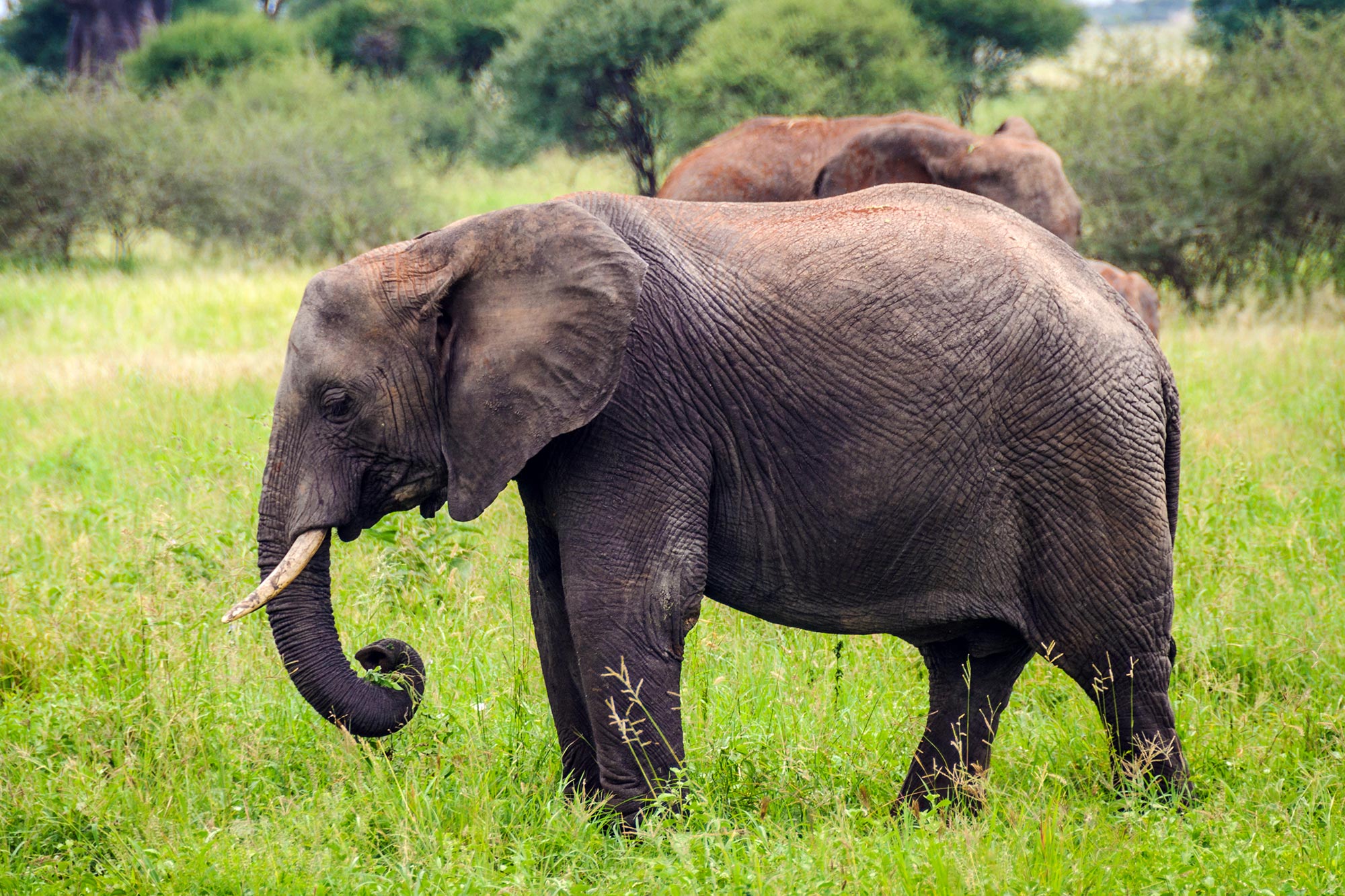
“Witnessing elephants interact with their dead sends chills up one’s spine, as the behavior so clearly indicates advanced feeling,” said Wittemyer. “This is one of the many magnificent aspects of elephants that we have observed, but cannot fully comprehend.” When greeting each other after separation, elephants engage in prolonged olfactory and tactile investigation, suggesting that they’re constantly updating social and spatial information. It is possible that elephant behavior toward a carcass serves the same purpose as who an elephant interacts with and has important implications in an individual’s survival.
The researchers said they hope future studies will be performed to better understand elephant memory and further explore the possibility of grief and emotion in elephants’ responses to death.
Reference: “Elephant behavior toward the dead: A review and insights from field observations” by Shifra Z. Goldenberg and George Wittemyer, 11 November 2019, Primates.
DOI: 10.1007/s10329-019-00766-5
Never miss a breakthrough: Join the SciTechDaily newsletter.
Follow us on Google and Google News.
1 Comment
A few genetic snippets of DNA implanted via CRISPR technology and perhaps we could have elephants with vocal chords. That’d be nice. We’d know what they were thinking. Hmmm. A few other enhanced snippets and perhaps we could have humans with IQs of 200. What do you suppose the fallout from smarter people would cause?