

Close Menu
    Facebook X (Twitter) Instagram
    SciTechDaily
    • Biology
    • Chemistry
    • Earth
    • Health
    • Physics
    • Science
    • Space
    • Technology
    Facebook X (Twitter) Pinterest YouTube RSS
    SciTechDaily
    Home»Health»Epigenetic Treatment Can Help the Spinal Cord Regenerate After Injury
    Health

    Epigenetic Treatment Can Help the Spinal Cord Regenerate After Injury

    By PLOSNovember 7, 2022No Comments3 Mins Read
    Facebook Twitter Pinterest Telegram LinkedIn WhatsApp Email Reddit
    Share
    Facebook Twitter LinkedIn Pinterest Telegram Email Reddit
    DNA Genetic Modification Concept
    TTK21 treatment was found to have several benefits over the control treatment. 

    Research shows TTK21 promotes neuron regrowth in mice with spinal injuries, with increased axon sprouting suggesting future therapeutic potential for spinal cord injury patients.

    Currently, there are no effective therapies for spinal cord damage; physical therapy may help patients recover some movement, but the results are severely limited in severe cases due to the inability of spinal neurons to regenerate naturally after injury.

    However, in a study that was recently published in PLOS Biology, scientists led by Simone Di Giovanni at Imperial College London in the UK demonstrate that when given to mice 12 weeks after a serious injury, weekly treatments with an epigenetic activator can encourage the regrowth of sensory and motor neurons in the spinal cord.
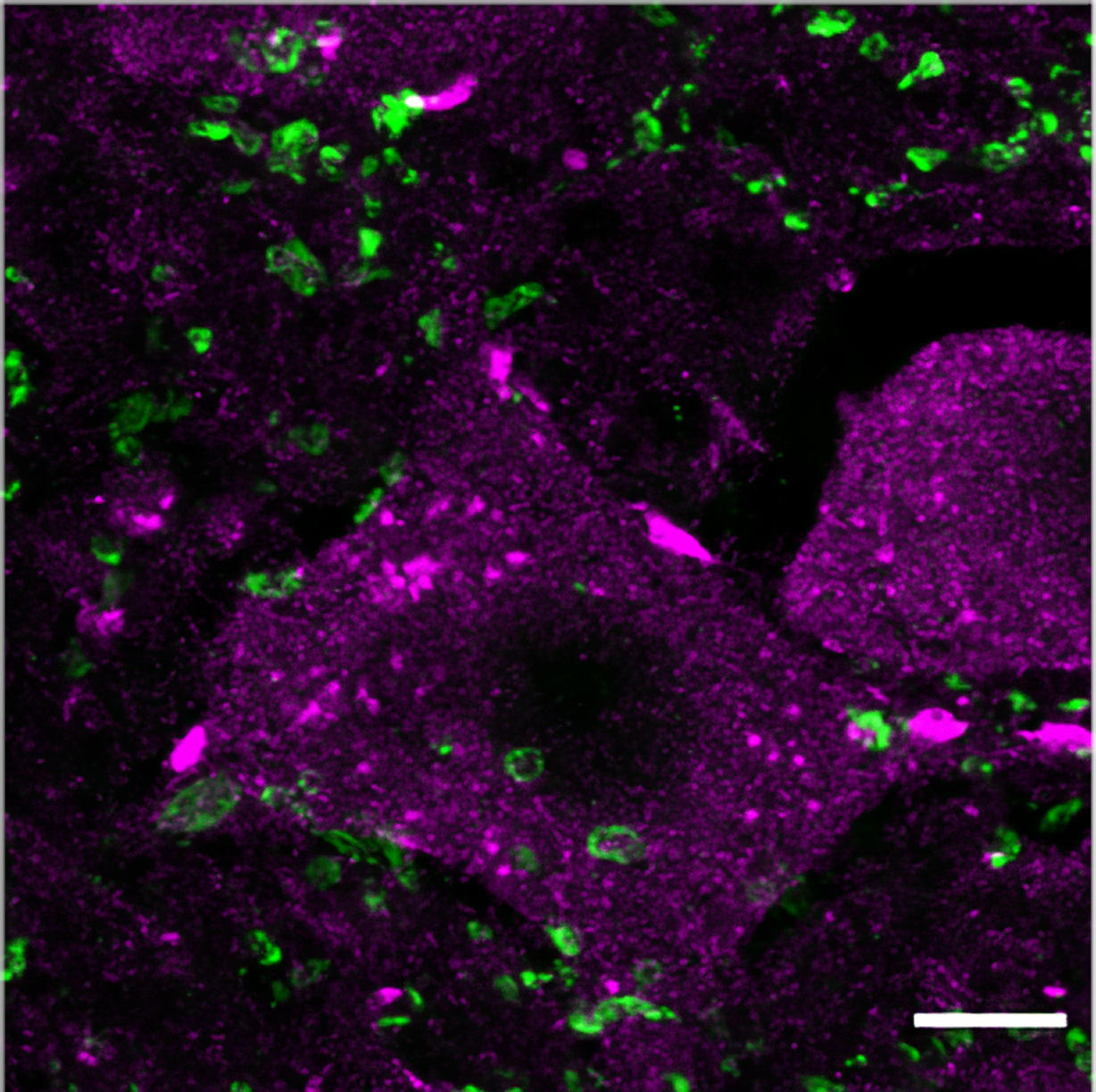
    Epigenetic Treatment in Mice Improves Spinal Cord Regeneration After Injury
    Shown is an increased density of synapses (green) that contact motoneurons (purple) in the spinal cord of an injured animal after treatment with the small molecule TTK21-These are important for motor function. Credit: Franziska Mueller (CC-BY 4.0)

    Activating Regrowth with Epigenetic Therapy

    Continuing their past success, the researchers utilized a tiny molecule called TTK21 to activate genetic programming that induces axon regeneration in neurons. TTK21 affects the epigenetic state of genes by activating the CBP/p300 family of coactivator proteins. They tested TTK21 treatment in a mouse model of severe spinal cord injury. The mice were raised in an enriching environment that encouraged them to be physically active, as is recommended for human patients.

    The treatment started 12 weeks after the severe spinal cord injury and lasted 10 weeks. Researchers found several improvements after TTK21 treatment compared with the control treatment. The most apparent effect was increased axon sprouting in the spinal cord. They also discovered that motor axon retraction above the point of injury halted and sensory axon growth increased.

    These changes were likely due to the observed increase in gene expression related to regeneration. The next step will be to enhance these effects even more and to trigger the regenerating axons to reconnect to the rest of the nervous system so that animals can regain their ability to move with ease.

    Di Giovanni adds, “This work shows that a drug called TTK21 that is administered systemically once/week after a chronic spinal cord injury (SCI) in animals can promote neuronal regrowth and an increase in synapses that are needed for neuronal transmission. This is important because chronic spinal cord injury is a condition without a cure where neuronal regrowth and repair fail. We are now exploring the combination of this drug with strategies that bridge the spinal cord gap such as biomaterials as possible avenues to improve disability in SCI patients.”

    Reference: “CBP/p300 activation promotes axon growth, sprouting, and synaptic plasticity in chronic experimental spinal cord injury with severe disability” by Franziska Müller, Francesco De Virgiliis, Guiping Kong, Luming Zhou, Elisabeth Serger, Jessica Chadwick, Alexandros Sanchez-Vassopoulos, Akash Kumar Singh, Muthusamy Eswaramoorthy, Tapas K. Kundu and Simone Di Giovanni, 20 September 2022, PLOS Biology.
    DOI: 10.1371/journal.pbio.3001310

    The study was funded by the International Spinal Research Trust, Marina Romoli Onlus, the Rosetrees Trust, and the Brain Research Trust.

    The funders had no role in study design, data collection and analysis, decision to publish, or preparation of the manuscript.

    Never miss a breakthrough: Join the SciTechDaily newsletter.
    Follow us on Google and Google News.

    Axons Imperial College London Nervous System Popular Regeneration Regenerative Biology Spinal Cord
    Share. Facebook Twitter Pinterest LinkedIn Email Reddit

    Related Articles

    Reversing Paralysis: “Dancing Molecules” Can Fix Spinal Cord Injuries

    Research Shows Investigational Cancer Drug Can Boost Regeneration of Damaged Nerves After Spinal Cord Injury

    Nerve Regeneration and Repair: Intermittent Fasting May Help Heal Nerve Damage

    Stem Cells Help Lizard Regenerate a Perfect Tail for First Time in More Than 250 Million Years

    Muscle Regeneration: Massage Doesn’t Just Feel Good, It Makes Muscles Heal Faster and Stronger

    “Zombie Cells” Hold Clues to Improved Healing of Spinal Cord Injuries

    ‘Last Resort’ Antibiotic Kills Bacteria by Popping Them Like Balloons

    Psychedelic Magic Mushroom Compound, Psilocybin, Performs at Least As Well as Leading Antidepressant

    New Lab-on-a-Chip Could Enable Fast, Easy Testing for Colds, Flu, UTIs, and COVID-19 at Home

    Leave A Reply Cancel Reply

    • Facebook
    • Twitter
    • Pinterest
    • YouTube

    Don't Miss a Discovery

    Subscribe for the Latest in Science & Tech!

    Trending News

    Artificial Sweeteners May Harm Future Generations, Study Suggests

    Splashdown! NASA Artemis II Returns From Record-Breaking Moon Mission

    What If Consciousness Exists Beyond Your Brain

    Scientists Finally Crack the 100-Million-Year Evolutionary Mystery of Squid and Cuttlefish

    Beyond “Safe Levels”: Study Challenges What We Know About Pesticides and Cancer

    Researchers Have Found a Dietary Compound That Increases Longevity

    Scientists Baffled by Bizarre “Living Fossil” From 275 Million Years Ago

    Your IQ at 23 Could Predict Your Wealth at 27, Study Finds

    Follow SciTechDaily
    • Facebook
    • Twitter
    • YouTube
    • Pinterest
    • Newsletter
    • RSS
    SciTech News
    • Biology News
    • Chemistry News
    • Earth News
    • Health News
    • Physics News
    • Science News
    • Space News
    • Technology News
    Recent Posts
    • Alzheimer’s Breakthrough: Scientists Discover Key Protein May Prevent Toxic Protein Clumps in the Brain
    • Scientists Discover New Way To Make Protein Shakes Taste Better
    • Scientists Break Optical Limits With Quantum Dot-Powered Nanoscopy
    • Scientists Shrink a Lab Spectrometer to the Size of a Grain of Sand
    • Quantum Reality Gets Stranger: Physicists Put a Lump of Metal in Two Places at Once
    Copyright © 1998 - 2026 SciTechDaily. All Rights Reserved.
    • Science News
    • About
    • Contact
    • Editorial Board
    • Privacy Policy
    • Terms of Use

    Type above and press Enter to search. Press Esc to cancel.