
Close Menu
    Facebook X (Twitter) Instagram
    SciTechDaily
    • Biology
    • Chemistry
    • Earth
    • Health
    • Physics
    • Science
    • Space
    • Technology
    Facebook X (Twitter) Pinterest YouTube RSS
    SciTechDaily
    Home»Space»ESA Hamster Ball: Robotic Sphere to Explore the Depths of Lunar Caves
    Space

    ESA Hamster Ball: Robotic Sphere to Explore the Depths of Lunar Caves

    By European Space Agency (ESA)March 26, 2021No Comments3 Mins Read
    Facebook Twitter Pinterest Telegram LinkedIn WhatsApp Email Reddit
    Share
    Facebook Twitter LinkedIn Pinterest Telegram Email Reddit
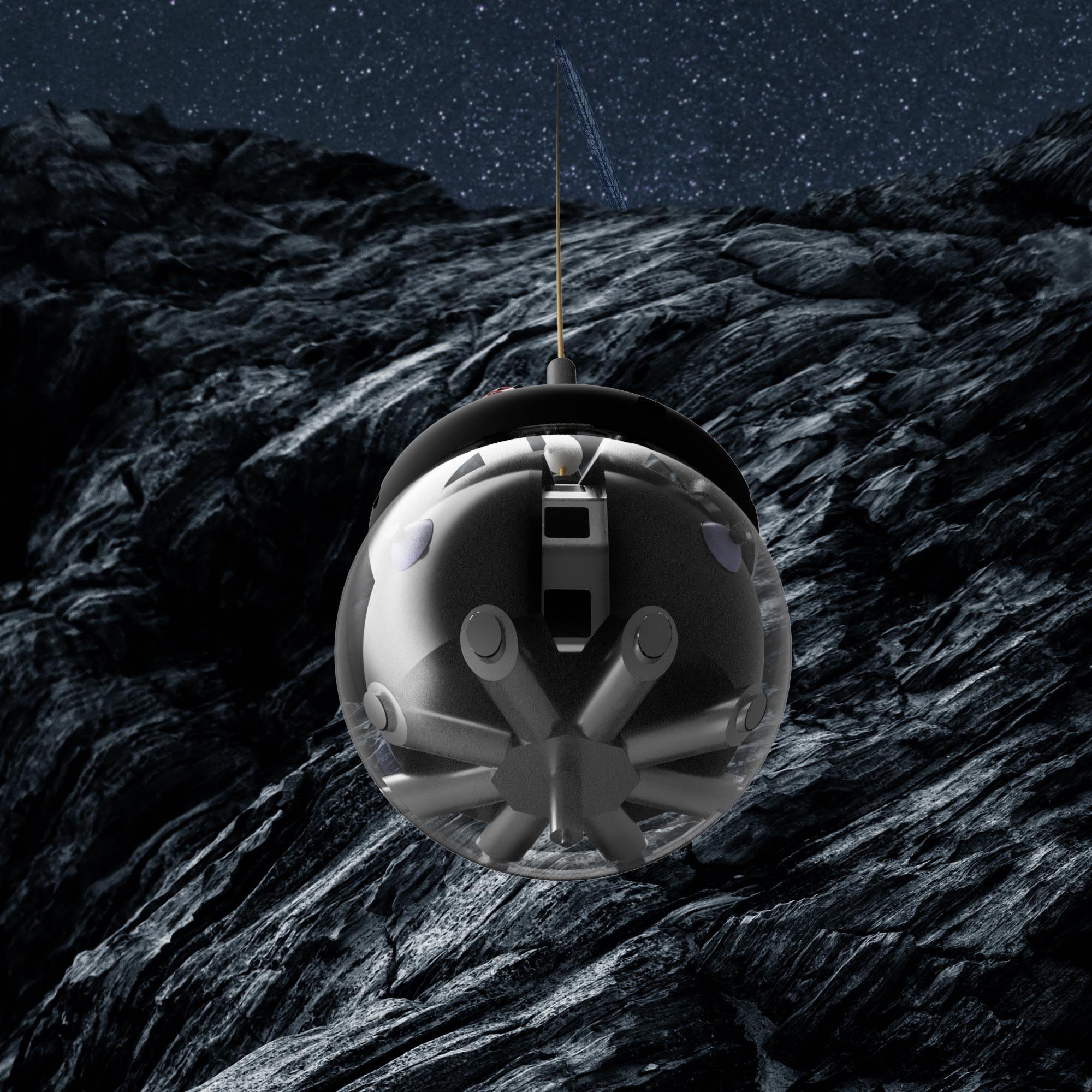
    DAEDALUS Sphere
    Descent And Exploration in Deep Autonomy of Lunar Underground Structures (DAEDALUS) Robot. Credit: Julius-Maximilians-University

    What might look like a dangling hamster ball is actually a robotic sphere to explore the depths of lunar caves.

    Designed by a team coordinated by Germany’s Julius-Maximilians-Universität of Würzburg (JMU), the Descent And Exploration in Deep Autonomy of Lunar Underground Structures, DAEDALUS, robot is being evaluated by ESA’s Concurrent Design Facility, as part of a larger study of lunar cave mission concepts.

    Lunar orbiters have mapped multiple deep pits on the surface of the Moon, believed to be ‘skylights’ into lava caves. These are of high scientific interest, offering access to pristine lunar material – perhaps even water ice deposits. Such caves might also become habitats for lunar settlers, offering natural shielding against radiation, micrometeorites, and surface temperature extremes.
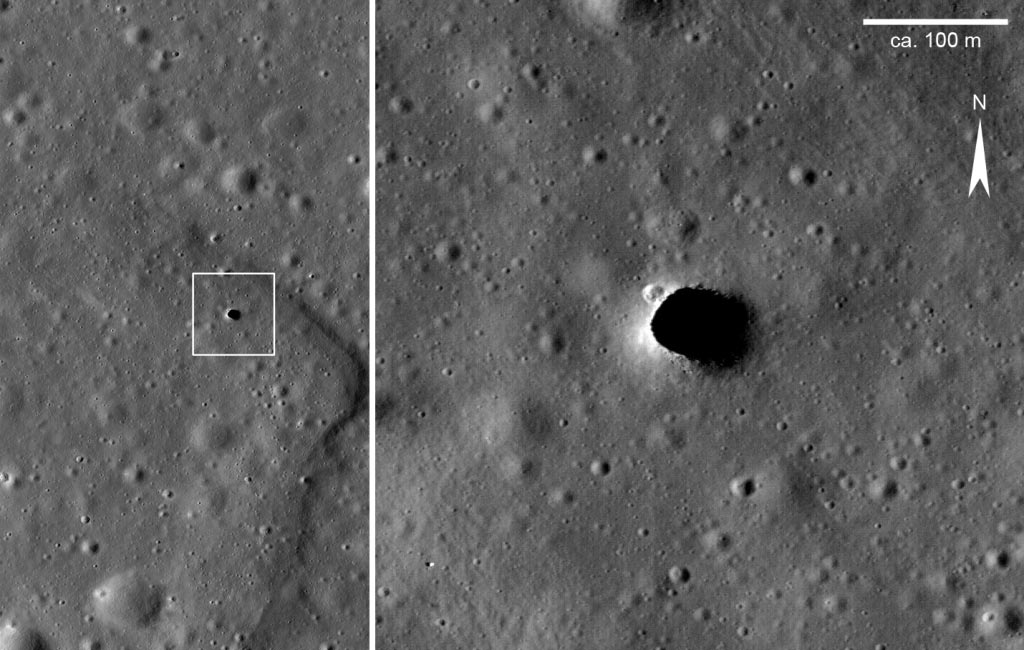
    Skylight on Moon
    Skylight opening on a huge lava tube in the Marius Hills region on the lunar near side. The Moon’s surface is covered by millions of craters, but it also hosts hundreds of very steep-walled holes known as pits. Like doorways to the underworld, photos of some pits clearly show a cavern beneath the Moon’s surface, suggesting that they are ‘skylights’ into extensive lava tubes that can be as wide as New York’s Central Park, and could extend for hundreds of kilometers. These tubes are thought to have formed during lava flows billions of years ago, when the Moon was still geologically active. Credit: NASA/Lunar Reconnaissance Orbiter Camera (LROC)/Science Operations Center (SOC)

    The 46-cm (18-in) diameter DAEDALUS sphere would carry an immersive stereoscopic camera, a ‘laser radar’ lidar system for 3D mapping of cave interiors, temperature sensors, and a radiation dosimeter, as well as extendible arms to help clear obstacles and test rock properties.

    DAEDALUS would first be lowered into the cave mouth on a long tether, then disconnect to roll away autonomously under its own power. The hanging tether would then double as a Wi-Fi receiver, allowing DAEDALUS to relay its findings out of the pit.
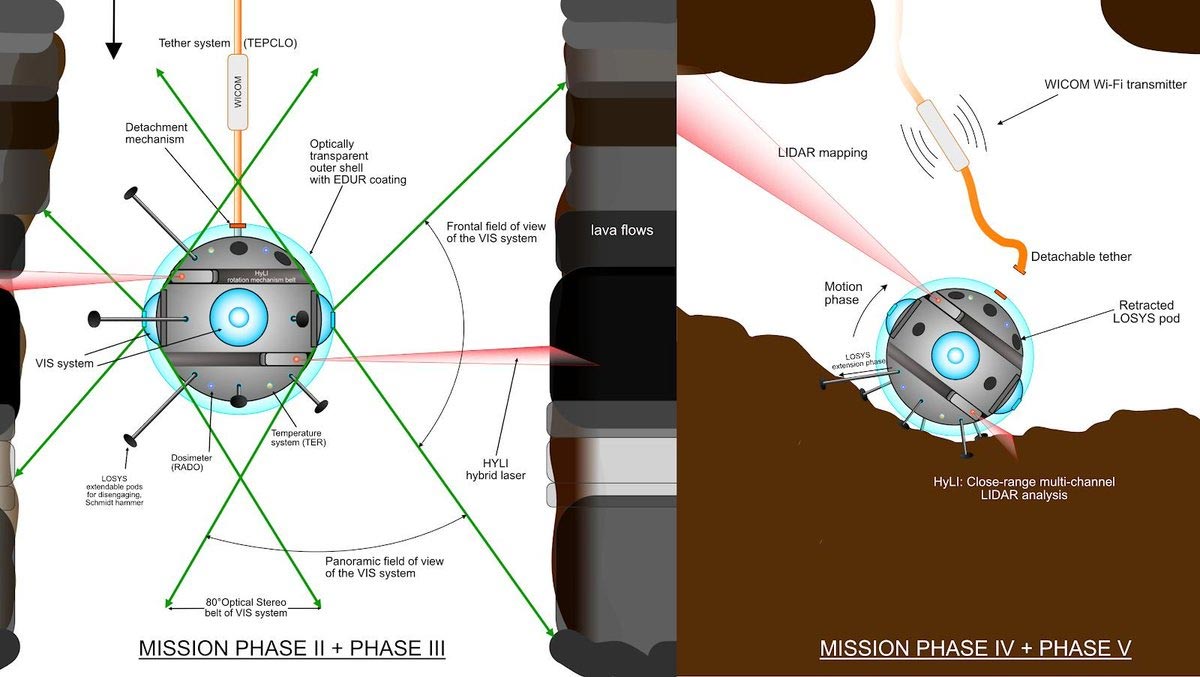
    DAEDALUS Roll Away

    “The design is driven by the requirement to observe the surroundings in full 360 degrees and the necessity to protect the interior from the harsh lunar environment,” explains Dorit Borrmann of the DAEDALUS team. “With the cameras acting as a stereo vision system and the laser distance measurements, the sphere detects obstacles during descent and navigates autonomously upon reaching the pit floor.”

    The consortium led by JMU has developed the robot as part of a larger Lunar Caves-System Study, carried out in response to an ESA Open Space Innovation Platform call. Partnering in this study is Germany’s Jacobs University Bremen, CISAS and the Department of Geosciences of the University of Padova, INAF-Astronomical Observatory of Padova, the VIGEA-Virtual Geographic Agency of Reggio Emilia and CIRA Space Exploration Technologies Department, all in Italy.

    The study is being evaluated along with other lunar cave exploration concepts at ESA’s Concurrent Design Facility at ESTEC in the Netherlands, bringing together space engineering experts to perform rapid analysis of future mission proposals.

    Never miss a breakthrough: Join the SciTechDaily newsletter.
    Follow us on Google and Google News.

    European Space Agency Moon Robotics
    Share. Facebook Twitter Pinterest LinkedIn Email Reddit

    Related Articles

    Exploring the Moon: Scientists and Engineers Design Lunar Cave Explorer

    Lunar Robot Wars: ESA-ESRIC Space Resources Challenge

    Mining the Moon: Preparing a Lunar Drill and Sample Analysis Package

    NELIOTA Project Views Flashes of Light Across the Surface of the Moon

    Moon Bricks Will Pave the Way for Human Space Exploration

    Can Lunar Dust Jeopardise Human Health?

    Moon Village – How to Build a Permanent Base Station on the Moon

    New Mosiac of the Moon’s South Pole

    Weather Satellite Captures Image of “Blue” Moon

    Leave A Reply Cancel Reply

    • Facebook
    • Twitter
    • Pinterest
    • YouTube

    Don't Miss a Discovery

    Subscribe for the Latest in Science & Tech!

    Trending News

    Scientists Discover 132-Million-Year-Old Dinosaur Tracks on South Africa’s Coast

    Scientists Uncover the Secret Ingredient Behind the Spark That May Have Started Life on Earth

    Physicists Observe Matter in Two Places at Once in Mind-Bending Quantum Experiment

    Stanford Scientists Discover Hidden Brain Circuit That Fuels Chronic Pain

    New Study Reveals Why Ozempic Works Better for Some People Than Others

    Climate Change Is Altering a Key Greenhouse Gas in a Way Scientists Didn’t Expect

    New Study Suggests Gravitational Waves May Have Created Dark Matter

    Scientists Discover Why the Brain Gets Stuck in Schizophrenia

    Follow SciTechDaily
    • Facebook
    • Twitter
    • YouTube
    • Pinterest
    • Newsletter
    • RSS
    SciTech News
    • Biology News
    • Chemistry News
    • Earth News
    • Health News
    • Physics News
    • Science News
    • Space News
    • Technology News
    Recent Posts
    • 320 Light-Years Away, a Planet Confirms a Fundamental Cosmic Assumption
    • Astronomers Solve Decades-Long Mystery About Saturn’s Spin – “Something Strange Was Happening”
    • Scientists Uncover Strange New State of Matter Inside Uranus and Neptune
    • The Crown Jewel of Dentistry? Breakthrough Tech Could Transform Tooth Repair
    • The Surprising Non-Medical Factor That Determines Cancer Survival
    Copyright © 1998 - 2026 SciTechDaily. All Rights Reserved.
    • Science News
    • About
    • Contact
    • Editorial Board
    • Privacy Policy
    • Terms of Use

    Type above and press Enter to search. Press Esc to cancel.