
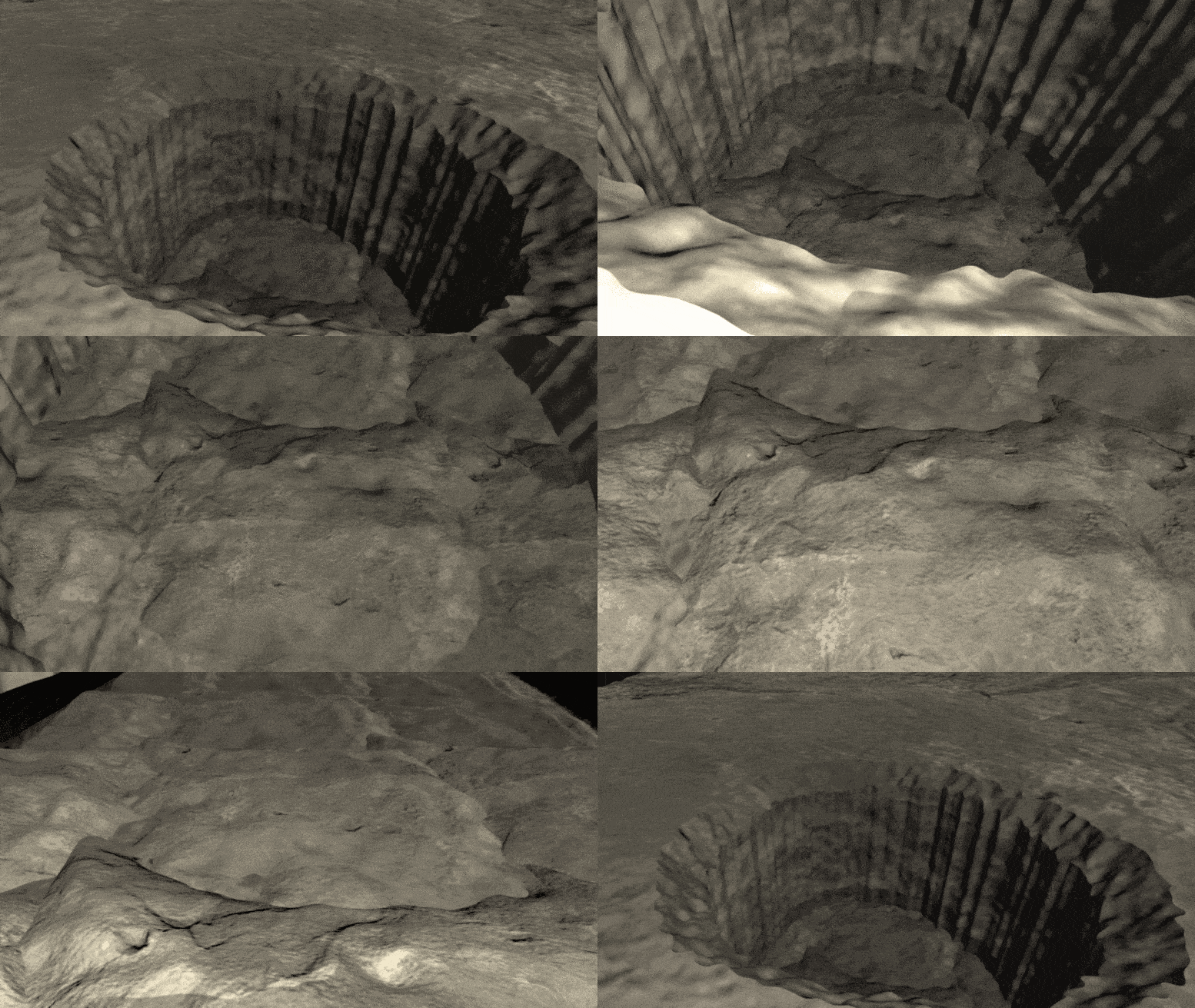
In a first step towards uncovering the Moon’s subterranean secrets, in 2019 ESA asked for your ideas to detect, map, and explore lunar caves. Five ideas were selected to be studied in more detail, each addressing different phases of a potential mission.
Through these five Sysnova studies, three mission scenarios were developed – one to perform a preliminary scout of entry pits and underground caves from the Moon’s surface, one to lower a probe into a pit and access the first part of a cave, and one to explore an underground lava tube using autonomous rovers.
“Although the studies were very different in topic and approach, they all provided great insight into potential technologies for exploring and investigating the geology of the Moon’s subsurface,” says Loredana Bessone, Technical Officer for the studies and Project Manager for ESA CAVES and PANGAEA, speaking soon after the results of the studies were presented. “It’s been a fascinating journey, and a great opportunity for ESA to start looking into missions to explore lunar caves.”

Bringing the Ideas Together With Other ESA Lunar Exploration Initiatives
As a combination that would give a maximum scientific return, teams behind two of the studies – one from the University of Würzburg and one from the University of Oviedo – were selected to take part in an ESA Concurrent Design Facility (CDF) study. Both focusing on the second mission scenario, the technologies that these teams have developed would allow a safe exploration and documentation of a lunar pit as well as a first peek inside the tunnels that a pit may lead to.
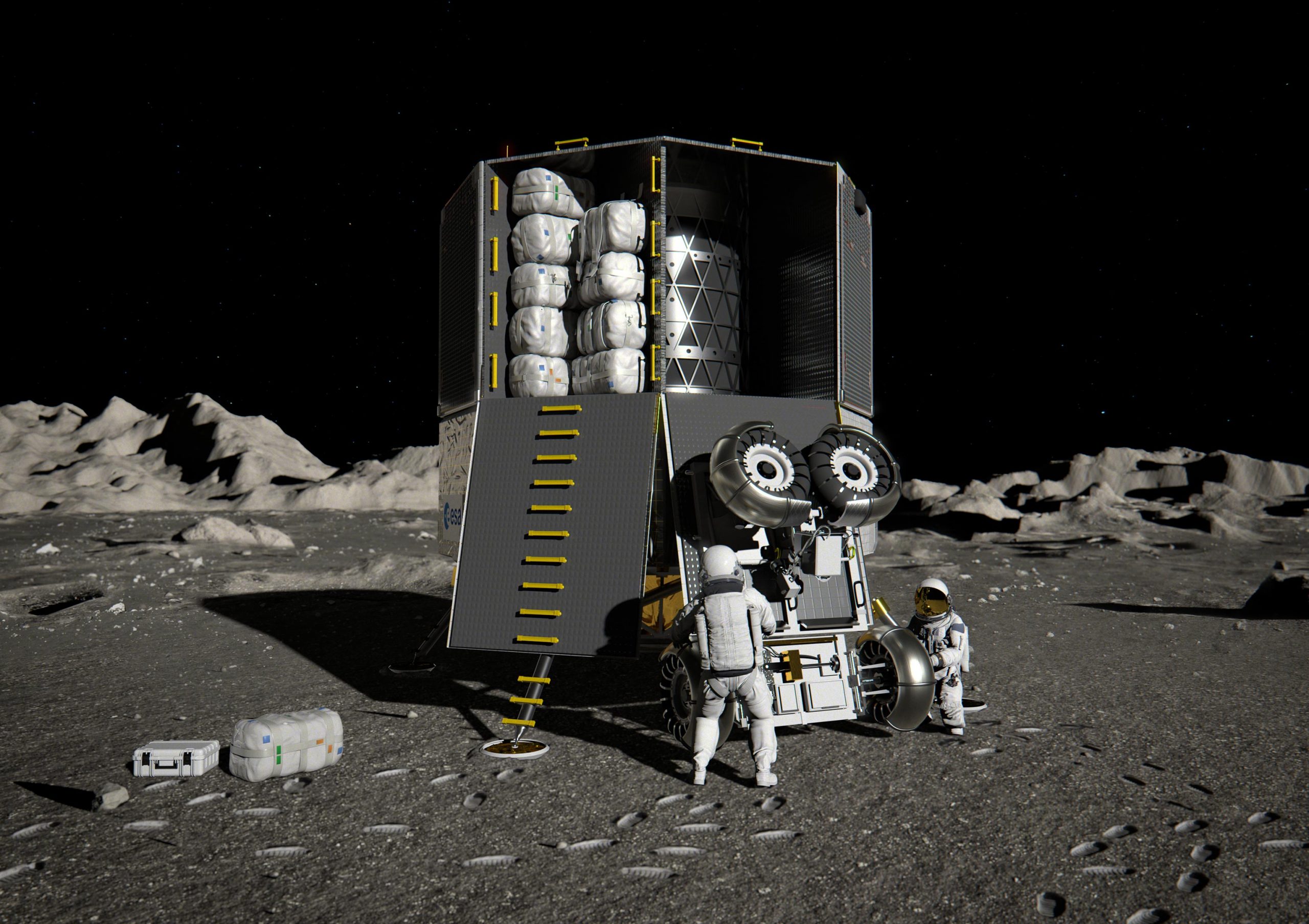
Kicking off this week, the CDF study is integrating the results of the studies carried out by these two teams with plans for ESA’s European Large Logistics Lander (EL3) and Moonlight initiatives. Whilst EL3 is a lander designed to enable a series of ESA missions to the Moon, Moonlight aims to provide navigation and telecommunications capabilities for lunar exploration.
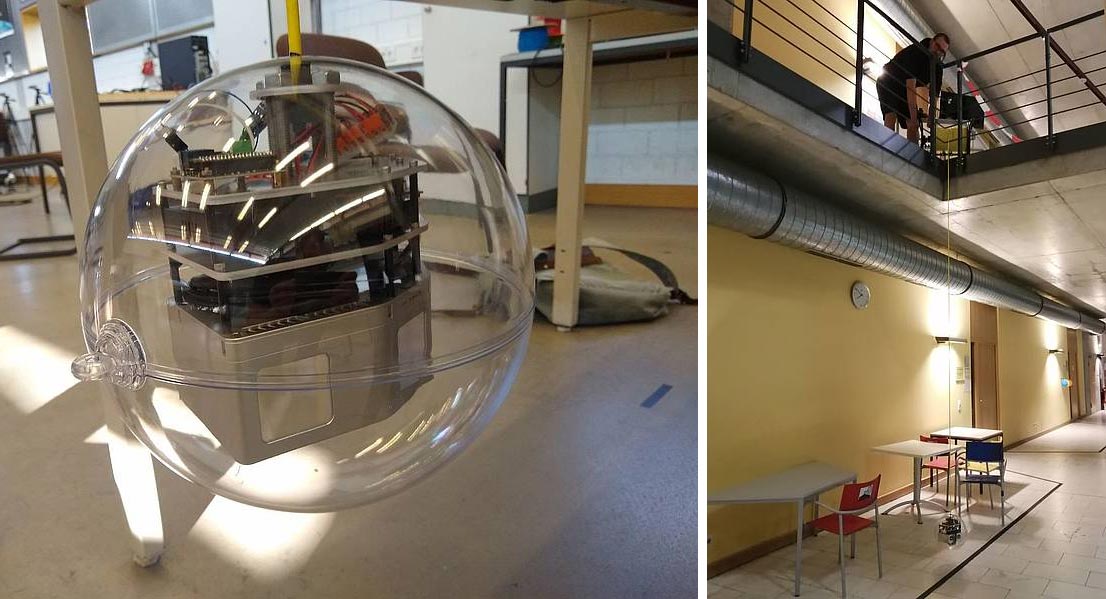
The University of Würzburg has been exploring the concept of lowering a probe using a tether to explore and characterize the entrance, walls and initial part of lunar lava tubes. These huge underground caverns are thought to have formed through lava flows billions of years ago.
Named Daedalus, the compact, spherical probe would be equipped with 3D lidar, stereo camera vision and an ability to move independently. By creating a 3D model of the inside of a lava tube, the probe could identify geological resources and seek out locations with stable radiation levels and temperature; this information could take us closer to building a human settlement on the Moon.
The University of Oviedo, meanwhile, has investigated deploying a swarm of small robots inside a cave. Working together with the University of Vigo and Alén Space, the focus of their research has been on overcoming the lack of sunlight – and therefore solar power – inside a cave, as well as how to transmit data from the robots to a rover on the Moon’s surface.
The team’s solution is to use a crane to lower the robots into a lava tube. Equipped with a solar panel, the rover would supply energy to the robots through the crane using a ‘charging head’ attached to the bottom of the crane. Being in sight of the robots, the charging head would supply energy wirelessly, as well as transmitting and receiving data.

Looking at the Big Picture and the Small Details
Continuing the research, the CDF study will design a lunar caves mission lasting one lunar day (14 Earth days), starting from the deployment of EL3. Focusing on the second mission scenario, the CDF study will also specify the individual subsystems of such a mission and ensure that they would all be able to work together.
“The CDF study will investigate details such as the energy requirements of the mission, the path that could be taken from the landing site to the pit rim, and the power and data budgets for descending into and mapping the pit,” explains Francesco Sauro, cave scientist, and planetary lava tube expert, as well as technical course director of ESA CAVES and PANGAEA. “It will also look at the interfaces between the rover and the robotic crane, as well as the crane and the Daedalus probe.”
“Overall, the Sysnova and CDF studies are helping ESA to identify interesting technologies and develop roadmaps for the future. They are supporting the Agency to assess the feasibility of novel concepts for future missions.”
Whilst the Moon’s surface has been well documented by orbital spacecraft, it hides an underground world that remains a mystery. The shelter that lunar caves provide, as well as the access to water and other resources, could be vital for our future human or robotic exploration of the Moon. This makes these Sysnova studies – and the ensuing CDF study – a major step forward in achieving a lunar mission.
Discover More About Each Sysnova Study
The following videos, as well as the articles at the end of this page, were put together by the Sysnova study teams.
Rover-based system for scouting and mapping lava tubes from the Moon’s surface using gravimetric surveying – Canadensys (mission scenario one)
Hopping rovers for lunar exploration – the University of Manchester (mission scenario one)
Robotic crane for wireless power and data transmission between surface and cave – University of Oviedo (mission scenario two)
Descent and exploration in deep autonomy of lava underground structures – University of Würzburg (mission scenario two)
Skylight: A tethered micro-rover for safe semi-autonomous exploration of lava tubes – DFKI (mission scenario three)
Never miss a breakthrough: Join the SciTechDaily newsletter.
Follow us on Google and Google News.
4 Comments
If astronauts are sent to the moon especially now youd better send them up there ready for a fight,,,I watch the moon every single night and there is more activity up there than you know,if there are clouds in front of the moon where it faces the earth Dont even bother because that’s when the moons inhabitants are busiest,Pleas Beware and mark my words THEY ARE UP THERE they just got here and I can prove it you will have no doubts,WE ARE ABSOLUTELY NOT ALONE
Please just send. Neuroscience brain info.😊ty
Its those damned Jewish Space Lasers again!!!
It would be a bit easier on Mars, send in the attack helicopter drones T2 style to peek into the caves but those are very limited in flight to a few minutes of power per day. Atleast if you had hundreds of rat like drones that could hop around and use a parachute, but energy density is such a bitch. Since nobody wants to live on the moon, and mars is not much better, they are both fantasy science projects.
People couldn’t even survive on earth in the Arizona Earth 2 project some decades ago.