
Close Menu
    Facebook X (Twitter) Instagram
    SciTechDaily
    • Biology
    • Chemistry
    • Earth
    • Health
    • Physics
    • Science
    • Space
    • Technology
    Facebook X (Twitter) Pinterest YouTube RSS
    SciTechDaily
    Home»Space»ESA’s Herschel Space Observatory Views Cosmic Cloud Mon R2
    Space

    ESA’s Herschel Space Observatory Views Cosmic Cloud Mon R2

    By SciTechDailyAugust 24, 2015No Comments2 Mins Read
    Facebook Twitter Pinterest Telegram LinkedIn WhatsApp Email Reddit
    Share
    Facebook Twitter LinkedIn Pinterest Telegram Email Reddit
    Herschel Space Observatory Views Cosmic Cloud Mon R2
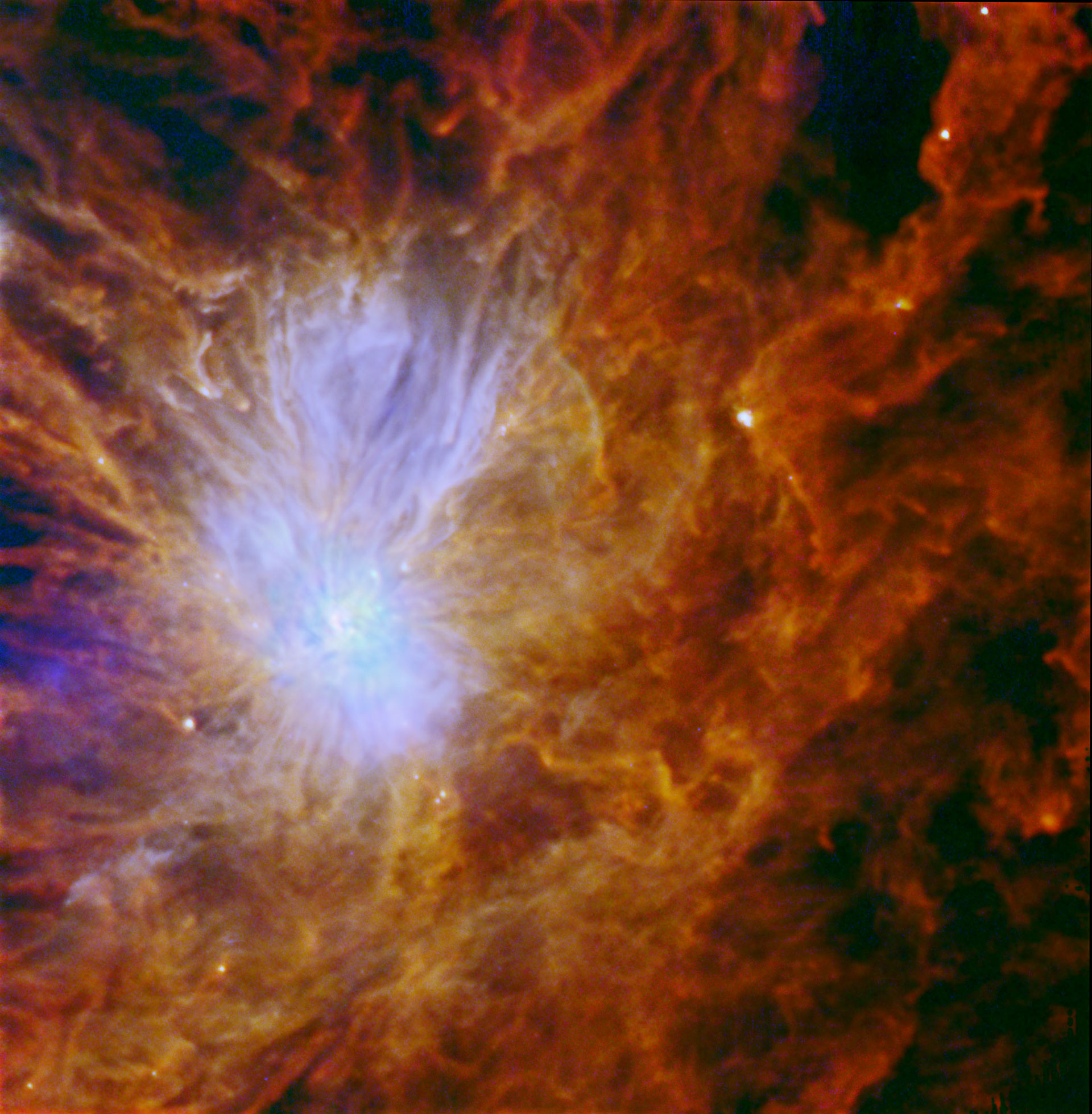
    Cosmic cloud Mon R2 lies some 2700 light-years away and is studded with hot, newly-formed stars. Credit: Copyright ESA/Herschel/PACS/SPIRE/HOBYS Key Program Consortium

    This new image from ESA’s Herschel space observatory reveals fierce flashes of light rippling through delicate tendrils of gas in the heart of a large and dense cosmic cloud known as Mon R2. This cloud lies some 2700 light-years away and is studded with hot, newly-formed stars.

    Packed into the bright center of this region are several hot ‘bubbles’ of ionized hydrogen, associated with newborn stars situated nearby. Here, gas heated to a temperature of 10,000 °C (18,000 °F) quickly expands outwards, inflating and enlarging over time. Herschel has explored the bubbles in Mon R2, finding them to have grown over the course of 100,000 to 350,000 years.

    This process forms bubble-like cavities that lie within the larger Mon R2 cloud. These are known as HII regions and Mon R2 hosts four of them, clustered together in the central blue-white haze of bright light — one at the very center, two stretching out like butterfly wings to the top left and bottom right, and another sitting just above the center.

    Each is associated with a different hot and luminous B-type star. These stars can be many times the mass of the Sun and usually appear with a blue hue due to their high temperature.

    Astronomers have found that the hot bubbles in Mon R2 are enveloped by vast clouds of cold, dense gas, sitting within the filaments that stretch across the frame. In stark contrast to the gas in the hot bubbles, these clouds can be at temperatures as low as –260 °C (-440 °F), just above absolute zero.

    This particular cluster of HII regions has been studied as part of the Herschel imaging survey of OB young stellar objects, or HOBYS, program. This image combines multiple Herschel observations obtained with the PACS and SPIRE cameras and has been processed to highlight the cloud’s clumpy complex of filaments, visible here in great and dramatic detail.

    Never miss a breakthrough: Join the SciTechDaily newsletter.
    Follow us on Google and Google News.

    Astronomy Cosmology European Space Agency Herschel Space Observatory
    Share. Facebook Twitter Pinterest LinkedIn Email Reddit

    Related Articles

    Astronomers Detect Subtle Twist in the Relic Radiation from the Big Bang

    Module for ESA’s Euclid ‘Dark Universe’ Mission in Development

    Herschel Makes Detailed Observations of a Hot Molecular Gas at the Center of the Milky Way

    Astronomers Discover Some of the Youngest Stars Ever Seen

    Researchers Detected a Cool Layer in the Atmosphere of Alpha Centauri A

    Herschel Views Red Supergiant Star Betelgeuse

    Crab Nebula Contains Enough Dust to Make Around 40,000 Earths

    Herschel Image of the Vela C Region

    ESA’s Euclid Mission Receives Final Approval

    Leave A Reply Cancel Reply

    • Facebook
    • Twitter
    • Pinterest
    • YouTube

    Don't Miss a Discovery

    Subscribe for the Latest in Science & Tech!

    Trending News

    The Universe Is Expanding Too Fast and Scientists Can’t Explain Why

    “Like Liquid Metal”: Scientists Create Strange Shape-Shifting Material

    Early Warning Signals of Esophageal Cancer May Be Hiding in Plain Sight

    Common Blood Pressure Drug Shows Surprising Power Against Deadly Antibiotic-Resistant Superbug

    Scientists Uncover Dangerous Connection Between Serotonin and Heart Valve Disease

    Scientists Discover a “Protector” Protein That Could Help Reverse Hair Loss

    Bone-Strengthening Discovery Could Reverse Osteoporosis

    Scientists Uncover Hidden Trigger Behind Stem Cell Aging

    Follow SciTechDaily
    • Facebook
    • Twitter
    • YouTube
    • Pinterest
    • Newsletter
    • RSS
    SciTech News
    • Biology News
    • Chemistry News
    • Earth News
    • Health News
    • Physics News
    • Science News
    • Space News
    • Technology News
    Recent Posts
    • Scientists Overcome Major Quantum Bottleneck, Potentially Transforming Teleportation and Computing
    • Quantum Physics’ Strangest Problem May Hold the Key to Time Itself
    • Scientists Create “Liquid Gears” That Spin Without Touching
    • The Simple Habit That Could Help Prevent Cancer
    • Forgotten Medicinal Plant Shows Promise in Fighting Dangerous Superbugs
    Copyright © 1998 - 2026 SciTechDaily. All Rights Reserved.
    • Science News
    • About
    • Contact
    • Editorial Board
    • Privacy Policy
    • Terms of Use

    Type above and press Enter to search. Press Esc to cancel.