
Close Menu
    Facebook X (Twitter) Instagram
    SciTechDaily
    • Biology
    • Chemistry
    • Earth
    • Health
    • Physics
    • Science
    • Space
    • Technology
    Facebook X (Twitter) Pinterest YouTube RSS
    SciTechDaily
    Home»Earth»Ethiopia’s Forest in the Clouds: Unusual Plants and Wildlife Live in the Harenna Forest
    Earth

    Ethiopia’s Forest in the Clouds: Unusual Plants and Wildlife Live in the Harenna Forest

    By Adam Voiland, NASA Earth ObservatoryFebruary 28, 2021No Comments2 Mins Read
    Facebook Twitter Pinterest Telegram LinkedIn WhatsApp Email Reddit
    Share
    Facebook Twitter LinkedIn Pinterest Telegram Email Reddit
    Harenna Forest Annotated
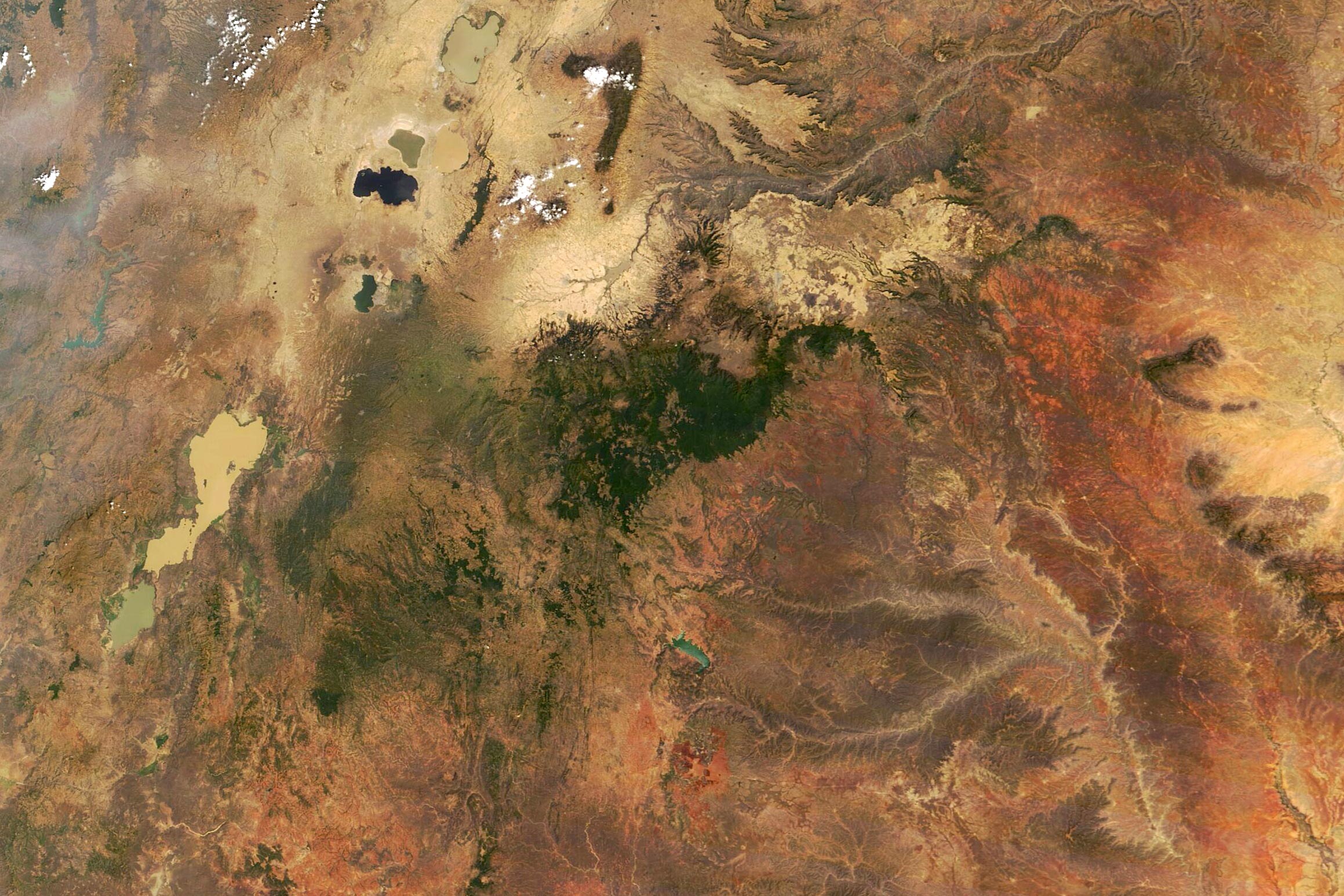
    Harenna Forest, February 5, 2021. (Click image for wider, high-resolution view.)

    A range of unusual plants and wildlife lives in the Harenna Forest, but they face pressure from development.

    There are few places in Ethiopia—or the world—quite like the Harenna Forest. Spread across the southern slopes of the Bale Mountains, it is the second-largest stand of moist tropical forest in Ethiopia and the largest cloud forest in the country.

    The Moderate Resolution Imaging Spectroradiometer (MODIS) on NASA’s Terra satellite acquired this natural-color image of the forest on February 5, 2021. The forest grows in highland areas at elevations of 1400 to 3200 meters (4,600 to 10,500 feet) above sea level. From the mostly treeless Sanetti Plateau, an escarpment drops sharply into a series of forested ecosystems defined by altitude, including areas where bamboo, tree heather, fig, fern pines, hagenia, and wild coffee thrive. Forest wildlife includes monkeys, baboons, bushbucks, warthogs, lions, leopards, hyenas, and wild dogs.

    While there are dense tracts of forest south of the Sanetti Plateau, a Global Forest Watch analysis of satellite data indicates that there was significant deforestation along roads and stream valleys in Hawo, Kumbi, Likimisa Bokore, and Soriba between 2000 and 2019. The data also show many small-scale forest clearings along the escarpment. Common causes for deforestation in this area include charcoal production, firewood collection, and clearing for agriculture. The analysis is led by a team of University of Maryland scientists and derived from data on tree cover loss collected by Landsat satellites.

    Loss of forest cover in this region could affect some distinctive cultural practices. Harenna Forest is one of the few places where people still harvest wild arabica beans to make coffee. The forest is also noted for being one of the few places where people still practice a traditional style of beekeeping that involves scaling trees to maintain hand-carved hives.

    NASA Earth Observatory image by Lauren Dauphin, using MODIS data from NASA EOSDIS LANCE and GIBS/Worldview.

    Never miss a breakthrough: Join the SciTechDaily newsletter.
    Follow us on Google and Google News.

    Cloud Forest Forests Geography NASA NASA Earth Observatory
    Share. Facebook Twitter Pinterest LinkedIn Email Reddit

    Related Articles

    See the Alarming Before-and-After of Ghana’s Disappearing Forests

    Coloring the Great Salt Lake – Astronaut Takes Beautiful Photograph From Space Station

    Sea Ice in Denmark Strait – Drifted More Than 1,000 Km (600 Miles) From the Arctic Ocean

    NASA Scientists Map Beirut Blast Damage – Devastating Explosion Rocked Port Area

    NASA Advanced Rapid Imaging Satellite Maps Blast Damage: Beirut Explosion Aftermath

    NASA/NOAA Satellites Observe Surprisingly Rapid Increase in Scale and Intensity of Fires in Siberia

    Mars Terraforming: Cultivating Ideas for Mars on Earth

    Meandering Mississippi River: Photo Taken by Astronaut on Space Station Shows Divergence From State Boundaries

    Incredible Rare Peek at Patagonia in Winter

    Leave A Reply Cancel Reply

    • Facebook
    • Twitter
    • Pinterest
    • YouTube

    Don't Miss a Discovery

    Subscribe for the Latest in Science & Tech!

    Trending News

    Largest-Ever Study Finds Medicinal Cannabis Ineffective for Anxiety, Depression, PTSD

    250-Million-Year-Old Egg Solves One of Evolution’s Biggest Mysteries

    Living With Roommates Might Be Changing Your Gut Microbiome Without You Knowing

    Century-Old Cleaning Chemical Linked to 500% Increased Risk of Parkinson’s Disease

    What if Your Memories Never Happened? Physicists Take a New Look at the Boltzmann Brain Paradox

    One of the Universe’s Largest Stars May Be Getting Ready To Explode

    Scientists Discover Enzyme That Could Supercharge Ozempic-Like Weight Loss Drugs

    Popular Sweetener Linked to DNA Damage – “It’s Something You Should Not Be Eating”

    Follow SciTechDaily
    • Facebook
    • Twitter
    • YouTube
    • Pinterest
    • Newsletter
    • RSS
    SciTech News
    • Biology News
    • Chemistry News
    • Earth News
    • Health News
    • Physics News
    • Science News
    • Space News
    • Technology News
    Recent Posts
    • Challenging the Narrative: New Study Shows U.S. Life Expectancy Is Rising Across All States
    • Mystery Illness Kills 5 in Burundi As Doctors Scramble for Answers
    • Bone-Strengthening Discovery Could Reverse Osteoporosis
    • The Most Elusive Number in Physics Just Got Even More Mysterious
    • Scientists Uncover Hidden Trigger Behind Stem Cell Aging
    Copyright © 1998 - 2026 SciTechDaily. All Rights Reserved.
    • Science News
    • About
    • Contact
    • Editorial Board
    • Privacy Policy
    • Terms of Use

    Type above and press Enter to search. Press Esc to cancel.