
Researchers demonstrate that the circadian clock aids cells in preserving and recovering their normal function during and after extended periods of starvation.
According to a study recently published in eLife, cells with a functioning molecular clock are more capable of adapting to fluctuations in glucose supply and recover quicker from prolonged starvation.
The finding sheds light on why disruptions to the body’s circadian rhythms, such as night shift work and jet lag, can raise the likelihood of developing metabolic diseases, such as diabetes.
Circadian clocks are closely linked to metabolism: on the one hand, the clock rhythmically modulates many metabolic pathways, and on the other, nutrients and metabolic cues influence the clock’s function. This is achieved through finely tuned feedback loops, where some positive components of the clock activate others, and these then negatively feedback the original activating components.
Exploring the Molecular Clock During Glucose Starvation
“Because glucose affects so many signaling pathways, it’s thought that glucose deficiency might challenge the feedback loops in the circadian clock and hinder its ability to maintain a constant rhythm,” explains lead author Anita Szöke, a Ph.D. student in the Department of Physiology, Semmelweis University, Budapest, Hungary. “We wanted to explore how chronic glucose deprivation affects the molecular clock and what role the clock plays in adaptation to starvation.”
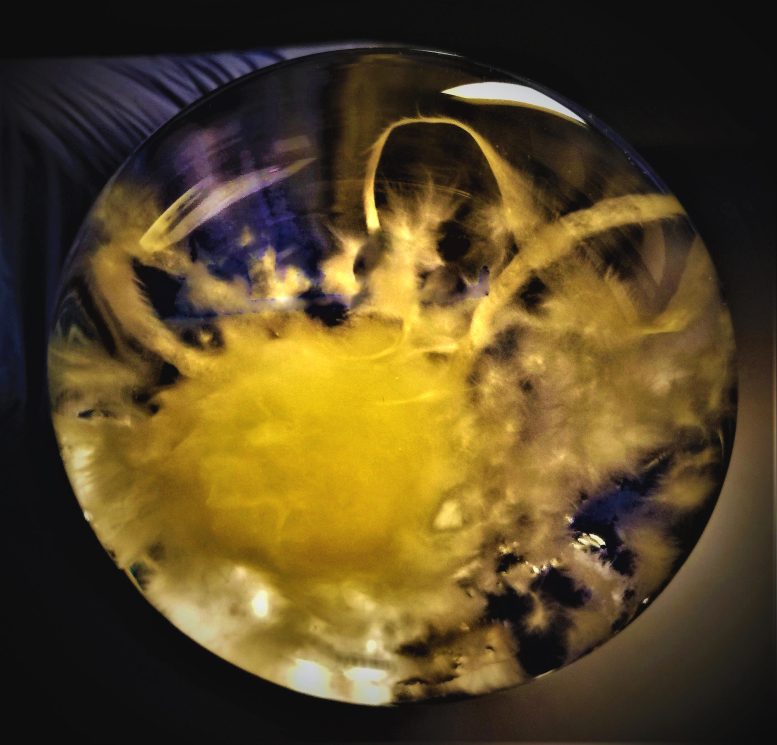
Using the fungus Neurospora crassa as a model, the team first looked at how glucose starvation for 40 hours affected two core clock components called the White Collar Complex (WCC), composed of two subunits WC-1 and 2, and Frequency (FRQ). They found that levels of WC1 and 2 decreased gradually to about 15% and 20% of initial levels, before starvation, whereas FRQ levels remained the same but were altered by the addition of many phosphate groups (a process called hyperphosphorylation).
Usually, hyperphosphorylation prevents FRQ from inhibiting WCC activity – so the authors speculated that the higher activity might speed up the degradation of the WCC. When they looked at the downstream actions of WCC, there was little difference between the starved cells and those still growing in glucose. Together, this suggests that the circadian clock was still functioning robustly and driving the rhythmic expression of cellular genes during glucose starvation.
Molecular Clock in Gene Expression
To look further at the importance of the molecular clock in adapting to glucose deprivation, the team used a Neurospora strain lacking the WC-1 domain of WCC. They then compared the levels of gene expression after glucose starvation with Neurospora containing an intact molecular clock. They found that long-term glucose starvation affected more than 20% of coding genes and that 1,377 of these 9,758 coding genes (13%) showed strain-specific changes depending on whether or not the cells had a molecular clock. This implies that the clock is an important piece of machinery for the cells’ response to a lack of glucose.
Next, the team looked at whether having a functional clock was important for cells to recover after glucose starvation. They found that the growth of Neurospora cells lacking a functional FRQ or WCC was significantly slower than that of normal cells when glucose was added, implying that a functional clock supports the cells’ regeneration. Moreover, when they studied the glucose transport system used in Neurospora, they found that cells lacking a functional clock were unable to dial up the production of a crucial glucose transporter to get more nutrients into the cell.
“The marked differences between the recovery behavior of fungus strains with and without functional molecular clocks suggests that adaptation to changing nutrient availability is more efficient when a circadian clock operates in a cell,” concludes senior author Krisztina Káldi, Associate Professor, Semmelweis University. “This suggests that the clock components have a major impact on balancing energy states within cells and highlights the importance of the clock in regulating metabolism and health.”
Reference: “Adaptation to glucose starvation is associated with molecular reorganization of the circadian clock in Neurospora crassa” by Anita Szőke, Orsolya Sárkány, Géza Schermann, Orsolya Kapuy, Axel CR Diernfellner, Michael Brunner, Norbert Gyöngyösi and Krisztina Káldi, 10 January 2023, eLife.
DOI: 10.7554/eLife.79765
Never miss a breakthrough: Join the SciTechDaily newsletter.
Follow us on Google and Google News.