

Astronomers are unraveling the mystery behind Ansky, a black hole system emitting powerful, repeating X-ray bursts called QPEs.
These outbursts may result from a small object colliding with a gas disk, sending debris flying at near-light speeds.
New Glimpse Into Mysterious X-Ray Outbursts
For the first time, astronomers have examined the environment around repeating X-ray eruptions near supermassive black holes, using data from NASA’s NICER (Neutron star Interior Composition Explorer) and other observatories.
These eruptions—known as quasi-periodic eruptions, or QPEs—are a newly identified class of high-energy flares. The system nicknamed Ansky is the eighth known QPE source and stands out as the most energetic yet. It also breaks records for its timing and duration, producing powerful X-ray outbursts about every 4.5 days, each lasting roughly 1.5 days.

Cracking the Code of Quasi-Periodic Eruptions
“These QPEs are mysterious and intensely interesting phenomena,” said Joheen Chakraborty, a graduate student at the Massachusetts Institute of Technology in Cambridge. “One of the most intriguing aspects is their quasi-periodic nature. We’re still developing the methodologies and frameworks we need to understand what causes QPEs, and Ansky’s unusual properties are helping us improve those tools.”
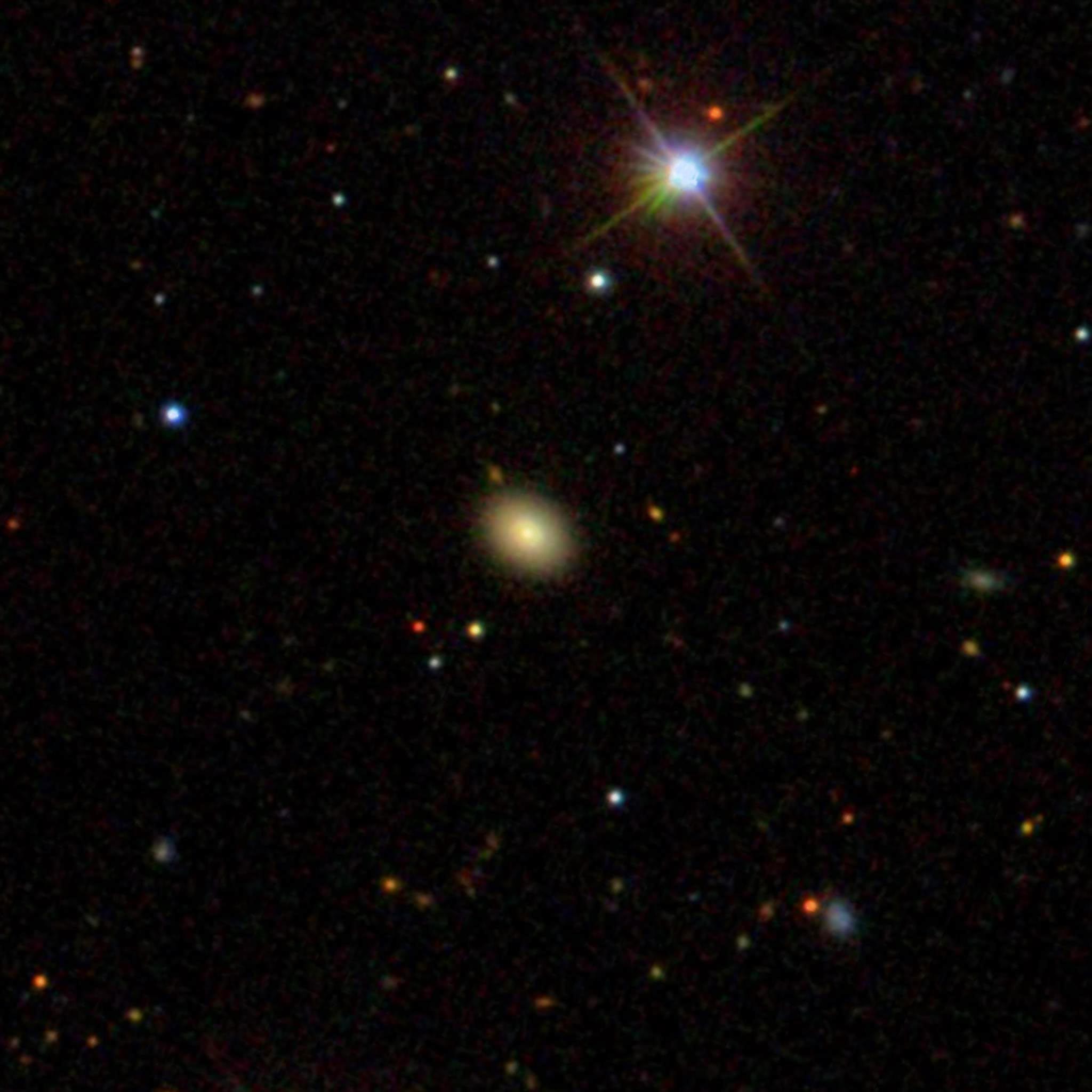
The name Ansky comes from ZTF19acnskyy, a visible-light outburst first spotted in 2019. This flare originated in a galaxy about 300 million light-years away in the constellation Virgo, and it was the first clue that something unusual was occurring in the region.
Chakraborty is the lead author of a new paper on Ansky, published on May 6 in The Astrophysical Journal.
A Gravitational Encounter Behind the Explosions
A leading theory suggests that QPEs occur in systems where a relatively low-mass object passes through the disk of gas surrounding a supermassive black hole that holds hundreds of thousands to billions of times the Sun’s mass.
When the lower-mass object punches through the disk, its passage drives out expanding clouds of hot gas that we observe as QPEs in X-rays.
Scientists think the eruptions’ quasi-periodicity occurs because the smaller object’s orbit is not perfectly circular and spirals toward the black hole over time. Also, the extreme gravity close to the black hole warps the fabric of space-time, altering the object’s orbits so they don’t close on themselves with each cycle. Scientists’ current understanding suggests the eruptions repeat until the disk disappears or the orbiting object disintegrates, which may take up to a few years.
Ansky’s Massive Disk May Be the Key
“Ansky’s extreme properties may be due to the nature of the disk around its supermassive black hole,” said Lorena Hernández-García, an astrophysicist at the Millennium Nucleus on Transversal Research and Technology to Explore Supermassive Black Holes, the Millennium Institute of Astrophysics, and the University of Valparaíso in Chile. “In most QPE systems, the supermassive black hole likely shreds a passing star, creating a small disk very close to itself. In Ansky’s case, we think the disk is much larger and can involve objects farther away, creating the longer timescales we observe.”
Hernández-García, in addition to being a co-author on Chakraborty’s paper, led the study that discovered Ansky’s QPEs, which was published in April in Nature Astronomy and used data from NICER, NASA’s Neil Gehrels Swift Observatory and Chandra X-ray Observatory, as well as ESA’s (European Space Agency’s) XMM-Newton space telescope.
Mapping the Explosive Details in Real Time
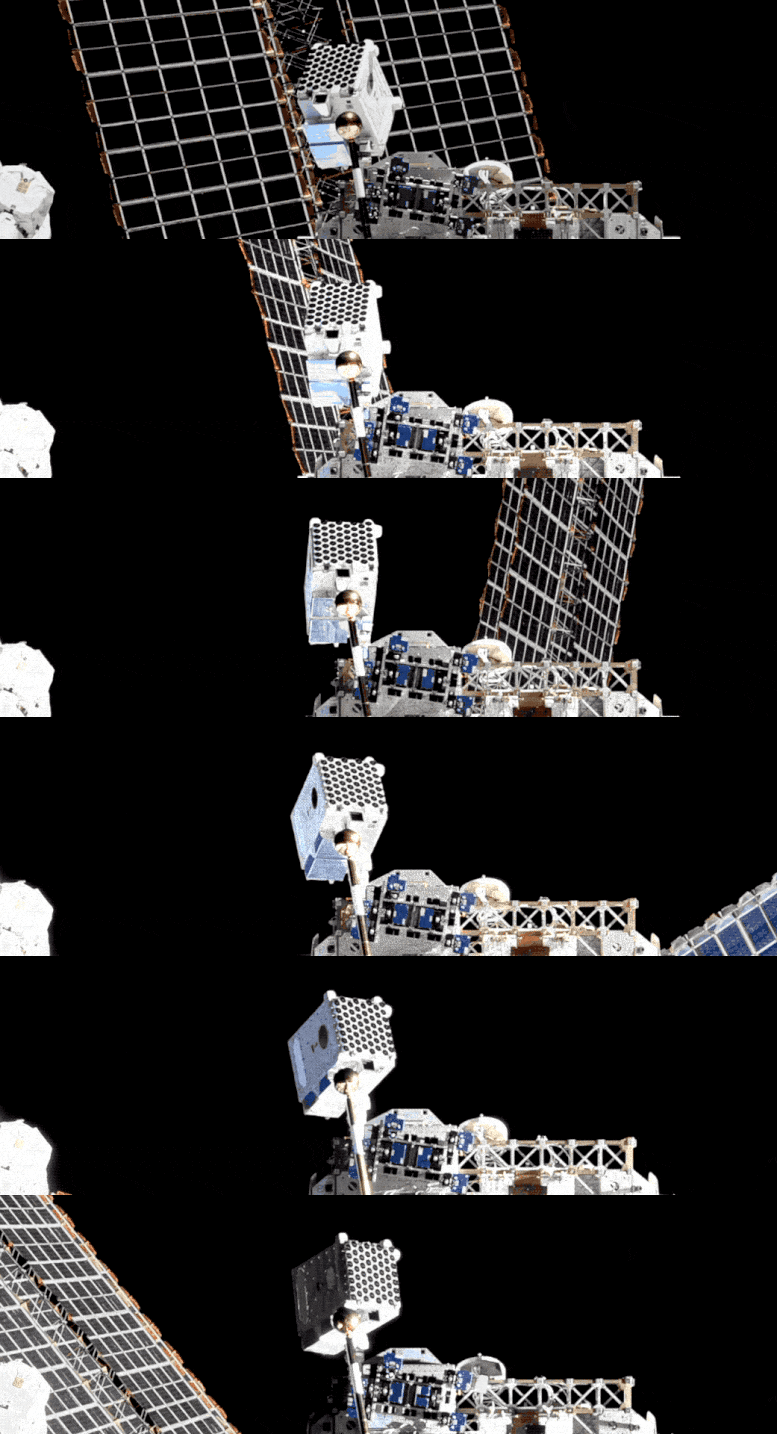
NICER’s position on the International Space Station allowed it to observe Ansky about 16 times every day from May to July 2024. The frequency of the observations was critical in detecting the X-ray fluctuations that revealed Ansky produces QPEs.
Chakraborty’s team used data from NICER and XMM-Newton to map the rapid evolution of the ejected material driving the observed QPEs in unprecedented detail by studying variations in X-ray intensity during the rise and fall of each eruption.
Bubble of Debris Speeds Through Space
The researchers found that each impact resulted in about a Jupiter’s worth of mass reaching expansion velocities around 15% of the speed of light.
The NICER telescope’s ability to frequently observe Ansky from the space station and its unique measurement capabilities also made it possible for the team to measure the size and temperature of the roughly spherical bubble of debris as it expanded.
“All NICER’s Ansky observations used in these papers were collected after the instrument experienced a ‘light leak’ in May 2023,” said Zaven Arzoumanian, the mission’s science lead at NASA’s Goddard Space Flight Center in Greenbelt, Maryland. “Even though the leak, which was patched in January, affected the telescope’s observing strategy, NICER was still able to make vital contributions to time domain astronomy, or the study of changes in the cosmos on timescales we can see.”
A Continuing Cosmic Watch
After the repair, NICER continued observing Ansky to explore how the outbursts have evolved over time. A paper about these results, led by Hernández-García and co-authored by Chakraborty, is under review.
Observational studies of QPEs like Chakraborty’s will also play a key role in preparing the science community for a new era of multimessenger astronomy, which combines measurements using light, elementary particles, and space-time ripples called gravitational waves to better understand objects and events in the universe.
Preparing for Gravitational Wave Breakthroughs
One goal of ESA’s future LISA (Laser Interferometer Space Antenna) mission, in which NASA is a partner, is to study extreme mass-ratio inspirals — or systems where a low-mass object orbits a much more massive one, like Ansky. These systems should emit gravitational waves that are not observable with current facilities. Electromagnetic studies of QPEs will help improve models of those systems ahead of LISA’s anticipated launch in the mid-2030s.
“We’re going to keep observing Ansky for as long as we can,” Chakraborty said. “We’re still in the infancy of understanding QPEs. It’s such an exciting time because there’s so much to learn.”
Reference: “Rapidly Varying Ionization Features in a Quasi-periodic Eruption: A Homologous Expansion Model for the Spectroscopic Evolution” by Joheen Chakraborty, Peter Kosec, Erin Kara, Giovanni Miniutti, Riccardo Arcodia, Ehud Behar, Margherita Giustini, Lorena Hernández-García, Megan Masterson, Erwan Quintin, Claudio Ricci and Paula Sánchez-Sáez, 6 May 2025, The Astrophysical Journal.
DOI: 10.3847/1538-4357/adb972
NICER, short for the Neutron star Interior Composition Explorer, is a NASA X-ray telescope mounted on the International Space Station. Launched in 2017, its primary mission is to study the internal structure and extreme physics of neutron stars by capturing precise X-ray timing and spectral data. NICER’s rapid-response capabilities and high sensitivity also make it ideal for observing other cosmic phenomena, such as black holes, pulsars, and explosive X-ray events, helping scientists explore the behavior of matter under intense gravitational and magnetic forces.
Never miss a breakthrough: Join the SciTechDaily newsletter.
Follow us on Google and Google News.
2 Comments
Too much enchilada and broccoli?
This may be a stupid question, but I’m interested so I’ll go at it through my ignorance. If the x-rays from the quasi-periodic eruptions only last 1.5 days each and the eruptions are happening every 4.5 days with a speed of 15% of speed of light, is the earth far enough away to not be experiencing the x-ray bursts? Or are we exposed to those x-rays?