
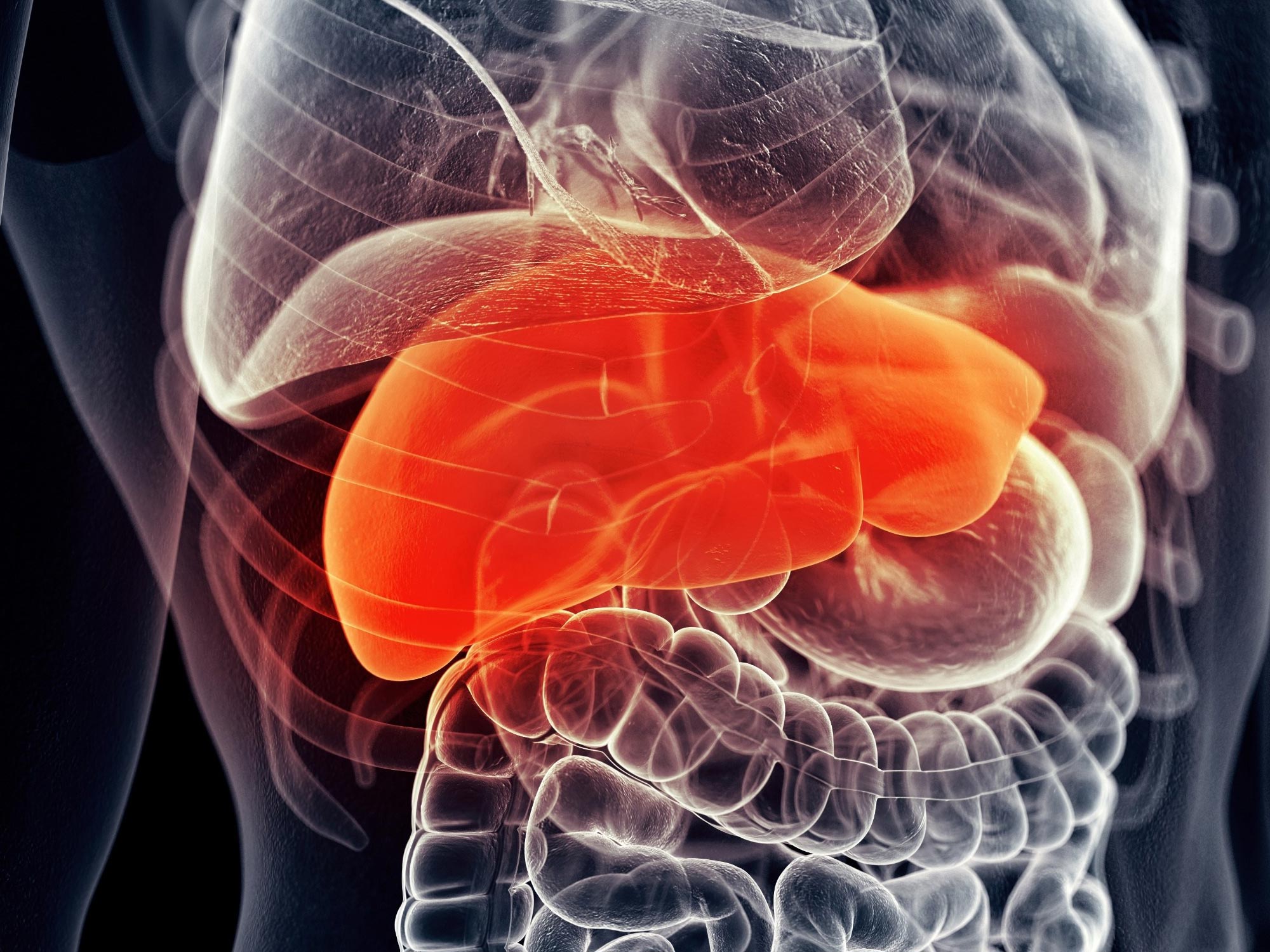
A chemical commonly found in consumer products and used in dry cleaning has been shown to triple the risk of liver fibrosis.
Liver disease is most often linked to three main causes: heavy alcohol use, fat buildup in the liver associated with obesity, diabetes, and high cholesterol, or infection with hepatitis B or C.
However, new research from Keck Medicine of USC, published in Liver International, suggests that another culprit may be at play. The study identified tetrachloroethylene (PCE), a chemical commonly used in dry cleaning and present in everyday products like craft adhesives, stain removers, and stainless steel polish, as a potential threat to liver health.
The findings revealed that people exposed to PCE had a threefold higher risk of developing significant liver fibrosis, a serious buildup of scar tissue that can progress to liver cancer, liver failure, or even death. The study also showed a clear trend: greater exposure to the chemical corresponded with a higher likelihood of severe liver damage.
“This study, the first to examine the association between PCE levels in humans and significant liver fibrosis, underscores the underreported role environmental factors may play in liver health,” said Brian P. Lee, MD, MAS, a hepatologist and liver transplant specialist with Keck Medicine and lead author of the study. “The findings suggest that exposure to PCE may be the reason why one person develops liver disease while someone with the exact same health and demographic profile does not.”
Where PCE can be found
PCE is a human-made, colorless liquid used in dry cleaning, household goods and industrial settings to remove grease and for other purposes.
People are typically exposed to PCE through the air — for example, the chemical can be slowly released into the air over time from clothes that have been dry cleaned. PCE can also be present in drinking water from contaminated sites due to spills and improper disposal of PCE that can seep into the soil and then into the groundwater.
The International Agency for Research on Cancer has classified PCE as a probable carcinogen and linked it to bladder cancer, multiple myeloma, and non-Hodgkin lymphoma. Other studies showed that exposure to PCE increased the risk of liver cancer, said Lee.
Due to its toxicity, the United States Environmental Protection Agency has launched a 10-year phaseout for the use of PCE in dry cleaning as well as banned or placed workplace controls on other uses of PCE. However, the chemical may remain present in some applications and in countries without similar regulations.
The more PCE exposure, the greater the risk of liver disease
Lee and his fellow researchers used data from the National Health and Nutrition Examination Survey (NHANES), a nationally representative survey of the United States population, to reach their conclusions. They tracked PCE exposure through the concentration of the chemical in individuals’ blood in people 20 and older from the years 2017-2020, the most recent years for which information is available, finding that some 7% of the population had detectable PCE.
They then examined which individuals with PCE in their blood had significant liver fibrosis and found that people exposed to PCE were three times more likely to have significant liver fibrosis than those without exposure.
These results held steady independent of factors such as age, sex, race, ethnicity, and education level.
The study did show that those most at risk of PCE exposure were from higher-income households. “People with higher incomes may be more likely to use dry cleaning services, which could increase their exposure to PCE,” said Lee. “However, people who work in dry cleaning facilities may also face elevated risk due to prolonged, direct exposure to PCE at work.”
The researchers also found that for every one nanogram per milliliter increase in PCE concentration in the blood (one nanogram is one-billionth of a gram), the individual’s odds of having significant liver fibrosis increased five-fold.
Of particular note, alcohol use and fat buildup in the liver, linked with obesity and other health factor,s did not appear to play a role in significant liver fibrosis when PCE was present. “Patients will ask, how can I have liver disease if I don’t drink and I don’t have any of the health conditions typically associated with liver disease, and the answer may be PCE exposure,” said Lee.
Future research needed
Lee would like to see future research in the field of environmental toxins and how they affect liver disease. “No doubt there are other toxins in our environment besides PCE that are dangerous to the liver,” he said.
He also thinks the study may lead to improved outcomes for patients. “We hope our research will help both the public and physicians understand the connection between PCE exposure and significant liver fibrosis,” he said. “If more people with PCE exposure are screened for liver fibrosis, the disease can be caught earlier and patients may have a better chance of recovering their liver function,” said Lee.
Reference: “Tetrachloroethylene Is Associated With Presence of Significant Liver Fibrosis: A National Cross-Sectional Study in US Adults” by Yinan Su, Jennifer L. Dodge and Brian P. Lee, 16 October 2025, Liver International.
DOI: 10.1111/liv.70398
Never miss a breakthrough: Join the SciTechDaily newsletter.
Follow us on Google and Google News.
6 Comments
I made some guitars. I had friends who died from breathing fumes. You use a lot of glues and epoxy – there are materials that get sanded out into the air – then of course smoking. People smoke. – All that stuff kills people. If you can smell it, it’s not good for you. That stuff gives people cancer.
Basically, if you take no drugs, eat well -and be in shape – it’ll be as good as it gets all your long life through. Everything else in your body and mind will be some chunky percentage less – as you are forcing your body to fix all the stuff you do every day. Day to day –
If bodies could talk, they’d all be loudly griping and singing the blues about what their dumb-bell (you) is doing now.
The dry cleaning in your closet is a ticking time bomb. Something to think about more than anything for the next few seconds.
“Perc” is indeed nasty stuff. However, it is hardly an “every day” chemical. With 35 years as an industrial chemist, I’m not aware of any consumer products containing perchloroethylene. Use in drycleaning is regulated, and machines are required to have vapor recovery to minimize worker exposure. It is set to be phased out over the next decade (probably not soon enough- there are alternatives).
Much to my surprise, I happened upon a commercial restaurant grill cleaner that contains “Perc”. Probably a really bad idea. Most chemical manufacturers have product stewardship programs to prevent that sort of thing.
Perc is one of the chemicals investigated in the Research Triangle Cancer Cluster, though I believe the results were inconclusive.
What about unannounced, unpublicized or unknown perc-leaks? Here in Las Vegas, we had a dry-cleaner on Maryland Parkway that leaked Perc into the ground for decades. Now an underground perc-cloud is progressing southeasterly from the release point. I only found out about it when inspecting an older home above the perc-cloud that had a 4″ PVC pipe installed in a small closet at the rear of the home. It had an electric fan installed at the top of the 4″ tube, just above roof level, to draw-in perc-vapors and expel them ‘above’ the home. After some research, I found out the history of this uncontrolled release and found many other homes with the same set-up. None of the home owners knew what the pipe was for and many of the electric draw-thru fans had stopped working, so the question is…how much perc-vapor is present in these homes? The perc-cloud area is massive…thousands and thousands of homes and businesses stand atop this cloud and it’s still growing. How many other cities in the US have the same issue…. And…couple that with Radon and lord knows what else is unseen/underground and whew! Boggles the mind. Our family moved almost every year in the 60’s and 70’s and with every move my father used to say “…it matters where you live.” He was right.
my wife, who worked at dry cleaners for years, died of liver failure
My mom warned us of this 25 years ago. That’s why we didn’t use dry cleaning services.