
Close Menu
    Facebook X (Twitter) Instagram
    SciTechDaily
    • Biology
    • Chemistry
    • Earth
    • Health
    • Physics
    • Science
    • Space
    • Technology
    Facebook X (Twitter) Pinterest YouTube RSS
    SciTechDaily
    Home»Science»Exceptional – Scientists Discover Advanced Technological Sophistication of 7,000-Year-Old Boats
    Science

    Exceptional – Scientists Discover Advanced Technological Sophistication of 7,000-Year-Old Boats

    By PLOSMarch 22, 2024No Comments3 Mins Read
    Facebook Twitter Pinterest Telegram LinkedIn WhatsApp Email Reddit
    Share
    Facebook Twitter LinkedIn Pinterest Telegram Email Reddit
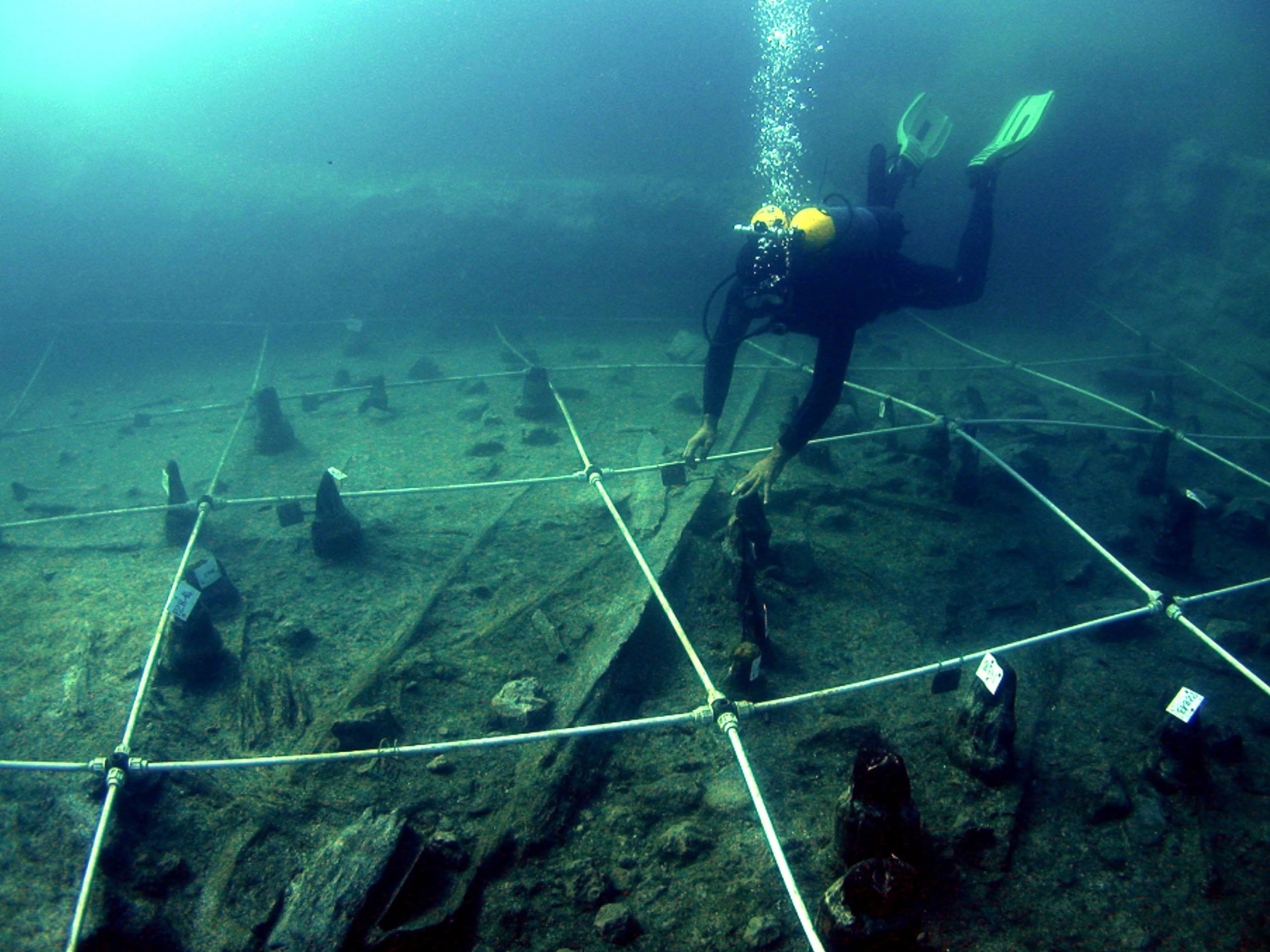
    Excavation of Canoe 5
    Research uncovering technologically sophisticated boats used over 7,000 years ago in the Mediterranean demonstrates early European civilizations’ advanced seafaring skills, suggesting a profound knowledge of boat construction and potential avenues for future archaeological discoveries. Excavation of Canoe 5. Credit: Gibaja et al., 2024, PLOS ONE, CC-BY 4.0

    Italian canoes exhibit the early development of sophisticated nautical technology.

    Over 7,000 years ago, people navigated the Mediterranean Sea using technologically sophisticated boats, according to a study recently published in the open-access journal PLOS ONE by Juan F. Gibaja of the Spanish National Research Council, Barcelona and colleagues.

    Many of the most important civilizations in Europe originated on the shores of the Mediterranean Sea. During the Neolithic, communities clearly traveled and traded across the water, as evidenced by watercraft in the archeological record and the presence of settlements on coasts and islands. In this study, Gibaja and colleagues provide new insights into the history of seafaring technology through analysis of canoes at the Neolithic lakeshore village of La Marmotta, near Rome, Italy.

    Excavation at this site has recovered five canoes built from hollowed-out trees (dugout canoes) dating between 5700-5100BC. Analysis of these boats reveals that they are built from four different types of wood, unusual among similar sites, and that they include advanced construction techniques such as transverse reinforcements.

    One canoe is also associated with three T-shaped wooden objects, each with a series of holes that were likely used to fasten ropes tied to sails or other nautical elements. These features, along with previous reconstruction experiments, indicate these were seaworthy vessels, a conclusion supported by the presence at the site of stone tools linked to nearby islands.
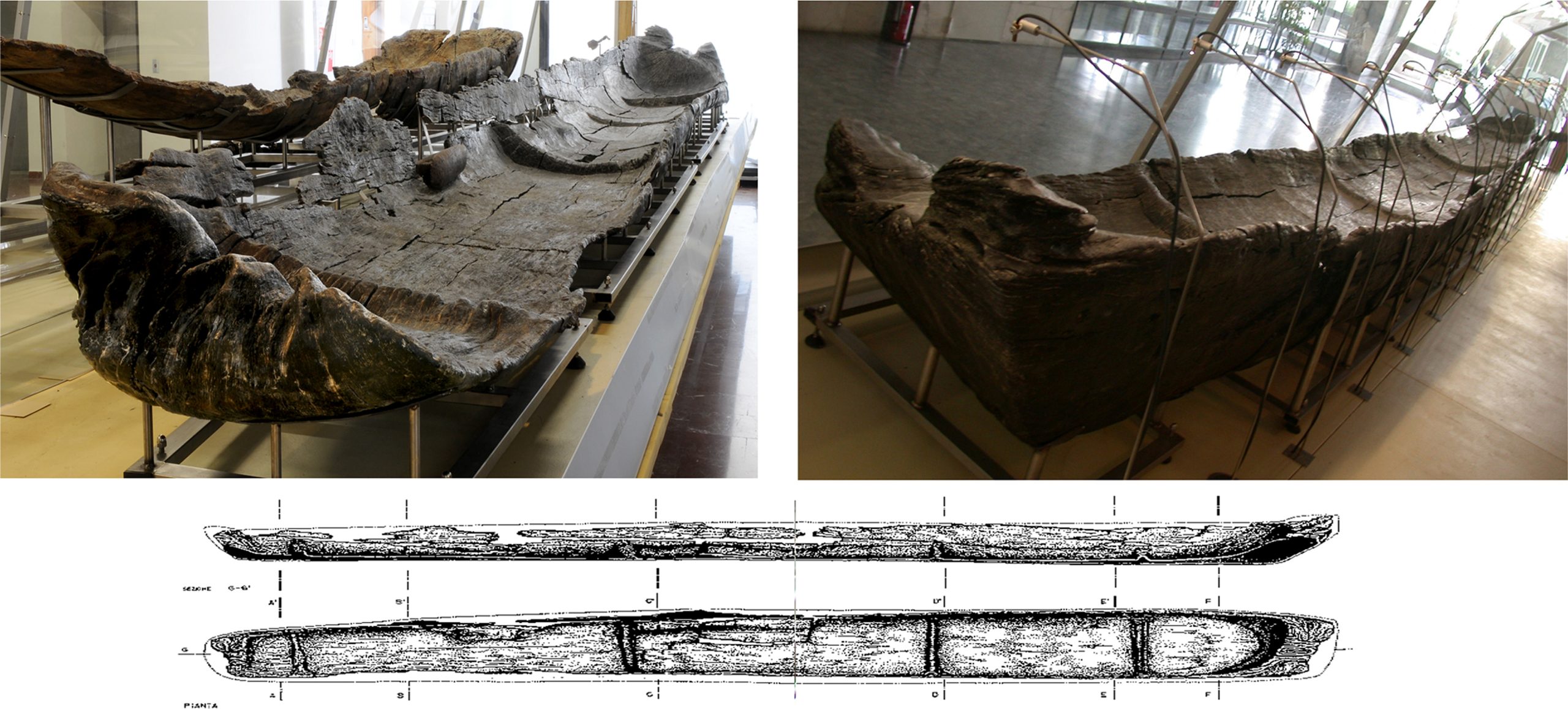
    Canoe Marmotta 1
    Canoe Marmotta 1. On display in the Museo delle Civiltà in Rome. Credit: Gibaja et al., 2024, PLOS ONE, CC-BY 4.0

    The Significance of Neolithic Canoe Construction

    The authors describe these canoes as exceptional examples of prehistoric boats whose construction required a detailed understanding of structural design and wood properties in addition to well-organized specialized labor. Similarities between these canoes and more recent nautical technologies support the idea that many major advances in sailing were made during the early Neolithic. The authors suggest there may be more boats preserved near La Marmotta, a potential avenue for future research.

    The authors add: “Direct dating of Neolithic canoes from La Marmotta reveals them to be the oldest in the Mediterranean, offering invaluable insights into Neolithic navigation. This study reveals the amazing technological sophistication of early agricultural and pastoral communities, highlighting their woodworking skills and the construction of complex vessels.”

    Reference: “The first Neolithic boats in the Mediterranean: The settlement of La Marmotta (Anguillara Sabazia, Lazio, Italy)” by Juan F. Gibaja, Mario Mineo, Francisco Javier Santos, Berta Morell, Laura Caruso-Fermé, Gerard Remolins, Alba Masclans and Niccolò Mazzucco, 20 March 2024, PLOS ONE.
    DOI: 10.1371/journal.pone.0299765

    Funding: The research has been carried out in the collaboration agreement between the Museo delle Civiltà and the Spanish Scientific Research Council (centers in Barcelona IMF-CSIC and Rome EEHAR-CSIC) and the National Accelerators Centre (CNA) in Seville. Several projects have resulted from this collaboration funded by the Ministry of Science and Innovation and State Research Agency of Spain, Marie Curie Europe Program, JdC-Formación 2020 AEI Program, and Ministry for University and Research of Italy: PID2020-112513RB-I00/AEI/10.13039/501100011033, HAR2016-75201-P, PIAR-201818008, PIAR-201918010, QUANT-792544, PICT-2015-2541 and Rita Levi Montalcini project ‘AGER’. The funders had no role in study design, data collection and analysis, decision to publish, or preparation of the manuscript.

    Never miss a breakthrough: Join the SciTechDaily newsletter.
    Follow us on Google and Google News.

    Anthropology Archaeology PLOS
    Share. Facebook Twitter Pinterest LinkedIn Email Reddit

    Related Articles

    Over 57,000 Years Old – Scientists Discover Oldest Known Neanderthal Cave Engravings

    Uncovering the Past of Ancient Puerto Rico: New Study Challenges Simplistic Assumptions

    Uncovering the Secrets of an Ancient Stone Monument: New Findings From an Archaeological Site in Saudi Arabia

    Ancient Roman Gold Coins – Long Thought To Be Fakes – Now Authenticated

    Before Stonehenge Monuments, Hunter-Gatherers Made Use of Open Woodland Habitats

    Archaeologists Discover That Ancient Islamic Tombs Cluster Like Galaxies

    Indiscriminate Killing Revealed in Genetic Analysis of Ancient Massacre

    Deformed Skulls Discovered in an Ancient Cemetery Reveal a Remarkably Diverse Community

    Neandertals Dove Underwater to Collect Clam Shells to Use as Tools

    Leave A Reply Cancel Reply

    • Facebook
    • Twitter
    • Pinterest
    • YouTube

    Don't Miss a Discovery

    Subscribe for the Latest in Science & Tech!

    Trending News

    New “Nanozyme Hypothesis” Could Rewrite the Story of Life’s Origins

    Anatomy Isn’t Finished: The Human Body Still Holds Secrets

    “Pretty Close to Home”: The Hidden Earthquake Threat Beneath Seattle

    The Surprising Reason You Might Want To Sleep Without a Pillow

    Scientists Say This Natural Hormone Reverses Obesity by Targeting the Brain

    35-Million-Year-Old Mystery: Strange Arachnid Discovered Preserved in Amber

    Is AI Really Just a Tool? It Could Be Altering How You See Reality

    JWST Reveals a “Forbidden” Planet With a Baffling Composition

    Follow SciTechDaily
    • Facebook
    • Twitter
    • YouTube
    • Pinterest
    • Newsletter
    • RSS
    SciTech News
    • Biology News
    • Chemistry News
    • Earth News
    • Health News
    • Physics News
    • Science News
    • Space News
    • Technology News
    Recent Posts
    • Scientists Capture Hidden Electron Patterns Inside Quantum Materials
    • New Study Challenges Alzheimer’s Theories: It’s Not Just About Plaques
    • Scientists Discover Way To Treat Lung Cancer and Its Deadly Side Effect Together
    • Artificial Sweeteners May Harm Future Generations, Study Suggests
    • The Ocean Current Stronger Than All Rivers Changed Earth Forever
    Copyright © 1998 - 2026 SciTechDaily. All Rights Reserved.
    • Science News
    • About
    • Contact
    • Editorial Board
    • Privacy Policy
    • Terms of Use

    Type above and press Enter to search. Press Esc to cancel.