
Close Menu
    Facebook X (Twitter) Instagram
    SciTechDaily
    • Biology
    • Chemistry
    • Earth
    • Health
    • Physics
    • Science
    • Space
    • Technology
    Facebook X (Twitter) Pinterest YouTube RSS
    SciTechDaily
    Home»Space»Exploring Alien Worlds With NASA’s Webb Space Telescope: Searching for Biosignatures
    Space

    Exploring Alien Worlds With NASA’s Webb Space Telescope: Searching for Biosignatures

    By NASAMarch 21, 2022No Comments3 Mins Read
    Facebook Twitter Pinterest Telegram LinkedIn WhatsApp Email Reddit
    Share
    Facebook Twitter LinkedIn Pinterest Telegram Email Reddit
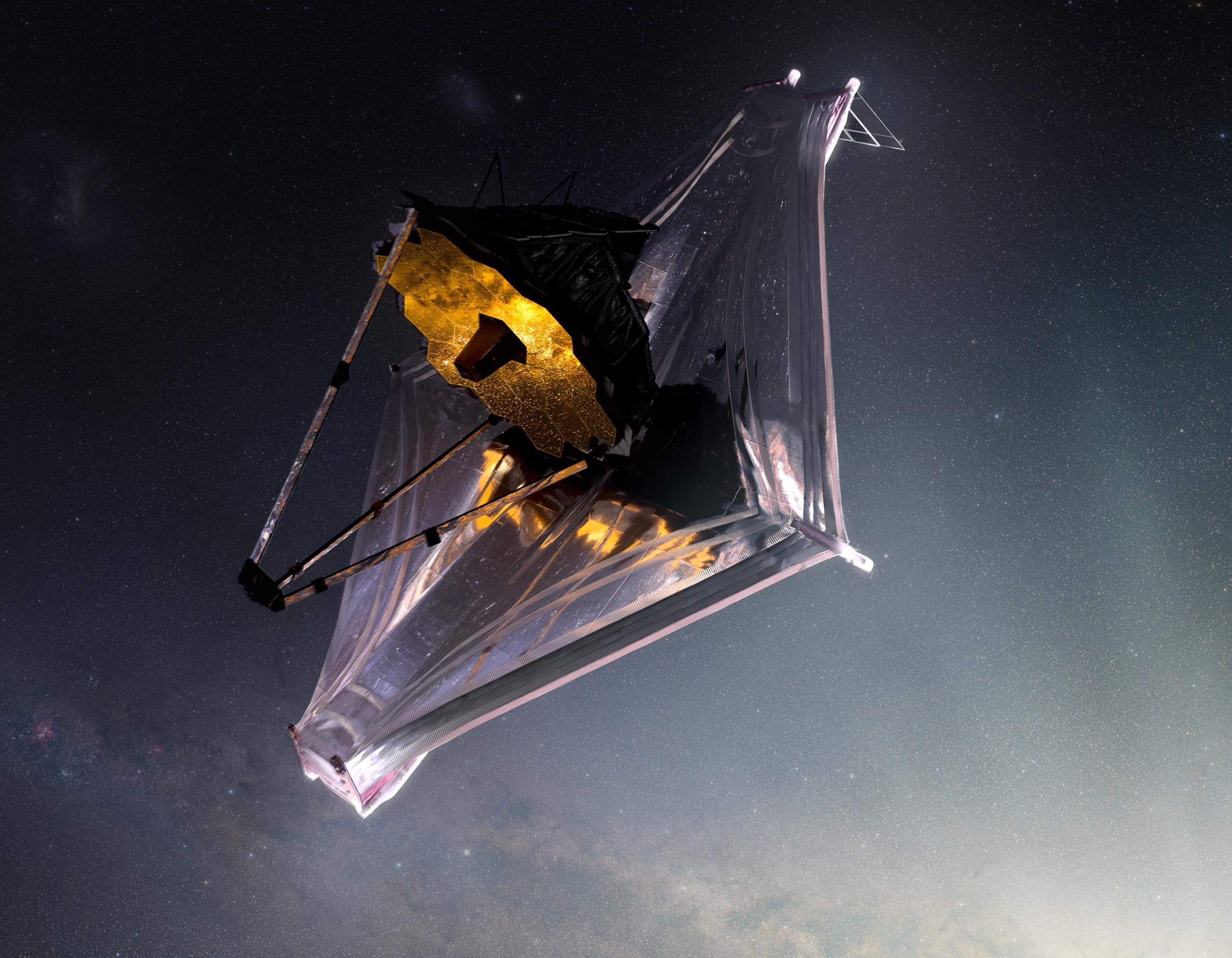
    James Webb Space Telescope Artist Conception
    Artist conception of the James Webb Space Telescope. Credit: NASA GSFC/CIL/Adriana Manrique Gutierrez

    The James Webb Space Telescope will use spectroscopy to study exoplanet atmospheres, aiding in the search for biosignatures like oxygen and methane.

    One of the many goals of the James Webb Space Telescope is to help characterize the atmospheres of exoplanets using a technique called spectroscopy, which splits light into different wavelengths allowing scientists to determine the elemental makeup of a distant object.

    Astrobiologists like Dr. Giada Arney from the NASA Goddard Space Flight Center are excited about this capability because it allows scientists to continue collecting evidence for possible biosignatures, or remotely observable signs of life. Some important biosignatures on Earth include oxygen and methane, which are direct results of biological processes of plants and animals. However, when looking at exoplanets, scientists must rule out other non-life methods of creating those signatures, like volcanism and atmospheric processes.

    Extraordinary claims, such as finding life on another planet, must have extraordinary evidence, and while Webb will help contribute to that effort, it alone will not be enough to truly detect life on an exoplanet.

    See Part 1 and Part 2 in this video series.

    Video Transcript:

    We’re really excited to use the James Webb Space Telescope to look for signs of life in the atmospheres of potentially habitable planets. And, in particular, we’re searching for signatures called biosignatures, which are remotely observable signs of life.

    Now on Earth, some of the important biosignatures of our own planet are oxygen, which is produced by oxygenic photosynthesis, that of course, we all know plants do that. But there’s all sorts of microbes that also do oxygenic photosynthesis, and a lot of people consider it to be the dominant metabolism of our planet.

    Another important biosignature of Earth is methane. Methane on our planet is produced by microbes that live in a variety of places, ranging from hydrothermal vents at the bottom of the ocean to the guts of cows. And they produce most of the methane that’s in our planet’s atmosphere.

    So, these are important gases that we want to look for in the atmospheres of exoplanets with the James Webb Space Telescope. But you also have to really carefully interpret that gas. That is, does it make sense for life to produce that given biosignature in that given environment.

    And then, really importantly, you also want to rule out what are called biosignature false positives.

    Biosignature false positives are non-life ways that a planet can fool you by producing something that looks like a biosignature, but it’s not actually a biosignature because it’s not produced by life; it’s produced by some other process like volcanism or atmospheric chemistry or any other process that doesn’t involve life.

    So, all of this together means this is a really exciting search, but it’s going to be complicated.

    And, if we detect something that we think is a biosignature when we look at an exoplanet, it might not immediately be definitive. It might be ambiguous until we collect more data to better understand it in the context of its environment.

    Never miss a breakthrough: Join the SciTechDaily newsletter.
    Follow us on Google and Google News.

    Astrobiology Exoplanet James Webb Space Telescope NASA Planets Popular
    Share. Facebook Twitter Pinterest LinkedIn Email Reddit

    Related Articles

    Clear Skies, Strange Chemistry: Webb Just Changed What We Know About Sub-Neptunes

    Webb’s Galactic Surprise: Reveals Rocky Planet Secrets in Cosmic Extremes

    NASA’s Webb Space Telescope Detects Water Vapor in Rocky Planet-Forming Zone

    Exoplanet Discovery Alert: Webb Space Telescope Finds Water in Ultra-Hot Alien World

    Webb Space Telescope Shocks Astronomers With Surprising Exoplanet Atmospheric Composition

    Webb Space Telescope To Provide Details of Two Intriguing “Super-Earths” in the Milky Way

    Exploring Alien Worlds With NASA’s Webb Space Telescope: TRAPPIST-1 System

    Exploring Alien Worlds With NASA’s James Webb Space Telescope [Video]

    NASA’s Webb Space Telescope Primed To Reveal Secrets of Galaxy’s Most Mysterious Planets

    Leave A Reply Cancel Reply

    • Facebook
    • Twitter
    • Pinterest
    • YouTube

    Don't Miss a Discovery

    Subscribe for the Latest in Science & Tech!

    Trending News

    Scientists Call for a Complete Rethink of Alzheimer’s Treatment

    Scientists Identify Molecular Switch That Lets Exercise Reverse Muscle Aging

    Why Your Most Vivid Dreams Might Be the Key to Deep, Restful Sleep

    A Bright Star Hid a Massive Secret for 50 Years: Mystery of Gamma Cassiopeiae Finally Solved

    Scientists Identify Protein That Slows Key Effects of Aging

    Revolutionary Submarine Mysteriously Disappears Without a Trace – Scientists Are Now Preparing for a Bold Return

    Why Drinking More Water Isn’t Enough To Stop Kidney Stones

    New Study Reveals Surprising Effect of Drinking Coffee at Night

    Follow SciTechDaily
    • Facebook
    • Twitter
    • YouTube
    • Pinterest
    • Newsletter
    • RSS
    SciTech News
    • Biology News
    • Chemistry News
    • Earth News
    • Health News
    • Physics News
    • Science News
    • Space News
    • Technology News
    Recent Posts
    • Your BMI Might Be Wrong: Study Finds Millions Are Misclassified
    • More Than Half of U.S. College Students Are Lonely, Major Study Reveals
    • Scientists Reveal Biological Signal Behind Mysterious Alzheimer’s Drug Side Effect
    • A Simple Blood Test Could Predict Dementia Risk 25 Years Early
    • Scientists Uncover Unexpected Behavior Deep Inside Earth’s Mantle
    Copyright © 1998 - 2026 SciTechDaily. All Rights Reserved.
    • Science News
    • About
    • Contact
    • Editorial Board
    • Privacy Policy
    • Terms of Use

    Type above and press Enter to search. Press Esc to cancel.