
Scientists and Engineers Are Designing a Lunar Cave Explorer To Explore the Moon
Lunar caves are not only a geologically pristine record of the Moon’s history, but they could also provide a safe home for future human explorers. Building upon ESA Discovery’s OSIP call and SysNova challenge, ESA gathered a spectrum of over 60 experts in many different areas of science and engineering to design a mission to enter a pit on the Moon’s surface and explore the entrance to a lunar cave.
The Moon is dotted with pits that scientists think could lead to huge underground tunnels. But a space mission has never been sent to explore what could lie within.
“A view into the interior of a lunar cave would be true exploration – it would reveal unexpected scientific information,” says Francesco Sauro, cave scientist, and planetary lava tube expert, as well as technical course director of ESA CAVES and PANGAEA.
ESA kick-started such a mission in 2019, when the Discovery element of ESA’s Basic Activities launched a public Open Space Innovation Platform (OSIP) call for ideas to detect, map and explore lunar caves. Five ideas were chosen to be studied in more detail through an ESA Discovery SysNova challenge, each addressing a different phase of a potential mission.
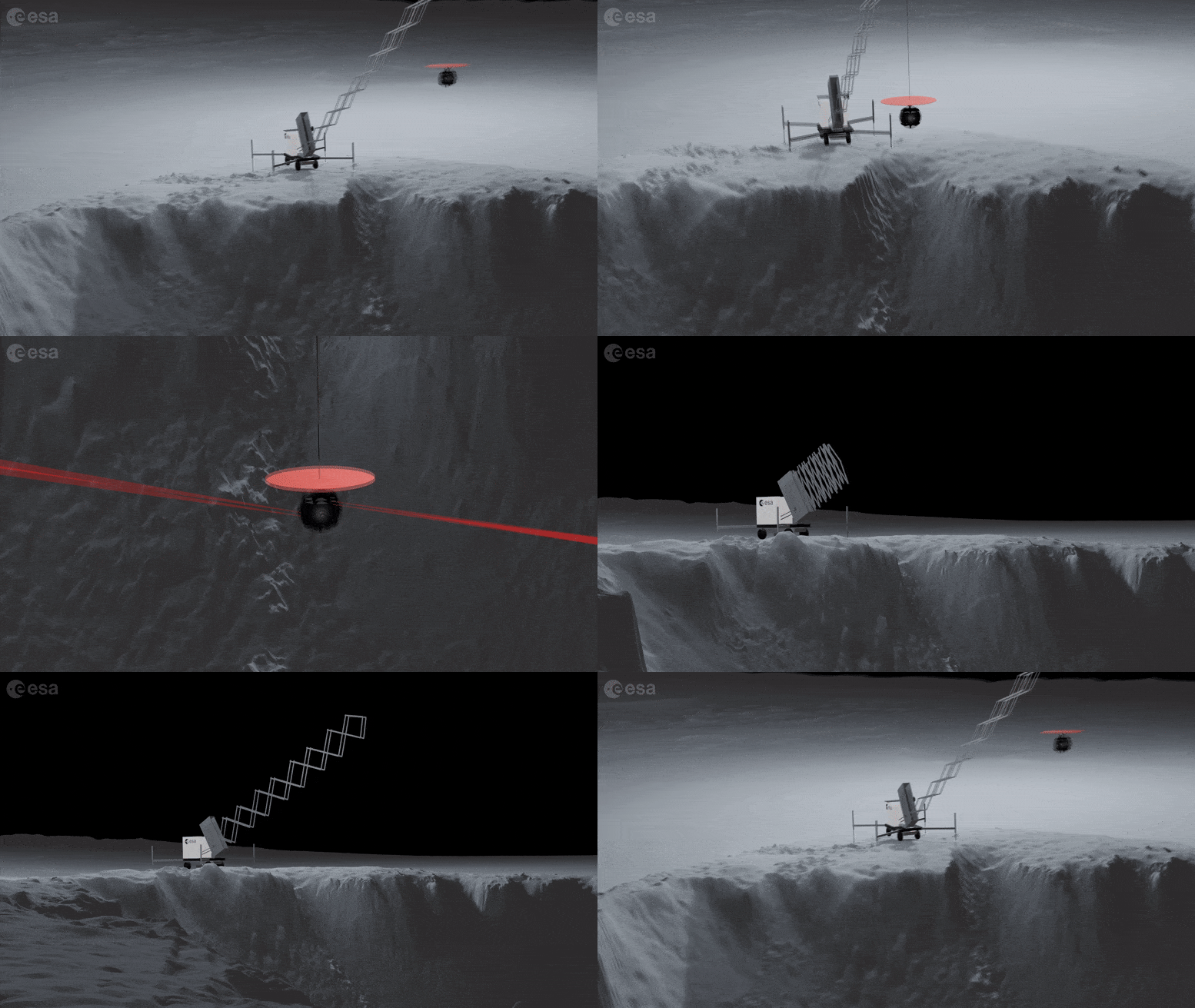
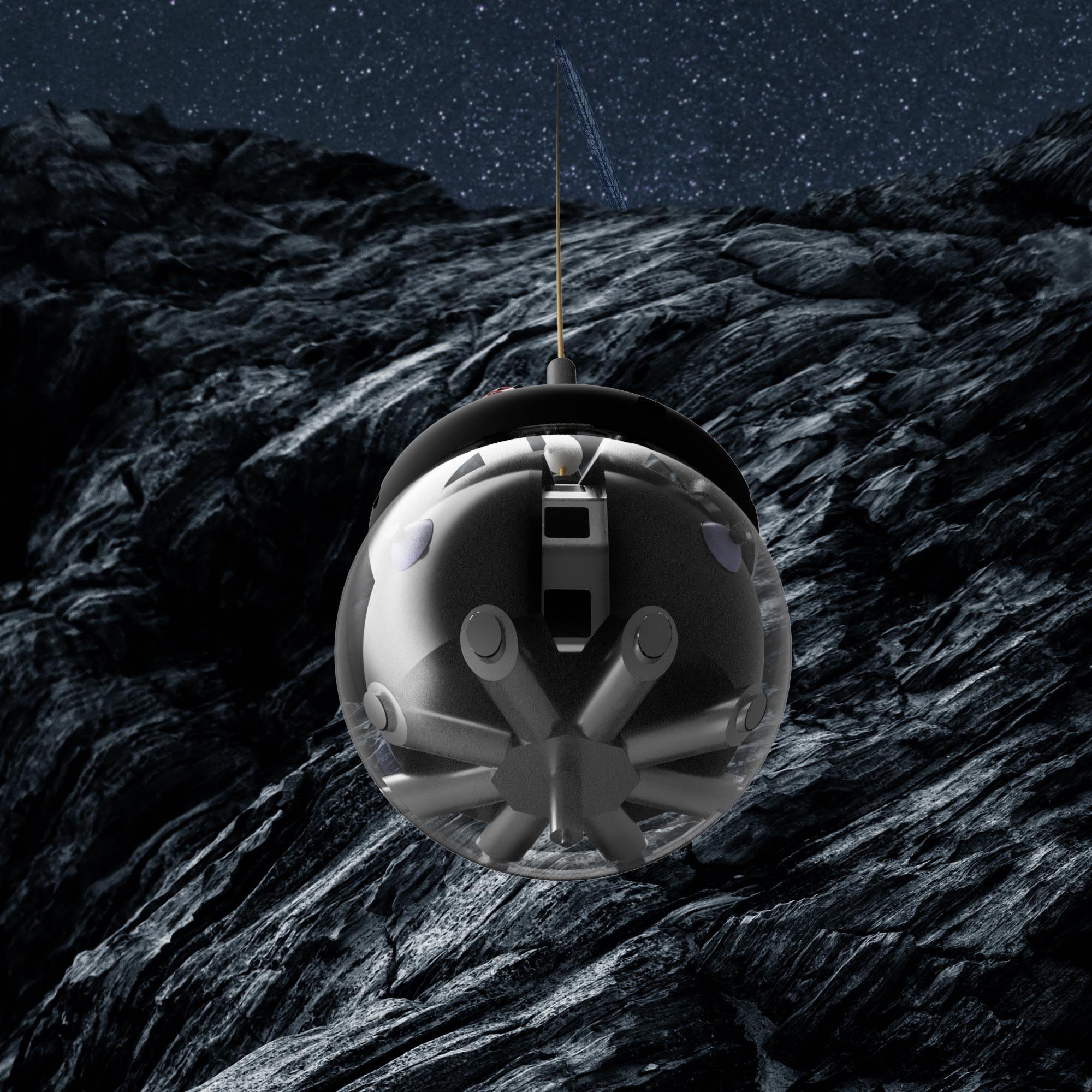
Most recently, the two winning SysNova studies – RoboCrane and Daedalus – were united and expanded into one complete mission plan through ESA’s Concurrent Design Facility (CDF). The mission would use a robotic crane (RoboCrane) to lower down a cave explorer (Daedalus) into a lunar pit. On its way down, Daedalus would explore and document the entrance to the cave, before mapping the closest part of the cave at the bottom.
Artist’s impression of the lunar caves exploration mission.
“The OSIP Campaign and SysNova challenge paved the way to the CDF mission analysis,” explains Loredana Bessone, CAVES and PANGAEA project lead and technical officer for the studies. “They allowed us to identify the interest in lunar cave missions from European and Canadian industry and research institutes, as well as revealing their expertise. It allowed industry and academia to confront the challenges of such missions and learn from lunar cave scientists about constraints, opportunities and potential mission scenarios.”
There is a huge amount to think about when designing a space mission; by bringing together experts from many different areas of science and engineering – including specialists from the RoboCrane and Daedalus teams, as well as ESA experts – this much-larger-than-usual CDF study came up with a complete vision of a lunar caves exploration mission. It confirmed that the mission is feasible and would be scientifically very interesting.
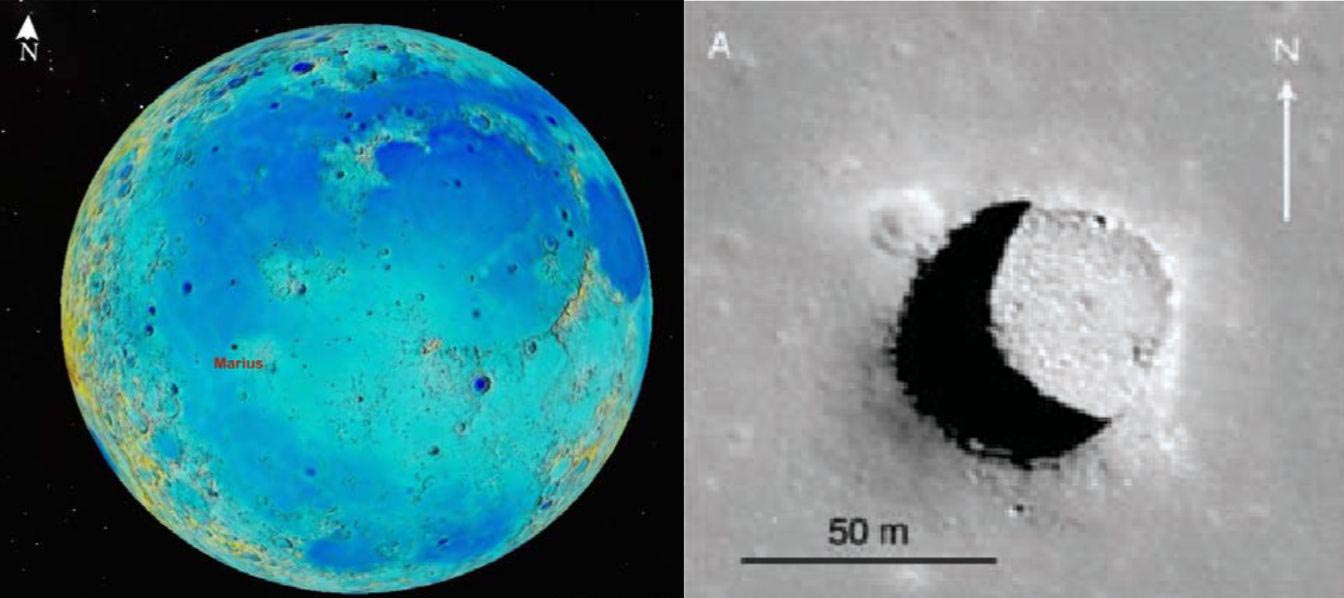
The mission could launch on an Ariane 6 in 2033 at the earliest, and would use the European Large Logistic Lander (EL3) to reach the Moon’s surface. It would target the Marius Hills pit and last a fortnight – equivalent to one day on the Moon.
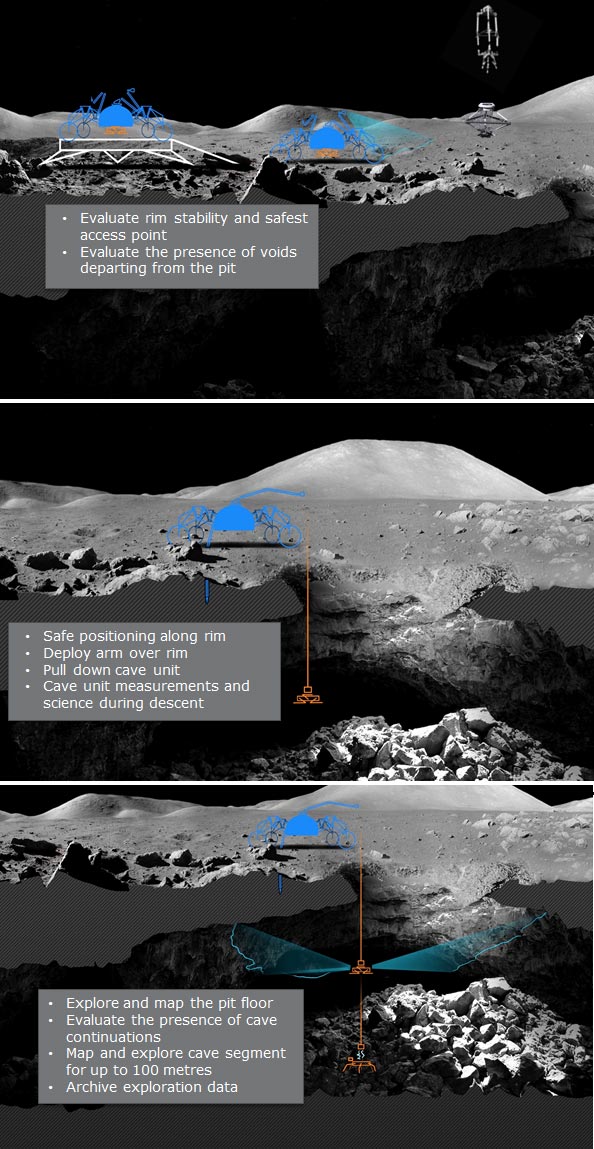
Experts taking part in the CDF study came up with rough designs for the rover that would carry the equipment to the pit, as well as concrete designs for RoboCrane and Daedalus themselves. They also studied the environment of the pit, created models of the Moon’s subsurface and the mission elements, generated roadmaps for developing the technologies that will be needed to make the mission a success, and assessed the main challenges that the mission will face.
“A mission like this would require the development of innovative technologies, encouraging the space sector to develop new solutions compared to previous lunar missions,” explains Francesco. “This advancement in technology would be a big step forward for lunar and martian exploration.”
The progress that has been made so far puts ESA at the frontline of pushing space exploration beyond the surface of the Moon and into its subsurface. But there is still lots to be done in the next decade to make such a mission possible.
The teams behind RoboCrane and Daedalus continue to work on their ideas. Led by the University of Oviedo, RoboCrane researchers published a paper in December 2021 describing their system to provide a power and communication link between the lunar surface and lunar caves for exploration robots.
“The mission will need to be defined in even more detail during the coming years,” says Loredana. “The rover that will carry RoboCrane and Daedalus to the pit will need to be described, and a lunar test range would be required to try out the techniques planned for the mission.”
A ‘Topical Team’ made up of 17 experts from universities and research institutes across Europe and Canada has now been established to support ESA in the development of a strategy that includes lunar caves in the framework of European lunar exploration. The Team is organising a planetary caves conference for 2023, where an international group of scientists and engineers will push the need for a lunar cave mission within the next decade.
Never miss a breakthrough: Join the SciTechDaily newsletter.
Follow us on Google and Google News.
1 Comment
A ball? You only want to explore the mouth of the cave, but not the cave itself? Why not send something like Boston Dynamics’ robot dog. Its designed for this type of scenario, and it’s available right now for about $75K. If its a lava tube, send two robots to explore opposing sections of the cave. Seems like this could be done cheaply, and soon, using SpaceX as the delivery vehicle, and Boston Dynamics as the rover. Let’s do it!