
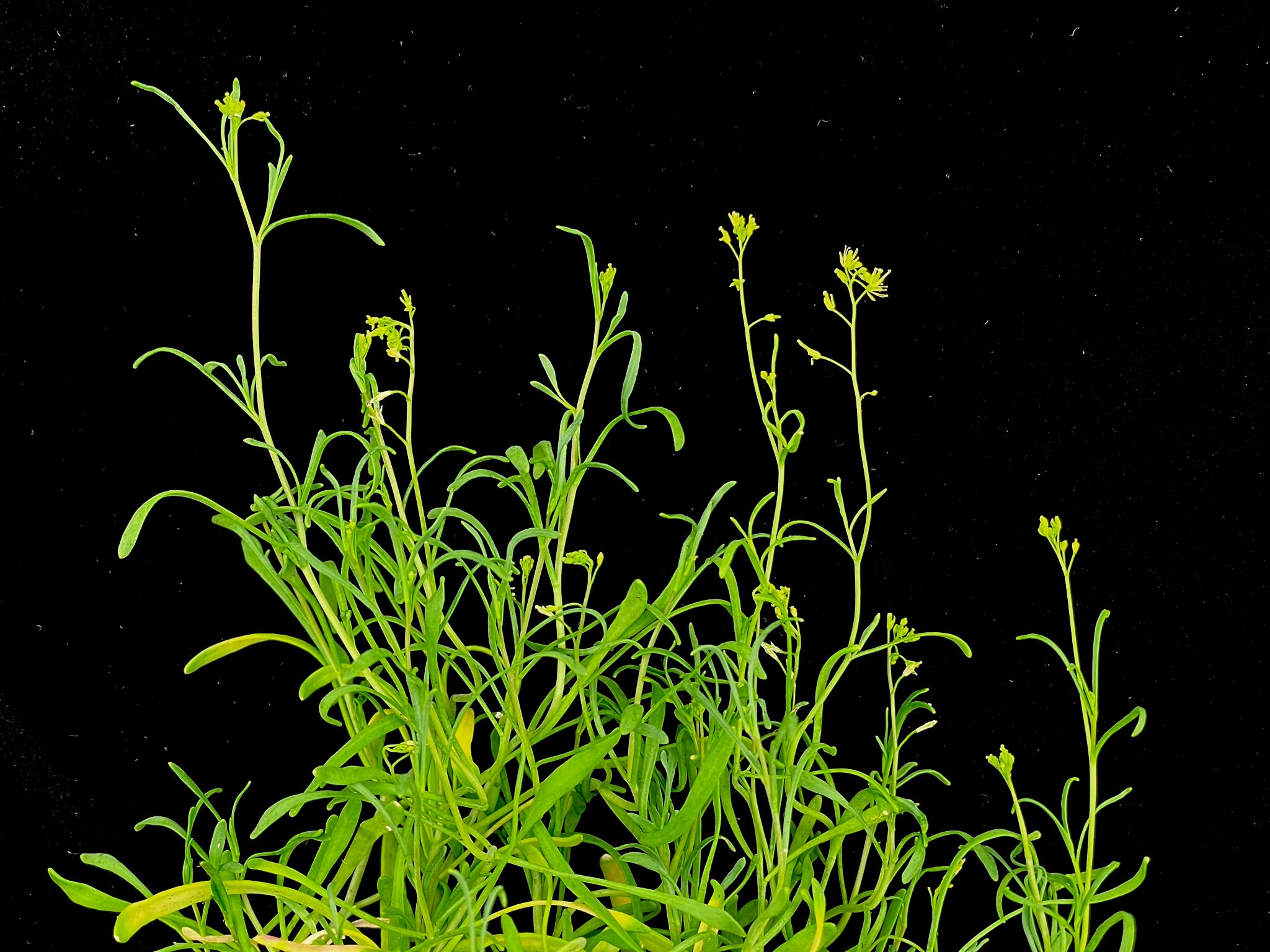
Schrenkiella parvula, a stress-tolerant plant, accelerates growth under harsh conditions. Researchers aim to use this knowledge to engineer crops that can better withstand climate change and grow in degraded soils, potentially benefiting agriculture and bioenergy production.
When plants are faced with conditions that are too dry, salty, or cold, most of them try to conserve resources. They send out fewer leaves and roots and close up their pores to hold in water. If circumstances don’t improve, they eventually die.
But some plants, known as extremophytes, have evolved to survive in harsh environments. Schrenkiella parvula, a scraggly, branching member of the mustard family, not only survives but thrives in conditions that would kill most plants. It grows along the shores of Lake Tuz in Turkey, where salt concentrations in the water can be six times higher than that of the ocean. In a paper published in Nature Plants on May 2, 2022, scientists at Stanford University discovered that Schrenkiella parvula actually grows faster under these stressful conditions.
“Most plants produce a stress hormone that acts like a stop signal for growth,” said José Dinneny, an associate professor of biology at Stanford, who is senior author of the paper. “But in this extremophyte, it’s a green light. The plant accelerates its growth in response to this stress hormone.”
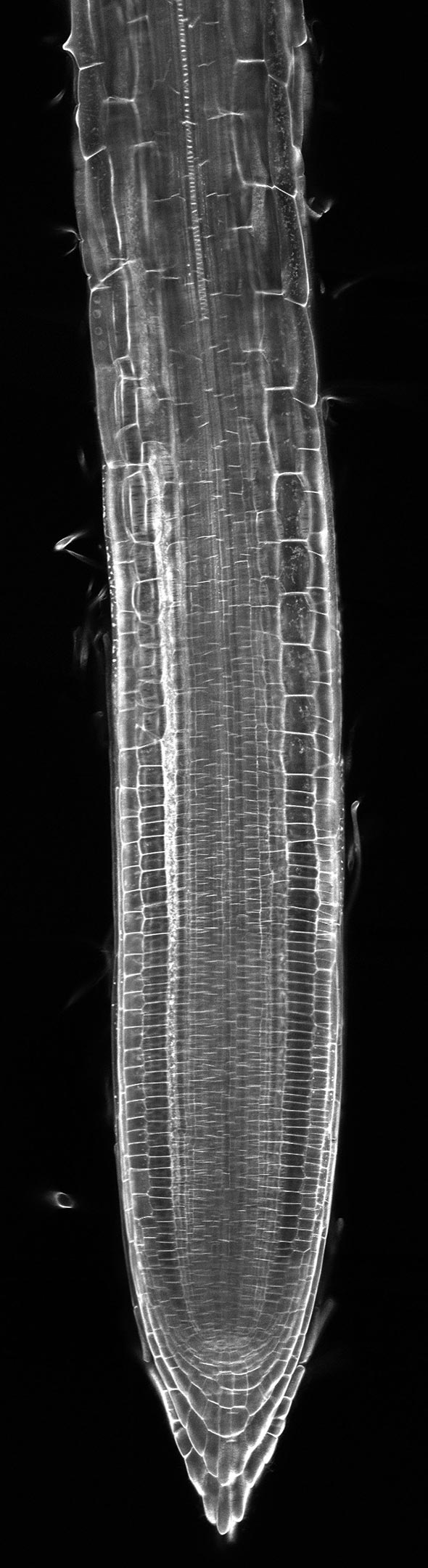
Dinneny and his colleagues are studying Schrenkiella parvula to learn more about how some plants cope with adverse conditions. Their findings could aid scientists in engineering crops that are able to grow in lower-quality soil and adapt to the stresses of climate change.
“With climate change, we can’t expect the environment to stay the same,” said Ying Sun, a postdoctoral researcher at the Salk Institute who earned her doctorate at Stanford and is a lead author on the paper. “Our crops are going to have to adapt to these rapidly changing conditions. If we can understand the mechanisms that plants use to tolerate stress, we can help them do it better and faster.”
An Unexpected Response
Schrenkiella parvula is a member of the Brassicaceae family, which contains cabbage, broccoli, turnips, and other important food crops. In areas where climate change is expected to increase the duration and intensity of droughts, it would be valuable if these crops were able to weather or even thrive in those dry spells.
When plants encounter dry, salty, or cold conditions – all of which create water-related stress – they produce a hormone called abscisic acid, or ABA. This hormone activates specific genes, essentially telling the plant how to respond. The researchers examined how several plants in the Brassicaceae family, including Schrenkiella parvula, responded to ABA. While the other plants’ growth slowed or stopped, the roots of Schrenkiella parvula grew significantly faster.
Schrenkiella parvula is closely related to the other plants in the study and has a very similar-sized genome, but ABA is activating different sections of its genetic code to create a completely different behavior.
“That rewiring of that network explains, at least partially, why we’re getting these different growth responses in stress-tolerant species,” Dinneny said.
Engineering Future Crops
Understanding this stress response – and how to engineer it in other species – could help more than just food crops, Dinneny said. Schrenkiella parvula is also related to several oilseed species that have the potential to be engineered and used as sustainable sources of jet fuel or other biofuels. If these plants can be adapted to grow in harsher environmental conditions, there would be more land available for cultivating them.
“You want to be growing bioenergy crops on land that is not suitable for growing food – say, an agricultural field that has degraded soil or has accumulated salinity because of improper irrigation,” Dinneny said. “These areas are not prime agricultural real estate, but land that would be abandoned otherwise.”
Dinneny and his colleagues are continuing to investigate the network of responses that could help plants survive in extreme conditions. Now that they have an idea of how Schrenkiella parvula sustains its growth in the face of limited water and high salinity, they will try to engineer related plants to be able to do the same by tweaking which genes are activated by ABA.
“We’re trying to understand what the secret sauce is for these plant species – what allows them to grow in these unique environments, and how we can use this knowledge to engineer specific traits in our crops,” Dinneny said.
Reference: “Divergence in the ABA gene regulatory network underlies differential growth control” by Ying Sun, Dong-Ha Oh, Lina Duan, Prashanth Ramachandran, Andrea Ramirez, Anna Bartlett, Kieu-Nga Tran, Guannan Wang, Maheshi Dassanayake and José R. Dinneny, 2 May 2022, Nature Plants.
DOI: 10.1038/s41477-022-01139-5
Dinneny is a member of Stanford Bio-X; the Director of Graduate Studies and chair of the Graduate Studies Committee in Stanford’s Biology Department; and a fellow of the American Association for the Advancement of Science.
Additional Stanford co-authors of this research include research associate Lina Duan, postdoctoral scholar Prashanth Ramachandran, and graduate student Andrea Ramirez. Other coauthors are from Louisiana State University and the Salk Institute for Biological Studies.
This work was funded by the U.S. Department of Energy, the Carnegie Institution for Science, the National Science Foundation, the Rural Development Association of South Korea, and the HHMI-Simons Faculty Scholars program.
Never miss a breakthrough: Join the SciTechDaily newsletter.
Follow us on Google and Google News.