
Close Menu
    Facebook X (Twitter) Instagram
    SciTechDaily
    • Biology
    • Chemistry
    • Earth
    • Health
    • Physics
    • Science
    • Space
    • Technology
    Facebook X (Twitter) Pinterest YouTube RSS
    SciTechDaily
    Home»Technology»Fabric-Covered Blades Could Make Wind Turbines Cheaper & More Efficient
    Technology

    Fabric-Covered Blades Could Make Wind Turbines Cheaper & More Efficient

    By SciTechDailyNovember 30, 2012No Comments2 Mins Read
    Facebook Twitter Pinterest Telegram LinkedIn WhatsApp Email Reddit
    Share
    Facebook Twitter LinkedIn Pinterest Telegram Email Reddit
    wind fabric
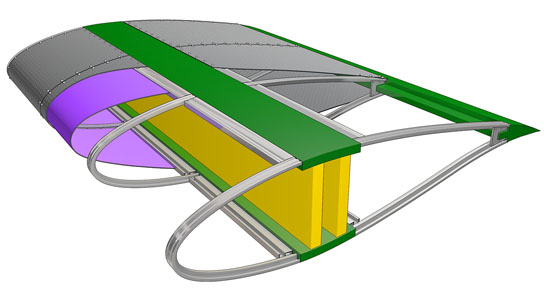
    Illustrated is a section of a wind blade depicting a new manufacturing concept that would entail covering the blade with a tensioned fabric. This new approach could significantly reduce production costs and make wind more economical. Credit: GE

    GE’s latest wind technology development is fabric-covered wind turbine blades, which are supposed to even more efficient that the fiberglass that is used now.

    The swap in technology will allow turbine blades to perform as well, but can be made on-site at a much lower cost, 25-40% less. This drop in manufacturing cost could help make wind energy more competitive as economical as fossil fuels without government subsidies.

    The fabric is lighter than fiberglass and allows for the production of much longer blades, which can capture more of the wind’s energy.

    The architectural fabrics will be wrapped around a metal spaceframe, resembling a fishbone. The fabric will be tensioned around the ribs and run the length of the blade. The fabric was specifically designed to meet the demands of wind blade operations.

    Current blade designs limit the length of the blades, due to financial, assembly, and transportation restrictions. Fiberglass molds of blades can cost millions. A lightweight fabric would allow the construction of larger blades that generate wind energy at slower wind speeds. With this new approach to making wind blades, components could be built and assembled on-site, meaning design engineers no longer have to concern themselves with manufacturing and transportation limitations.

    Large blades will help the US achieve the national goal of 20% wind power by expanding wind energy into areas that wouldn’t have been suitable in the past. The $5.6M ARPA-E project will span three years and GE’s blade architecture will be built to achieve a 20-year life with no regular maintenance to tension fabrics required.

    Never miss a breakthrough: Join the SciTechDaily newsletter.
    Follow us on Google and Google News.

    Green Technology Renewable Energy Wind Power Wind Turbine
    Share. Facebook Twitter Pinterest LinkedIn Email Reddit

    Related Articles

    Wind Farms Cause More Environmental Impact Than Previously Thought

    New On-Site Fabrication Process Makes Taller Wind Turbines More Feasible

    London Array Is the World’s Largest Offshore Wind Farm

    Wind Could Power Half the World by 2030

    Key Findings From the DOE’s 2011 Wind Technologies Market Report

    Sandia Engineers Are Reevaluating Vertical Axis Wind Turbines

    Gigantic Downdraft Energy Tower Planned Near US-Mexico Border

    Waste to Energy Technology Commercially Available in the US

    MIT Researchers Design Inexpensive Liquid Batteries With Distinct Layers

    Leave A Reply Cancel Reply

    • Facebook
    • Twitter
    • Pinterest
    • YouTube

    Don't Miss a Discovery

    Subscribe for the Latest in Science & Tech!

    Trending News

    Giant Crocodylians Ruled South America’s Ancient Food Chain

    Breakthrough in a Bizarre Galaxy Could Help Unlock the Mystery of Dark Matter

    Just 4 Minutes of Daily Strength Training Can Quadruple Fitness in Older Adults

    Almost All Plant-Based Meat Alternatives Contain Mycotoxins, Study Finds

    Astronomers Detect a Record-Breaking “Cosmic Laser” From 8 Billion Light-Years Away

    A 47-Year-Old Scientist Tracked Himself for Months – His Biological Age Fell to 32

    Construction Crew Uncovers Giant 20-Meter Dinosaur in Brazil

    30 Years of Hurricane Data Reveal 4 Warning Signs Before Storms Strengthen

    Follow SciTechDaily
    • Facebook
    • Twitter
    • YouTube
    • Pinterest
    • Newsletter
    • RSS
    SciTech News
    • Biology News
    • Chemistry News
    • Earth News
    • Health News
    • Physics News
    • Science News
    • Space News
    • Technology News
    Recent Posts
    • A 20-Year Study Finds Preschool Can Influence Success for Years
    • 55-Million-Year-Old Penguin Fossils Preserve Clues to a Warmer Antarctica
    • A 35,000-Year-Old Neanderthal Pelvis May Explain Why Men and Women Walk Differently
    • Hidden Brain Wiring May Help Preserve Thinking As Gray Matter Shrinks
    • Dual Stem Cell Treatment Restores Vision in First Human Trial
    Copyright © 1998 - 2026 SciTechDaily. All Rights Reserved.
    • Science News
    • About
    • Contact
    • Editorial Board
    • Privacy Policy
    • Terms of Use

    Type above and press Enter to search. Press Esc to cancel.