
How to Supply Emergency Power to Residents of Rural and Suburban Communities During Multi-Day Outages
New research suggests that cooperative strategies for sharing emergency power among households can be 10 to 40 times less costly than running individual gas-powered generators.
As demand for electricity rises and climate change brings more frequent and extreme storms, residents in rural and suburban communities must have access to the minimal electricity they need to survive a large, long-duration (LLD) power outage.
A new study in the journal Risk Analysis compared strategies for providing emergency power to residents in two hypothetical New England communities during such an event. The results suggest that cooperative strategies like sharing a higher capacity generator among multiple homes cost 10 to 40 times less than if each household used its own generator.
“Our findings provide impetus for utilities, regulators, and policymakers to make collective options readily accessible to communities,” says co-author M. Granger Morgan, Hamerschlag University Professor of Engineering at Carnegie Mellon University and co-director of the National Science Foundation’s Center for Climate and Energy Decision Making.
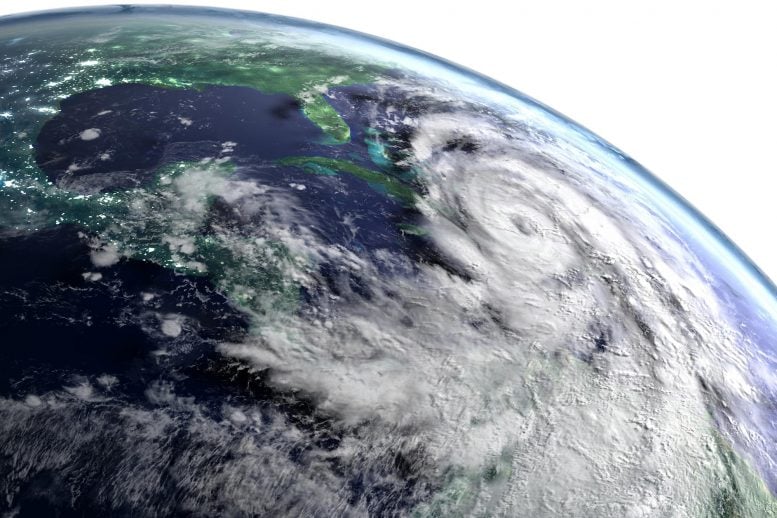
LLD-outages are defined as blackouts that extend over multiple service areas or states and last several days or longer. Over the last decade, severe storms have caused LLD-outages affecting millions of people. In 2012, Superstorm Sandy disrupted power in 21 states, affecting over 8 million customers with approximately 800,000 customers still without power after 10 days. And in 2017, Hurricane Maria devastated electrical service across Puerto Rico for months.
Vulnerability of Rural and Suburban Communities
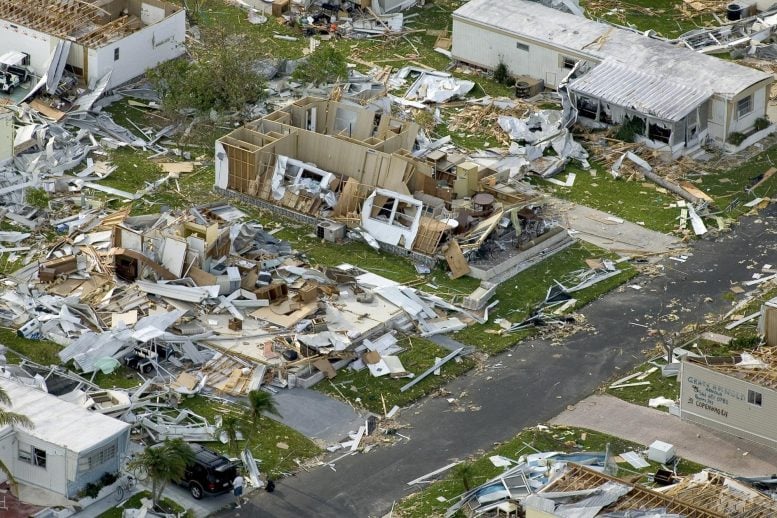
In their study, the researchers focused on power resilience among often-overlooked residential customers in rural and suburban communities. “Rural and suburban communities tend to be more vulnerable in long-duration outages,” says Angelena Bohman, lead author and a Ph.D. candidate in Engineering and Public Policy at Carnegie Mellon University.
Most rural and suburban areas have overhead power lines, which can be taken down by high wind events like hurricanes and tornadoes. Ice storms can also weigh down and snap overhead lines. “The more spread out communities are, the harder it is for residents to access support in an emergency due to destroyed or blocked roads and limited fuel access,” says Bohman. “They are also likely to have to wait longer for power to be restored as other critical infrastructures and urban communities typically get priority.”
The team’s analysis focuses on two hypothetical communities in New Hampshire, a region that has experienced both hurricanes and ice storms and where there is a risk of frozen pipes during a winter outage that could result in serious water damage. One of the hypothetical communities relies on a fuel mix for heating; the other uses piped natural gas. The study compares individual and cooperative strategies for providing limited amounts of power to residential customers in both communities during an LLD-outage.
To estimate how much power is needed by each household, the researchers considered only the energy needed for basic survival. In freezing temperatures, households need enough heat to prevent hypothermia and frozen pipes (a thermostat setting of 50° F). They need enough power to support minimal lighting at night and to charge mobile devices. A refrigerator is necessary during summer, but not winter. Air conditioning was not considered a necessity.
The analysis suggests that most houses require roughly 600 running watts during an outage to meet their emergency demand, regardless of the season. This “emergency load” comprises about 10 percent of normal household load.
The Four Emergency Power Strategies Compared
The researchers analyzed the cost and performance of these four different strategies for providing emergency power during an LLD-outage:
- Individual houses each purchase and use their own emergency generator fueled with gasoline, propane, or diesel or have installed a PV + battery system.
- A 10-house “neighborhood” operates as a microgrid served by a small, single-phase generator fueled with propane, diesel, or natural gas
- A 100-house “community” operates as a microgrid using a three-phase generator fueled by propane, diesel, or natural gas
- A single, large, three-phase generator or microturbine capable of serving the entire feeder for a community is located at the substation.
They considered each strategy’s performance during outages that lasted five, 10, and 20 days in duration. Compared to the cost of running an individual generator at each home, the results showed that the three cooperative solutions cost 10 to 40 times less per household.
Providing a gas-powered generator to each home would be problematic if an outage lasted more than a few days. A 5.5kW portable generator would require 300 gallons of gasoline during a 20-day outage as well as four to five oil changes. Keeping it running that long would only be plausible if the town made prior arrangements to keep filling stations operating and reached agreements about fuel supply priorities with emergency responders and others.
Coordination is Key for Community Solutions
Co-author Ahmed Abdulla, assistant professor in the Department of Mechanical and Aerospace Engineering at Carleton University, points out that while collective strategies are significantly cheaper than individual strategies, they also require prior arrangements between customers and with the local township, local utility, third-party suppliers, and regulators such as the state’s Public Utility Commission (PUC).
All of this may be worth it to a state like Texas, which suffered devastating rolling blackouts during severe winter storms last February. More than 4.5 million homes and businesses were without power, some for more than three days. “If customers on distribution feeders in Texas had implemented any of the strategies outlined in our paper they would have had access to enough power to avoid frozen pipes, modestly heat their home, keep a few lights on, and cycle through other small loads to make the situation much more bearable,” says Bohman.
Finding cost-efficient solutions to mitigate the impacts of climate change is more important than ever, adds Granger. “Unfortunately, the risk of LLD-outages is growing as climate change brings more frequent and extreme weather events. We are developing a set of strategies to assess how resilient a power system is likely to be as it strives to balance decarbonizing the power grid while also protecting it against these extreme events – two goals that are not always easily aligned.”
Reference: “Individual and Collective Strategies to Limit the Impacts of Large Power Outages of Long Duration” by Angelena D. Bohman, Ahmed Abdulla and M. Granger Morgan, 24 June 2021, Risk Analysis: An International Journal.
DOI: 10.1111/risa.13765
About SRA
The Society for Risk Analysis is a multidisciplinary, interdisciplinary, scholarly, international society that provides an open forum for all those interested in risk analysis. SRA was established in 1980 and has published Risk Analysis: An International Journal, the leading scholarly journal in the field, continuously since 1981.
Never miss a breakthrough: Join the SciTechDaily newsletter.
Follow us on Google and Google News.