
Close Menu
    Facebook X (Twitter) Instagram
    SciTechDaily
    • Biology
    • Chemistry
    • Earth
    • Health
    • Physics
    • Science
    • Space
    • Technology
    Facebook X (Twitter) Pinterest YouTube RSS
    SciTechDaily
    Home»Biology»Fast-Acting Virus Targets Most Melanoma Tumors
    Biology

    Fast-Acting Virus Targets Most Melanoma Tumors

    By Bill Hathaway, Yale UniversityJune 14, 2013No Comments2 Mins Read
    Facebook Twitter Pinterest Telegram LinkedIn WhatsApp Email Reddit
    Share
    Facebook Twitter LinkedIn Pinterest Telegram Email Reddit
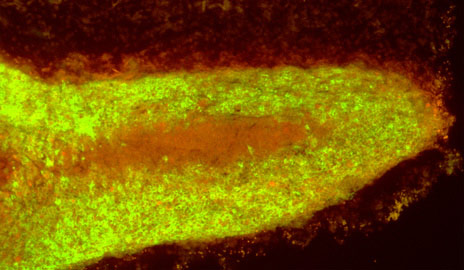
    Fast Acting Virus Eradicates Most Melanoma Tumors
    The green color shows where the vesicular stomatitis virus has infected rust-colored melanoma tumor cells after injection of the virus into the blood stream. The surrounding non-cancerous tissue is free of virus. Credit: Yale University

    In a newly published study, Yale University researchers show that a fast-acting virus targets most melanoma tumors after injection into the blood stream of mice.

    Yale researchers eradicated most melanoma tumors by exposing them to a fast-acting virus, they report in the June 15 edition of the Journal of Virology.

    Melanoma is the deadliest type of skin cancer and can spread throughout the body and even into the brain.

    “After injection into the blood stream of mice, the virus finds melanoma on its own, and is fast and aggressive with tumors,” said Anthony N. van den Pol, professor of neurosurgery at Yale School of Medicine, investigator for the Yale Cancer Center and senior author of the study. “Because the virus replicates rapidly, it can kill the melanoma before the immune system responds and kills the virus.”

    In the process of eliminating the virus, the immune system may also begin to target and kill tumor cells, he added.

    The researchers used the vesicular stomatitis virus — part of a family of viruses that include rabies and may generate flu-like symptoms in humans. The fast-acting virus ignored healthy melanocytes (the cells from which melanoma arises) but zeroed in on 19 melanoma tumors studied. In 70 percent of tumors tested, melanoma was eradicated completely, while the rest showed a more limited response to the virus.

    If safety of the virus can be substantiated, the next target would be to begin trials in humans, van den Pol said.

    Other Yale authors include Guido Wollmann, John N. Davis, and Marcus W. Bosenberg.

    The study was funded by the National Institutes of Health.

    Reference: “Highly Attenuated Recombinant Vesicular Stomatitis Virus VSV-12′GFP Displays Immunogenic and Oncolytic Activity” by Anthony N. van den Pol and John N. Davis, 15 January 2013, Journal of Virology.
    DOI: 10.1128/JVI.01106-12

    Never miss a breakthrough: Join the SciTechDaily newsletter.
    Follow us on Google and Google News.

    Cancer Melanoma Virology Virus
    Share. Facebook Twitter Pinterest LinkedIn Email Reddit

    Related Articles

    Ebola-Like Virus Safely Destroys Brain Tumors

    A New Class of Molecular Compounds Capable of Killing the Influenza Virus

    Novel Coronavirus hCoV-EMC Infects Humans & Animals

    People With Redhead Pigment Are More Susceptible to Skin Cancer

    Monkeys Cured of Ebola Zaire Virus With Antibody Cocktail

    Immune System May Trigger Melanoma Growth

    Examining the Mechanism Behind Melanoma Drug Resistance

    Visual Science’s Ebolavirus 3D Model is 10 Times More Complex Than Their HIV Model

    Ruminant Orthobunyavirus Takes Northern Europe By Surprise

    Leave A Reply Cancel Reply

    • Facebook
    • Twitter
    • Pinterest
    • YouTube

    Don't Miss a Discovery

    Subscribe for the Latest in Science & Tech!

    Trending News

    The Universe Is Expanding Too Fast and Scientists Can’t Explain Why

    “Like Liquid Metal”: Scientists Create Strange Shape-Shifting Material

    Early Warning Signals of Esophageal Cancer May Be Hiding in Plain Sight

    Common Blood Pressure Drug Shows Surprising Power Against Deadly Antibiotic-Resistant Superbug

    Scientists Uncover Dangerous Connection Between Serotonin and Heart Valve Disease

    Scientists Discover a “Protector” Protein That Could Help Reverse Hair Loss

    Bone-Strengthening Discovery Could Reverse Osteoporosis

    Scientists Uncover Hidden Trigger Behind Stem Cell Aging

    Follow SciTechDaily
    • Facebook
    • Twitter
    • YouTube
    • Pinterest
    • Newsletter
    • RSS
    SciTech News
    • Biology News
    • Chemistry News
    • Earth News
    • Health News
    • Physics News
    • Science News
    • Space News
    • Technology News
    Recent Posts
    • Scientists Crack Alfalfa’s Chromosome Mystery After Decades of Debate
    • Ancient Ant-Plant Alliance Collapses As Predatory Wasps Move In
    • Scientists Discover Tiny New Spider That Hunts Prey 6x Its Size
    • Natural Component From Licorice Shows Promise for Treating Inflammatory Bowel Disease
    • New Research Finds Shocking Link Between Chili Peppers and Cancer
    Copyright © 1998 - 2026 SciTechDaily. All Rights Reserved.
    • Science News
    • About
    • Contact
    • Editorial Board
    • Privacy Policy
    • Terms of Use

    Type above and press Enter to search. Press Esc to cancel.