
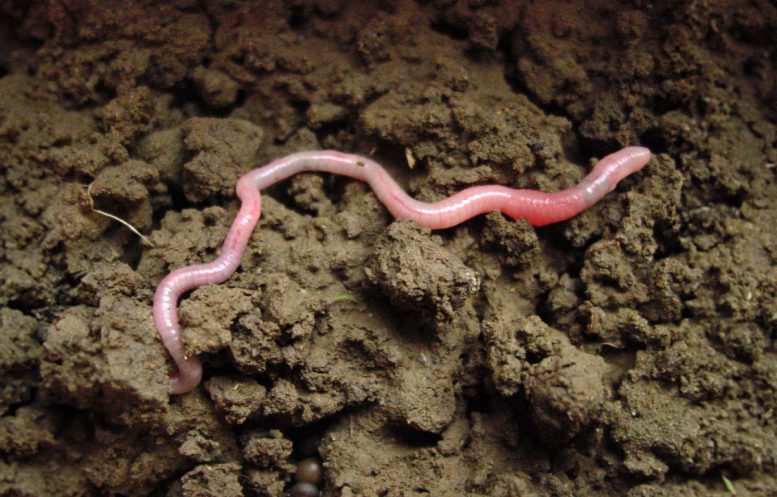
Earthworms: Unsung Heroes of Global Food Production
Earthworms are important drivers of global food production, contributing to approximately 6.5% of grain yield and 2.3% of legumes produced worldwide each year, according to new work published today (September 26) by Colorado State University scientists in the journal Nature Communications.
These new estimates from a trio of CSU researchers mean earthworms may account for as much as 140 million metric tons of food produced annually — roughly comparative to the amount of cereal grains (rice, wheat, rye, oats, barley, maize, and millet) grown annually by Russia, the world’s fourth-largest producer.
“This is the first effort that I’m aware of that’s trying to take one piece of soil biodiversity and say, ‘OK, this is the value of it; this is what it’s giving us on a global scale,’” said Steven Fonte, associate professor of agroecosystem ecology in the Department of Soil and Crop Sciences at CSU, and the study’s lead author.
Role of Earthworms in Soil Health
Earthworms help establish healthy soils by supporting plant growth in multiple ways — building good soil structure, assisting in water capture and aiding in the beneficial churn of organic matter that makes nutrients more available to plants. Other research has also shown that earthworms can facilitate the production of plant-growth-promoting hormones and help plants protect themselves against common soil pathogens. Some estimates have indicated earthworms can increase overall plant productivity by about 25 percent.
Fonte and his colleagues — Nathan Mueller, an associate professor in the Department of Ecosystem Science and Sustainability, and Marian Hsieh, a doctoral student in the same department — estimated the contribution of earthworms to global food production by overlaying and analyzing maps of earthworm abundance, soil properties, fertilize rate and crop yields.
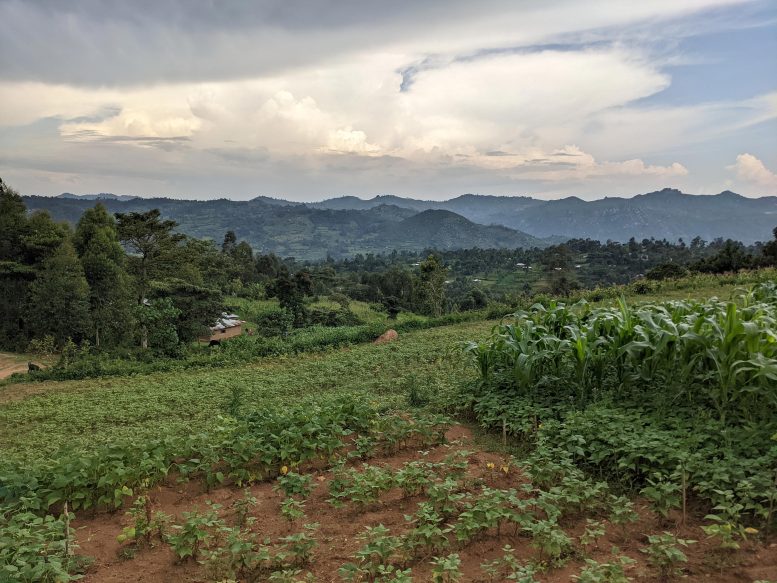
The analysis indicated that earthworms had a more significant impact on grain production in the global south — notably, 10% of grain yield in Sub-Saharan Africa and 8% in Latin America and the Caribbean. It’s likely the earthworms contributed more in those areas, Fonte said, because farmers there tend to have less access to fertilizer and pesticides. Instead, they rely more on earthworm-rich organic matter like manure and crop residues, which help stimulate the beneficial effect earthworms have on plants.
“Earthworms are contributing a lot in these areas where we have fewer chemical inputs,” Fonte said.
Earthworms and Sustainable Agriculture
For this study, Fonte and his colleagues analyzed earthworm impacts on four grain crops: rice, maize, wheat and barley; the group examined a set of legumes that included soybeans, peas, chickpeas, lentils, and alfalfa, among others.
Fonte said he thinks soil biodiversity has historically been undervalued, and that he hopes this work will bring more attention to how healthy soils can have positive, tangible impacts on crops.
“If we manage our soils in a more sustainable way, we can better harness or leverage this biodiversity and produce more sustainable agroecosystems,” Fonte said. “This work highlights that potential.”
Fonte noted that other recent research has shown that soils contain as much as half the world’s biodiversity, a significant increase from previous estimates of approximately 25%. “Soils are just such an intricate habitat,” he said. “But there’s really been very few efforts to understand what that biodiversity means to our global crop yields.”
Implications and Future Directions
Diana Wall, a professor in the Department of Biology and the science chair of the Global Soil Biodiversity Initiative, was excited by the data published in the Nature Communications paper. “This, to me, is a really clever, very data-rich paper,” Wall said. “It’s really impressive.”
This information could also have implications for future efforts to mitigate drought and erosion, Fonte said. For example, he said, earthworms can improve soil porosity, aiding in the beneficial capture and retention of water.
Fonte cautioned that he and his colleagues are not advocating for anyone to transplant earthworms into places they do not already exist. Rather, he hopes this work shows how improved management of soil biology in places where earthworms already call home has the potential to enhance agricultural productivity and reduce our reliance on agrochemicals. This study marks an important first step, Fonte said, but he hopes that researchers will continue to dig into the positive benefits that other soil organisms have on crops.
“Soils are still this huge, big black box that we don’t fully understand,” Fonte said. “This work helps show that there’s a lot of opportunity that we’re just kind of ignoring.”
He added, “There are probably other soil organisms that are even more important, especially microbial communities.”
Reference: “Earthworms contribute significantly to global food production” by Steven J. Fonte, Marian Hsieh and Nathaniel D. Mueller, 26 September 2023, Nature Communications.
DOI: 10.1038/s41467-023-41286-7
Never miss a breakthrough: Join the SciTechDaily newsletter.
Follow us on Google and Google News.