
Close Menu
    Facebook X (Twitter) Instagram
    SciTechDaily
    • Biology
    • Chemistry
    • Earth
    • Health
    • Physics
    • Science
    • Space
    • Technology
    Facebook X (Twitter) Pinterest YouTube RSS
    SciTechDaily
    Home»Technology»Flat Lens a Thousand Times Thinner Than a Human Hair Offers a Wide Field of View for Smartphone Cameras
    Technology

    Flat Lens a Thousand Times Thinner Than a Human Hair Offers a Wide Field of View for Smartphone Cameras

    By FAPESPAugust 24, 2020No Comments3 Mins Read
    Facebook Twitter Pinterest Telegram LinkedIn WhatsApp Email Reddit
    Share
    Facebook Twitter LinkedIn Pinterest Telegram Email Reddit
    Flat Lens High Resolution
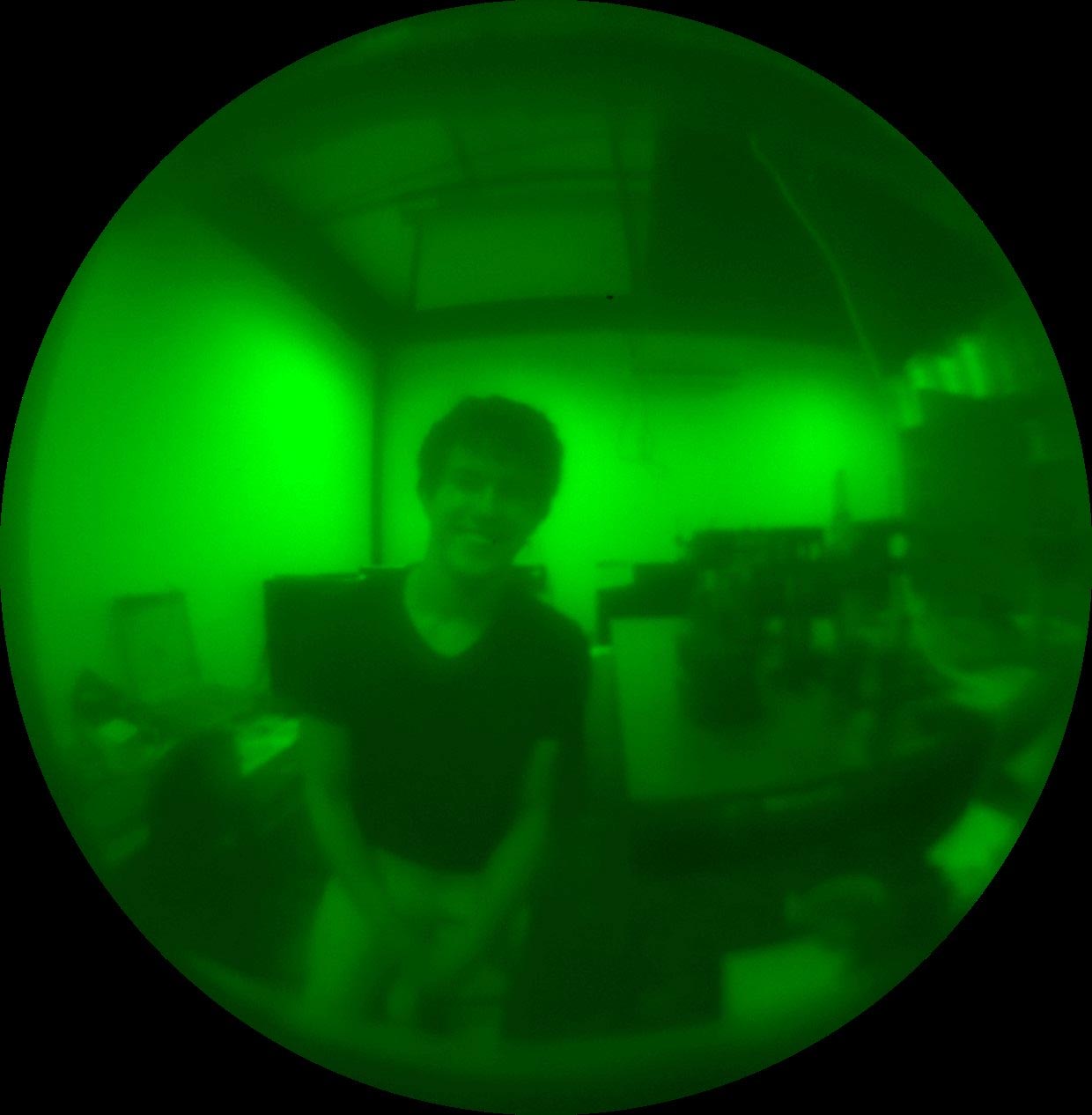
    The lens can be used to produce high-resolution images with a wide field of view. It can serve as a camera lens in smartphones and can be used in other devices that depend on sensors (high-resolution wide-angle selfie obtained using metalens). Credit: Augusto Martins/USP

    The lens can be used to produce high-resolution images with a wide field of view. It can serve as a camera lens in smartphones and can be used in other devices that depend on sensors.

    A lens that is a thousand times thinner than a human hair has been developed in Brazil by researchers at the University of São Paulo’s São Carlos School of Engineering (EESC-USP). It can serve as a camera lens in smartphones or be used in other devices that depend on sensors.

    “In the present technological context, its applications are almost unlimited,” Emiliano Rezende Martins, a professor in EESC-USP’s Department of Electrical Engineering and Computing and last author of a published paper on the invention, told Agência FAPESP.

    The paper is entitled “On Metalenses with Arbitrarily Wide Field of View” and is published in ACS Photonics. The study was supported by FAPESP via a scholarship for a research internship abroad awarded to Augusto Martins, Ph.D. candidate and lead author of the paper.

    The lens consists of a single nanometric layer of silicon on arrays of nanoposts that interact with light. The structure is printed by photolithography, a well-known technique used to fabricate transistors.

    This kind of lens is known as a metalens. Metalenses were first developed ten years ago and achieve the highest resolution that is physically feasible, using an ultrathin array of tiny waveguides called a metasurface that bends light as it passes through the lens.

    According to Rezende Martins, metalenses have long faced the problem that the angle of view is extremely small (less than 1°). “One way to solve the problem is to combine metalenses, forming complex structures,” he said.

    Based on the realization that in a conventional lens an increase in refraction index increases the field of view in proportion to the flatness of the lens, the authors designed a metalens to mimic a totally flat lens with an infinite refraction index, which could not be obtained with a conventional lens.

    “Our lens has an arbitrary field of view, which ideally can reach 180° without image distortion,” Rezende Martins said. “We’ve tested its effectiveness for an angle of 110°. With wider angles of view, light energy decreases owing to the shadow effect, but this can be corrected by post-processing.”

    Combining metalenses prevents super-resolution, but the resolution obtained is sufficient for all conventional applications. Martins tested the metalens with a 3D printed camera and obtained high-resolution images with a wide field of view. “So far we’ve only succeeded in photographing in green, but in the months ahead we’ll upgrade the lens so that all colors are feasible,” he said.

    Reference: “On Metalenses with Arbitrarily Wide Field of View” by Augusto Martins, Kezheng Li, Juntao Li, Haowen Liang, Donato Conteduca, Ben-Hur V. Borges, Thomas F. Krauss and Emiliano R. Martins, 30 June 2020, ACS Photonics.
    DOI: 10.1021/acsphotonics.0c00479

    Never miss a breakthrough: Join the SciTechDaily newsletter.
    Follow us on Google and Google News.

    Agência FAPESP Optics Popular
    Share. Facebook Twitter Pinterest LinkedIn Email Reddit

    Related Articles

    Russian Scientists Break Google’s Quantum Algorithm

    New Flat Lens Enables Focus-Free Cameras With Drastically Reduced Weight, Complexity & Cost

    New Camera Combines Lasers and Terahertz Waves to Reveal ‘Unseen’ Detail and ‘See Inside’ Objects

    “Perfect” Solar Energy Absorber Created by Laser Etching Metal With Nanoscale Structures

    New Flexible Transparent Solar Cells Could Be Used in Buildings, Vehicles and Portable Electronics

    Blanket of Entangled Light Pulses for Larger and More Powerful Quantum Computers

    Prototype Large-Scale Quantum Processor Made Entirely of Light

    New Tunable Optical Chips Can Be Used As Building-Blocks for Next Generation Quantum Computers

    Engineers Develop a Telescopic Contact Lens

    Leave A Reply Cancel Reply

    • Facebook
    • Twitter
    • Pinterest
    • YouTube

    Don't Miss a Discovery

    Subscribe for the Latest in Science & Tech!

    Trending News

    The Universe Is Expanding Too Fast and Scientists Can’t Explain Why

    “Like Liquid Metal”: Scientists Create Strange Shape-Shifting Material

    Early Warning Signals of Esophageal Cancer May Be Hiding in Plain Sight

    Common Blood Pressure Drug Shows Surprising Power Against Deadly Antibiotic-Resistant Superbug

    Scientists Uncover Dangerous Connection Between Serotonin and Heart Valve Disease

    Scientists Discover a “Protector” Protein That Could Help Reverse Hair Loss

    Bone-Strengthening Discovery Could Reverse Osteoporosis

    Scientists Uncover Hidden Trigger Behind Stem Cell Aging

    Follow SciTechDaily
    • Facebook
    • Twitter
    • YouTube
    • Pinterest
    • Newsletter
    • RSS
    SciTech News
    • Biology News
    • Chemistry News
    • Earth News
    • Health News
    • Physics News
    • Science News
    • Space News
    • Technology News
    Recent Posts
    • A Common Diabetes Drug May Hold the Key to Stopping HIV From Coming Back
    • Ancient “Syphilis-Like” Disease in Vietnam Challenges Key Scientific Assumptions
    • Drinking Alcohol To Cope in Your 20s Could Damage Your Brain for Life
    • Scientists Crack Alfalfa’s Chromosome Mystery After Decades of Debate
    • Ancient Ant-Plant Alliance Collapses As Predatory Wasps Move In
    Copyright © 1998 - 2026 SciTechDaily. All Rights Reserved.
    • Science News
    • About
    • Contact
    • Editorial Board
    • Privacy Policy
    • Terms of Use

    Type above and press Enter to search. Press Esc to cancel.