
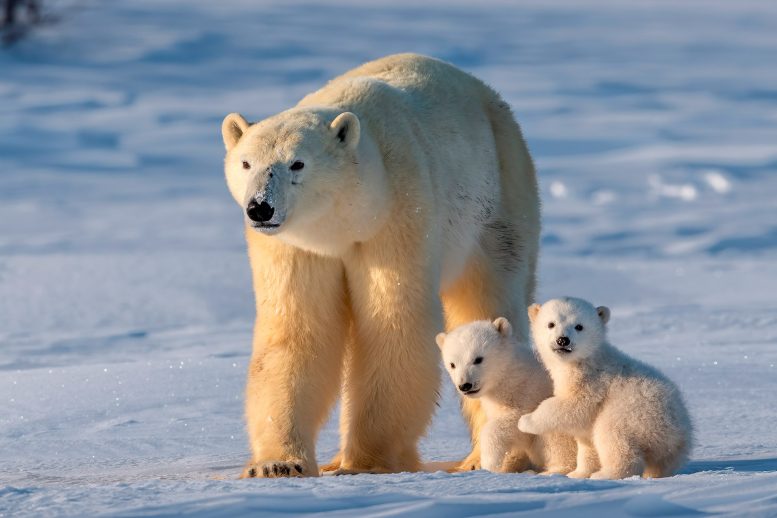
Scientists have found a way of capturing DNA from snow tracks — a promising non-invasive method of monitoring elusive animals like polar bears.
Polar bears are icons of the Arctic, elusive and vulnerable. Detailed monitoring of their populations is crucial for their conservation — but because polar bears are so difficult to find, we are missing critical data about population size and how well-connected those populations are. Scientists have now developed a new tool to help: DNA analysis using skin cells shed in the bears’ footprints in the snow.
“It is particularly challenging, expensive, and time-consuming to find polar bears in the Arctic, let alone count them and understand how they are coping with climate change,” said Dr. Melanie Lancaster of the World Wide Fund for Nature Global Arctic Programme, senior author of the study in Frontiers in Conservation Science.
Innovative Forensic Techniques in Conservation
The scientists were inspired by forensic techniques that can be applied to tiny, degraded DNA samples. With these techniques, it isn’t necessary to physically capture bears, which can be stressful and dangerous for both bears and humans, and is a source of concern to some local Indigenous communities. Instead, scientists can look at sources of DNA shed in passing — environmental DNA.
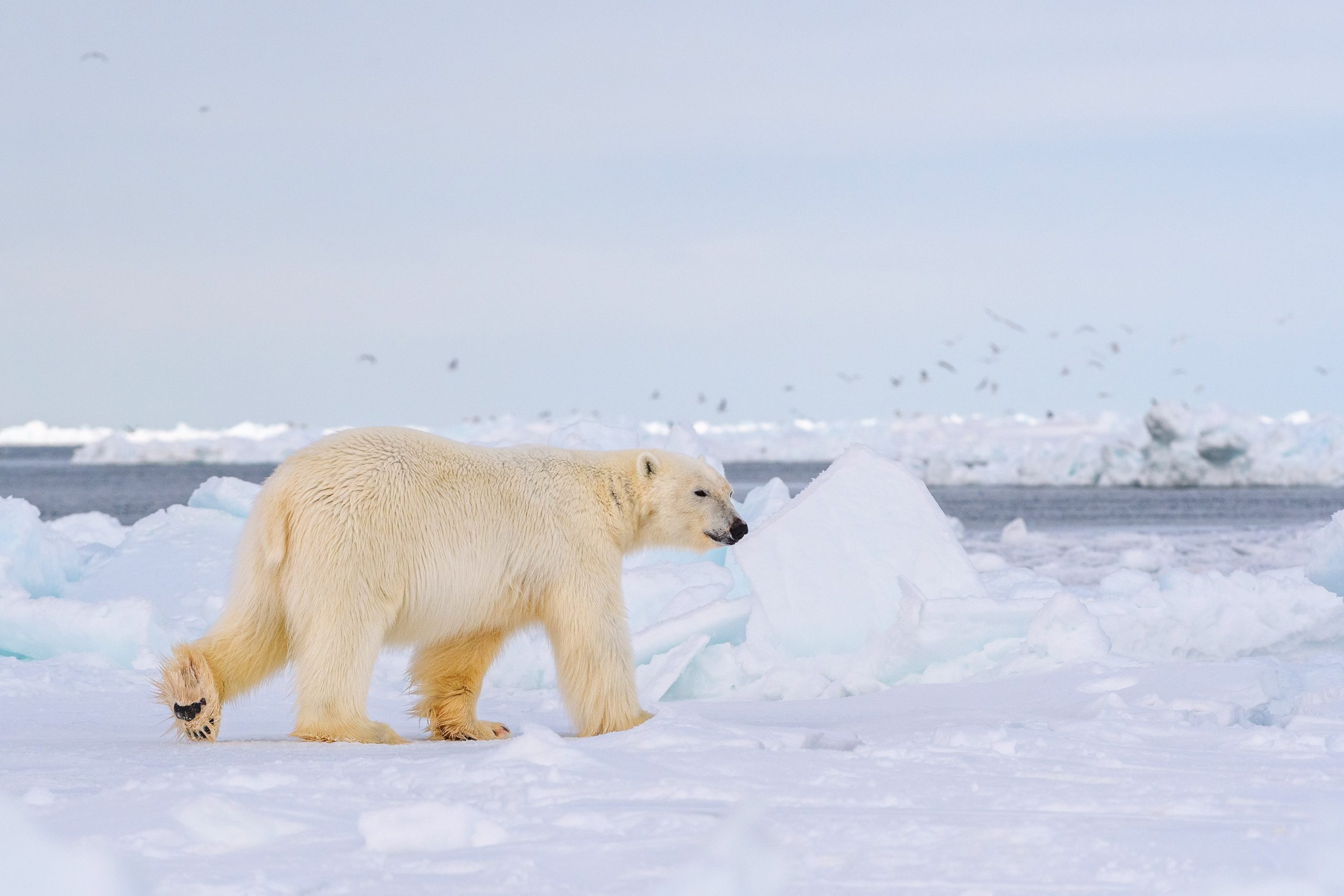
“Many Inuit express concern about invasive research methods,” said Elisabeth Kruger of the World Wildlife F und, an author of the article. “People are concerned about the welfare of the individual polar bear and the health and safety of people who may harvest the bear later. This is one of the reasons we are so excited about new methods like this — the person collecting the sample never needs to even see or be seen by the polar bear.”
Environmental DNA: A Non-Invasive Tool
A common form of environmental DNA is deposited when animals defecate. However, the DNA quality is not always good enough for the individual-level analysis needed for conservation. Additionally, for territorial animals like the two other species the scientists tested — lynxes and snow leopards — sampling feces could affect the animals’ behavior. So the researchers turned to skin cells in snowy footprints.
“The tracks usually contain fresh cells, and the DNA is intact because of the cold ‘storage’ temperature. DNA that has passed the gut is much more degraded and therefore more challenging to work on,” said Dr Micaela Hellström of MIX Research Sweden AB, lead author.
Tracking and Sampling in the Wild
The scientists collected snow from individual tracks made by Alaskan polar bears and Swedish Eurasian lynxes in the wild and in captivity. They also collected snow from tracks made by a captive snow leopard. Additional materials like hair, saliva, and mucus were sampled, confirming that the tracks provided accurate genotypes.
24 wild polar bear tracks and 44 wild lynx tracks were sampled. The researchers melted and filtered the snow to collect environmental DNA, then carried out microsatellite analysis. Although the concentrations of DNA retrieved from tracks sampled in the wild were very low, it was possible to retrieve nuclear DNA from 87.5% of wild polar bear tracks and 59.1% of wild lynx tracks. 13 of the wild polar bear samples could be genotyped, identifying 12 different individuals.
11% of the lynx tracks could be genotyped, but when the scientists only looked at the tracks sampled by trained personnel, this rose substantially. They were able to retrieve nuclear DNA from 76% of samples collected by trained personnel, and to genotype 24% of those sampled.
A Paws-Off Approach
This technique has huge potential to inform conservation of these animals, to better understand their populations and behavior, and to manage conflict with humans through accurate identification of animals. Although non-invasive sampling has a lower success rate, ease of collection means that it can significantly expand sample sizes.
“We hope this method will be taken up by the polar bear research community, with the involvement of hunters, volunteers, and Indigenous communities, as a new way to collect information on polar bears,” said Lancaster. “We also hope the method will be expanded to other animals living in snowy environments — we have shown it works for lynx and snow leopards as a start.”
Reference: “Capturing environmental DNA in snow tracks of polar bear, Eurasian lynx and snow leopard towards individual identification” by Micaela Hellström, Elisabeth Kruger, Johan Näslund, Mia Bisther, Anna Edlund, Patrick Hernvall, Viktor Birgersson, Rafael Augusto and Melanie L. Lancaster, 11 October 2023, Frontiers in Conservation Science.
DOI: 10.3389/fcosc.2023.1250996
Never miss a breakthrough: Join the SciTechDaily newsletter.
Follow us on Google and Google News.