
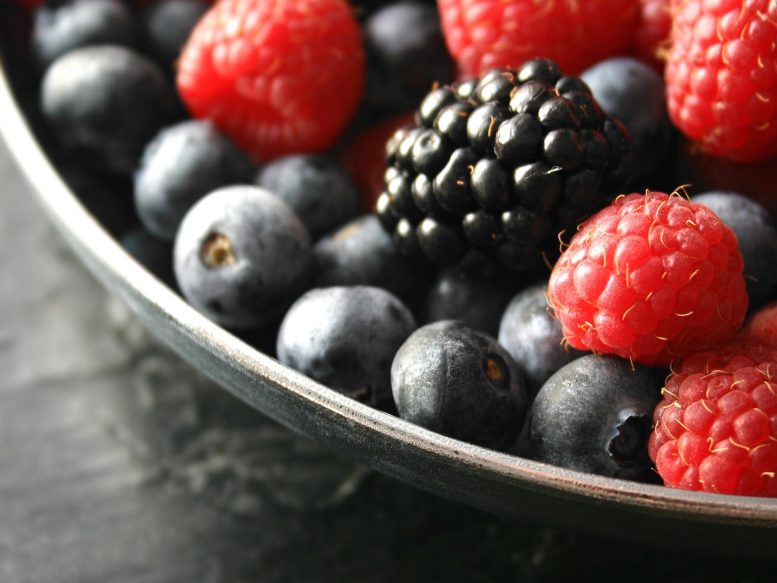
A study by researchers from Columbia and Brigham and Women’s Hospital/Harvard links age-related memory loss to a diet low in flavanols—nutrients found in fruits and vegetables. The study found that replenishing these nutrients in adults over 60 improved performance on memory tests, indicating the importance of specific nutrients for optimal brain health in aging populations.
A large-scale study led by researchers at Columbia and Brigham and Women’s Hospital/Harvard is the first to establish that a diet low in flavanols—nutrients found in certain fruits and vegetables—drives age-related memory loss.
The study found that flavanol intake among older adults tracks with scores on tests designed to detect memory loss due to normal aging and that replenishing these bioactive dietary components in mildly flavanol-deficient adults over age 60 improves performance on these tests.
“The improvement among study participants with low-flavanol diets was substantial and raises the possibility of using flavanol-rich diets or supplements to improve cognitive function in older adults,” says Adam M. Brickman, PhD, professor of neuropsychology at Columbia University Vagelos College of Physicians and Surgeons and co-leader of the study.
The finding also supports the emerging idea that the aging brain requires specific nutrients for optimal health, just as the developing brain requires specific nutrients for proper development.
“The identification of nutrients critical for the proper development of an infant’s nervous system was a crowning achievement of 20th-century nutrition science,” says the study’s senior author, Scott A. Small, MD, the Boris and Rose Katz Professor of Neurology at Columbia University Vagelos College of Physicians and Surgeons.
“In this century, as we are living longer research is starting to reveal that different nutrients are needed to fortify our aging minds. Our study, which relies on biomarkers of flavanol consumption, can be used as a template by other researchers to identify additional, necessary nutrients.”
Age-Related Memory Loss Linked to Changes in Hippocampus
The current study builds on over 15 years of research in Small’s lab linking age-related memory loss to changes in the dentate gyrus, a specific area within the brain’s hippocampus—a region that is vital for learning new memories—and showing that flavanols improved function in this brain region.
Additional research, in mice, found that flavanols—particularly a bioactive substance in flavanols called epicatechin—improved memory by enhancing the growth of neurons and blood vessels in the hippocampus.
Next, Small’s team tested flavanol supplements in people. One small study confirmed that the dentate gyrus is linked to cognitive aging. A second, larger trial showed that flavanols improved memory by acting selectively on this brain region and had the most impact on those starting out with a poor-quality diet.
In the new study, the Columbia team collaborated with researchers at Brigham and Women’s Hospital studying the effects of flavanols and multivitamins in COSMOS (COcoa Supplements and Multivitamin Outcomes Study). The current study, COSMOS-Web, was designed to test the impact of flavanols in a much larger group and explore whether flavanol deficiency drives cognitive aging in this area of the brain.
Study Methods
More than 3,500 healthy older adults were randomly assigned to receive a daily flavanol supplement (in pill form) or placebo pill for three years. The active supplement contained 500 mg of flavanols, including 80 mg of epicatechins, an amount that adults are advised to get from food.
At the beginning of the study, all participants completed a survey that assessed the quality of their diet, including foods known to be high in flavanols. Participants then performed a series of web-based activities in their own homes, designed and validated by Brickman, to assess the types of short-term memory governed by the hippocampus. The tests were repeated after years one, two, and three. Most of the participants identified themselves as non-Hispanic and white.
More than a third of the participants also supplied urine samples that allowed researchers to measure a biomarker for dietary flavanol levels, developed by co-study authors at Reading University in the UK, before and during the study. The biomarker gave the researchers a more precise way to determine if flavanol levels corresponded to performance on the cognitive tests and ensure that participants were sticking to their assigned regimen (compliance was high throughout the study). Flavanol levels varied moderately, though no participants were severely flavanol-deficient.
People With Mild Flavanol Deficiency Benefited From Flavanol Supplement
Memory scores improved only slightly for the entire group taking the daily flavanol supplement, most of whom were already eating a healthy diet with plenty of flavanols.
But at the end of the first year of taking the flavanol supplement, participants who reported consuming a poorer diet and had lower baseline levels of flavanols saw their memory scores increase by an average of 10.5% compared to placebo and 16% compared to their memory at baseline. Annual cognitive testing showed the improvement observed at one year was sustained for at least two more years.
The results strongly suggest that flavanol deficiency is a driver of age-related memory loss, the researchers say, because flavanol consumption correlated with memory scores and flavanol supplements improved memory in flavanol-deficient adults.
The findings of the new study are consistent with those of a recent study, which found that flavanol supplements did not improve memory in a group of people with a range of baseline flavanol levels. The previous study did not look at the effects of flavanol supplements on people with low and high flavanol levels separately.
“What both studies show is that flavanols have no effect on people who don’t have a flavanol deficiency,” Small says.
It’s also possible that the memory tests used in the previous study did not assess memory processes in the area of the hippocampus affected by flavanols. In the new study, flavanols only improved memory processes governed by the hippocampus and did not improve memory mediated by other areas of the brain.
Next Steps
“We cannot yet definitively conclude that low dietary intake of flavanols alone causes poor memory performance, because we did not conduct the opposite experiment: depleting flavanol in people who are not deficient,” Small says, adding that such an experiment might be considered unethical.
The next step needed to confirm flavanols’ effect on the brain, Small says, is a clinical trial to restore flavanol levels in adults with severe flavanol deficiency.
“Age-related memory decline is thought to occur sooner or later in nearly everyone, though there is a great amount of variability,” says Small. “If some of this variance is partly due to differences in dietary consumption of flavanols, then we would see an even more dramatic improvement in memory in people who replenish dietary flavanols when they’re in their 40s and 50s.”
Reference: “Dietary flavanols restore hippocampal-dependent memory in older adults with lower diet quality and habitual flavanol consumption” by Adam M. Brickman, Lok-Kin Yeung, Daniel M. Alschuler, Javier I. Ottaviani, Gunter G. C. Kuhnle, Richard P. Sloan, Heike Luttmann-Gibson, Trisha Copeland, Hagen Schroeter, Howard D. Sesso, JoAnn E. Manson, Melanie Wall and Scott A. Small, 29 May 2023, Proceedings of the National Academy of Sciences.
DOI: 10.1073/pnas.2216932120
The study was supported by grants from Mars Edge, a segment of Mars Inc., and the National Institutes of Health (AG050657, AG071611, EY025623, and HL157665).
Authors from Mars Edge did not have a role in the statistical analysis.
Never miss a breakthrough: Join the SciTechDaily newsletter.
Follow us on Google and Google News.
1 Comment
I am gaining a lot of knowledge