
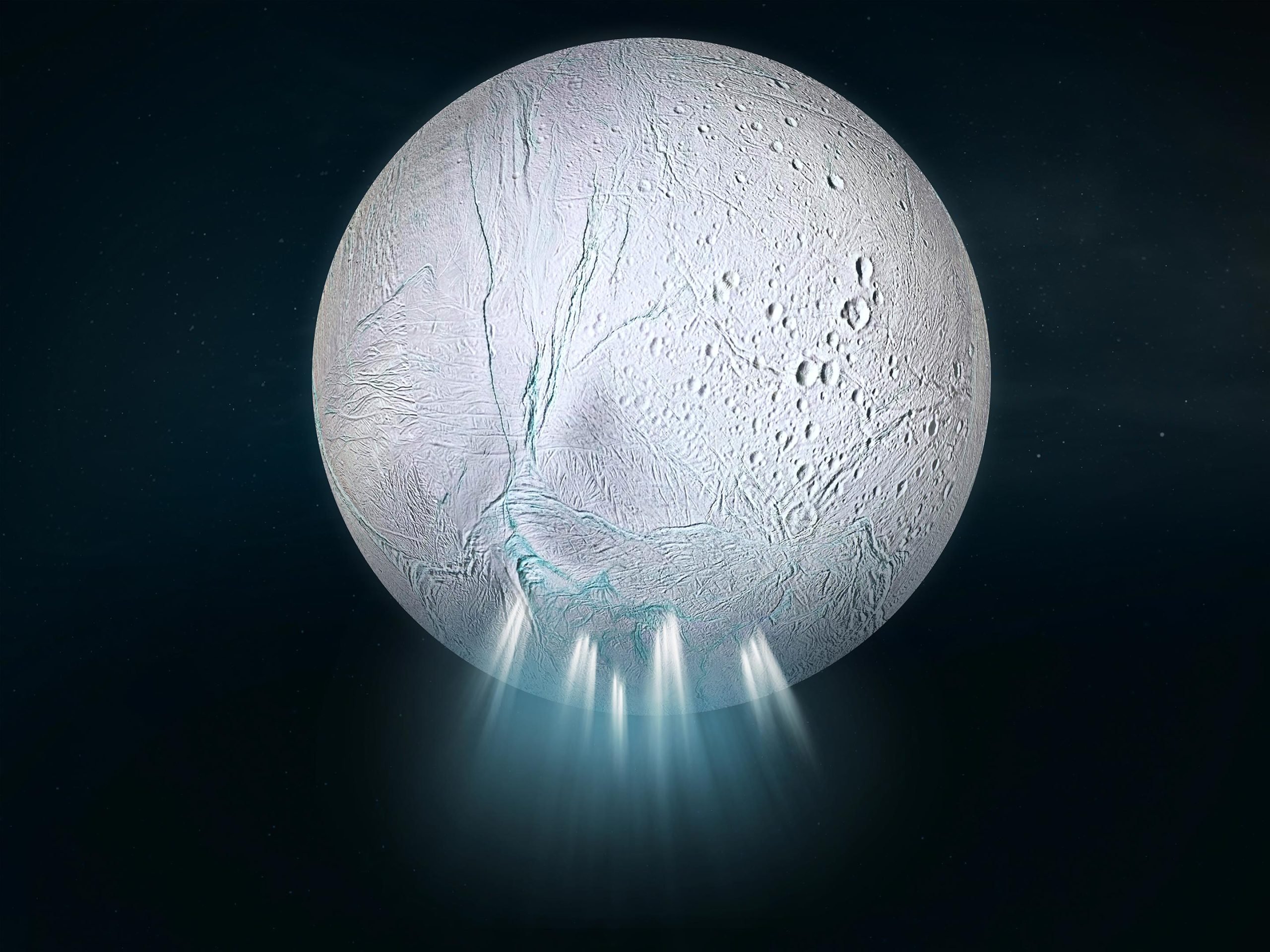
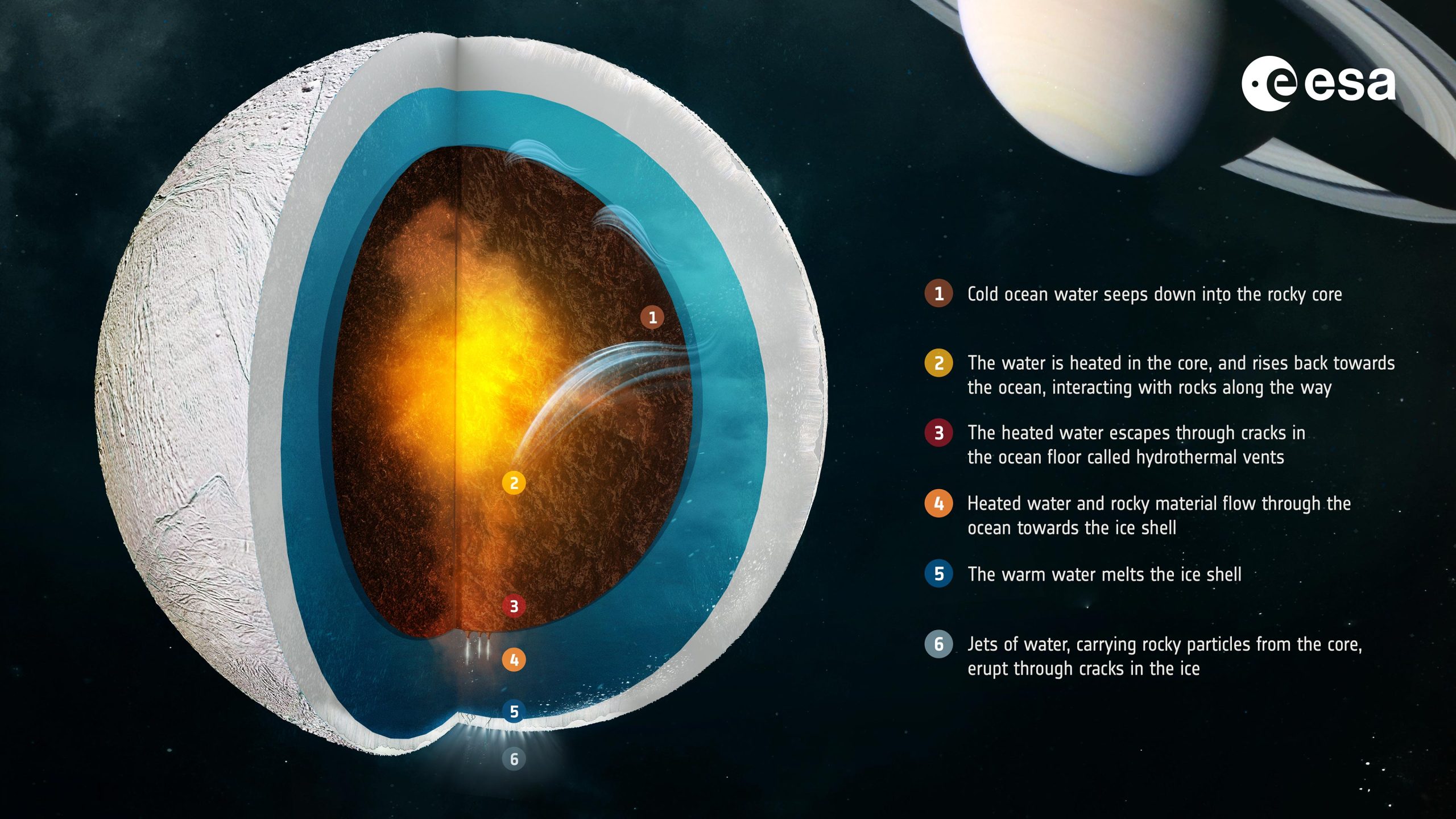
Jets of water burst from cracks close to the moon’s south pole, shooting ice grains into space. These ice grains carry organic molecules from Enceladus’s underground ocean, some of which are complex enough to reveal that advanced chemistry is taking place inside this ice world. Credit: Graphic composition: ESA; Surface: NASA/JPL-Caltech/Space Science Institute/Lunar and Planetary Institute
Scientists reexamining data from NASA’s Cassini spacecraft have uncovered exciting new evidence from Saturn’s icy moon Enceladus.
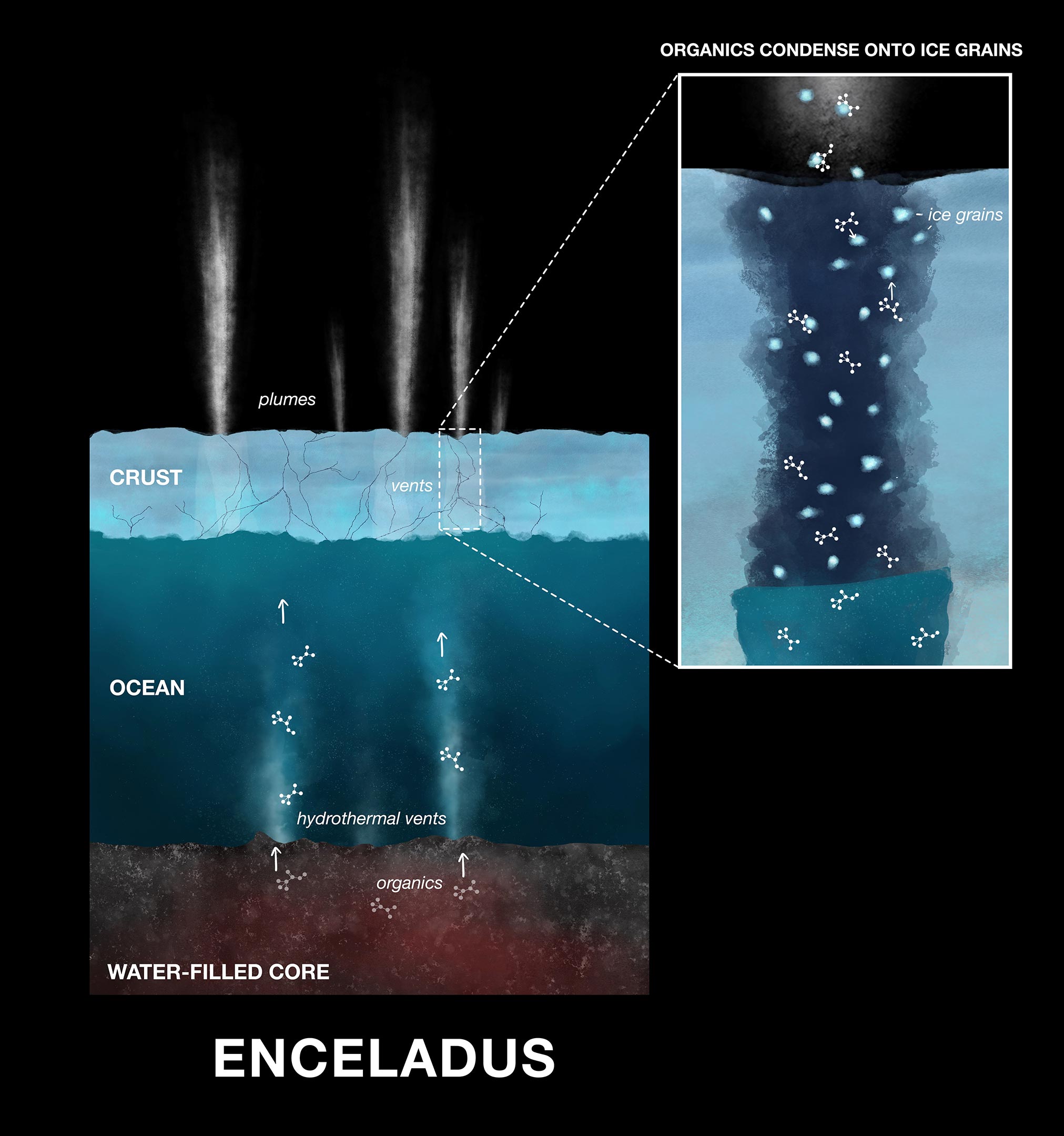
The spacecraft detected complex organic molecules being blasted into space from powerful jets near the moon’s south pole, hinting at active chemical processes deep within its hidden ocean. Some of these reactions may form the early building blocks of life.
The findings, published in Nature Astronomy, add to growing evidence that Enceladus could be one of the most promising places beyond Earth to search for life and strengthen the case for a future European Space Agency (ESA) mission to explore the moon up close.
A Secret Ocean Beneath the Ice
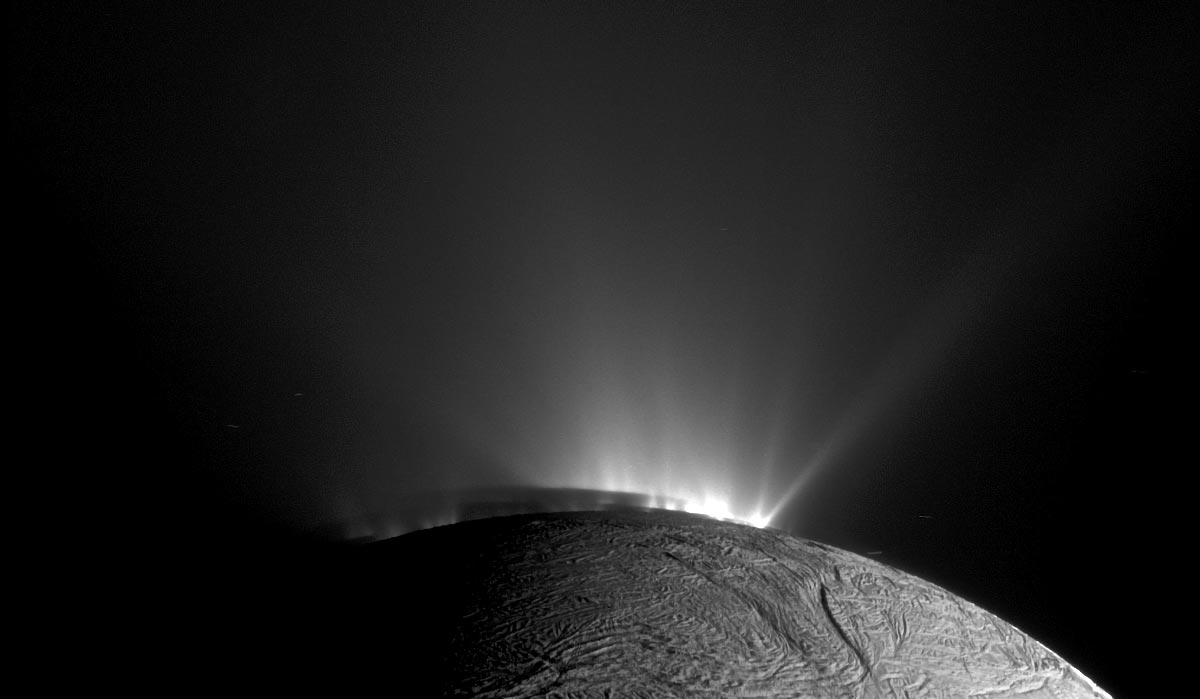
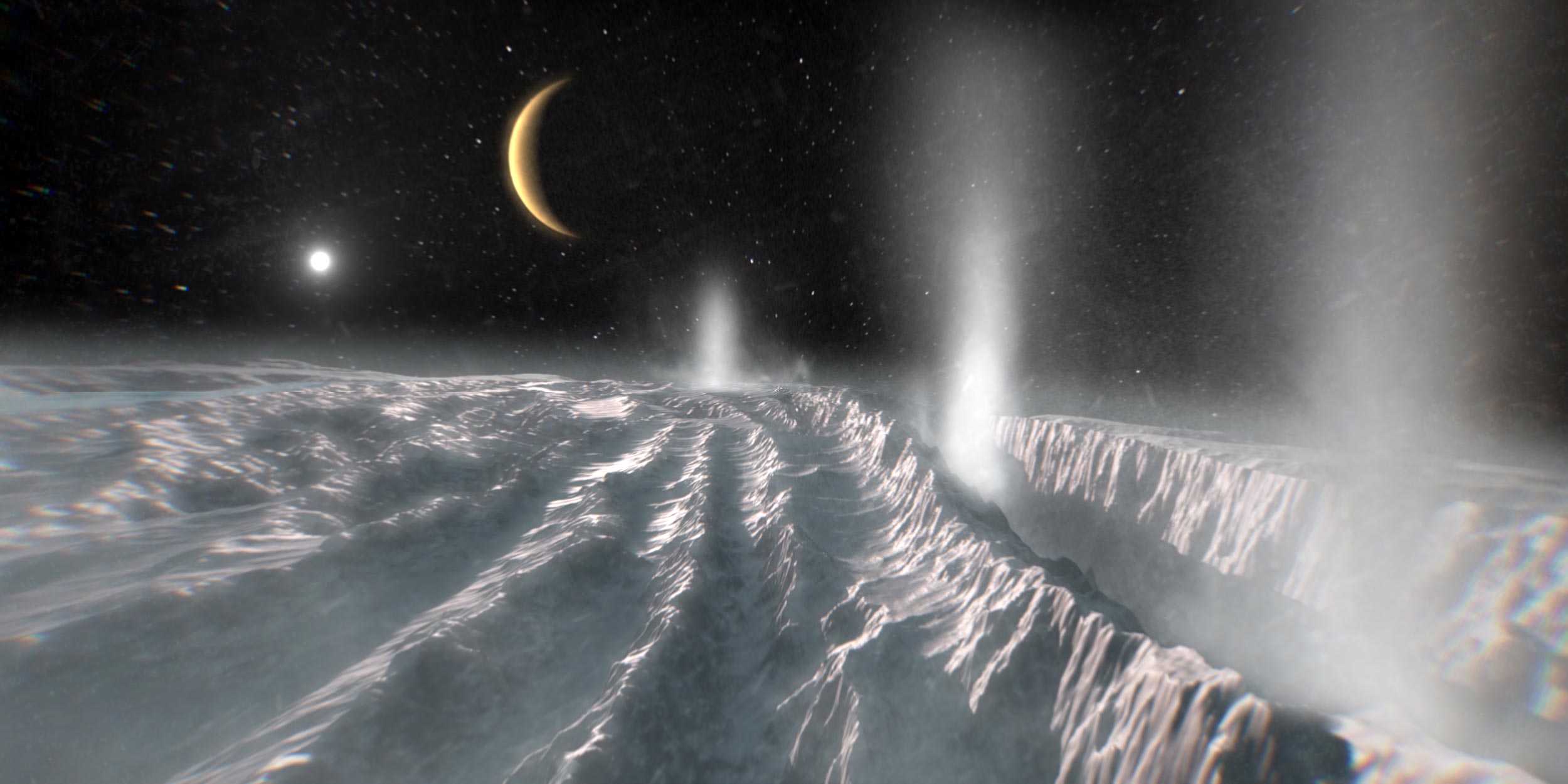
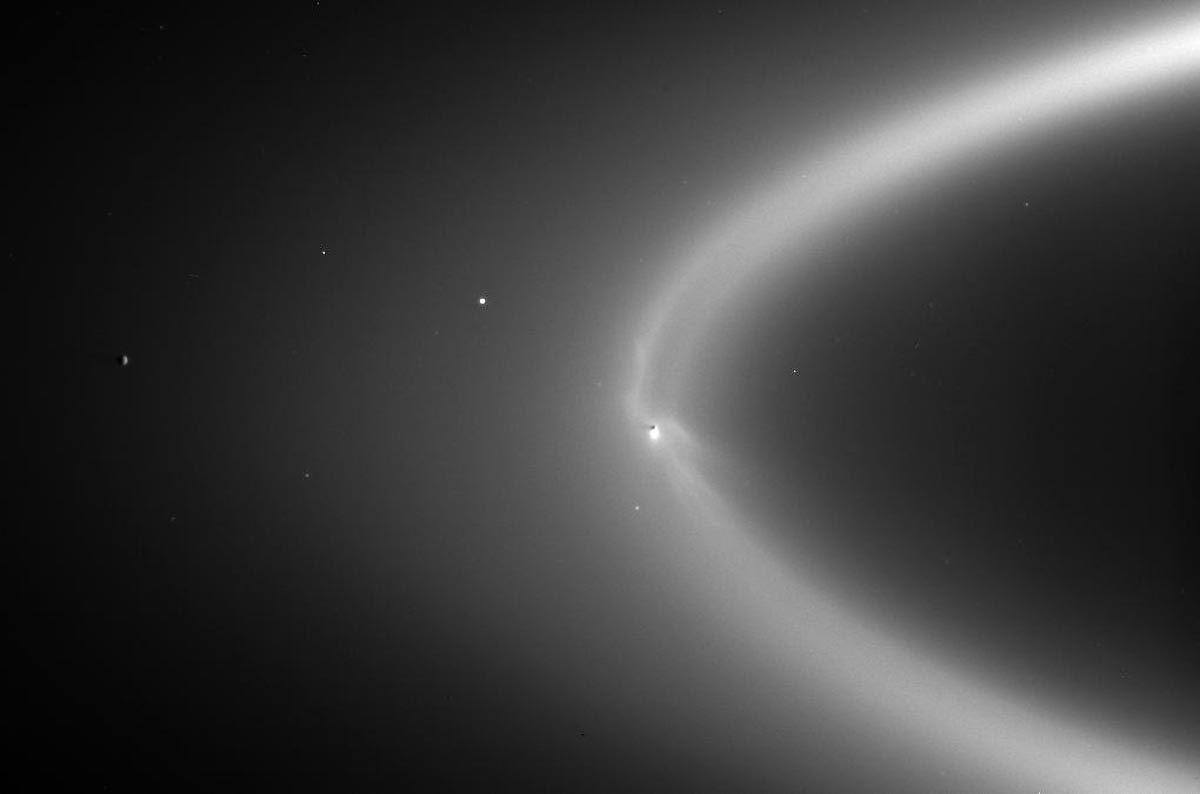
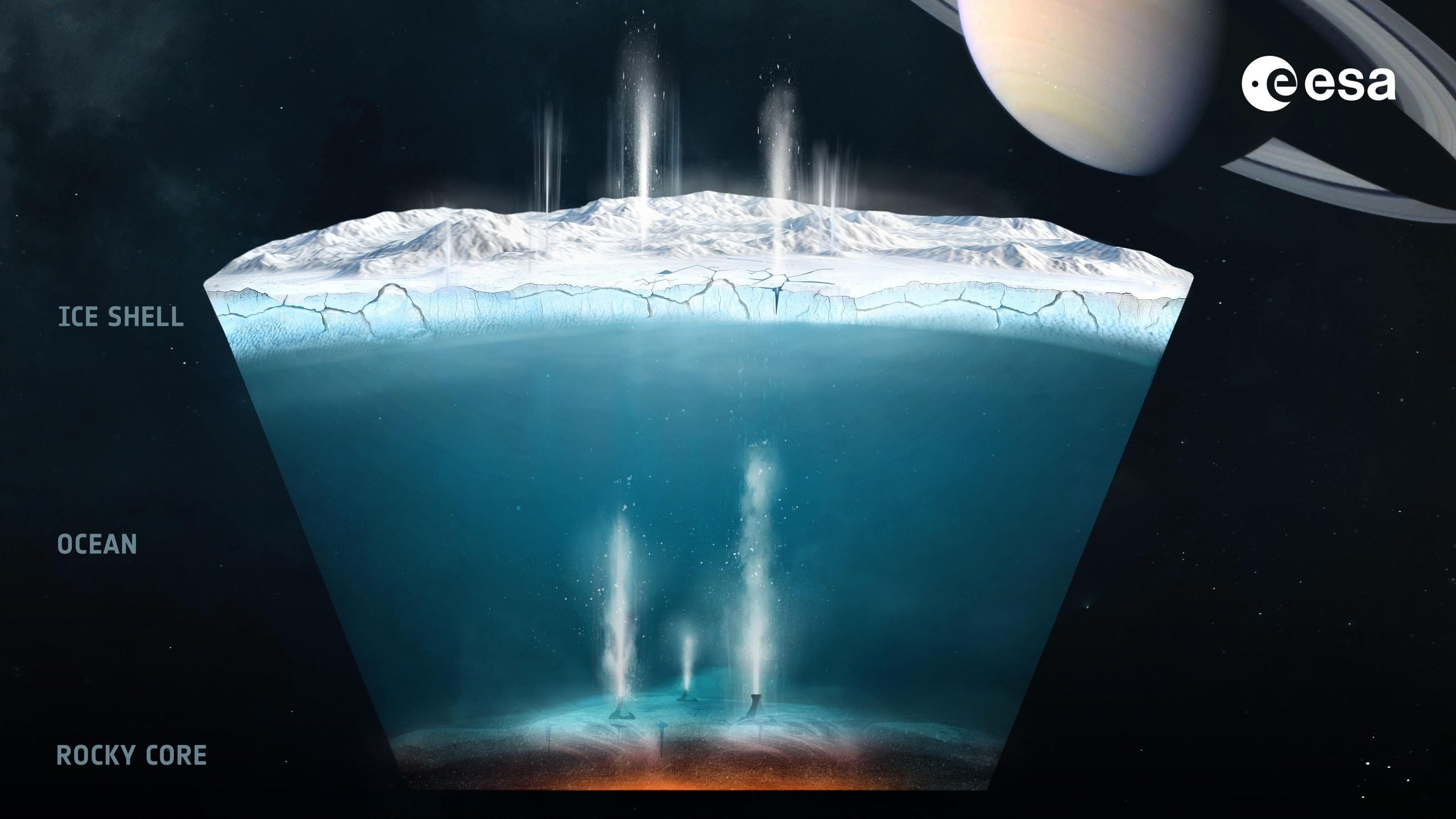
In 2005, NASA’s Cassini spacecraft uncovered the first signs that Saturn’s moon Enceladus hides a vast ocean beneath its frozen crust. Near the moon’s south pole, jets of water erupt from long surface fractures, flinging fine particles of ice into space. Some of these icy grains fall back like snow onto the surface, while others drift away and become part of a thin ring that follows Enceladus’s orbit around Saturn.
Lead author Nozair Khawaja describes what scientists already understood: “Cassini was detecting samples from Enceladus all the time as it flew through Saturn’s E ring. We had already found many organic molecules in these ice grains, including precursors for amino acids.”
Capturing Fresh Ice Grains in Space
The ice grains that make up Saturn’s E ring can persist for centuries, slowly altered by radiation and sunlight. Over time, this exposure can change their chemistry. To get a clearer picture of the moon’s current ocean environment, researchers wanted to examine newly ejected material that hadn’t yet been “weathered” by space.
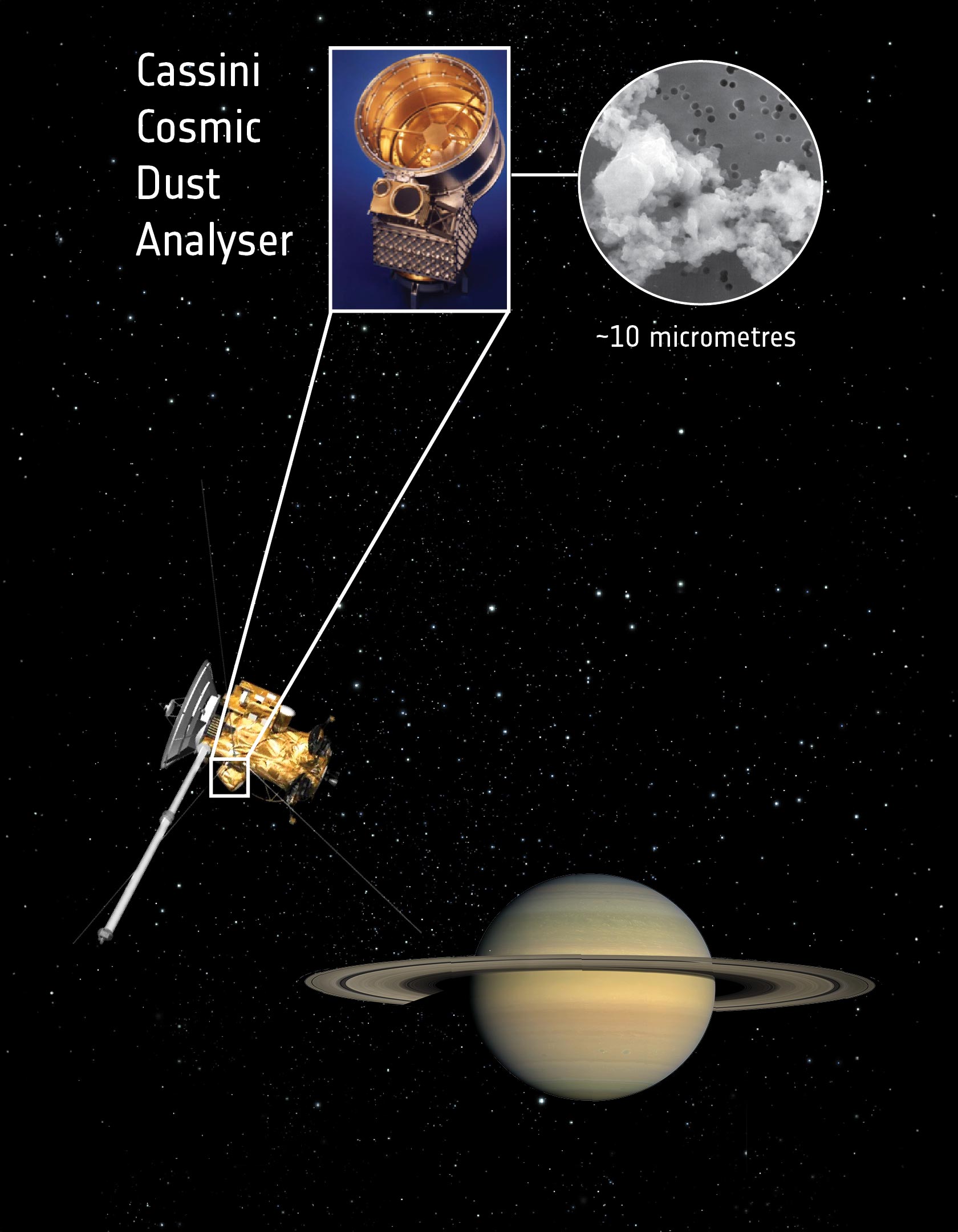
Fortunately, Cassini had already collected just such data. During a 2008 flyby, the spacecraft passed directly through Enceladus’s icy plume. Ice grains that had been expelled only minutes earlier struck Cassini’s Cosmic Dust Analyzer (CDA) instrument at roughly 18 kilometers per second. These were the freshest and fastest ice grains ever recorded by the mission.
Why Speed Matters in Cassini’s Discoveries
The velocity of those impacts proved crucial. Nozair explains:
“The ice grains contain not just frozen water, but also other molecules, including organics. At lower impact speeds, the ice shatters, and the signal from clusters of water molecules can hide the signal from certain organic molecules. But when the ice grains hit CDA fast, water molecules don’t cluster, and we have a chance to see these previously hidden signals.”
Unlocking New Organic Molecules
It took years to build up knowledge from previous flybys and then apply it to decipher this data. But now, Nozair’s team has revealed what kind of molecules were present inside the fresh ice grains.
They saw that certain organic molecules that had already been found distributed in the E ring were also present in the fresh ice grains. This confirms that they are created within Enceladus’s ocean.
They also found totally new molecules that had never been seen before in ice grains from Enceladus. For the chemists reading, the newly detected molecular fragments included aliphatic, (hetero)cyclic ester/alkenes, ethers/ethyl and, tentatively, nitrogen- and oxygen-bearing compounds.
Echoes of Earth’s Chemistry
On Earth, these same molecules are involved in the chains of chemical reactions that ultimately lead to the more complex molecules that are essential for life.
“There are many possible pathways from the organic molecules we found in the Cassini data to potentially biologically relevant compounds, which enhances the likelihood that the moon is habitable,” says Nozair.
“There is much more in the data that we are currently exploring, so we are looking forward to finding out more in the near future.”
Co-author Frank Postberg adds: “These molecules we found in the freshly ejected material prove that the complex organic molecules Cassini detected in Saturn’s E ring are not just a product of long exposure to space, but are readily available in Enceladus’s ocean.”
Nicolas Altobelli, ESA Cassini project scientist adds: “It’s fantastic to see new discoveries emerging from Cassini data almost two decades after it was collected. It really showcases the long-term impact of our space missions. I look forward to comparing data from Cassini with data from ESA’s other missions to visit the icy moons of Saturn and Jupiter.”
Returning to Enceladus
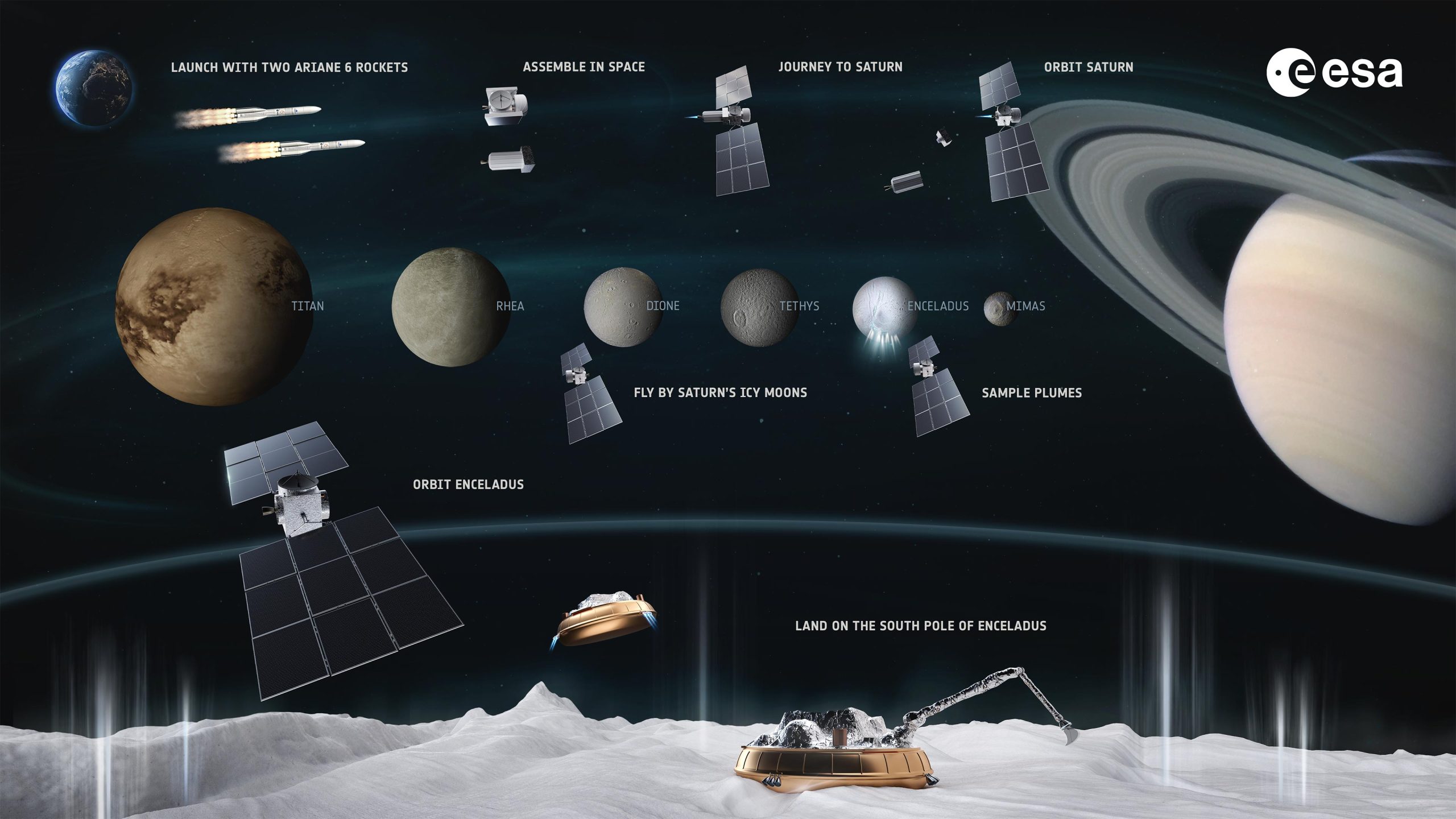
Discoveries from Cassini are valuable for planning a future ESA mission dedicated to Enceladus. Studies for this ambitious mission have already begun. The plan is to fly through the jets and even land on the moon’s south polar terrain to collect samples.
A team of scientists and engineers is already considering the selection of modern scientific instruments that the spacecraft would carry. This latest result made using CDA will help guide that decision.
The Case for Life Beyond Earth
Enceladus ticks all the boxes to be a habitable environment that could support life: the presence of liquid water, a source of energy, a specific set of chemical elements and complex organic molecules. A mission that takes measurements directly from the moon’s surface, seeking out signs of life, would offer Europe a front seat in Solar System science.
“Even not finding life on Enceladus would be a huge discovery, because it raises serious questions about why life is not present in such an environment when the right conditions are there,” says Nozair.
Reference: “Detection of organic compounds in freshly ejected ice grains from Enceladus’s ocean” by Nozair Khawaja, Frank Postberg, Thomas R. O’Sullivan, Maryse Napoleoni, Sascha Kempf, Fabian Klenner, Yasuhito Sekine, Maxwell Craddock, Jon Hillier, Jonas Simolka, Lucía Hortal Sánchez and Ralf Srama, 1 October 2025, Nature Astronomy.
DOI: 10.1038/s41550-025-02655-y
Lead author Nozair Khawaja conducted the research at Freie Universität Berlin and the University of Stuttgart, both in Germany. Frank Postberg is also affiliated with Freie Universität Berlin.
Cassini-Huygens was a cooperative project of NASA, ESA and the Italian Space Agency. It comprised two elements: the Cassini orbiter and the Huygens probe.
Cassini’s Cosmic Dust Analyzer (CDA) was led by the University of Stuttgart in Germany.
Never miss a breakthrough: Join the SciTechDaily newsletter.
Follow us on Google and Google News.
2 Comments
Exciting! But notably the biomolecules are merely one of many shared traits cells have with hydrothermal serpentinization systems, which is why phylogenetics place the split between biology and geology there.
67