
Close Menu
    Facebook X (Twitter) Instagram
    SciTechDaily
    • Biology
    • Chemistry
    • Earth
    • Health
    • Physics
    • Science
    • Space
    • Technology
    Facebook X (Twitter) Pinterest YouTube RSS
    SciTechDaily
    Home»Earth»From Ice Age to Geological Wonderland: The Rapid Transformation of Adam’s Inlet
    Earth

    From Ice Age to Geological Wonderland: The Rapid Transformation of Adam’s Inlet

    By Adam Voiland, NASA Earth ObservatoryJune 2, 20241 Comment3 Mins Read
    Facebook Twitter Pinterest Telegram LinkedIn WhatsApp Email Reddit
    Share
    Facebook Twitter LinkedIn Pinterest Telegram Email Reddit
    Adam’s Inlet Alaska Annotated
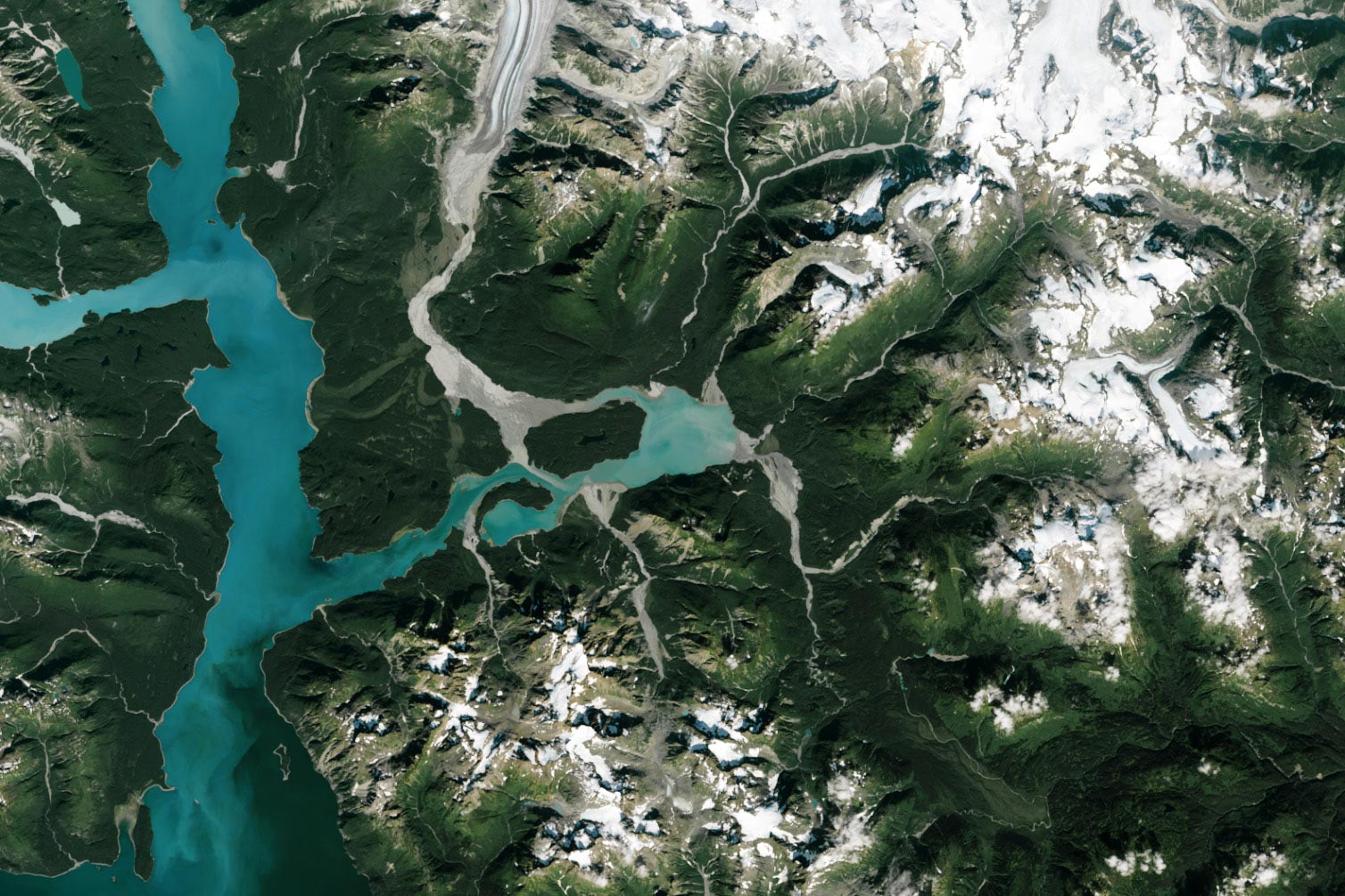
    Satellite image of Adam’s Inlet in Alaska captured on August 28, 2023, by the Operational Land Imager-2 on Landsat 9.

    Adam’s Inlet, previously covered by thick ice, is now ice-free and features braided rivers, landslide debris, and alluvial fans spread across a dynamic landscape in Glacier Bay National Park.

    From a geological perspective, Adam’s Inlet in Alaska has undergone major changes in the blink of an eye. Just 130 years ago, the inlet was covered by ice hundreds of meters thick. Today, it is ice-free.

    Geomorphological Transformations

    The inlet, which drains into the East Arm of Glacier Bay, lies within Glacier Bay National Park. “Since the end of the Little Ice Age about 150 years ago, Glacier Bay has seen deglaciation on a scale almost unseen anywhere else on Earth,” said Dan Shugar, a University of Calgary geomorphologist. “In Adam’s Inlet, the retreat of the ice has exposed a remarkable landscape. Steep slopes, glacial rivers, ocean tides, and sediment are smashing together to create a geological wonderland.”

    Landsat 9’s OLI-2 (Operational Land Imager-2) captured this image of the area on August 28, 2023. Several streams flow into the inlet, including a large one that drains meltwater from the Casement Glacier. It is one of several glaciers in the eastern part of the park that has retreated by several kilometers in recent decades, partly because of warming air and water temperatures.

    Sediment Dynamics and Water Coloration

    “These rivers transport incredible quantities of fine-grained sediment,” Shugar said. “They are braided, meaning they have lots of strands that interweave, and can change dramatically from day to day over the melt season.” They also dump large quantities of sediment into the ocean, resulting in striking offshore plumes and sometimes giving the water a turquoise color. This effect, seen in the eastern part of the inlet, is caused by fine-grained silt and clay particles (rock flour) suspended in the water that absorb certain wavelengths of light.

    Formation of Alluvial Fans

    Also notable is the alluvial fan near the center of the image. These features form where sediment-laden rivers drain from narrow, steep valleys into broader plains. “When the gradient decreases, the water moves less quickly and is less able to carry sediment,” Shugar explained. “The sediment drops out and creates these beautiful landforms.”

    Impact of Landslides

    Southeast of the alluvial fan, debris from a landslide has tumbled into a braided stream that enters the inlet from the south. The landslide occurred in 2020, delivering enough material to temporarily block the stream; it has since carved a channel through the debris.

    While that event caused minimal damage, landslides crashing into inlets in this region have had serious consequences. In nearby Lituya Bay, an earthquake in 1958 triggered a landslide that sent 90 million tons of rock plunging into the inlet and generated tsunami waves that inundated land up to an elevation of 1,720 feet (524 meters)—higher than New York’s Empire State Building is tall. That event, one of the largest known examples of a landslide, generated waves that flattened so much surrounding forest that the damage is still visible in Landsat imagery today.

    NASA Earth Observatory image by Wanmei Liang, using Landsat data from the U.S. Geological Survey.

    Never miss a breakthrough: Join the SciTechDaily newsletter.
    Follow us on Google and Google News.

    Geography Geology NASA NASA Earth Observatory
    Share. Facebook Twitter Pinterest LinkedIn Email Reddit

    Related Articles

    Utah’s Hidden Time Capsule: The Dark Canyon Complex

    Traces of an Ancient Watery World in Capitol Reef Photographed From Space Station

    Island Obliterated: Dramatic Changes at Hunga Tonga-Hunga Ha’apai

    Otherworldly Earth: This NASA Photo Isn’t Really Mars, It’s the Libyan Desert

    Movie Mars on Earth: Wadi Rum as a Stand-In for the Red Planet

    Ol Doinyo Lengai: The Symmetric “Mountain of God” in Tanzania Is Part of the East African Rift System

    From Russia With Questions: Distinctive Striping Pattern in Siberia Puzzles Researchers

    Gold Mining in Russia’s Central Aldan Ore District Seen From Space

    Sea of Galilee Seen From Space – Source of Religious Inspiration and Intrigue

    1 Comment

    1. Clyde Spencer on June 2, 2024 6:34 pm

      “It is one of several glaciers in the eastern part of the park that has retreated by several kilometers in recent decades, partly because of warming air and water temperatures.”

      Has there been a decrease in cloudiness or snowfall?

      Reply
    Leave A Reply Cancel Reply

    • Facebook
    • Twitter
    • Pinterest
    • YouTube

    Don't Miss a Discovery

    Subscribe for the Latest in Science & Tech!

    Trending News

    Just 10 Minutes a Day: Scientists Say This Ancient Chinese Practice Shows Powerful Blood Pressure Benefits

    Scientists Say This Popular Food Could Help Your Body Get Rid of Microplastics

    For the First Time, ChatGPT Has Solved an Unproven Math Problem in Geometry

    This Popular Supplement May Actually Slow Biological Aging, Scientists Reveal

    Can a Common Vitamin Fight the Most Aggressive Brain Cancer?

    Scientists Discover How to Stop Vision Loss Before It Starts

    The Mediterranean Isn’t Safe: Scientists Warn of Inevitable Tsunami

    Scientists Say Washing Dishes With a Sponge Has a Concerning Side Effect

    Follow SciTechDaily
    • Facebook
    • Twitter
    • YouTube
    • Pinterest
    • Newsletter
    • RSS
    SciTech News
    • Biology News
    • Chemistry News
    • Earth News
    • Health News
    • Physics News
    • Science News
    • Space News
    • Technology News
    Recent Posts
    • A 30-Year-Old Flu Shot Still Works Today With One Big Problem
    • Widely Available Drug Found To Ease One of Long COVID’s Most Stubborn Symptoms
    • New Study Finds Internalized Stress May Accelerate Cognitive Decline
    • Stopping Weight-Loss Drugs Like Ozempic Can Quickly Erase Heart Benefits
    • A 500-Million-Year-Old Surprise Is Forcing Scientists to Rethink Spider Evolution
    Copyright © 1998 - 2026 SciTechDaily. All Rights Reserved.
    • Science News
    • About
    • Contact
    • Editorial Board
    • Privacy Policy
    • Terms of Use

    Type above and press Enter to search. Press Esc to cancel.