
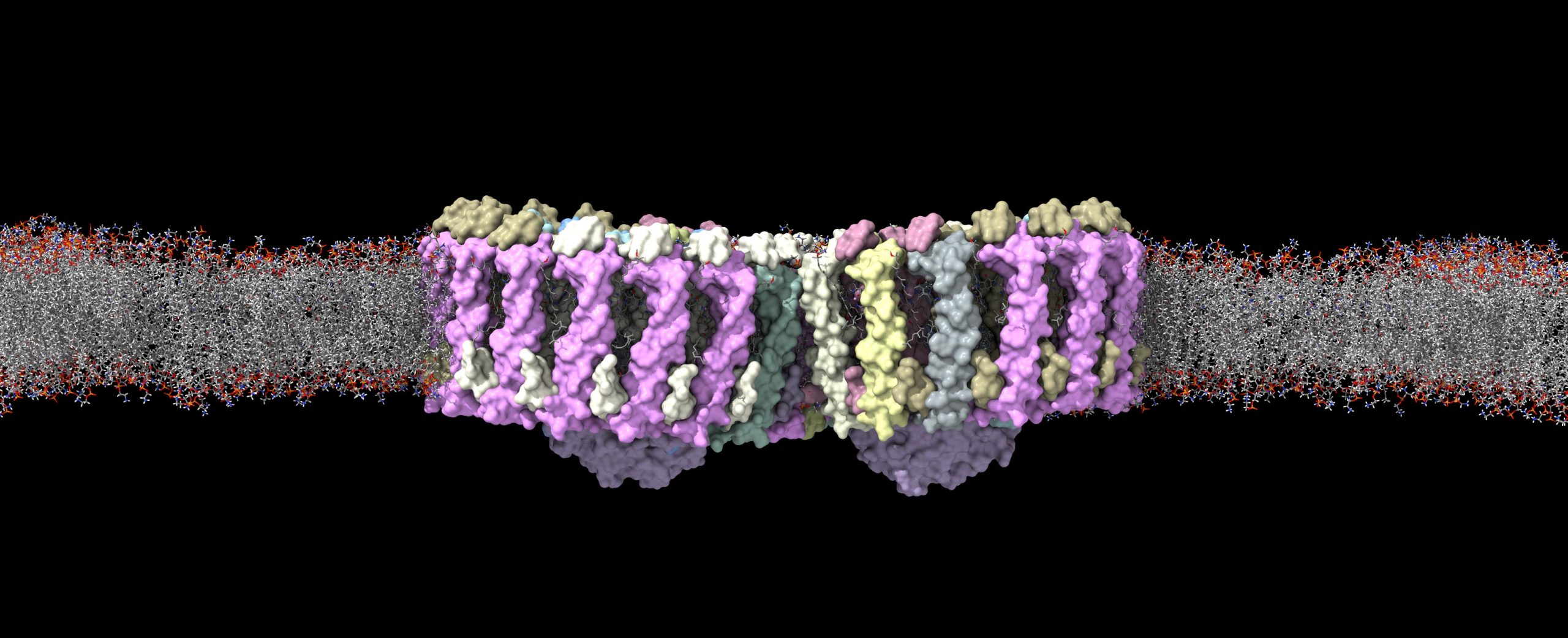
Researchers have made significant strides in understanding bacterial photosynthesis by capturing high-resolution images of photosynthetic proteins in purple bacteria.
These insights could pave the way for developing advanced artificial photosynthetic systems, enhancing clean energy production, and deepening our understanding of the evolution of life on Earth.
Breakthrough in Bacterial Photosynthesis Research
Scientists at the University of Liverpool, along with their collaborators, have deepened our understanding of bacterial photosynthesis.
Utilizing advanced techniques, the team has revealed highly detailed images of the key photosynthetic protein complexes in purple bacteria. These images provide new insights into how these microorganisms harness solar energy.
Published on October 9, the study not only enhances our knowledge of bacterial photosynthesis but also offers potential applications in developing artificial photosynthetic systems for clean energy production.
Bacterial Photosynthesis: Essential to Ecosystems
Like plants, many bacteria have evolved the remarkable ability to convert light into energy through a process called bacterial photosynthesis. This important biological reaction enables the microorganisms to play a crucial role in global nutrient cycles and energy flow in ecosystems and form the base of aquatic food chains. Studying ancient bacterial photosynthesis also helps to understand the evolution of life on Earth.
This latest work presents high-resolution structures of photosynthetic reaction centre−light harvesting complexes (RC−LH1) from Rhodobacter blasticus, a model organism for understanding bacterial photosynthesis.
Innovations in Photosynthetic Understanding
The research team of collaborators from the University of Liverpool, the Ocean University of China, Huazhong Agricultural University and Thermo Fisher Scientific, captured detailed images of both monomeric and dimeric forms of the RC-LH1 membrane protein supercomplexes. These structures reveal unique features that distinguish R. blasticus from its close relatives, highlighting the remarkable variability in photosynthetic systems among purple bacteria.
Professor Luning Liu, Chair of Microbial Bioenergetics and Bioengineering, University of Liverpool said: “By revealing these natural photosynthetic mechanisms, we open new avenues for designing more efficient light-harvesting and energy transduction systems or cells. This study represents a significant step forward in our comprehension of how bacteria optimize their photosynthetic machinery, providing valuable insights that could inform future clean energy innovations.”
Structural Diversity in Photosynthesis Revealed
A unique feature of the RC-LH1 dimer of R. blasticus is its flatter conformation compared to its counterparts from other model species. This structure provides the foundation for specific membrane curvature and energy transfer efficiency in bacteria.
Unlike some related bacteria, R. blasticus lacks a protein component called PufY in the RC-LH1 structure. The study revealed that its absence compensates with additional light-harvesting subunits that create a more enclosed LH1 structure. This was determined to affect electron transport rates of the RC-LH1 structure.
This systematic study, integrating structural biology, in silico simulations, and spectroscopic studies, provides new insights into how bacterial photosynthetic complexes assemble and mediate electron transfer, crucial processes for energy production.
Lead investigator, Professor Luning Liu added: “Our findings demonstrate the structural diversity of photosynthetic complexes even among closely related bacterial species. This variability likely reflects different evolutionary adaptations to specific environmental conditions. We are thrilled that we can contribute such molecular details in the investigation of photosynthetic mechanisms and evolution.”
Reference: “Architectures of photosynthetic RC-LH1 supercomplexes from Rhodobacter blasticus” by Peng Wang, Bern M. Christianson, Deniz Ugurlar, Ruichao Mao, Yi Zhang, Ze-Kun Liu, Ying-Yue Zhang, Adrian M. Gardner, Jun Gao, Yu-Zhong Zhang and Lu-Ning Liu, 9 October 2024, Science Advances.
DOI: 10.1126/sciadv.adp6678
Never miss a breakthrough: Join the SciTechDaily newsletter.
Follow us on Google and Google News.