
Close Menu
    Facebook X (Twitter) Instagram
    SciTechDaily
    • Biology
    • Chemistry
    • Earth
    • Health
    • Physics
    • Science
    • Space
    • Technology
    Facebook X (Twitter) Pinterest YouTube RSS
    SciTechDaily
    Home»Science»From the Depths of Italy: Ancient Mysteries Unearthed in an Etruscan Bronze Lamp
    Science

    From the Depths of Italy: Ancient Mysteries Unearthed in an Etruscan Bronze Lamp

    By De GruyterApril 13, 20241 Comment3 Mins Read
    Facebook Twitter Pinterest Telegram LinkedIn WhatsApp Email Reddit
    Share
    Facebook Twitter LinkedIn Pinterest Telegram Email Reddit
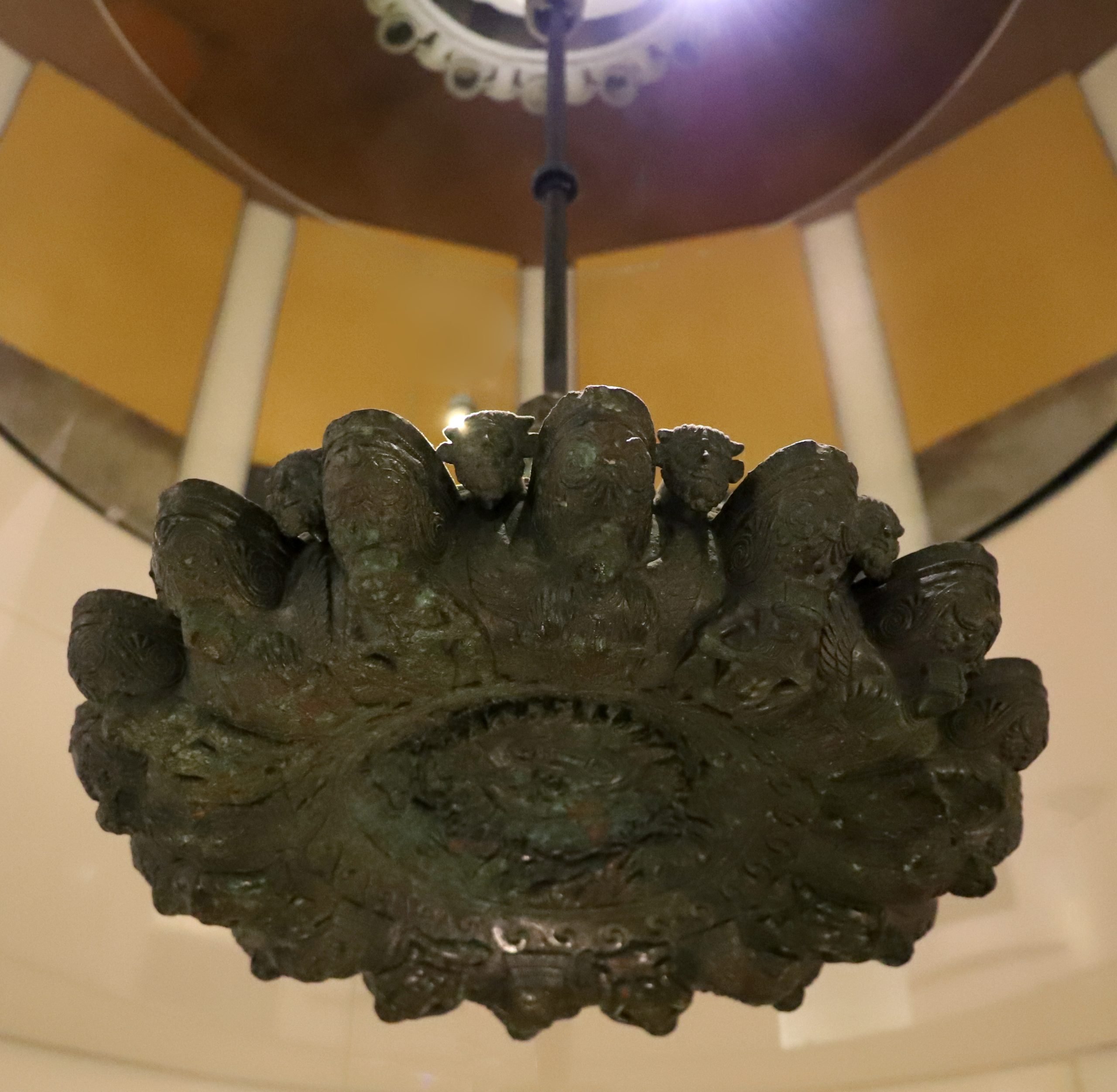
    Etruscan Lamp of Cortona
    New research suggests the Cortona lamp, an ornate bronze artifact from central Italy dating back to 480 BCE, depicts Dionysus and his revelers, marking it as significant to the Dionysian cult. The Etruscan lamp of Cortona. Credit: Museo dell’Accademia Etrusca e della città di Cortona

    A reassessment of the ancient bronze lamp has determined that it is a ritual artifact linked to the secretive worship of Dionysus.

    A recent study published in De Gruyter’s Etruscan and Italic Studies suggests that an ornately designed bronze lamp, discovered in a ditch near Cortona in central Italy, is much older than previously thought and features the image of the god Dionysus.

    The date of the lamp and the meaning and significance of its decorations have been the subject of controversy since its discovery in 1840. Now, Ph.D. student Ronak Alburz and Associate Professor Gijs Willem Tol of the University of Melbourne, Australia, have used literary sources and other iconographic evidence to provide a comprehensive new analysis of the object.

    The Cortona lamp is a bronze hanging oil lamp, roughly in the shape of a chandelier, measuring 60cm across and weighing almost 60kg. It originates from the Etruscan civilization of Archaic Etruria, a region of central Italy corresponding roughly to present-day Tuscany and part of Umbria. The Etruscan civilization thrived from about 900 BCE, but was gradually absorbed into the Roman Republic after about 400 BCE.

    Challenges in Interpretation

    The Cortona lamp has defied a comprehensive and satisfactory explanation for two main reasons. Firstly, very few similar objects (‘comparanda’) have been discovered in Etruscan or Ancient Greek art, making it difficult to draw insightful comparisons. Secondly, the lamp lacks context, having been found with only an inscribed bronze plaque which originates from much later. This means there is no information about the building in which it was used or how it related to other artifacts. Scholars were therefore restricted to analyzing individual decorative motifs displayed on the lamp.

    In their re-evaluation, Alburz and Tol identify new comparanda that indicate the lamp originated in about 480 BCE, significantly earlier than many other estimates.

    They also argue that earlier scholars were incorrect in identifying the lamp’s 16 bull-horned figures as the Greek river god Acheloos. By drawing on various literary sources and presenting new iconographic evidence, they show that Dionysus, the Ancient Greek god of wine and pleasure, was also often portrayed with bull features. They thus propose that the lamp depicts the Dionysian thiasus, the ecstatic retinue of Dionysus who are often portrayed as inebriated revelers.

    Lead author Alburz said: “The lamp was probably an object associated with the mystery cult of Dionysus. Its decoration represents the Dionysian thiasus, perhaps engaged in a cultic performance in the cosmos of the mysteries in celebration of Dionysus.”

    Reference: “A Re-Evaluation of the Iconography of the Etruscan Bronze Lamp of Cortona” by Ronak Alburz and Gijs Willem Tol, 8 April 2024, Etruscan and Italic Studies.
    DOI: 10.1515/etst-2023-0019

    Never miss a breakthrough: Join the SciTechDaily newsletter.
    Follow us on Google and Google News.

    Archaeology De Gruyter Popular
    Share. Facebook Twitter Pinterest LinkedIn Email Reddit

    Related Articles

    Scientists Discover Fossils of a Giant Extinct Burrowing Bat in New Zealand

    Newly Discovered Fossils Reveal Man’s Earliest Ancestors

    The Stonehenge Hidden Landscapes Project Reveals a Major New Prehistoric Stone Monument

    Prolonged Drought Contributed to Maya Civilization’s Collapse

    Easter Island Moai Statues Could Have “Walked” Out of Quarries

    European Cave Paintings Older Than Previously Thought, Might Have Been Painted by Neanderthals

    Ancient Murals in Guatemala Offer Glimpse of Mayan Astronomy

    Million-Year-Old Ash in South African Cave Yields Evidence of Cooking

    Humans Implicated in Africa’s Deforestation 3,000 Years Ago

    1 Comment

    1. Eric on April 15, 2024 6:12 am

      Stop. Wars

      Reply
    Leave A Reply Cancel Reply

    • Facebook
    • Twitter
    • Pinterest
    • YouTube

    Don't Miss a Discovery

    Subscribe for the Latest in Science & Tech!

    Trending News

    Popular Sugar-Free Sweetener Linked to Liver Disease, Study Warns

    What Is Hantavirus? The Deadly Disease Raising Alarm Worldwide

    Scientists Just Discovered How the Universe Builds Monster Black Holes

    Scientists Unveil New Treatment Strategy That Could Outsmart Cancer

    A Simple Vitamin May Hold the Key to Treating Rare Genetic Diseases

    Scientists Think the Real Fountain of Youth May Be Hiding in Your Gut

    Ravens Don’t Follow Wolves, They Predict Them

    This Common Knee Surgery May Be Doing More Harm Than Good

    Follow SciTechDaily
    • Facebook
    • Twitter
    • YouTube
    • Pinterest
    • Newsletter
    • RSS
    SciTech News
    • Biology News
    • Chemistry News
    • Earth News
    • Health News
    • Physics News
    • Science News
    • Space News
    • Technology News
    Recent Posts
    • Why Are So Many New Fathers Dying? Scientists Say the U.S. Has a Dangerous Blind Spot
    • Scientists Identify Simple Supplement That Greatly Reduces Alzheimer’s Damage
    • You May Have a Dangerous Type of Cholesterol Even if Your Tests Look Normal
    • Study Reveals Dangerous Flaw in AI Symptom Checkers
    • New MRI Breakthrough Captures Stunningly Clear Images of the Eye and Brain
    Copyright © 1998 - 2026 SciTechDaily. All Rights Reserved.
    • Science News
    • About
    • Contact
    • Editorial Board
    • Privacy Policy
    • Terms of Use

    Type above and press Enter to search. Press Esc to cancel.