
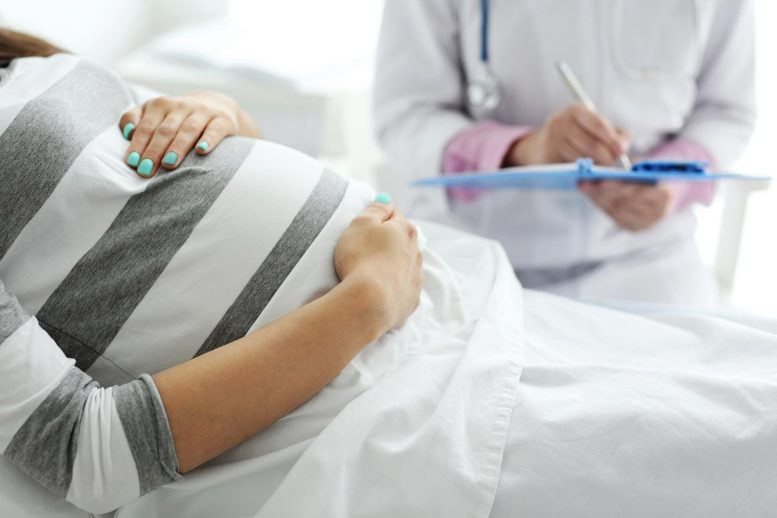
Higher rates of high blood pressure persist even after adjusting for age differences at pregnancy.
- High blood pressure in pregnancy is increasing and a leading cause of maternal death
- Hypertension in pregnancy is linked to an increased risk of heart failure and stroke in mom, and the baby being premature or dying
- Pregnant American Indian/Alaskan Native and non-Hispanic Black people are most affected
Gen Zers and millennials are around two times more likely to be newly diagnosed with high blood pressure during pregnancy, which includes preeclampsia and gestational hypertension, compared with pregnant people from the baby boomer generation. This holds true even after adjusting for age differences at pregnancy, reports a new Northwestern Medicine study.
This discovery is significant because it is commonly believed that increases in rates of high blood pressure during pregnancy are due to people becoming pregnant at older ages. However, this research newly finds rates of high blood pressure during pregnancy are higher among individuals from more recent generations regardless of their age during pregnancy.
Decline in Heart Health Linked to Higher Risk
“While there are many reasons for the generational changes observed, we hypothesize that this is, in large part, due to the observed generational decline in heart health,” said corresponding study author Dr. Sadiya Khan. She is an assistant professor of medicine at Northwestern University Feinberg School of Medicine and a Northwestern Medicine physician. “We are seeing more people in more recent generations entering pregnancy with risk factors such as obesity.”
Khan said that the stakes are high.
“High blood pressure during pregnancy is a leading cause of death for both mom and baby,” Khan said. “High blood pressure during pregnancy is associated with increased risk of heart failure and stroke in the mother and increased risk of the baby being born prematurely, being growth restricted or dying.”
The study was published on August 24, 2020, in JAMA Open Network.
Previous research from Northwestern and the Centers for Disease Control and Prevention (CDC) has highlighted the near doubling in rates of hypertension in pregnancy over the past decade.
Persistent Racial and Ethnic Disparities
In fact, more than a million millennials have already been diagnosed with high blood pressure during their first pregnancies, according to Khan. In the four generations studied, racial and ethnic disparities have also persisted. According to the new Northwestern study, the highest rates of high blood pressure during pregnancy were among those who identified as non-Hispanic American Indian/Alaskan Native and non-Hispanic Black.
“This is the first multi-generational study that moves beyond the age of the mom or the calendar year of the delivery to understand patterns of hypertension in pregnancy,” Khan said. “This is especially important when we look at the legacy of substantial racial and ethnic disparities in this high-risk condition that affects not only the mom but also the baby. This sets up a vicious cycle of generational health decline by starting life with poorer heart health.”
“The public health and clinical message from this work is the need to broaden our perspective on screening and expand our focus on prevention in all age groups before and during pregnancy, particularly among younger people who have traditionally not been considered at high risk,” said study first author Dr. Natalie Cameron. She is an instructor of medicine at Feinberg and a Northwestern Medicine physician.
Khan said mobile health technologies (e.g., wearable devices) and telehealth/remote health opportunities have opened opportunities to equitably improve surveillance for blood pressure.
“Prevention and earlier identification can be life-saving and improve the health of future generations beginning at birth,” Khan said.
The study was conducted using data from the National Vital Statistics System Natality Database, which contains information from birth certificates for all live births in the United States. The study focused on first pregnancies of individuals between 1995-2019 and included data from more than 38 million people. Using these data, investigators were able to determine rates of hypertensive disorders of pregnancy grouped by the mother’s birth year (maternal birth cohort) and their self-identified race or ethnicity.
Reference: “Association of Birth Year of Pregnant Individuals With Trends in Hypertensive Disorders of Pregnancy in the United States, 1995-2019” by Natalie A. Cameron, MD; Lucia C. Petito, PhD; Nilay S. Shah, MD, MPH; Amanda M. Perak, MD, MS; Janet M. Catov, PhD, MS; Natalie A. Bello, MD, MPH; Simon Capewell, DSc, MD; Martin O’Flaherty, MD, MSc, PhD; Donald M. Lloyd-Jones, MD, ScM; Philip Greenland, MD; William A. Grobman, MD, MBA and Sadiya S. Khan, MD, MS, 24 August 2022, JAMA Network Open.
DOI: 10.1001/jamanetworkopen.2022.28093
Other Northwestern authors include Lucia C. Petito, Dr. Nilay S. Shah, Dr. Amanda M. Perak, Dr. Donald M. Lloyd-Jones, and Dr. Philip Greenland.
This research was supported by grant 1R01HL161514 from the National Heart, Lung, and Blood Institute of the National Institutes of Health.
Never miss a breakthrough: Join the SciTechDaily newsletter.
Follow us on Google and Google News.