
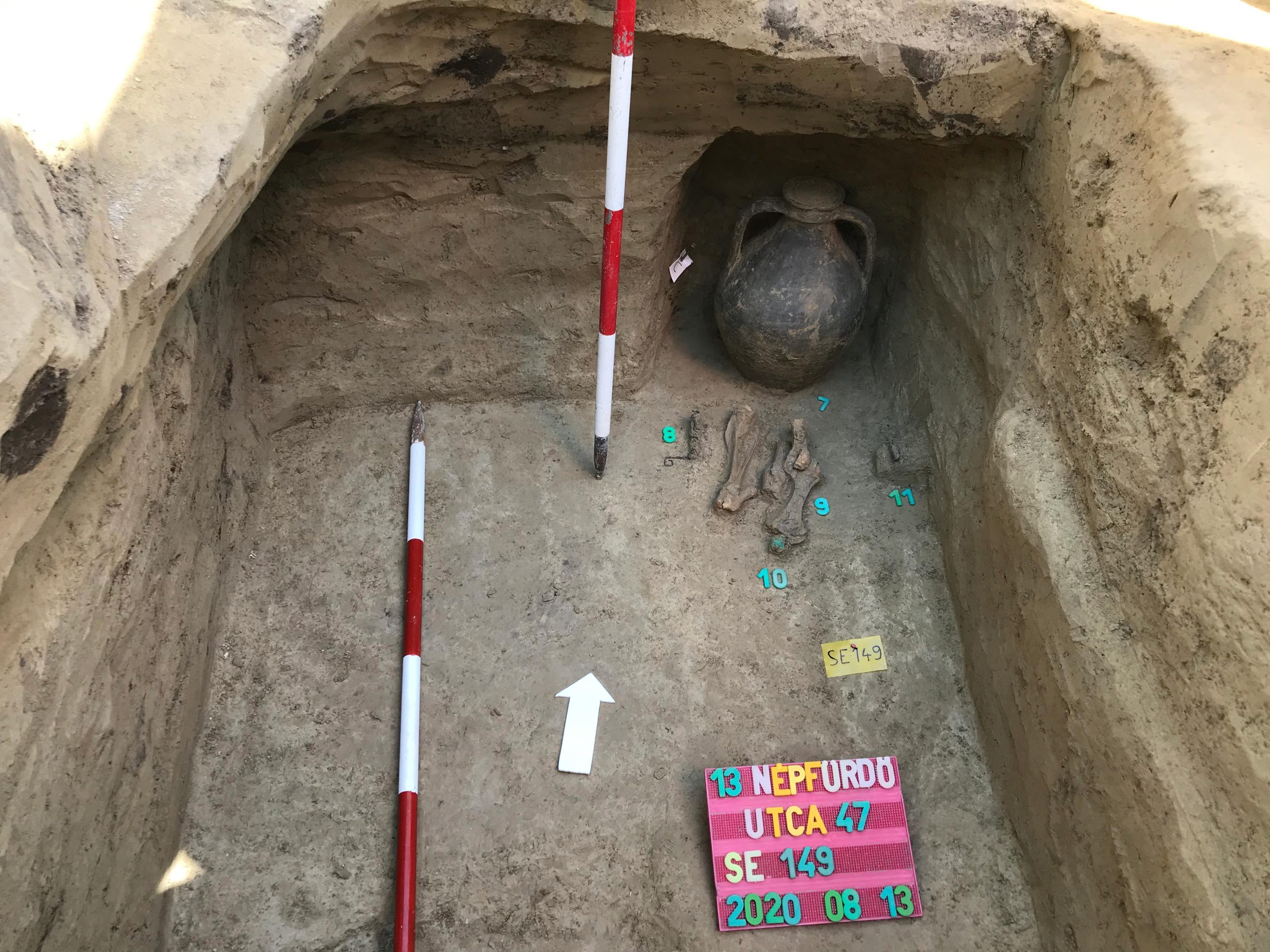
Extensive genetic connections existed between the Mongolian steppe and Central Europe during the rule of the Huns.
The Huns emerged suddenly in Europe during the 370s, establishing a powerful yet short-lived empire. Scholars have long debated whether they were descended from the Xiongnu, a nomadic confederation from the Mongolian steppe. However, the Xiongnu Empire dissolved around 100 CE, leaving a 300-year gap before the Huns appeared in Europe. This raises the question: Can genetic evidence bridge this chronological gap?
To investigate, researchers analyzed the DNA of 370 individuals who lived between the 2nd century BCE and the 6th century CE. Their study spanned sites across the Mongolian steppe, Central Asia, and the Carpathian Basin of Central Europe. They focused particularly on 35 newly sequenced genomes from a 3rd–4th century site in Kazakhstan and 5th–6th century burials in the Carpathian Basin. Some of these burials, associated with the Hunnic period, displayed “eastern-type” characteristics—traits often linked to nomadic steppe traditions.
This research was conducted as part of the ERC Synergy Grant project HistoGenes (No. 856453) by an interdisciplinary team of geneticists, archaeologists, and historians, including scholars from the Max Planck Institute for Evolutionary Anthropology in Leipzig, Germany.
The results showed that there was not a large Asian- or steppe-descended community living in the Carpathian Basin after the Huns’ arrival.
However, they identified a small but distinct set of individuals – often belonging to the “eastern-type” burials – who did carry significant East Asian genetic signatures. Advanced comparisons of genealogical connections (the analysis of shared DNA segments known as identical-by-descent, or IBD) led to a remarkable discovery.
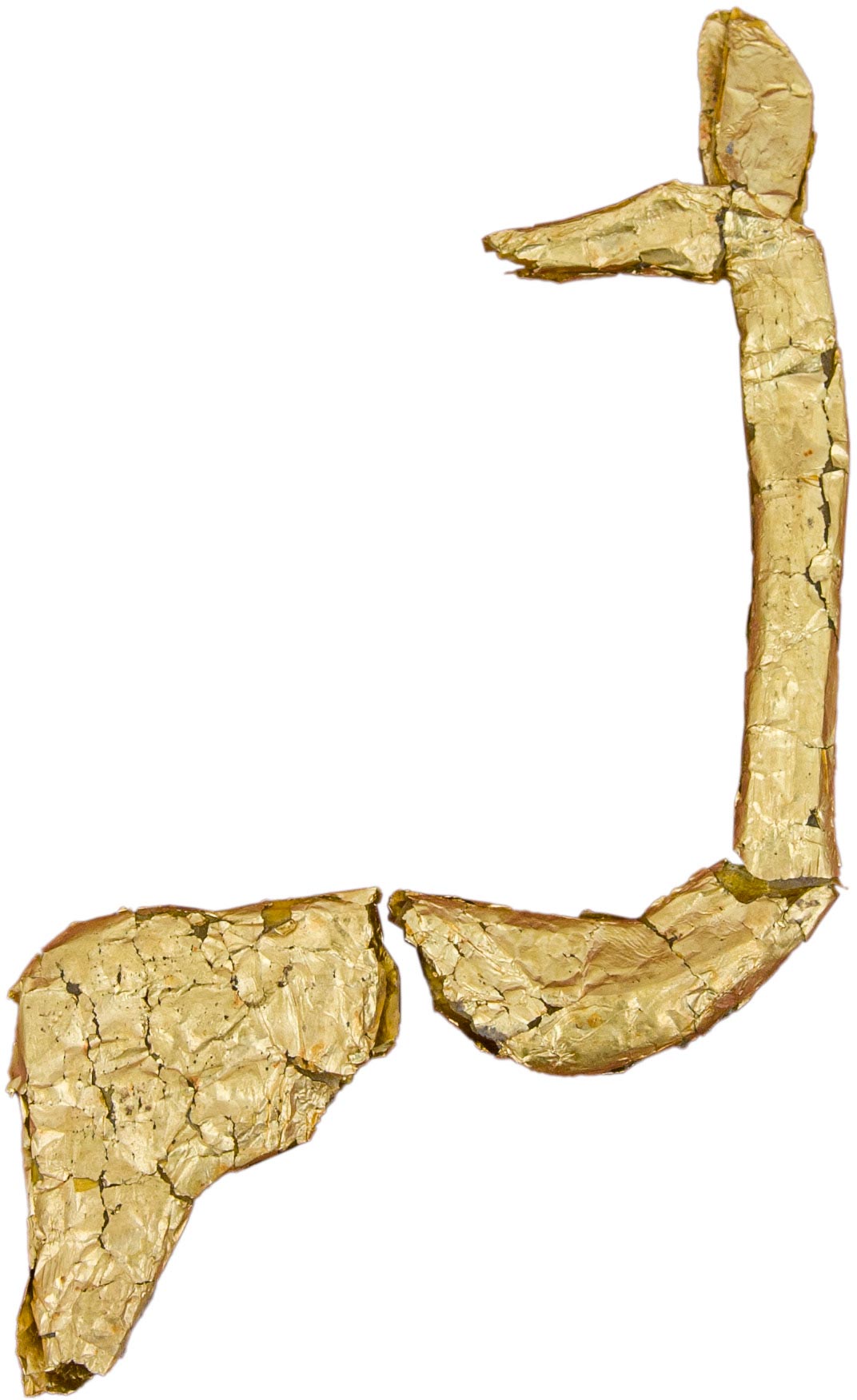
Co-first author Guido Alberto Gnecchi-Ruscone of the Max Planck Institute for Evolutionary Anthropology adds: “It came as a surprise to discover that few of these Hun-period individuals in Europe share IBD links with some of the highest-ranking imperial elite individuals from the late Xiongnu Empire”. These connections also include an individual from the largest terrace tomb ever discovered in a Xiongnu context.
Connections across the steppe and mixed legacy
This link suggests that some among the Huns in Europe could trace their lineage back to important late Xiongnu burials from the Mongolian steppe. Yet the archaeogenomic picture for most Hun and post-Hun period individuals in the Carpathian Basin is far more varied. Co-first author Zsófia Rácz of the Eötvös Loránd University in Budapest adds: “DNA and archaeological evidence reveal a patchwork of ancestries, pointing to a complex process of mobility and interaction rather than a mass migration.” While these connections confirm the presence of some direct descendants of Xiongnu elites, the study also shows that the population of the Hun empire in Europe was genetically highly heterogeneous. Another key conclusion of the study is that the 5th-century “eastern-type” burials from Central Europe are highly diverse in both their cultural and genetic heritage.
The findings also underscore that the Huns’ arrival in Europe contrasts with that of the Avars two centuries later. Co-corresponding author Walter Pohl of the Austrian Academy of Sciences adds: “The Avars came directly to Europe after their East-Asian empire had been destroyed by the Turks, and many of their descendants still carried considerable East Asian ancestry until the end of their rule in c. 800. The ancestors of Attila’s Huns took many generations on their way westward and mixed with populations across Eurasia”.
Implications for European history
This research illuminates how past societies in the Carpathian Basin adapted and changed in response to new arrivals. Co-corresponding author Zuzana Hofmanová of the Max Planck Institute for Evolutionary Anthropology adds: “Although the Huns dramatically reshaped the political landscape, their actual genetic footprint – outside of certain elite burials – remains limited”. Instead, the population as a whole appears to be predominantly of European origin and have continued local traditions, with some newly arrived steppe influences woven in.
Co-corresponding author Johannes Krause, director of the Department of Archaeogenetics at the Max Planck Institute for Evolutionary Anthropology, adds: “From a broader perspective, the study underscores how cutting-edge genetic research, in combination with a careful exploration of the archaeological and historical context, can resolve centuries-old debates about the composition and origin of past populations”. While many questions remain, this work offers compelling evidence for direct connections between the Hun period population, the steppe, and the Xiongnu Empire, deepening our understanding of the dynamic networks that linked East and West Eurasia in the past.
Reference: “Ancient genomes reveal trans-Eurasian connections between the European Huns and the Xiongnu Empire” by Guido Alberto Gnecchi-Ruscone, Zsófia Rácz, Salvatore Liccardo, Juhyeon Lee, Yilei Huang, Luca Traverso, Rita Radzevičiūtė, Zsuzsanna Hajnal, Anna Szécsényi-Nagy, Balázs Gyuris, Orsolya Mateovics-László, Zsolt Bernert, Tamás Szeniczey, Tamás Hajdu, Boglárka Mészáros, Marianna Bálint, Balázs Gusztáv Mende, Bryan Miller, Zainolla Samashev, Ainash Childebayeva, Leyla Djansugurova, Patrick Geary, Harald Ringbauer, Tivadar Vida, Choongwon Jeong, Walter Pohl, Johannes Krause and Zuzana Hofmanová, 24 February 2025, Proceedings of the National Academy of Sciences.
DOI: 10.1073/pnas.2418485122
This research project has been funded by the European Research Council (ERC) under the European Union’s Horizon 2020 research and innovation program (Grant Agreement No. 856453 ERC-2019-SyG HistoGenes). HistoGenes is a research framework investigating the period of 400 to 900 CE in the Carpathian Basin from an interdisciplinary perspective.
Never miss a breakthrough: Join the SciTechDaily newsletter.
Follow us on Google and Google News.