
Ancient DNA helps researchers elucidate the structure of a prehistoric community from Southeast Asia.
A mortuary practice known as Log Coffin culture characterizes the Iron Age of highland Pang Mapha in northwestern Thailand. Between 2,300 and 1,000 years ago, individuals were buried in large wooden coffins on stilts, mostly found in caves and rock shelters. An international team of researchers from the Max Planck Institute for Evolutionary Anthropology in Leipzig, Germany, and the Prehistoric Population and Cultural Dynamics in Highland Pang Mapha Project in Bangkok, Thailand, has now analyzed DNA from 33 buried individuals from five Log Coffin sites, and found fascinating new connections between individuals from the same and different sites. The associated people seem to have been a large, well-connected community, where genetic relatedness played a significant role in the mortuary ritual.
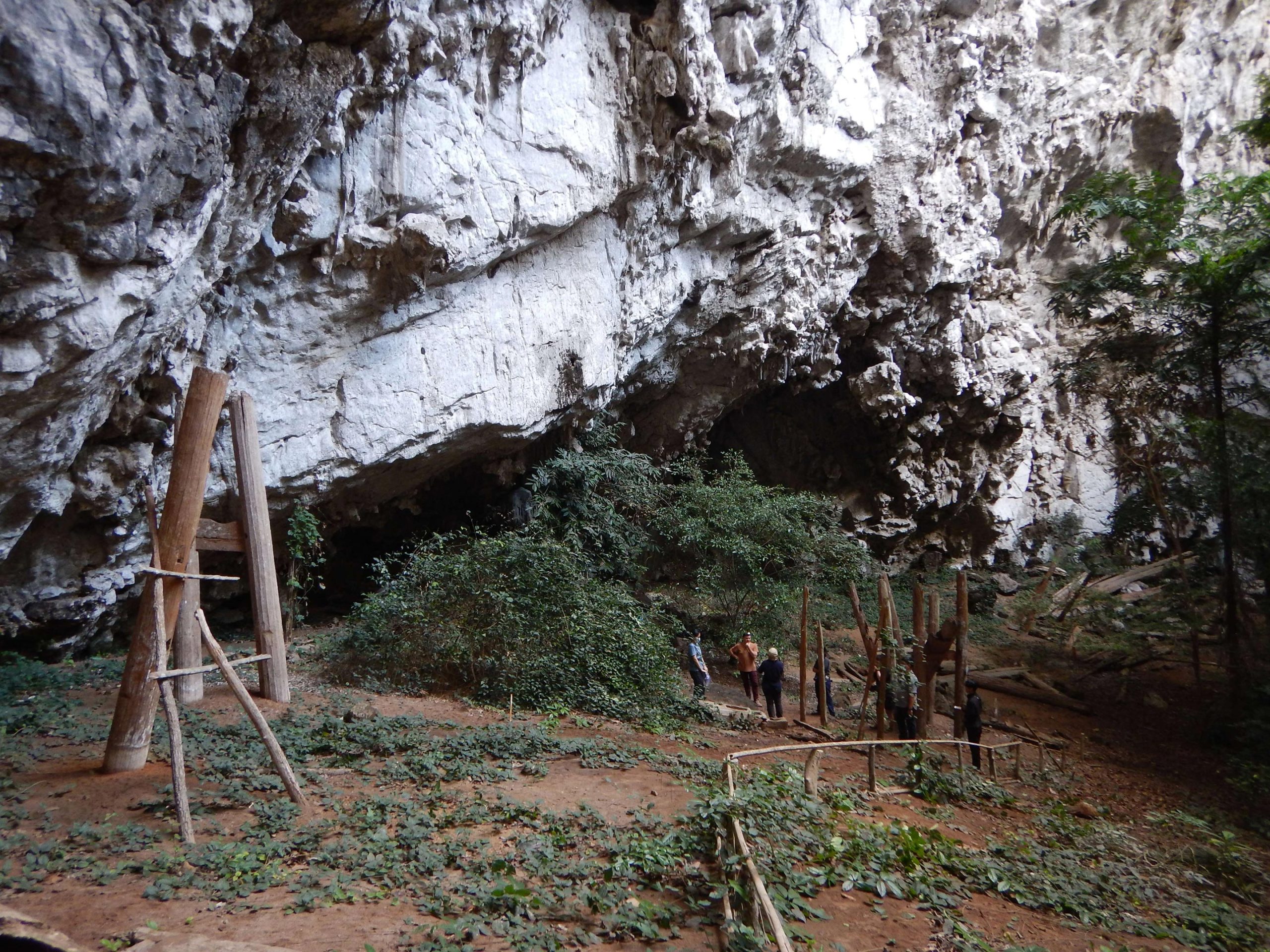
Thailand’s Iron Age Log Coffin Culture
Deciduous and evergreen forests dominate the limestone karst formations of the northwestern highlands of Thailand. A vast number of caves and rock shelters intersperses the mountains. In over 40 such caves in Mae Hong Son province, large wooden coffins mounted on stilts, dating between 2,300 and 1,000 years ago, can be found. During the Iron Age period, each of these up to several-meter-long coffins was crafted from a single teak tree and features refined carvings of geometric, animal- or human-like shapes at the handles of both ends.
This archaeological assemblage has been studied for over two decades by members of the Prehistoric Population and Cultural Dynamics in Highland Pang Mapha Project, led by Professor Rasmi Shoocongdej, from the Department of Archaeology, Faculty of Archaeology, Silpakorn University.
“Our research examines the relationship between humans and their environments in the seasonal tropics. One crucial aspect is the exploration of the social structure of these prehistoric communities, as well as explaining their connections with other pre-Neolithic, Neolithic, and post-Neolithic groups in this region,” says Rasmi Shoocongdej, an archaeologist and senior author of the study.
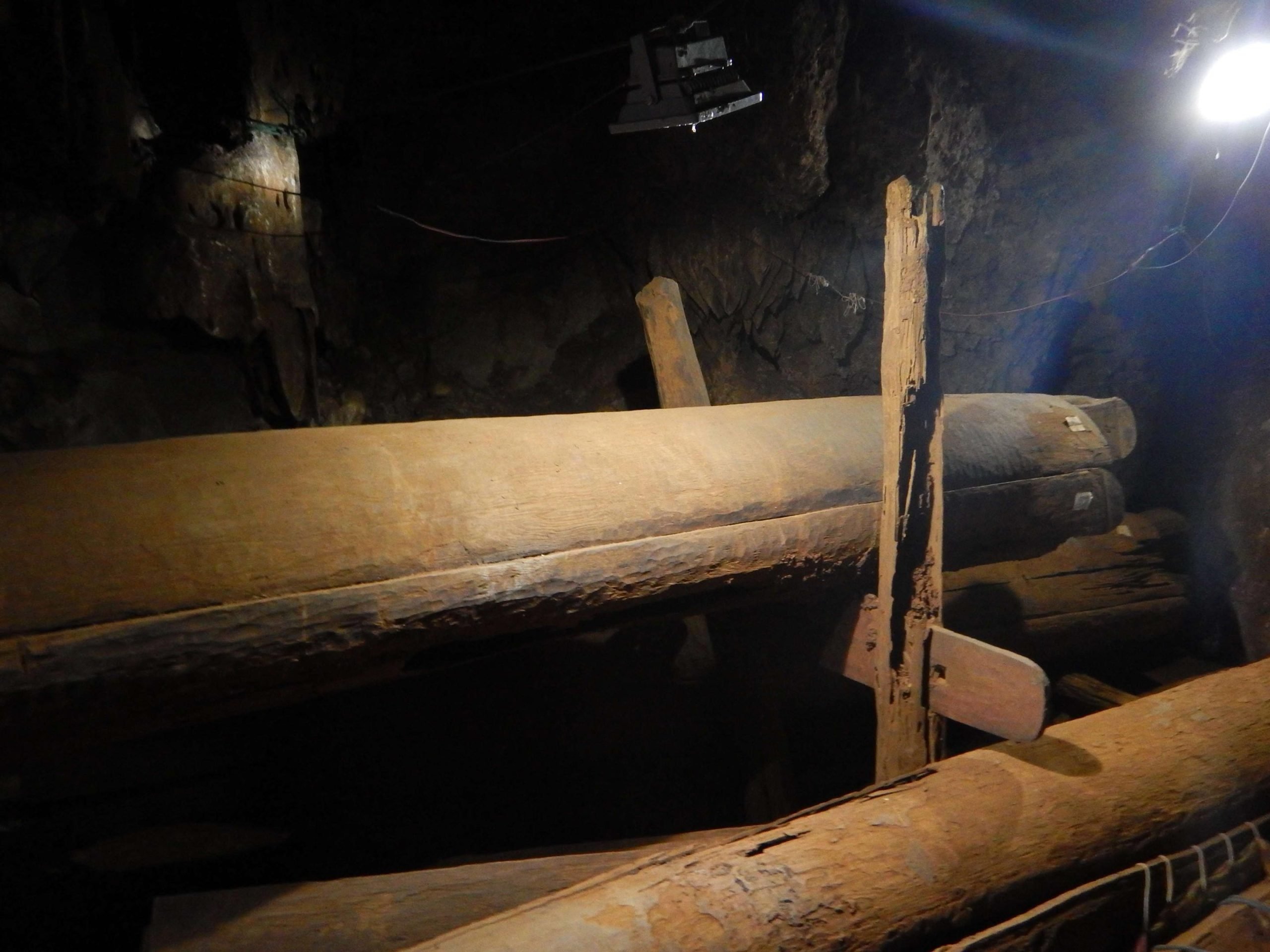
To understand the genetic profile of the Log Coffin-associated communities, and the connection of individuals buried in different caves, an interdisciplinary team of researchers from Germany and Thailand has analyzed the DNA of 33 ancient individuals from five Log Coffin sites. The genomes recovered from the ancient individuals allow the first detailed study of the structure of a prehistoric community from Southeast Asia.
“This project illustrates how ancient DNA can contribute to our understanding of past communities, their everyday life, and their cross-regional connections,” says first author Selina Carlhoff, a researcher in the Department of Archaeogenetics at the Max Planck Institute for Evolutionary Anthropology.
Complex Genetic Landscape in post-Neolithic Mainland South East Asia
DNA preservation conditions in tropical regions are challenging and limit ancient population genetic studies from Southeast Asia. Most studies were limited to single individuals or small groups representing a country and period, and identifying only broad patterns, such as genetic admixture of farmers from the Yangtze River valley in southern China with the local Hòabìnhian hunter-gather-associated gene pool during the pre-Neolithic.
The current study identifies two separate farmer-associated ancestries in the Log Coffin-associated individuals. One connected to the Yangtze River Valley, and another to the Yellow River Valley in China. While previously published individuals from Myanmar, Laos, and Vietnam also carry the Yellow River-related ancestry, it was absent in Bronze and Iron Age individuals from Ban Chiang in northeastern Thailand. These genetic differences mirror cultural differences between the two regions, such as mortuary practices and diet, and point towards separate influence spheres and connections to separate initial migration routes during the Neolithic period.
“Our results contribute to the emerging picture of a complex genetic landscape in post-Neolithic mainland Southeast Asia; however, this study provides successful genetic results from samples in limestone caves from the northwestern highlands of Thailand. Future studies of samples retrieved from open-air archaeological sites in the lowlands seem promising. If possible, they can provide additional insight into the genetic history of Mainland Southeast Asia,” says Wibhu Kutanan, a scientist from Naresuan University, Thailand, involved in the conception of the study.
Detailed analyses of uniparental markers, which can reveal sex-specific demographic histories of Log Coffin-associated groups, will be provided in a forthcoming study. Further archaeogenetic studies in collaboration with local scholars, as well as novel admixture modeling and dating techniques, will illuminate the developing patterns better and enable direct connections to archaeological findings and hypotheses.
First Community-Level Analysis in Southeast Asian Archaeology
On the local scale, the study provided the first community-level analysis in Southeast Asian archaeology. To investigate the relations between individuals, the authors used genetic regions that are identical in two individuals, because they were inherited from a common ancestor. The analysis of so-called IBD blocks (identical-by-descent) helps tracing complex biological relatedness patterns within a site and across regions — and had so far not been applied in archaeogenetic studies of Southeast Asia.
The study identified close genetic relatives buried in the same cave system, such as parents and children or grandparents and grandchildren. This cluster of closely related individuals was more distantly connected to all other individuals buried at the site.
While this suggests a selection of burial place under consideration of genetic relatedness, the more distant genetic relationships between Log Coffin sites, a low level of consanguinity, as well as high mitochondrial and low genome-wide diversity suggest that the Log Coffin-associated groups were rather large and constantly connected to each other across different river valleys.
“This result is highly significant, since wooden coffins were also used in other archaeological cultures all over Southeast Asia. Comparing relatedness patterns and cross-regional genetic connections would be a fascinating future collaborative project which could potentially explain the cultural dynamics and population interactions within Southeast Asian and other regions,” says Rasmi Shoocongdej.
Reference: “Genomic portrait and relatedness patterns of the Iron Age Log Coffin culture in northwestern Thailand” by Selina Carlhoff, Wibhu Kutanan, Adam B. Rohrlach, Cosimo Posth, Mark Stoneking, Kathrin Nägele, Rasmi Shoocongdej and Johannes Krause, 22 December 2023, Nature Communications.
DOI: 10.1038/s41467-023-44328-2
Never miss a breakthrough: Join the SciTechDaily newsletter.
Follow us on Google and Google News.